

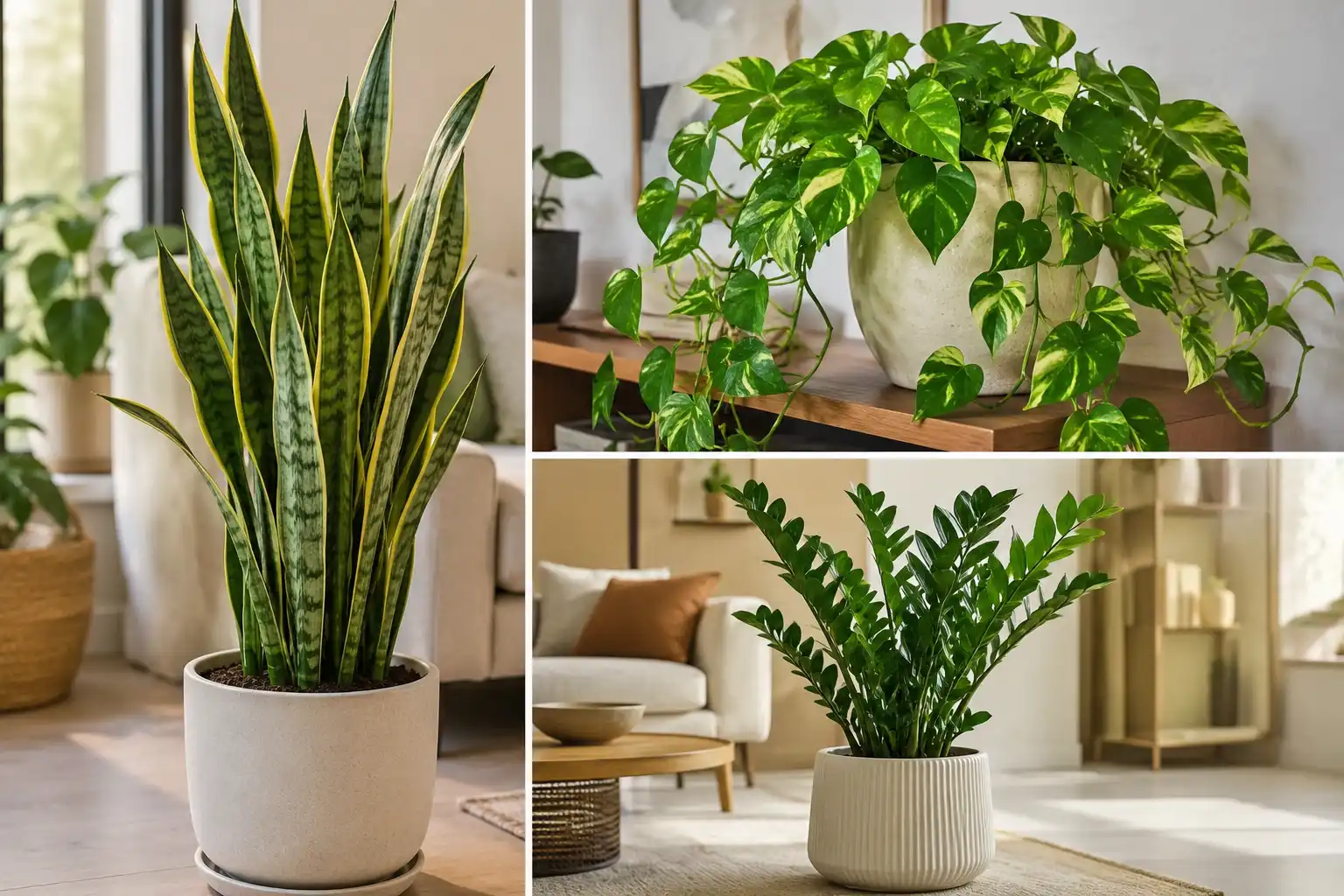
Table of Contents
Bringing plants into your home can make a room feel fresher, warmer, and more inviting. But if you’re new to plant care, choosing the right variety can make all the difference.
The good news is that you don’t need a complicated routine to enjoy beautiful greenery indoors. Many houseplants can handle occasional missed waterings and adapt well to everyday home conditions.
From leafy trailing plants to compact tabletop favorites, there are plenty of options for first-time plant owners. The key is choosing a plant that fits your space, light, and lifestyle.
Easy Low-Maintenance Indoor Plants That Make Everyday Care Simple
This list brings together 14 low-maintenance indoor plants that are well suited to beginners. Each one offers a different look and works in spaces ranging from bright living rooms and bedrooms to desks, shelves, and quieter corners.
1. Snake Plant Adds Effortless Height to Modern Interiors
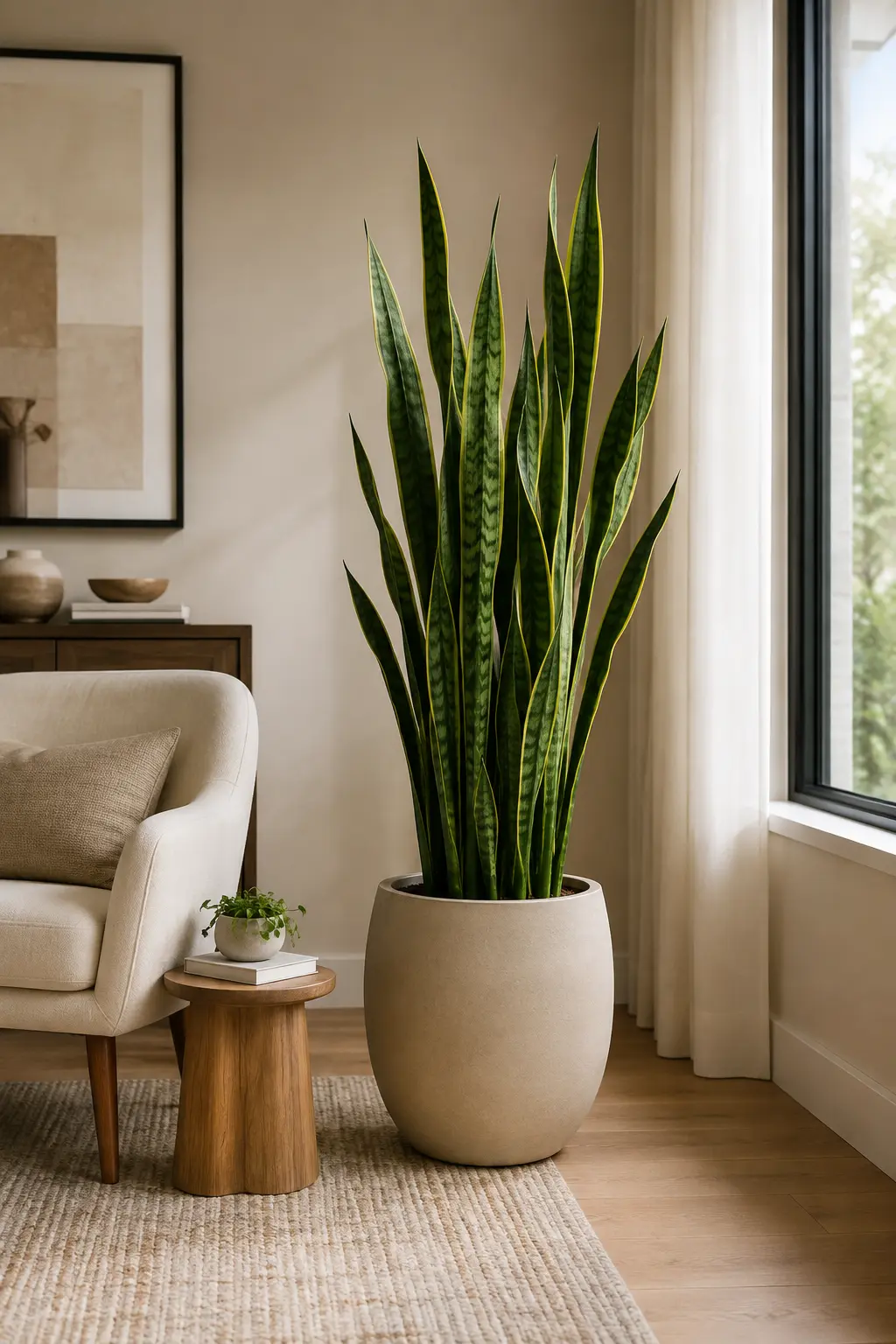
The Snake Plant is a standout choice for beginners who want a strong dose of greenery without committing to a demanding care routine. Its tall, upright leaves bring natural height and structure to a room, while the deep green and yellow pattern adds plenty of visual interest.
It can handle a range of indoor lighting conditions, including lower-light areas where other houseplants may struggle. Its thick leaves hold moisture, so it doesn’t need frequent watering. That makes it a practical option for busy homes, apartments, offices, and anyone still learning the basics of plant care.
For a polished decorating idea, place a full Snake Plant in a large neutral ceramic planter beside an accent chair, sofa, or sunny window. Pairing its vertical shape with warm wood, soft textiles, and simple decor creates a balanced look without making the room feel crowded.
Pro Tip: Always check the soil before watering and let it dry well between waterings. A pot with proper drainage is especially important because soggy soil can quickly cause root problems.
2. Golden Pothos Creates a Lush Cascading Display Indoors
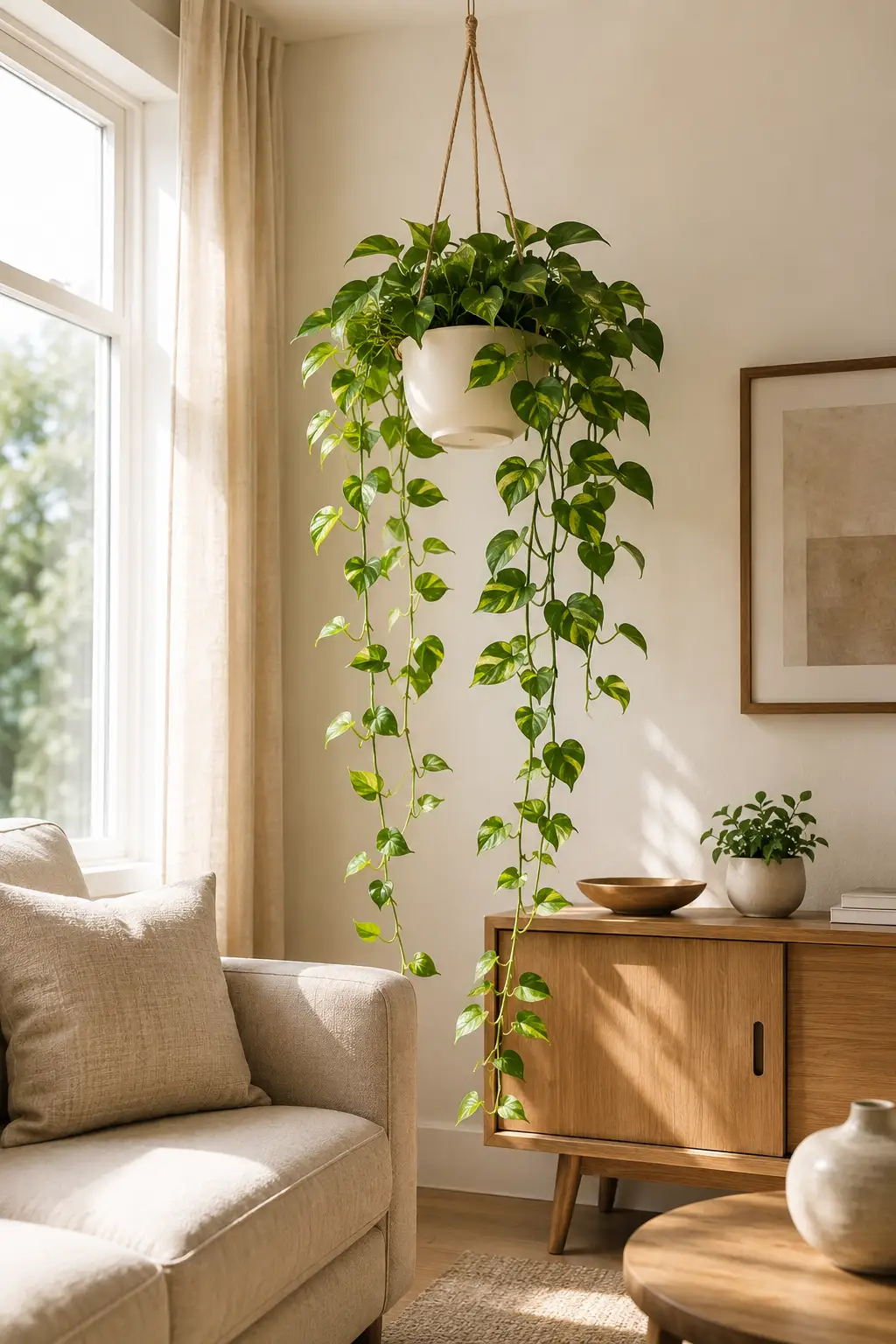
Golden Pothos is an excellent choice for beginners who want plenty of greenery without a complicated care routine. Its heart-shaped leaves and naturally trailing vines create a full, relaxed look, making it especially attractive when displayed in a hanging planter.
This adaptable houseplant works beautifully in bright indirect light and can also tolerate lower-light conditions. As the vines grow, they naturally cascade downward, giving empty vertical spaces more character. Its forgiving nature also makes it a practical option for anyone who is still getting comfortable with regular plant care.
For a stylish arrangement, hang a Golden Pothos near a bright window where its trailing stems have room to grow freely. A simple white planter, warm wood furniture, and neutral textiles create a polished setting that lets the green and golden leaves become the focal point.
Pro Tip: Allow the top layer of soil to dry before watering, and trim overly long vines when needed to encourage a fuller, bushier shape.
3. Peace Lily Brings Lush Foliage and Elegant Blooms Indoors
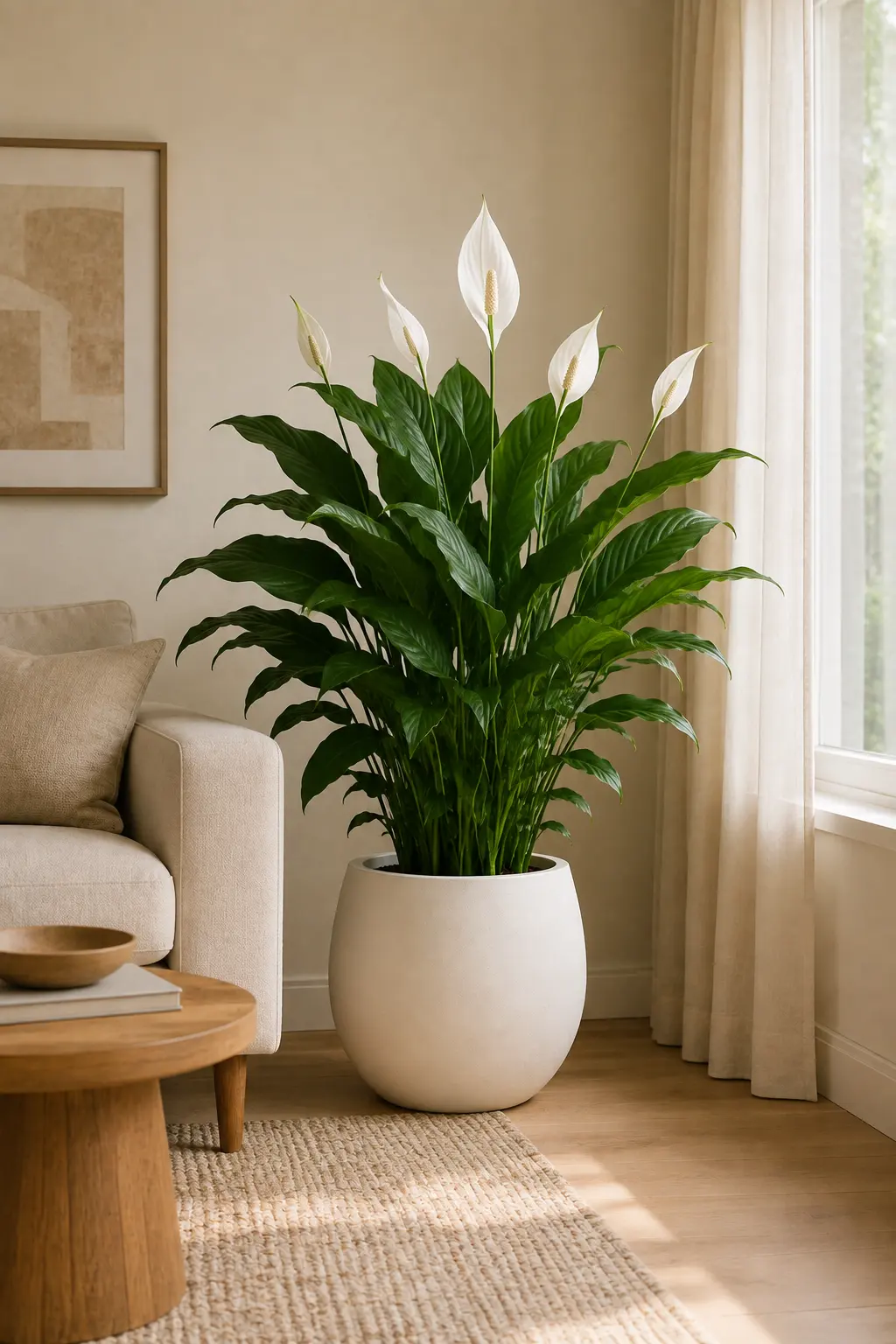
The Peace Lily is a beautiful option for beginners who want an indoor plant with more than just green foliage. Its broad, glossy leaves create a lush appearance, while its distinctive white flowers add a soft and elegant touch to living rooms, bedrooms, and other relaxing spaces.
It prefers bright, indirect light but can also adapt to lower-light areas, making it fairly flexible around the home. Unlike drought-tolerant plants, the Peace Lily appreciates more consistent moisture, so it can be a good choice if you enjoy checking on your plants regularly. Its foliage can also droop noticeably when it needs water, giving beginners a useful visual reminder.
For a sophisticated display, place a full Peace Lily in a large rounded ceramic planter beside a sofa or near a window with filtered light. The combination of deep green foliage, white blooms, warm wood, and neutral furnishings creates a calm focal point that feels polished without being overdone.
Pro Tip: Keep the soil lightly moist but never waterlogged, and avoid placing the plant directly in harsh afternoon sunlight, which can scorch its leaves.
4. Rubber Plant Creates a Sophisticated Green Focal Point
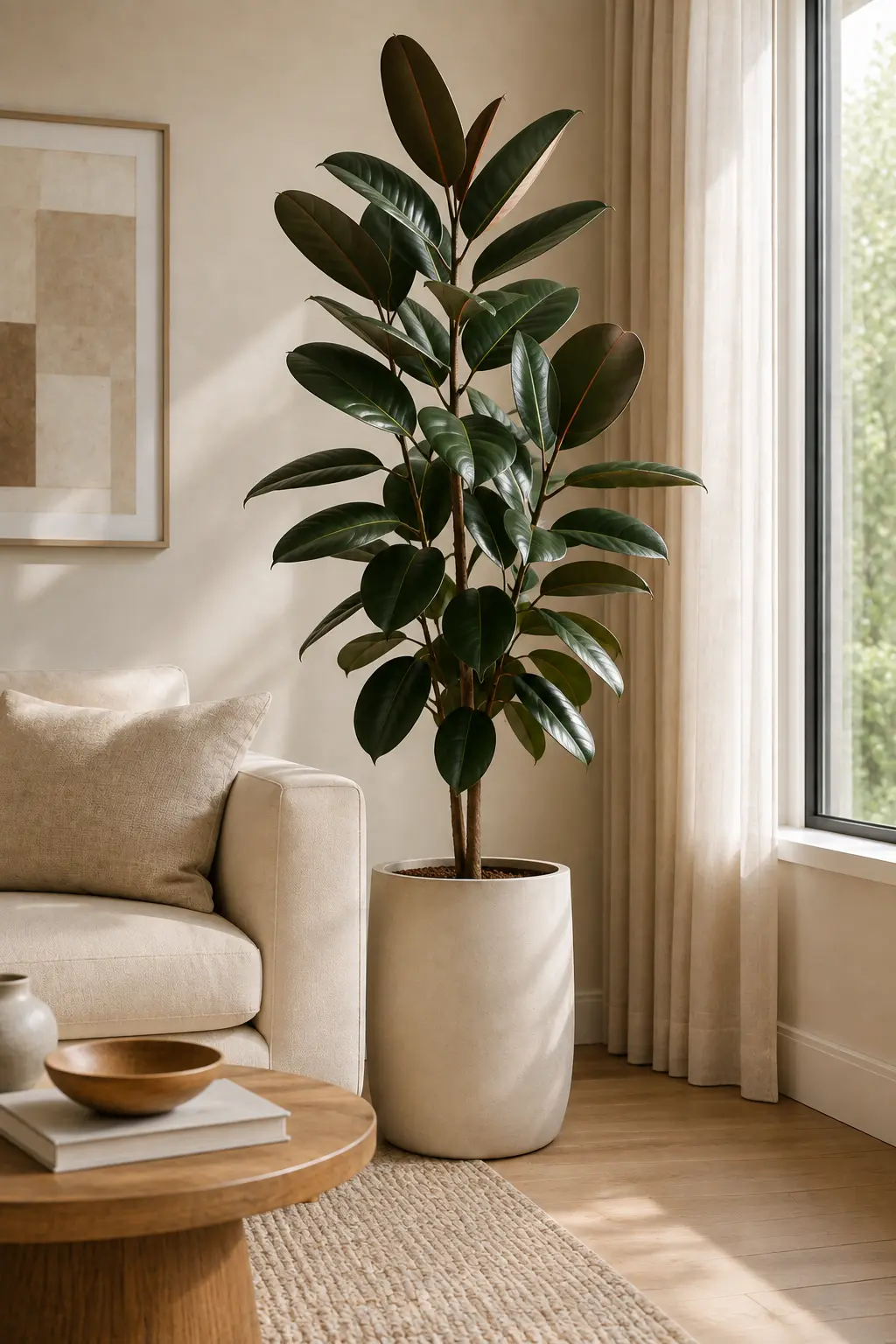
The Rubber Plant is a strong choice for beginners who want an indoor plant that feels substantial and decorative. Its large, glossy leaves bring rich greenery into a room, while its upright growth gives it the presence of a statement piece without requiring a complicated care routine.
This plant does best in bright, indirect light, making it especially suitable for rooms with large windows. It prefers to dry somewhat between waterings, so there’s no need to keep the soil constantly wet. With steady care and the right placement, a Rubber Plant can gradually grow into an impressive feature for your living space.
For a polished interior, place it in a tall neutral planter beside a sofa or near a bright window. The deep green foliage works beautifully with cream upholstery, natural wood, and warm neutral finishes, creating a sophisticated look that feels fresh without overwhelming the room.
Pro Tip: Rotate the plant occasionally so all sides receive balanced light, and wipe the broad leaves gently with a soft damp cloth to keep them clean and glossy.
5. Aloe Vera Adds Fresh Greenery to Bright Kitchen Spaces
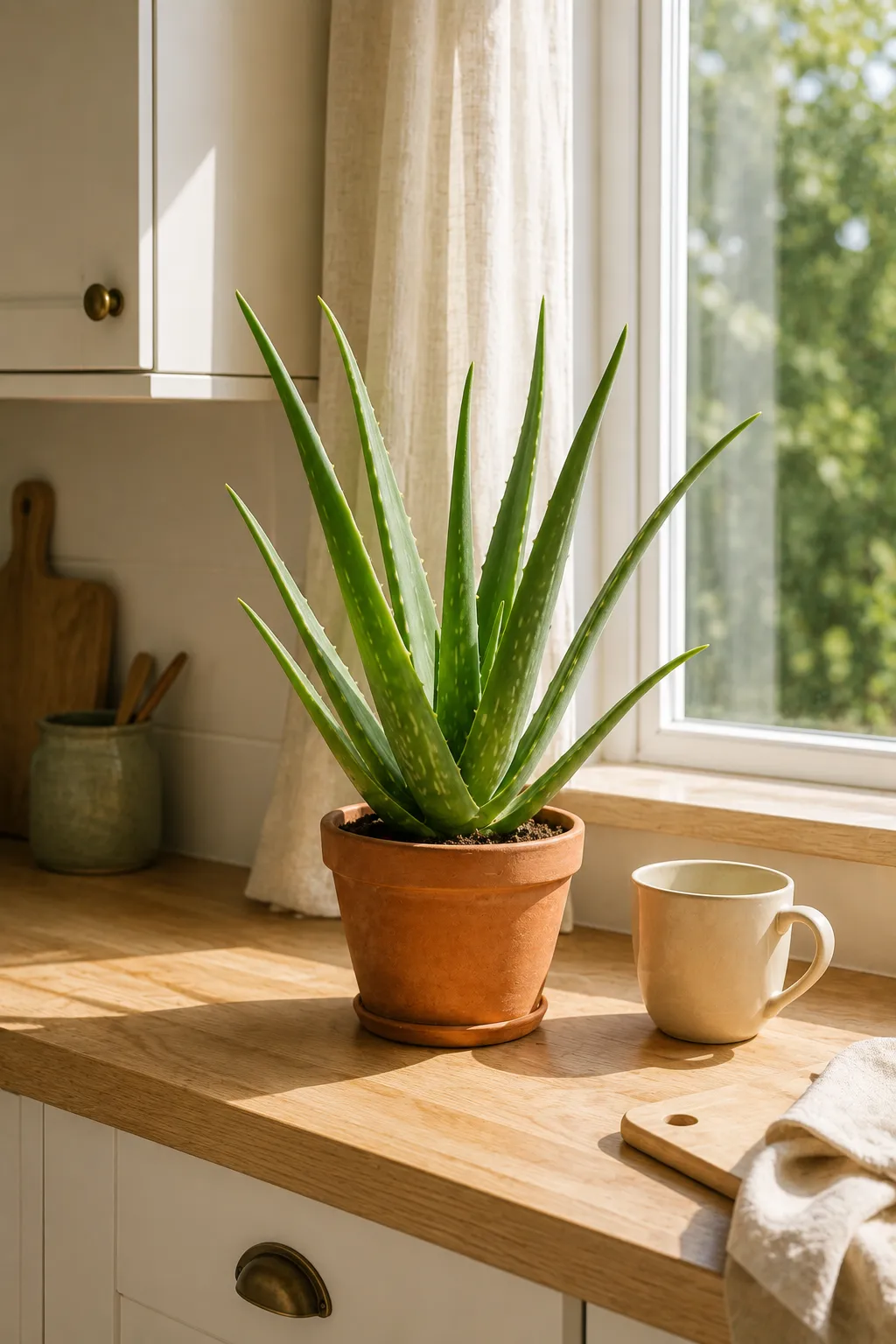
Aloe Vera is a practical choice for beginners who want a compact plant that looks attractive without needing constant attention. Its thick, pointed leaves create a sculptural shape, while the rich green color adds a fresh natural accent to kitchen counters, windowsills, and sunny shelves.
This succulent stores moisture in its fleshy leaves, which means it can go longer between waterings than many common houseplants. It prefers plenty of bright light, so a sunny window is an ideal spot. With the right placement, Aloe Vera can stay healthy without demanding much from a first-time plant owner.
For an easy decorating idea, place it in a simple terracotta pot on a wooden kitchen counter. The warm color of the pot pairs beautifully with natural wood, cream cabinetry, and soft daylight, creating a relaxed display that feels useful as well as decorative.
Pro Tip: Let the soil dry completely before watering again, and make sure the container has drainage holes. Too much moisture is one of the quickest ways to damage Aloe Vera.
6. Ponytail Palm Adds Sculptural Character to Sunny Rooms
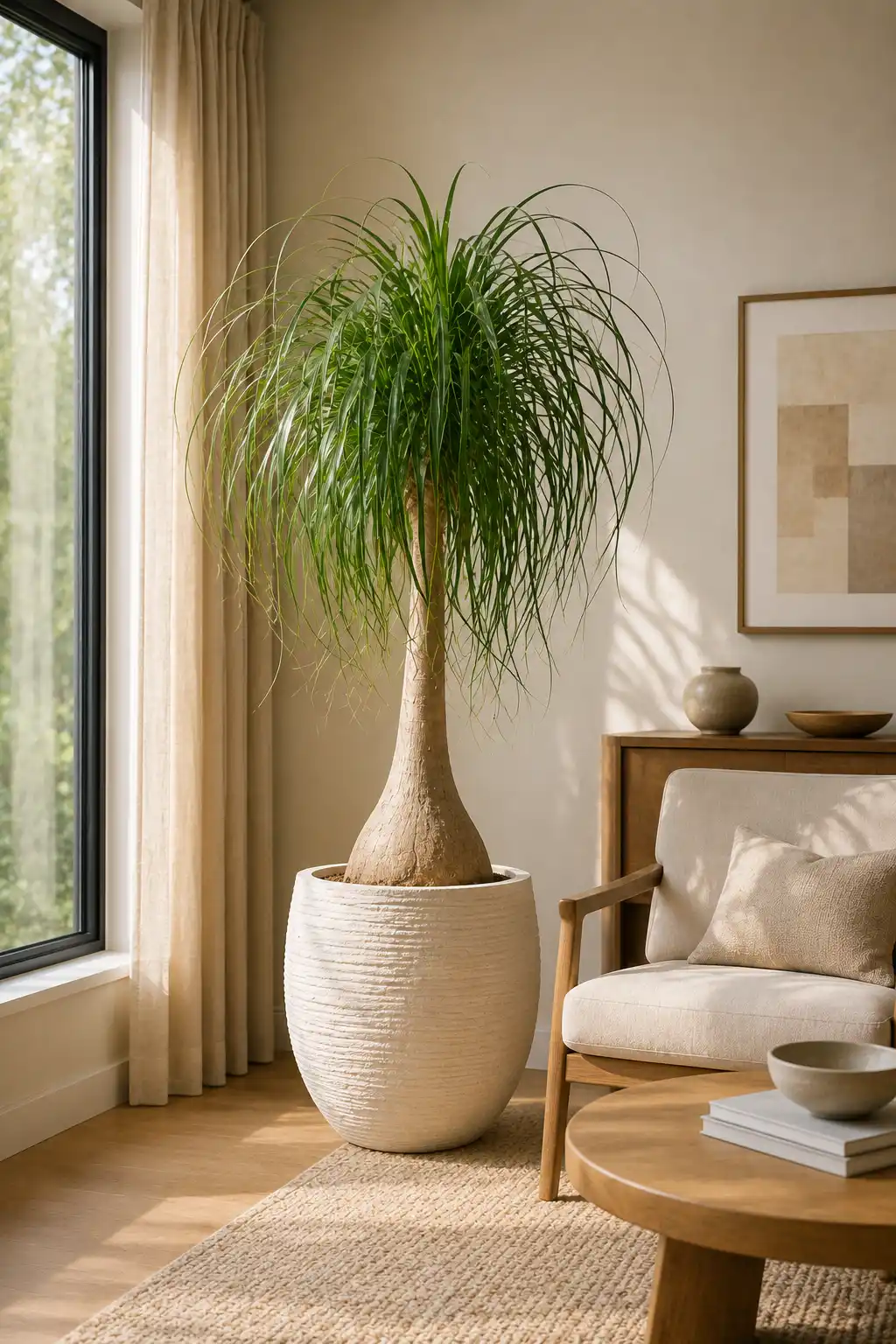
The Ponytail Palm is a great beginner-friendly choice when you want an indoor plant with a distinctive shape. Its swollen trunk and long, flowing leaves give it a sculptural appearance, making it feel more like a natural piece of decor than an ordinary houseplant.
It stores water in its thick trunk, which helps it handle periods of dry soil and occasional missed waterings. Bright light is ideal, so placing it near a large window can support healthy growth. Its relatively slow growth also means you won’t have to constantly prune, rearrange, or repot it.
For a striking display, use a large textured planter and give the Ponytail Palm plenty of room around its unusual form. Placing it beside a comfortable accent chair and a sunny window creates a warm focal point while the flowing foliage softens the clean lines of the room.
Pro Tip: Allow the soil to dry thoroughly between waterings, and give the plant plenty of bright light. Avoid keeping the roots constantly damp, especially in a large decorative planter.
Also Read: 10 DIY Kids Playground Ideas For A More Playful Backyard
Also Read: 15 Minecraft Staircase Ideas For A More Striking Interior
7. Heartleaf Philodendron Turns Empty Shelves Into Lush Displays
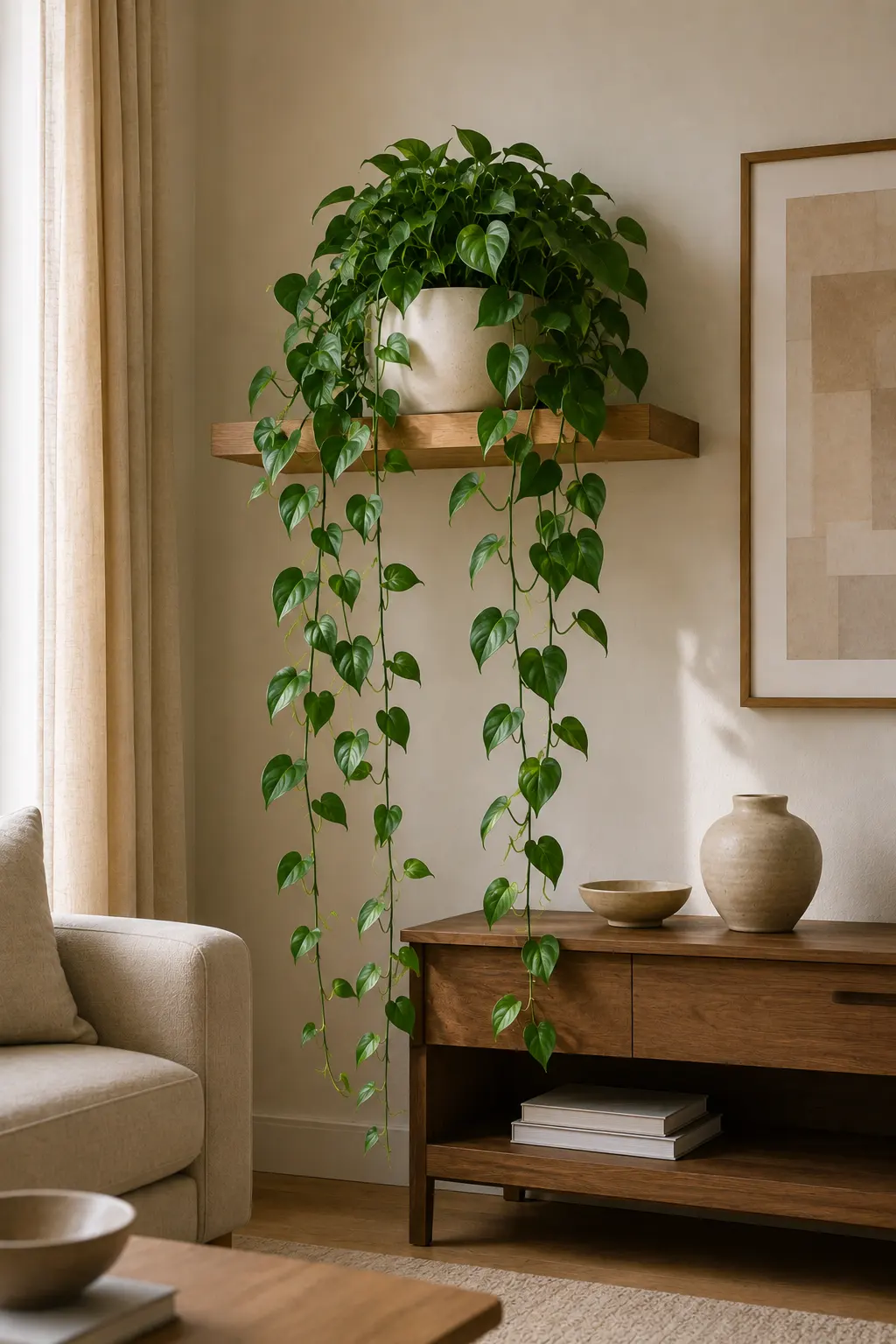
The Heartleaf Philodendron is a wonderful choice for beginners who want a relaxed, leafy look without taking on a demanding plant-care routine. Its glossy heart-shaped leaves grow along long trailing vines, creating a naturally full appearance that works beautifully in modern living spaces.
This plant adapts well to typical indoor conditions and prefers bright, indirect light, although it can tolerate lower light too. As the vines grow longer, they can be guided across a shelf or allowed to hang freely. That flexibility makes it especially useful when you want to add greenery without taking up valuable floor space.
For a stylish display, place the plant in a simple ceramic planter on a floating wooden shelf and let the vines cascade naturally. The combination of rich green foliage, warm wood, neutral walls, and minimal decor creates a layered look that adds plenty of character without making the room feel busy.
Pro Tip: Allow the top portion of the soil to dry before watering again, and trim long or sparse vines occasionally to encourage fuller growth.
8. ZZ Plant Delivers Glossy Greenery With Minimal Fuss
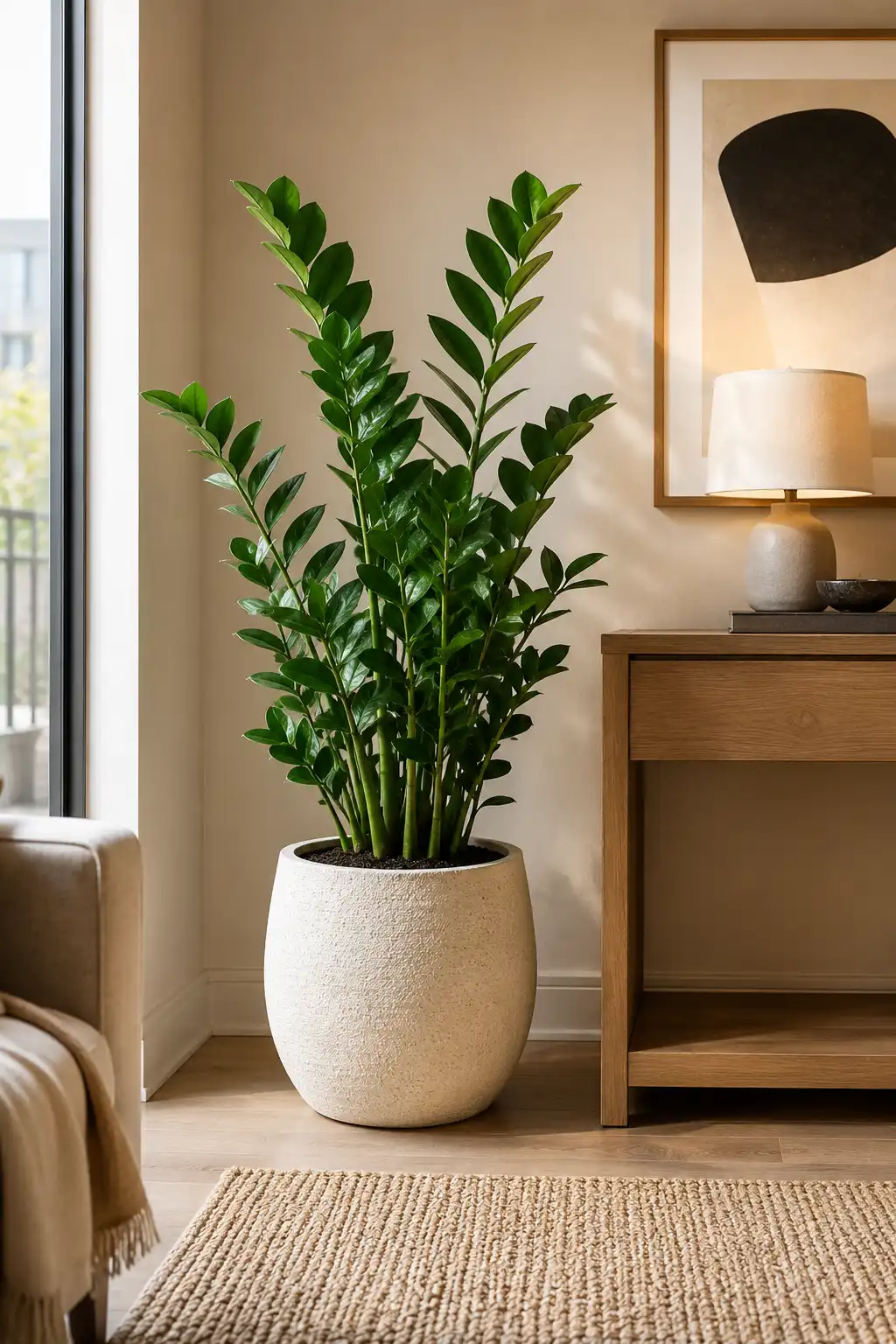
The ZZ Plant is a smart pick for beginners who want a full, polished houseplant without spending a lot of time on daily care. Its thick upright stems and naturally glossy leaves create a rich green display that can instantly make an empty corner feel more finished.
One of its biggest advantages is its ability to handle periods of dry soil and less frequent watering. It can adapt to a range of indoor lighting conditions, although brighter indirect light can support stronger growth. That forgiving nature makes it particularly useful for busy households, offices, and first-time plant owners.
For a sophisticated setup, place a mature ZZ Plant in a large textured ceramic planter beside a console, cabinet, or seating area. The deep green foliage pairs beautifully with warm wood, neutral walls, and soft furnishings, creating a clean and contemporary display without adding visual clutter.
Pro Tip: Check the soil before watering and allow it to dry between waterings. Avoid letting the plant sit in excess water, as consistently wet soil can lead to root problems.
9. Spider Plant Adds Airy Texture to Bright Bedrooms
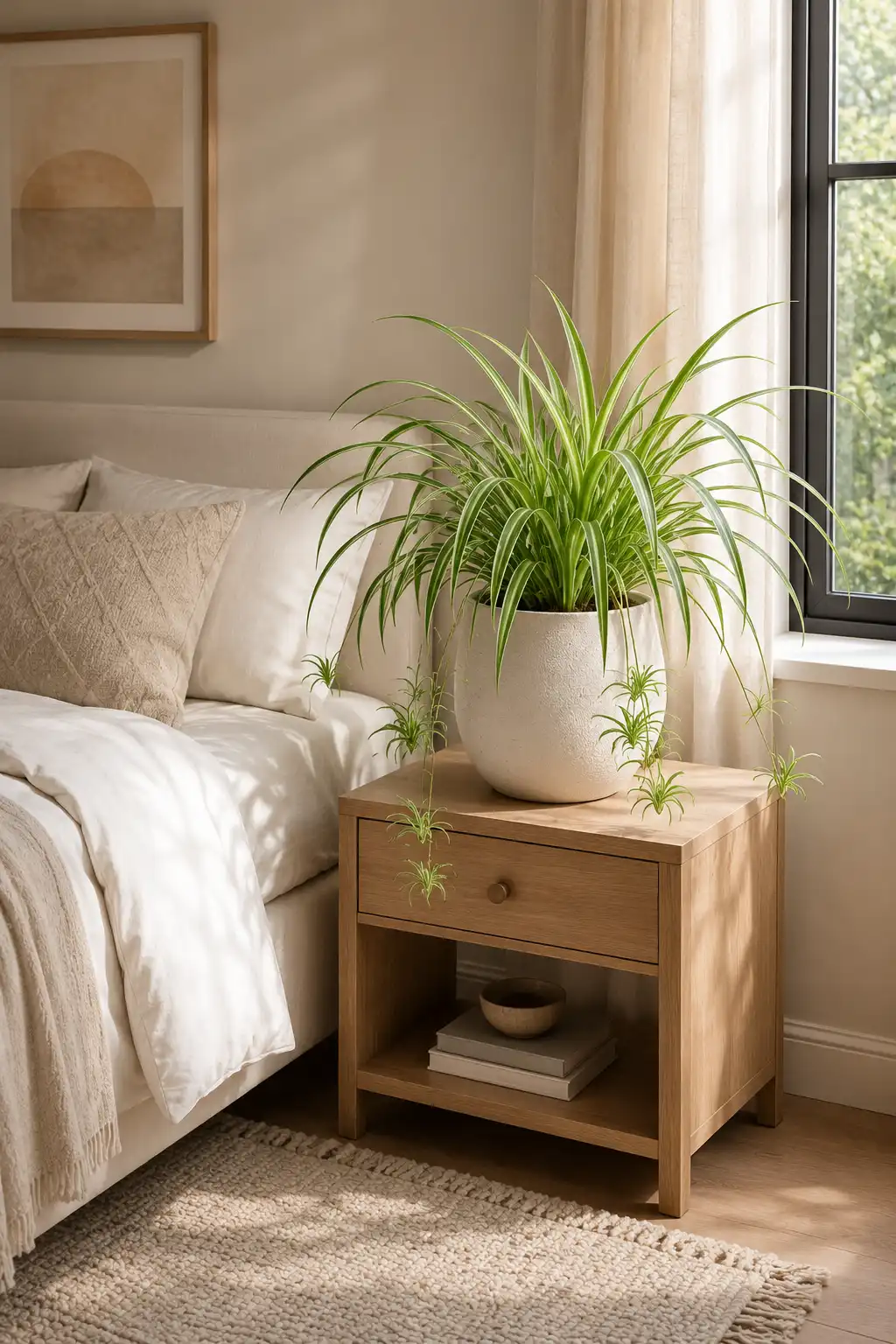
The Spider Plant is a reliable choice for beginners who want an indoor plant with a soft, full appearance. Its long, arching leaves create a graceful shape, while mature plants often produce small baby plantlets that hang from thin stems and add extra visual interest.
It prefers bright, indirect light but can adapt to moderate indoor conditions, making it fairly flexible around the home. Spider Plants also grow readily when given consistent basic care, so they’re a fun option for anyone who wants to watch a plant become fuller over time without taking on a complicated routine.
For a relaxed bedroom display, place a Spider Plant in a rounded ceramic planter on a wooden nightstand near a bright window. The combination of fresh green foliage, warm wood, soft bedding, and natural light creates a calm corner that feels inviting without looking overstyled.
Pro Tip: Water when the upper layer of soil begins to dry, and give the plant bright indirect light for healthy, attractive foliage. If brown leaf tips appear, check your watering routine and indoor conditions.
10. Cast Iron Plant Fills Dim Corners With Lasting Greenery
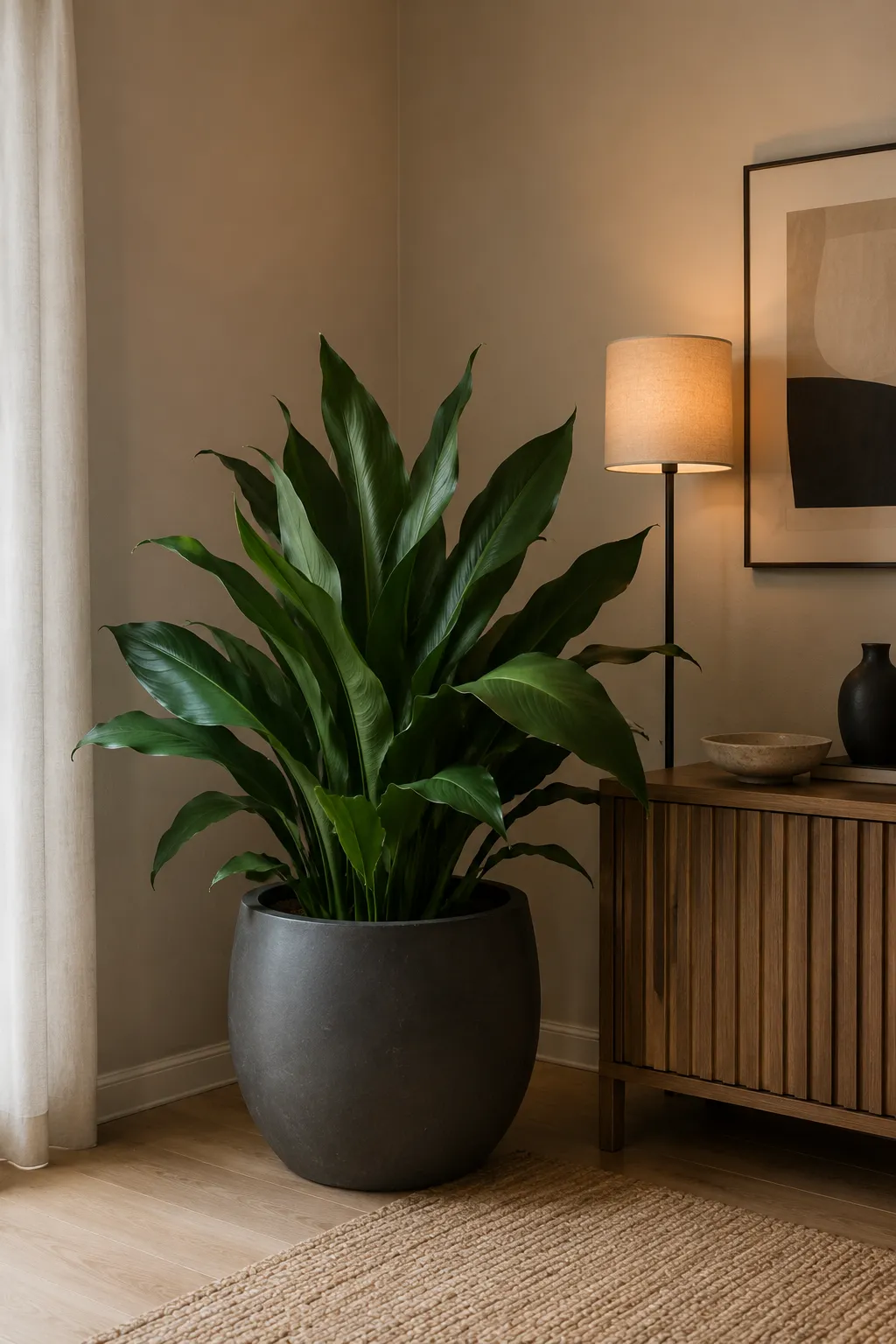
The Cast Iron Plant is an excellent option for beginners who want a lush indoor plant that doesn’t demand constant attention. Its long, deep green leaves grow in a naturally full cluster, giving even a quiet corner a rich and finished appearance.
One of its biggest strengths is its tolerance for lower-light indoor spaces, making it useful for rooms that don’t receive strong natural sunlight. It also handles occasional missed waterings better than many moisture-loving houseplants. That forgiving nature makes it a practical choice when you’re still learning how to build a consistent plant-care routine.
For a sophisticated look, place it in a large rounded planter beside a console, cabinet, or accent chair. The dark green foliage works especially well with warm wood, neutral walls, soft lighting, and textured rugs, creating a cozy display that feels intentional without requiring lots of decorative pieces.
Pro Tip: Let the soil dry slightly between waterings and keep the plant away from harsh direct sunlight. Wipe the broad leaves occasionally to remove dust and keep their natural sheen visible.
11. Chinese Evergreen Brings Patterned Foliage to Cozy Interiors
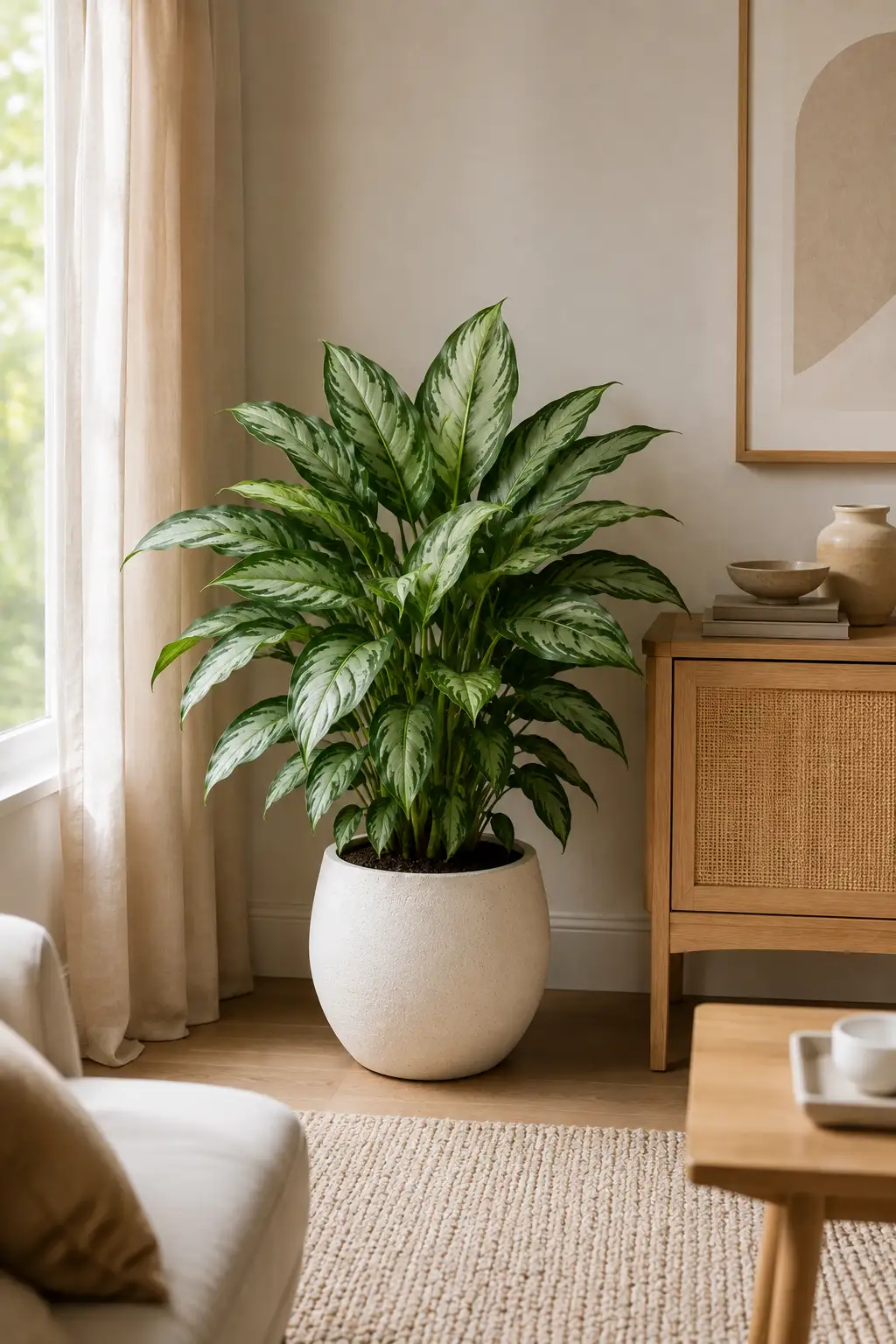
Chinese Evergreen is a great choice for beginners who want a houseplant with plenty of visual character. Its broad leaves come in attractive shades of green, silver, and cream, creating a layered display that can brighten an otherwise simple corner without adding lots of extra decor.
It generally adapts well to indoor conditions and can tolerate lower light than many colorful foliage plants. The key is to avoid keeping its soil constantly saturated, as overly wet conditions can cause problems. With moderate attention to watering and a suitable spot, it can maintain its full, leafy appearance with relatively little effort.
For a polished arrangement, place a mature Chinese Evergreen in a rounded neutral planter beside a wooden cabinet or console. Pairing its patterned foliage with warm wood, soft curtains, neutral upholstery, and simple artwork creates a welcoming composition that feels stylish but still relaxed.
Pro Tip: Keep it in bright to moderate indirect light for attractive foliage, and allow the top layer of soil to dry slightly before watering again.
12. Jade Plant Adds a Miniature Tree Look to Sunny Spaces
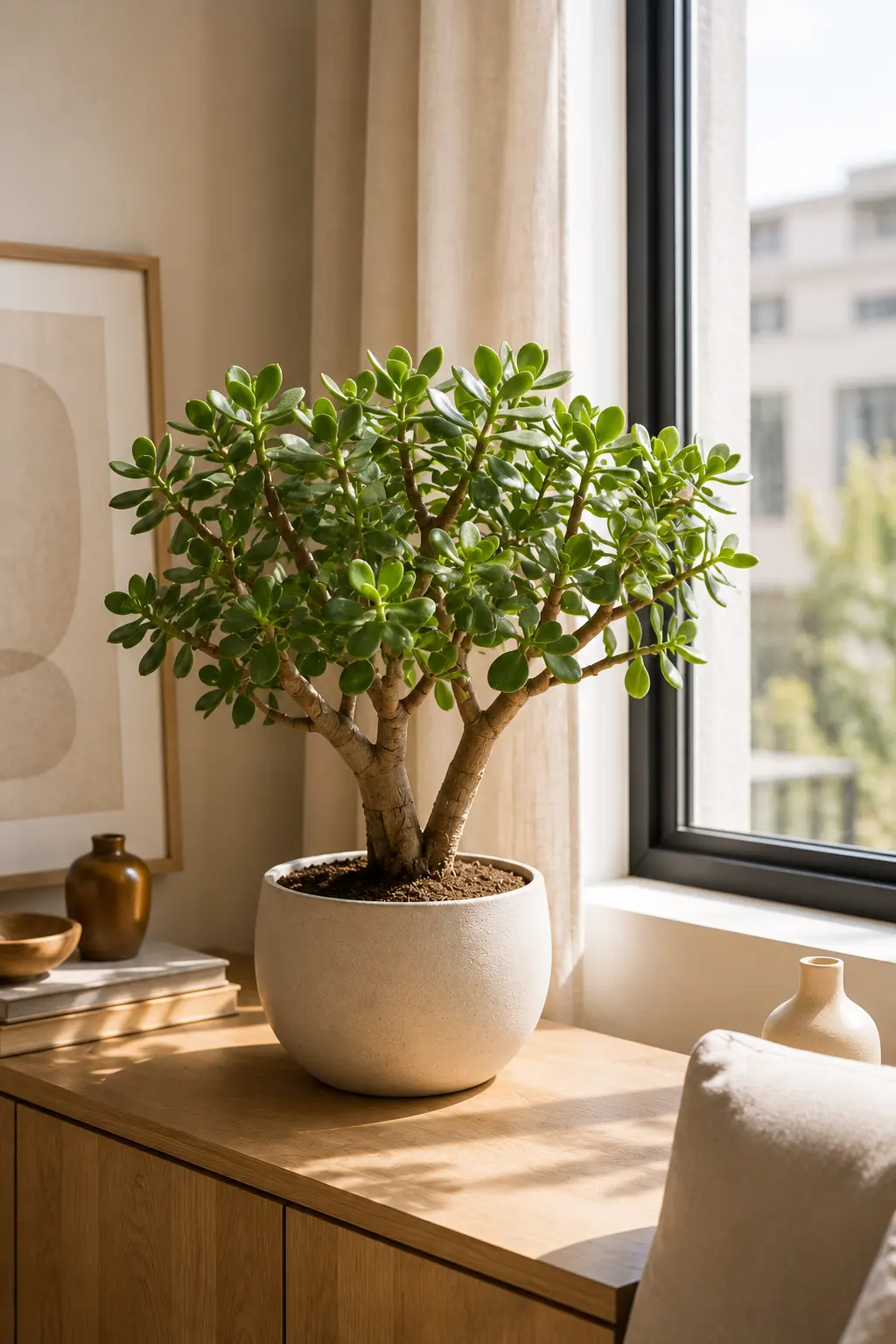
The Jade Plant is a wonderful choice for beginners who want a compact houseplant with a more sculptural appearance. Its thick woody stems and rounded, fleshy leaves give it a miniature tree-like shape, while its rich green foliage adds a natural accent to desks, consoles, and sunny shelves.
Jade Plants prefer plenty of bright light and can handle periods of dry soil because their thick leaves store moisture. They also tend to grow slowly, which means they don’t require constant pruning or repotting. With a suitable sunny spot and careful watering, a Jade Plant can remain an attractive part of your home for years.
For an elegant display, place a mature Jade Plant in a rounded neutral planter on a wooden console or table near a bright window. The warm sunlight, natural wood, and simple pottery create a refined setting that lets the plant’s branching shape and dense foliage take center stage.
Pro Tip: Give your Jade Plant plenty of bright light and let the soil dry out thoroughly between waterings. Always use a container with drainage to avoid excess moisture around the roots.
13. Parlor Palm Brings Soft Tropical Texture to Living Rooms
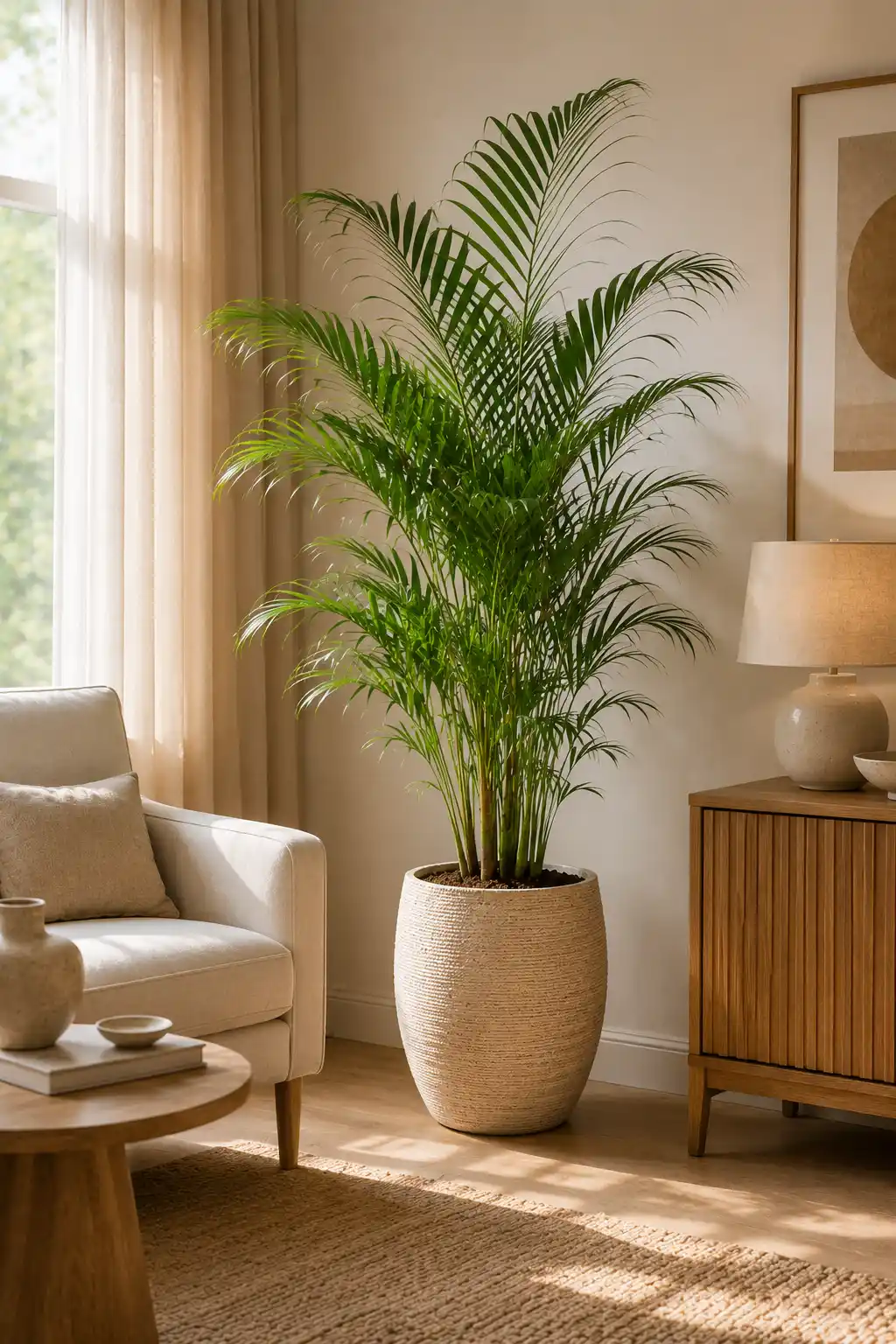
The Parlor Palm is a lovely option for beginners who want their home to feel greener and more inviting without choosing a plant with complicated care needs. Its slender stems and graceful fronds create a soft, airy shape that adds movement without making a room feel visually heavy.
It can adapt to moderate indoor light and generally prefers bright, indirect light for steady growth. Unlike drought-tolerant plants, it appreciates some consistency with watering, but it doesn’t require constant attention. Its naturally elegant form also makes it easy to use as a larger floor plant in living rooms, bedrooms, and home offices.
For a refined display, place a mature Parlor Palm in a textured neutral planter beside a sofa or wooden cabinet. The delicate fronds work beautifully with warm wood, cream upholstery, soft curtains, and natural daylight, creating a relaxed indoor setting that feels fresh and sophisticated.
Pro Tip: Keep the soil slightly moist but avoid letting it remain soggy, and place the palm where it receives bright, filtered light rather than harsh direct sun.
14. Peperomia Brings Compact Greenery to Home Workspaces
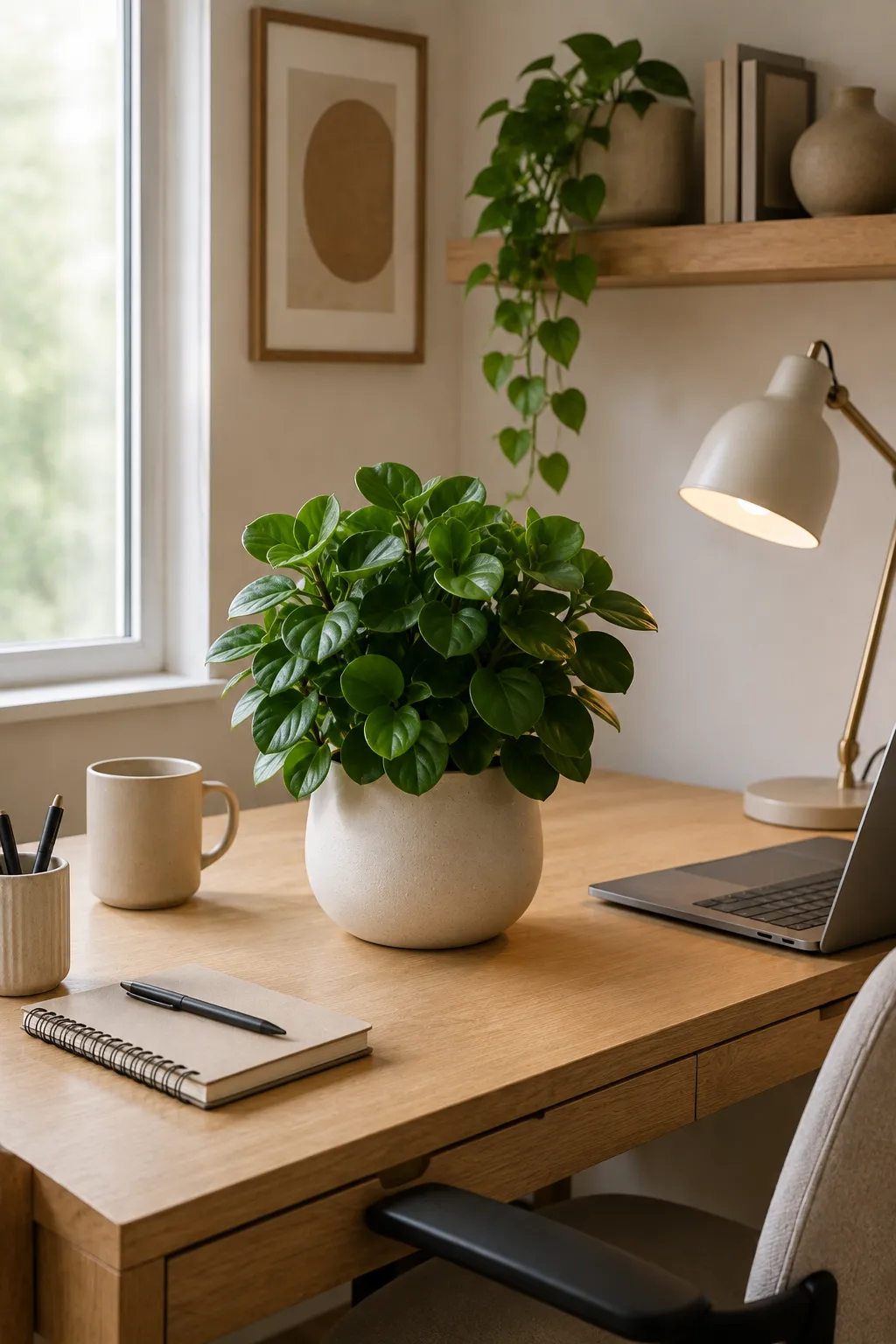
Peperomia is an excellent choice for beginners who want a compact indoor plant that looks full and polished without taking over a room. Its thick, rounded leaves create a lush appearance, while its manageable size makes it especially useful for desks, shelves, bedside tables, and smaller spaces.
It generally prefers bright, indirect light and doesn’t need frequent watering because its fleshy leaves can retain moisture. That makes it a practical option for people who want attractive greenery without a demanding daily routine. With a suitable spot and careful watering, Peperomia can maintain its dense, healthy appearance with relatively little effort.
For a stylish workspace, place a full Peperomia in a rounded ceramic planter at the center of a wooden desk. Pairing the glossy green foliage with natural wood, a simple laptop, neutral stationery, and soft daylight creates a workspace that feels fresh and inviting without becoming cluttered.
Pro Tip: Let the soil dry somewhat between waterings and use a pot with good drainage. Bright indirect light will help keep the foliage compact and healthy.
Creating a Greener Home With Less Daily Effort
Choosing a low-maintenance indoor plant is less about finding one that needs no care and more about finding one that fits naturally into your routine. Snake Plants, ZZ Plants, Pothos, Spider Plants, and other forgiving varieties can make it easier to enjoy greenery without constantly worrying about watering or complicated maintenance.
Once you understand the light and watering needs of your chosen plant, caring for it becomes much simpler. Start with a suitable location, use a container with proper drainage, and pay attention to the soil rather than following a rigid watering schedule. With the right plant in the right spot, even a beginner can create a home that feels fresher, warmer, and beautifully connected to nature.