
Table of Contents
The TV wall has become much more than a practical place for a screen. In a well designed home, it can shape the entire room, bringing architecture, storage, lighting, and visual interest together in one striking feature.
Today’s most interesting TV walls move beyond predictable panels and simple finishes. Sculptural forms, layered frames, recessed lighting, dimensional surfaces, and clever built in storage can make the wall feel like a carefully planned part of the architecture.
The key is finding a design that looks impressive without sacrificing function. These ideas balance strong visual character with practical details, giving you plenty of inspiration for creating a TV wall that feels polished, intentional, and suited to a stylish modern home.
Best Architectural TV Wall Ideas for Every Home
The following 14 ideas explore very different ways to turn an everyday media wall into a defining interior feature. From flowing three dimensional forms and dramatic layered portals to floating structures, geometric compositions, and hidden TV solutions, each concept offers a fresh approach while keeping function, proportion, and real world usability at the center of the design.
1. Sculpted 3D Ribbons That Flow Around the TV
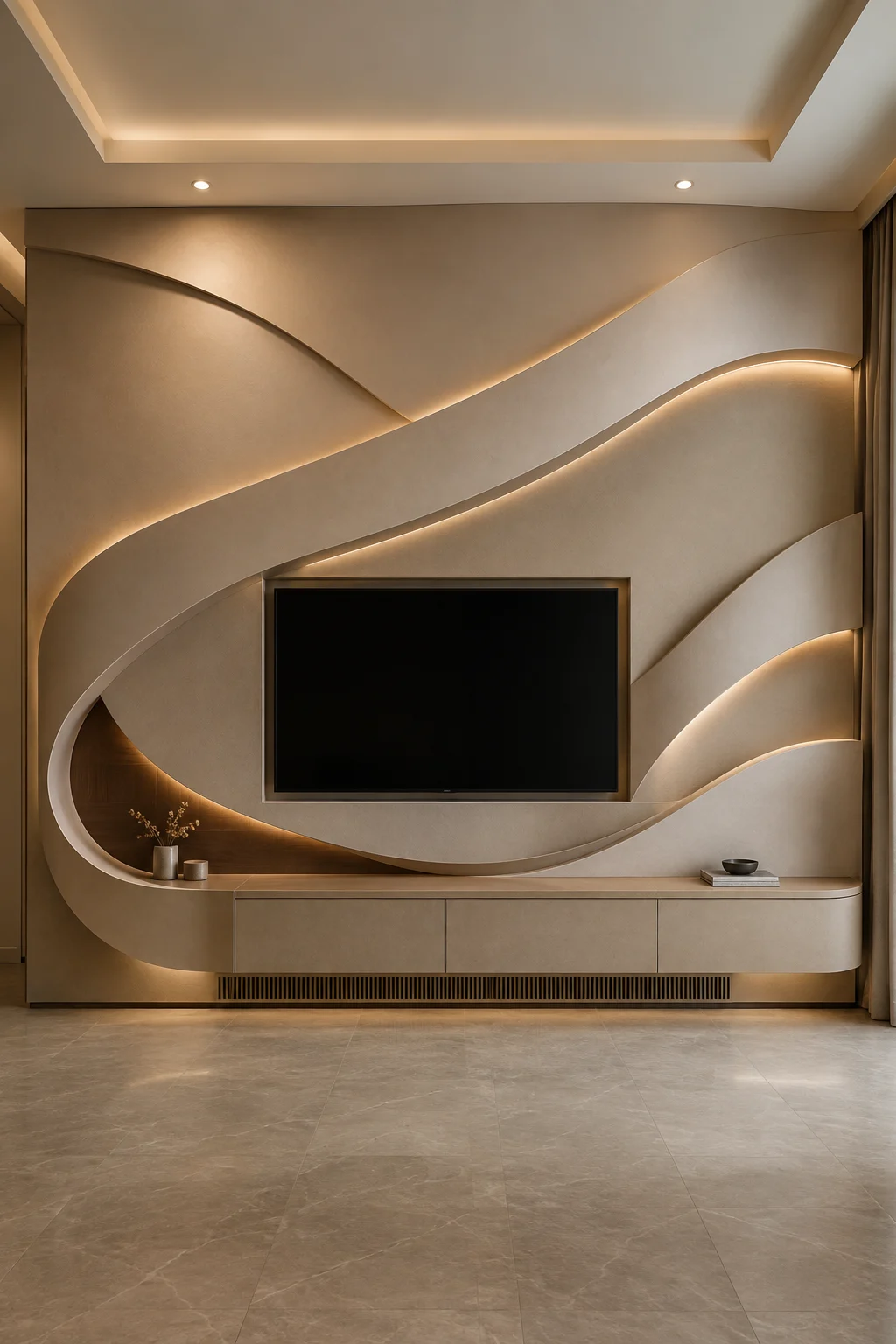
Flowing architectural ribbons give this TV wall its striking sense of movement. Instead of relying on a flat decorative backdrop, broad sculpted forms sweep across the surface at different heights and depths. The television sits within the composition rather than looking like an object simply mounted onto it.
Soft concealed lighting follows selected curves and brings the layered construction to life. As the light catches each raised edge, it creates gentle shadows that make the wall appear deeper and more dimensional. The warm neutral finish keeps those dramatic forms sophisticated rather than overly futuristic.
The long integrated cabinet below gives the design a practical foundation while maintaining its seamless appearance. Closed storage keeps media equipment and everyday clutter out of sight, while the recessed ventilation detail allows electronics to function properly without interrupting the clean architectural lines.
Pro Tip: Use concealed lighting on only a few of the deepest curves. Illuminating every ribbon can flatten the visual hierarchy, while selective lighting makes the sculptural layers feel more intentional and refined.
2. Layered Architectural Portals That Frame the TV in Depth
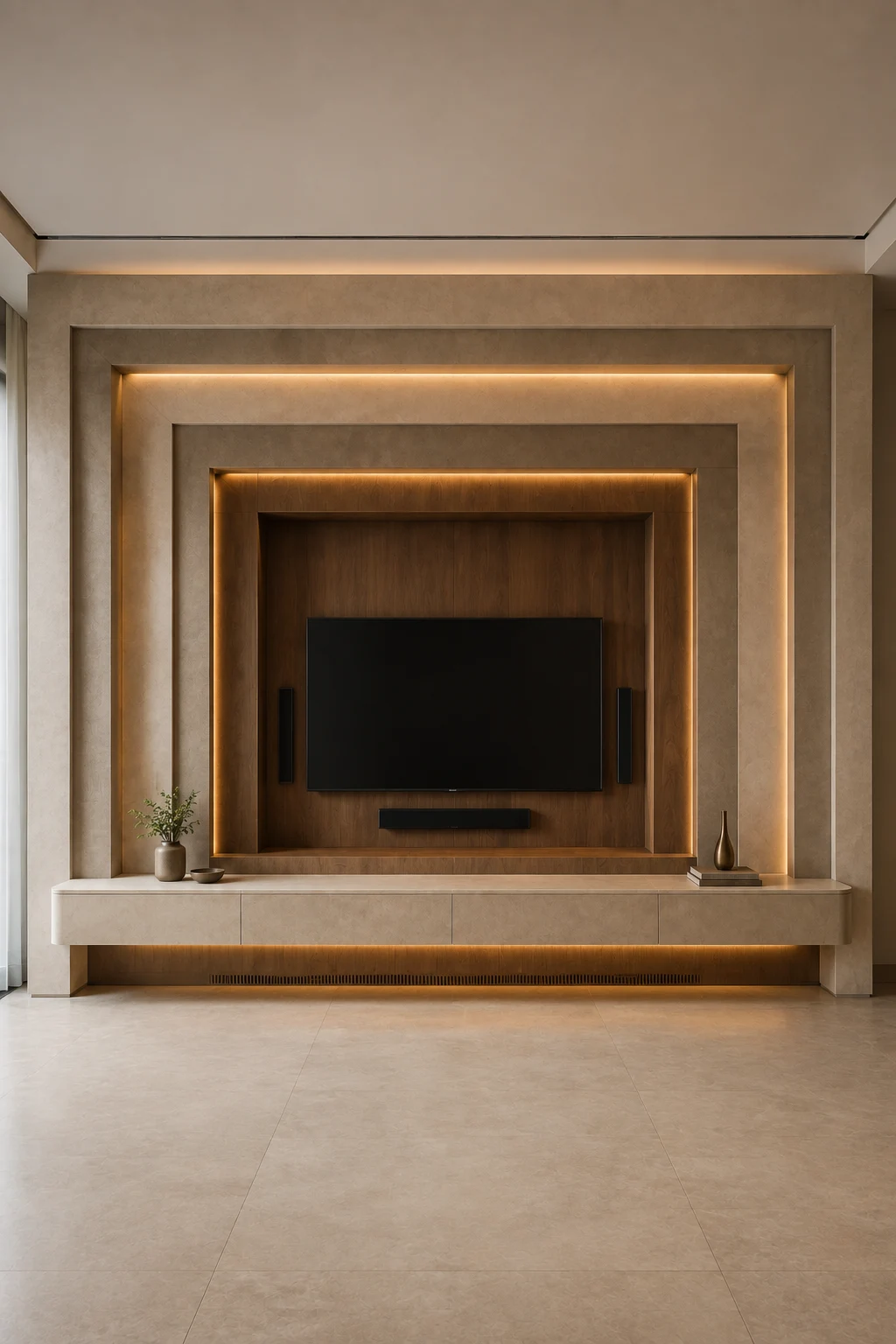
This layered portal design uses a series of oversized rectangular frames to draw attention toward the television. Each frame steps gradually inward, creating real architectural depth rather than relying on decorative trim. The strong symmetry also gives the wall a composed, polished presence.
Warm concealed lighting between the recessed layers makes those changes in depth much more noticeable. A rich wood finish on the innermost section adds contrast and visually anchors the black television, while the surrounding neutral surfaces keep the larger composition calm and sophisticated.
A long integrated console completes the wall without competing with the portal effect. Closed cabinetry provides practical storage for media equipment, while the speakers and soundbar can sit neatly within the central zone. This combination makes the feature wall equally effective for entertainment and everyday living.
Pro Tip: Keep the depth between portal layers consistent and use one contrasting material only in the innermost section. This naturally pulls the eye toward the TV without making every layer compete for attention.
3. Folded Geometric Planes That Give the TV Wall an Edge
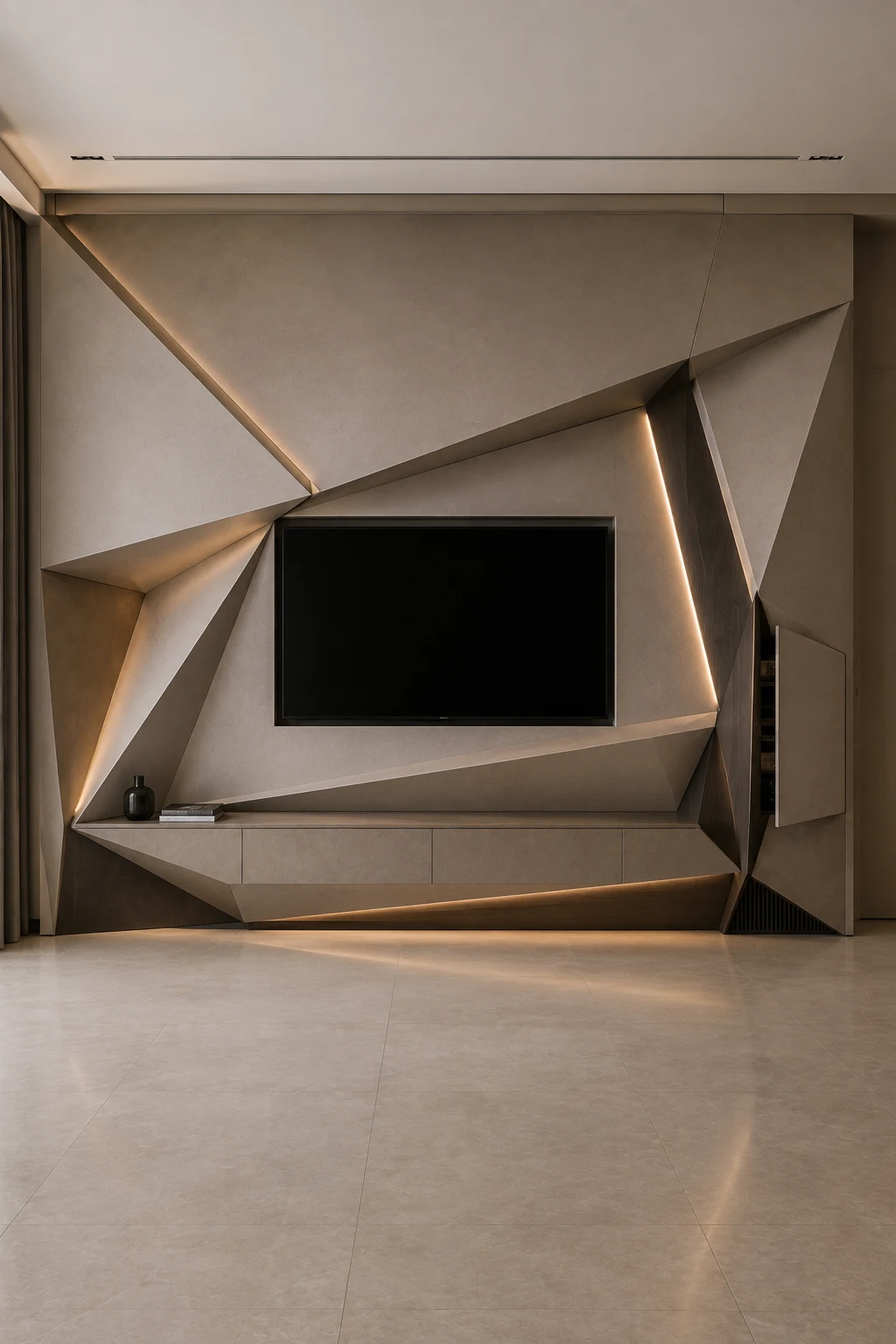
Sharp folded planes give this TV wall the character of a large architectural sculpture. Instead of following a predictable rectangular layout, angled surfaces converge around the television from different directions. The changing depths create strong shadow lines and make the composition feel dynamic even when the screen is off.
Concealed lighting placed within selected folds adds another layer to the geometry. Thin washes of warm light emphasize the deepest intersections without outlining every panel. Keeping the finishes within a restrained neutral palette also allows the angular construction to provide the drama rather than relying on bold colors.
Function is cleverly worked into the sculptural structure rather than added afterward. The lower folded plane transitions into concealed media storage, while a discreet side cabinet provides additional space for electronics or accessories. This helps maintain the uninterrupted geometric appearance that makes the wall so distinctive.
Pro Tip: Use fewer, larger folded planes instead of filling the wall with small geometric pieces. Strong oversized forms create cleaner sightlines and make the finished feature feel architectural rather than decorative.
4. Rotating Media Partition That Makes the TV Work From Both Sides
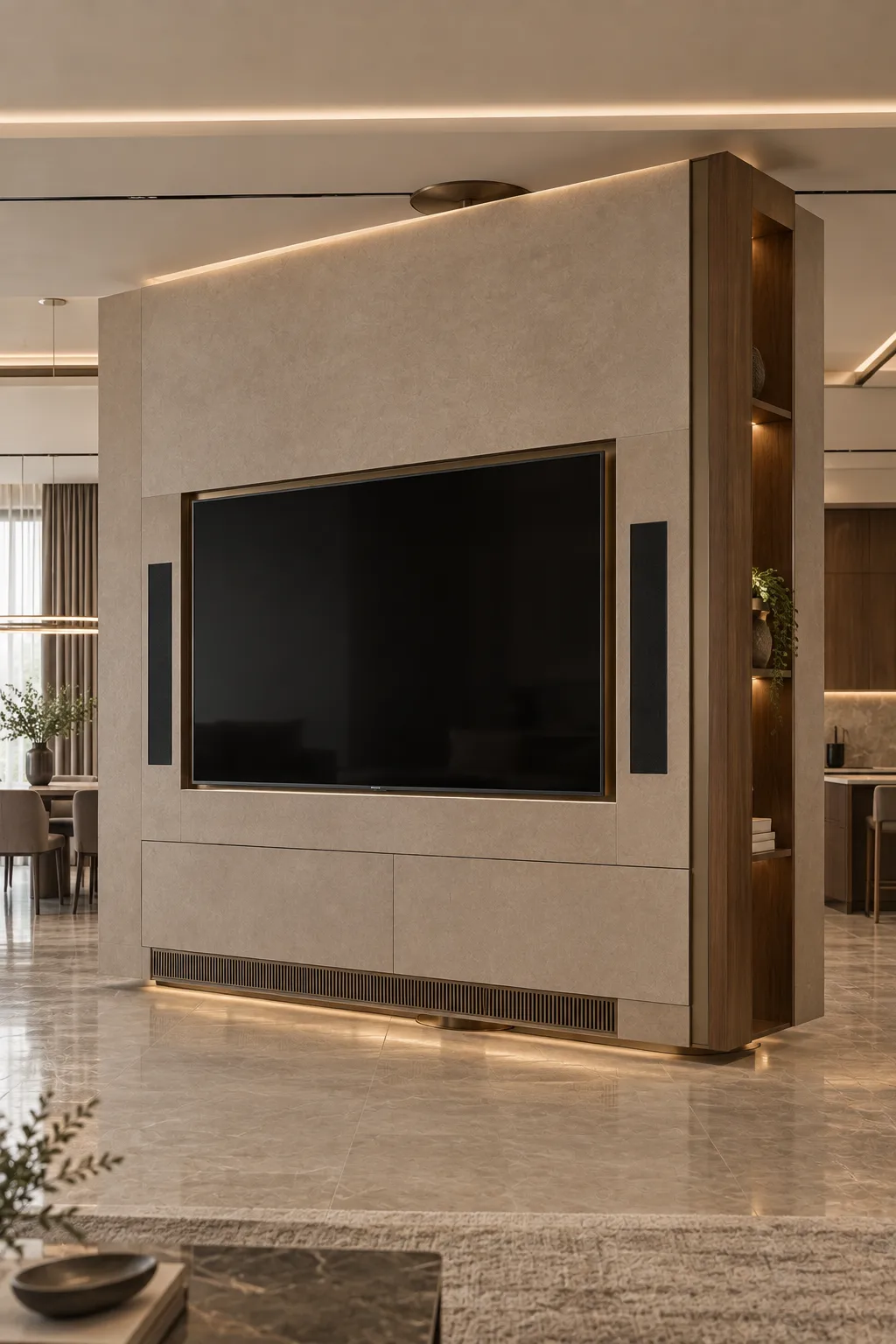
A freestanding media partition offers a clever alternative when a traditional TV wall would interrupt an open layout. This substantial structure creates a clear entertainment zone without closing off the surrounding space. Its slightly angled form also gives the installation a more architectural presence from different viewpoints.
The television sits neatly within the broad front surface, while integrated speakers maintain a clean and balanced arrangement. Concealed lower cabinetry provides room for media equipment and accessories, and discreet ventilation helps everything operate without adding visible clutter to the streamlined facade.
The side of the partition becomes useful space rather than a forgotten edge. Warm wood detailing and recessed display niches add depth, while a rotating base allows the screen to face different areas when required. This makes the concept particularly effective in larger open plan homes with multiple seating zones.
Pro Tip: Plan the pivot mechanism, electrical routing, and viewing angles before finalizing the partition size. A properly positioned rotation point lets the TV change direction smoothly without exposing cables or interfering with nearby furniture.
5. Vertical Light Canyons That Add Height and Architectural Drama
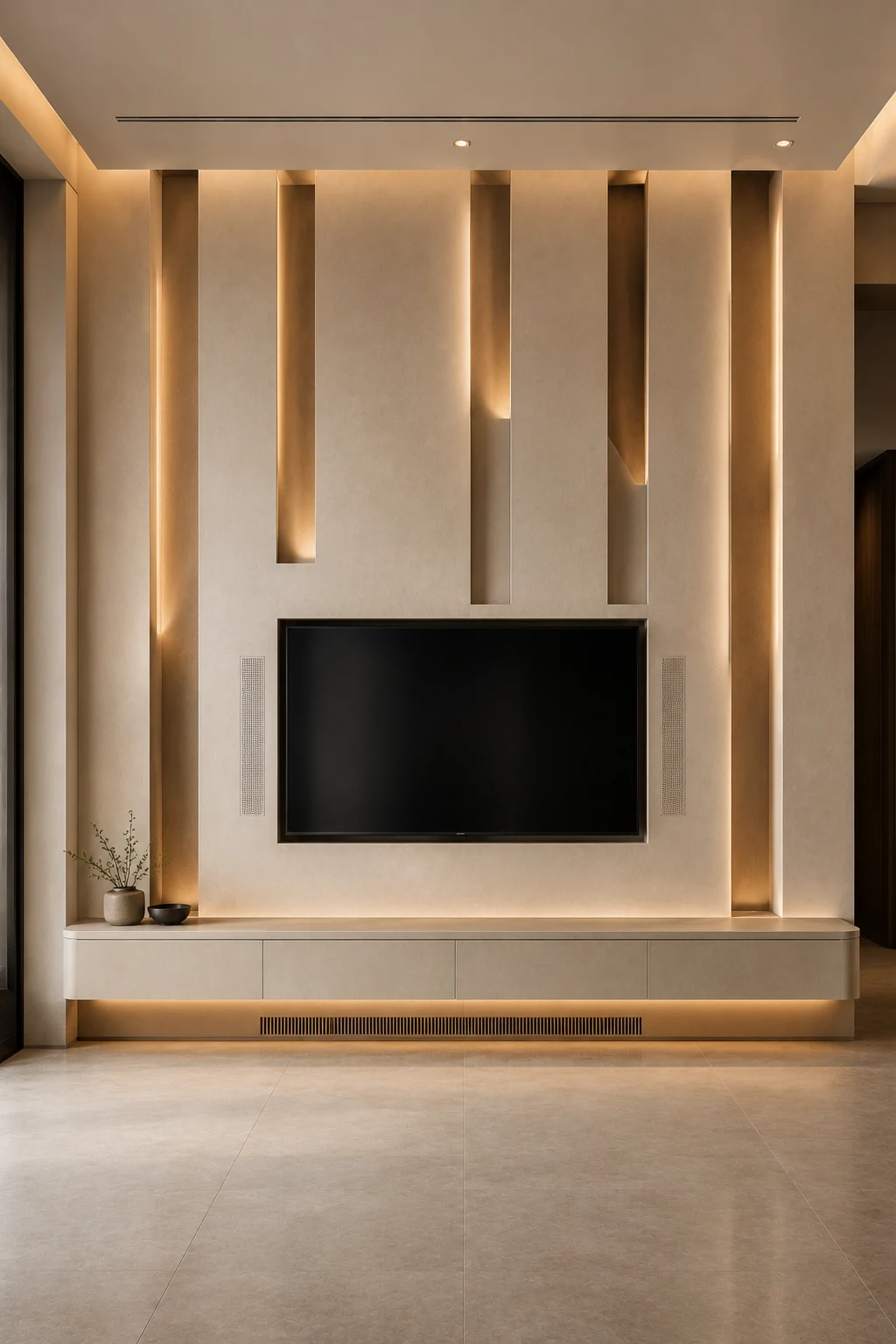
Deep vertical recesses give this TV wall a strong sense of height while keeping the overall composition remarkably clean. Rather than covering the surface with decorative panels, the design uses tall architectural cuts at different lengths and positions. Their varying depths create rhythm without distracting from the television.
Warm concealed lighting inside the recesses turns those narrow openings into softly illuminated architectural features. Because the light source stays hidden, the effect feels integrated rather than decorative. The warm glow also softens the structured geometry and brings more dimension to the neutral wall finish.
The streamlined console below provides generous closed storage while visually grounding the tall composition. Integrated speaker panels and discreet ventilation keep the entertainment setup functional without introducing bulky equipment. Together, these practical details allow the wall to maintain its precise, uncluttered appearance.
Pro Tip: Vary the lengths of the vertical recesses while keeping their widths relatively consistent. This creates a stronger architectural rhythm and makes a standard height wall appear noticeably taller.
6. Floating Monolith Wall That Makes the TV Feel Weightless
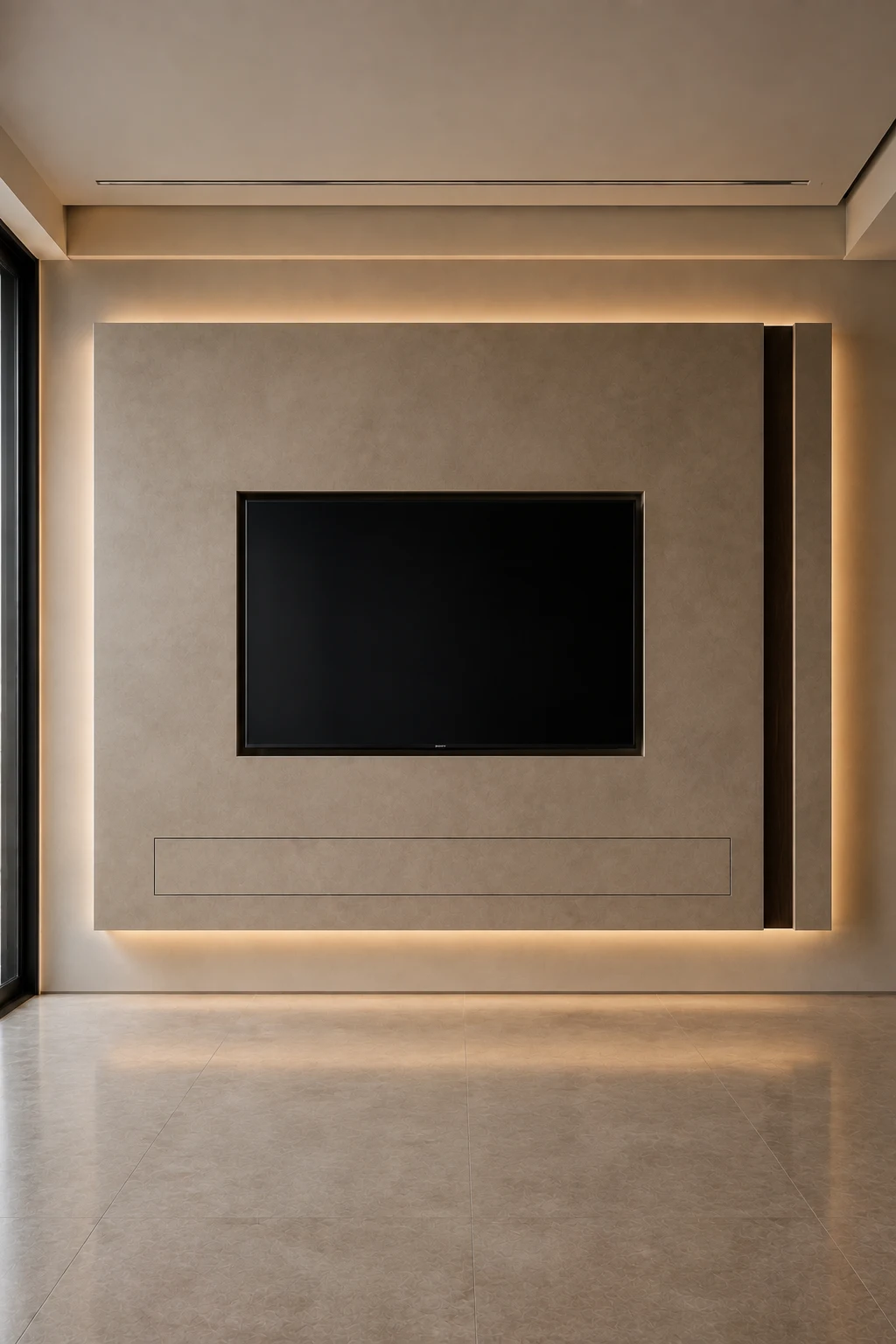
This floating monolith takes a much quieter approach to making a statement. One oversized architectural panel holds the television within a clean, uninterrupted surface, while a deep perimeter gap separates the structure from the wall behind it. That separation gives the heavy form an unexpected sense of weightlessness.
Warm backlighting makes the floating effect especially convincing after dark. Rather than becoming a decorative outline, the concealed glow washes softly onto the surrounding wall and emphasizes the depth between the two surfaces. The slim vertical accent along one side introduces just enough asymmetry to keep the composition interesting.
Function is almost completely hidden within the monolithic form. A long flush panel beneath the television can conceal media equipment and everyday accessories without requiring a separate console. This keeps the floor clear and allows the strong rectangular architecture to remain the focus.
Pro Tip: Leave a generous and consistent shadow gap around the monolith instead of mounting it too close to the backing wall. More depth creates stronger natural shadows and makes the floating illusion far more convincing.
Also Read: 13 Beautiful Open Layout Living Room Dining Room Ideas
7. Illuminated Display Niches That Give the TV Wall Gallery Appeal
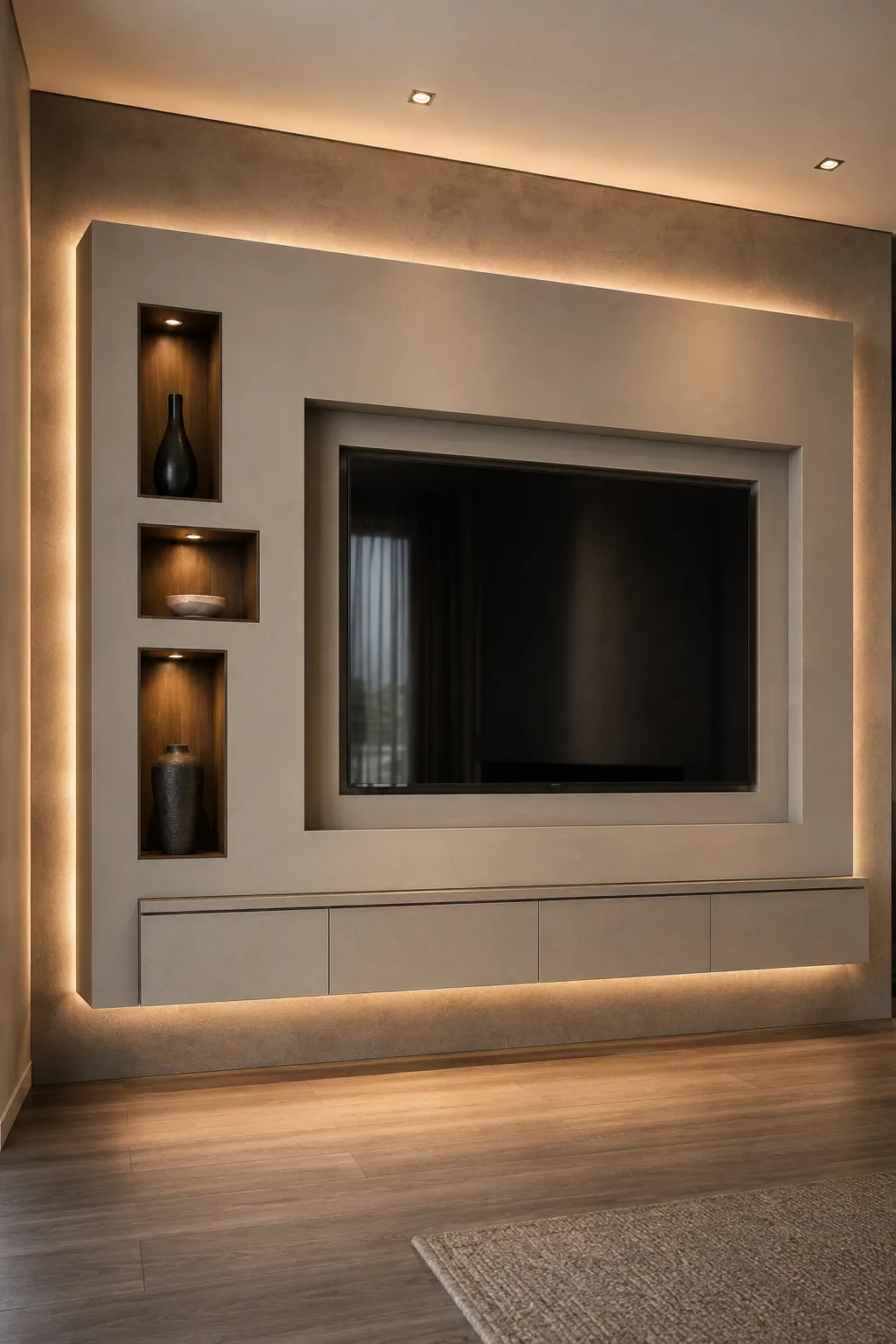
This design treats the TV wall more like a curated architectural display than a standard entertainment unit. A broad projecting frame surrounds the television, giving the screen a defined place within the composition. The recessed inner border adds another layer of depth without making the overall wall feel overly complex.
A trio of illuminated niches brings character to one side and breaks up the otherwise strong rectangular geometry. Warm wood interiors create a richer backdrop for a few carefully chosen objects, while individual spotlights give each niche the presence of a small gallery display. The asymmetry keeps the arrangement visually interesting.
Long concealed cabinetry beneath the television handles the practical side of the design. Its flush fronts maintain the streamlined appearance while providing useful storage for electronics and accessories. Soft perimeter lighting behind the main frame then separates the entire installation from the wall and gives it a subtle floating effect.
Pro Tip: Treat illuminated niches as display moments rather than extra storage. Leaving space around one carefully selected object in each opening will make the wall feel more curated and sophisticated.
8. Parametric Wave Fins That Turn the Wall Into a 3D Sculpture
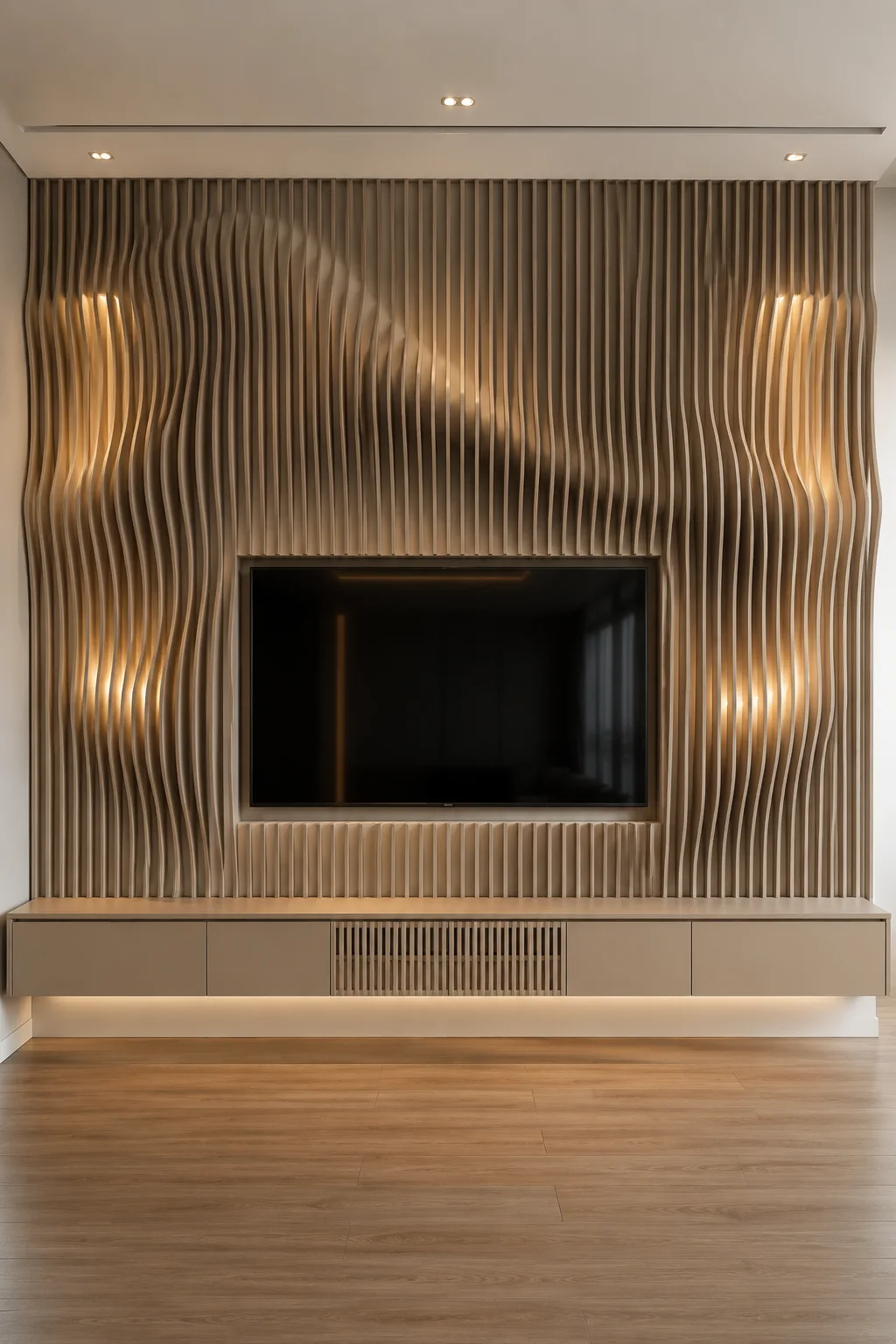
This parametric wall brings movement through a series of vertical fins that shift in depth as they travel across the surface. Instead of staying perfectly straight, the fins bend into broad waves around the television, giving the wall a sculptural quality that changes depending on where you view it from.
Lighting tucked behind selected sections makes the varying depths even more noticeable. Warm highlights appear between the deeper curves while other areas remain softly shadowed, creating an interesting play of light across the wall. The consistent finish keeps all that movement controlled and sophisticated.
A streamlined floating console gives the composition a clean horizontal base and provides concealed storage for media equipment. The ventilated center section also offers a practical place for electronics without disturbing the design. This balance of precision, movement, and function makes the wall especially suited to contemporary statement interiors.
Pro Tip: Gradually change the depth of the fins instead of using identical wavy panels. A smooth progression creates a more convincing parametric effect and gives the wall a custom architectural character.
9. Sweeping Architectural Arcs That Soften a Structured TV Wall
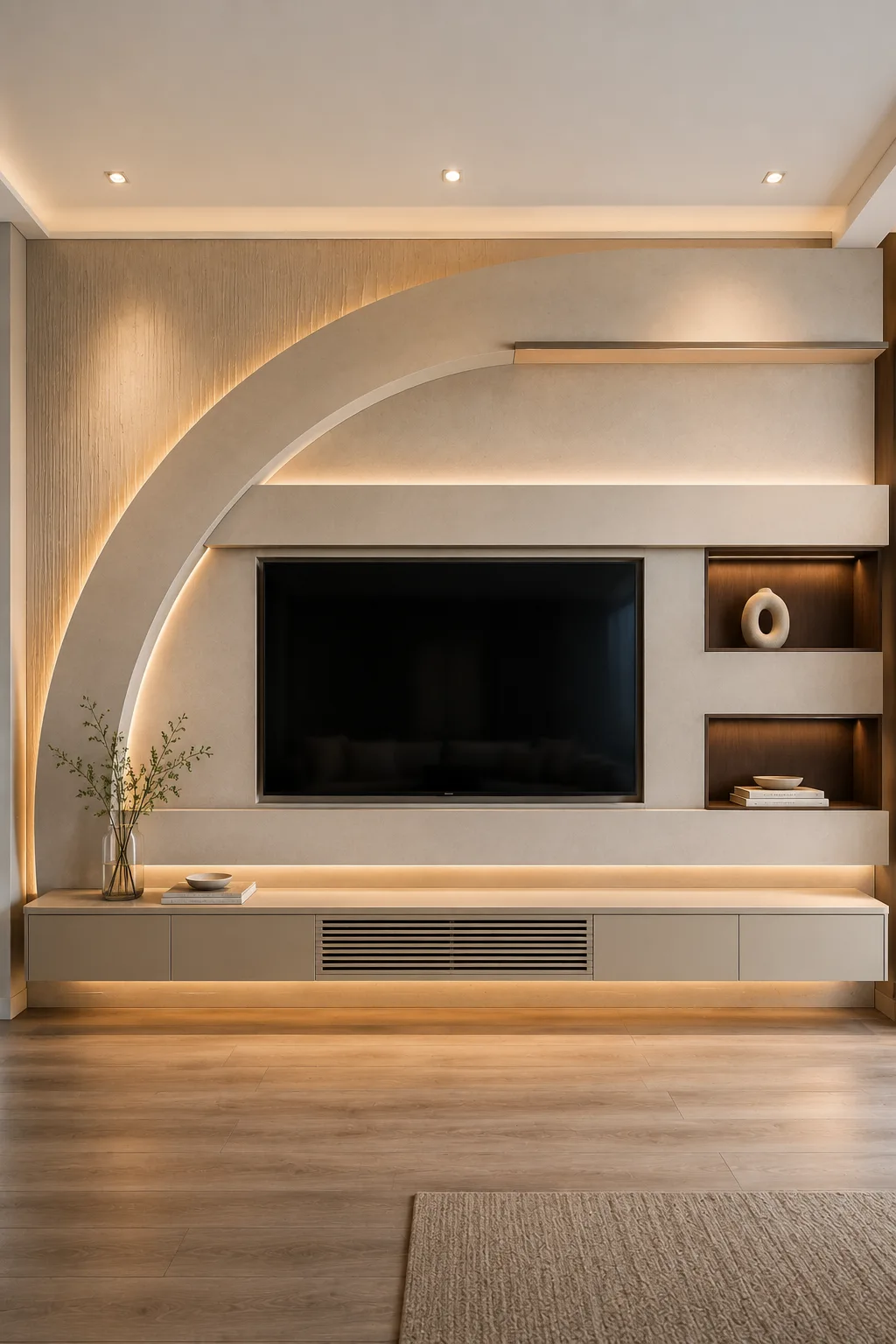
A dramatic oversized arc gives this TV wall a softer architectural identity without losing its contemporary edge. The curved form sweeps upward across the feature wall and meets a series of crisp horizontal planes, creating an appealing contrast between fluid movement and structured geometry.
Layered sections around the television add depth while keeping the screen comfortably integrated into the composition. Warm concealed lighting follows the inner curve and selected horizontal edges, making the different planes easier to read. Recessed display niches on one side introduce darker wood tones and provide a subtle break from the neutral finish.
The long floating cabinet below keeps the design practical with generous concealed storage and a ventilated center section for media equipment. Its simple horizontal profile also grounds the much larger curve above, helping the wall feel balanced rather than overly decorative.
Pro Tip: Let one large arc dominate the design instead of repeating several smaller curves. Pairing a single sweeping form with straight horizontal elements creates a stronger architectural contrast and keeps the finished wall looking refined.
10. Layered Blockwork That Builds Storage Into the Architecture
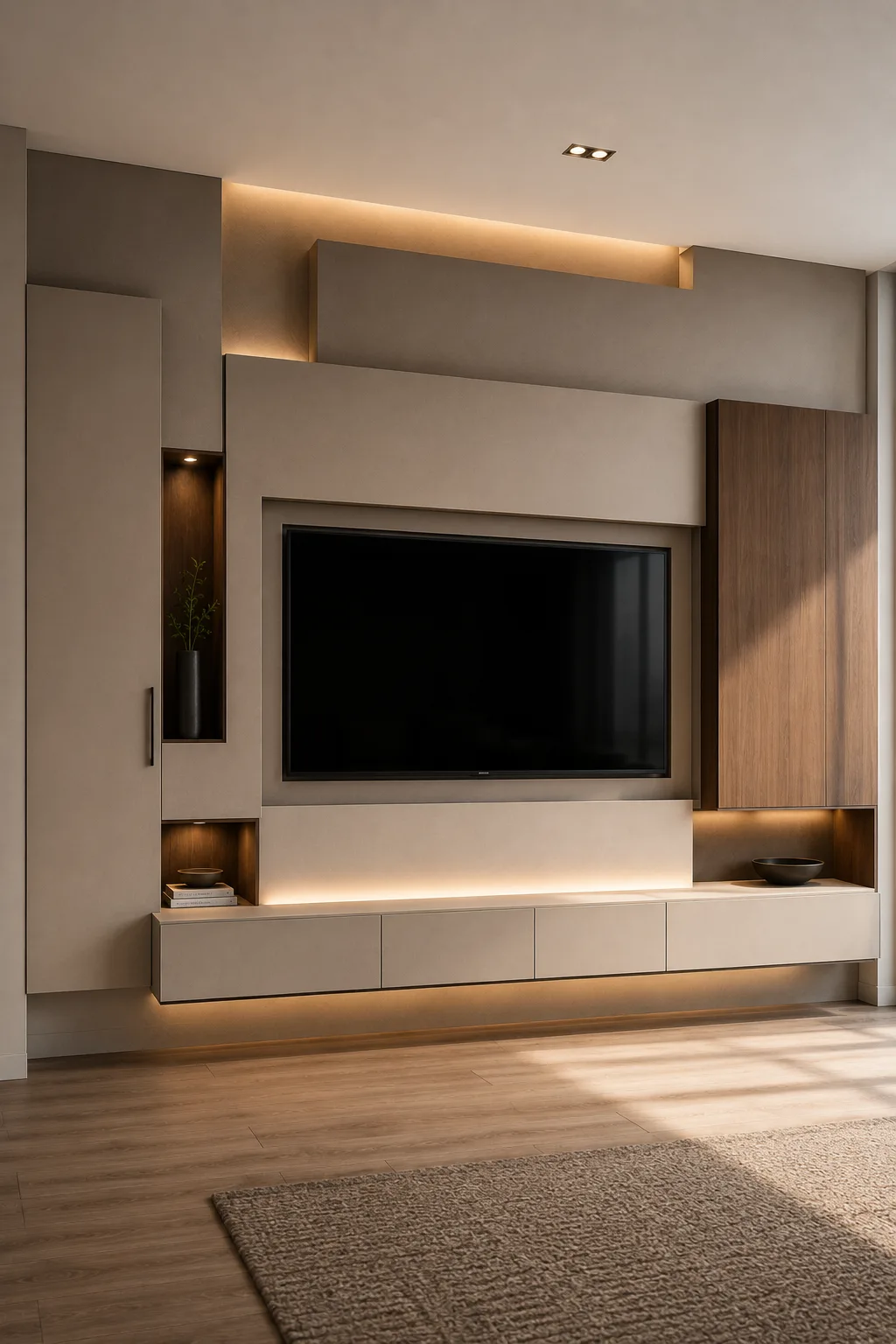
This TV wall uses overlapping rectangular volumes to create depth without relying on busy surface decoration. Large blocks project at different distances from the base wall, forming an asymmetrical composition around the television. The result feels structured and architectural while still fitting naturally into a contemporary living space.
Warm wood introduces contrast on one side, while narrow recessed niches break up the larger solid surfaces. Concealed lighting behind selected blocks makes their different depths easier to see and creates a soft glow after dark. Keeping most of the palette neutral prevents the layered arrangement from becoming visually heavy.
Storage is built directly into the composition, with tall cabinets, low floating drawers, and smaller display areas all serving different purposes. Electronics and everyday items can stay hidden while a few open niches provide room for carefully chosen decor. This makes the wall work as both a media center and a substantial storage feature.
Pro Tip: Mix closed cabinets with only a few open niches and vary their depths slightly. This gives the wall architectural dimension while preventing it from looking like a conventional shelving unit.
11. Central Wood Spine That Gives the TV Wall a Stronger Focus
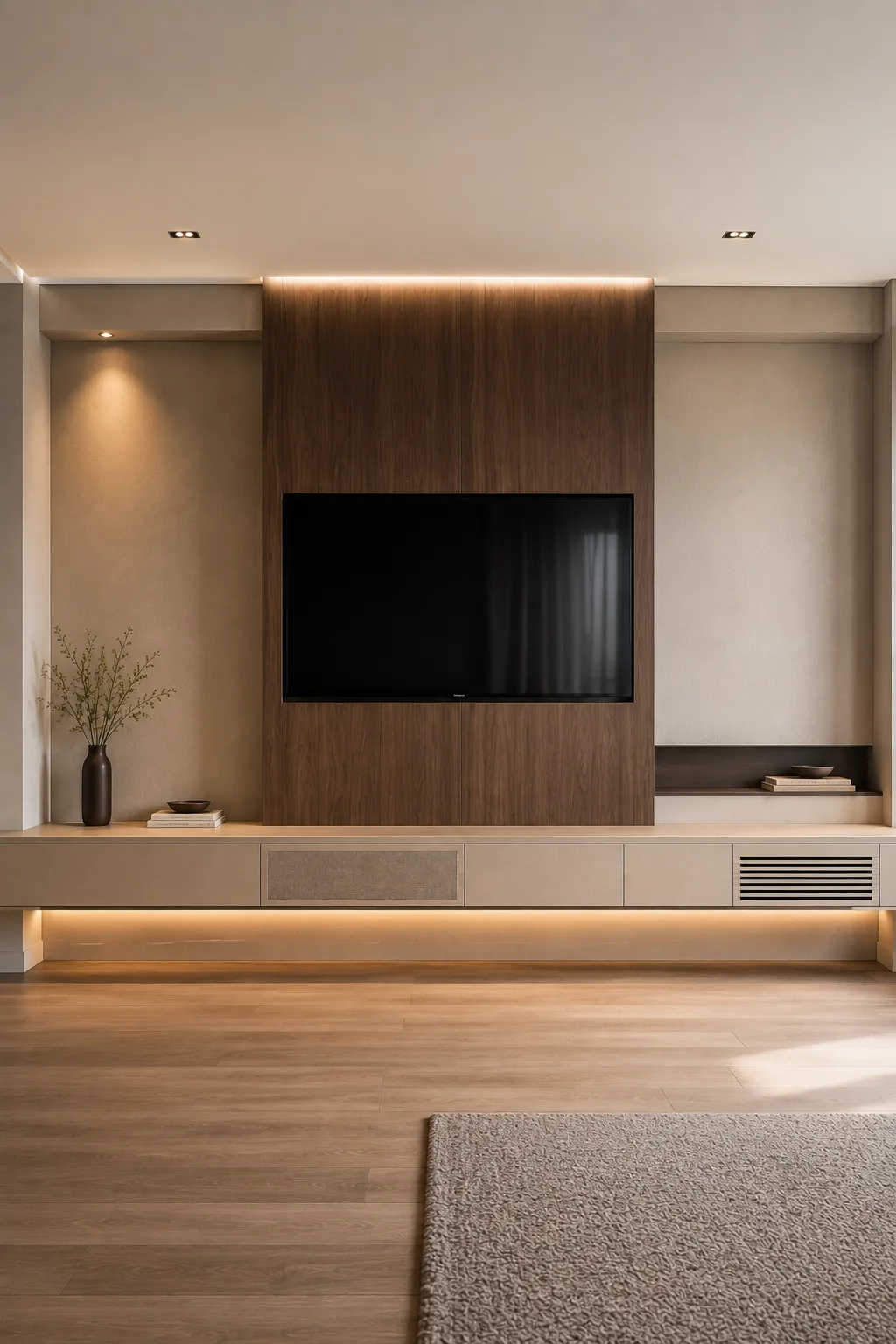
A full height wood spine creates a clear focal point at the center of this TV wall. By extending from the console toward the ceiling, the darker vertical panel visually anchors the television and adds warmth against the lighter surrounding surfaces. The contrast feels intentional without making the entire wall heavily wood clad.
Wide recessed sections on either side keep the composition open and balanced. Their quieter finishes give the central panel more presence, while subtle overhead lighting adds depth around the architectural edges. A low display ledge on one side also creates room for a few accessories without turning the wall into conventional shelving.
The long floating console ties every section together and provides plenty of concealed storage. Integrated speaker fabric and ventilation panels allow media equipment to remain functional while staying visually discreet. Warm underlighting further separates the cabinet from the floor and reinforces its floating appearance.
Pro Tip: Keep the central wood panel wider than the TV but noticeably narrower than the overall wall. This creates a strong vertical anchor while leaving enough lighter surface around it for the composition to feel spacious and balanced.
12. Offset Geometric Panels That Create a Tailored 3D Effect
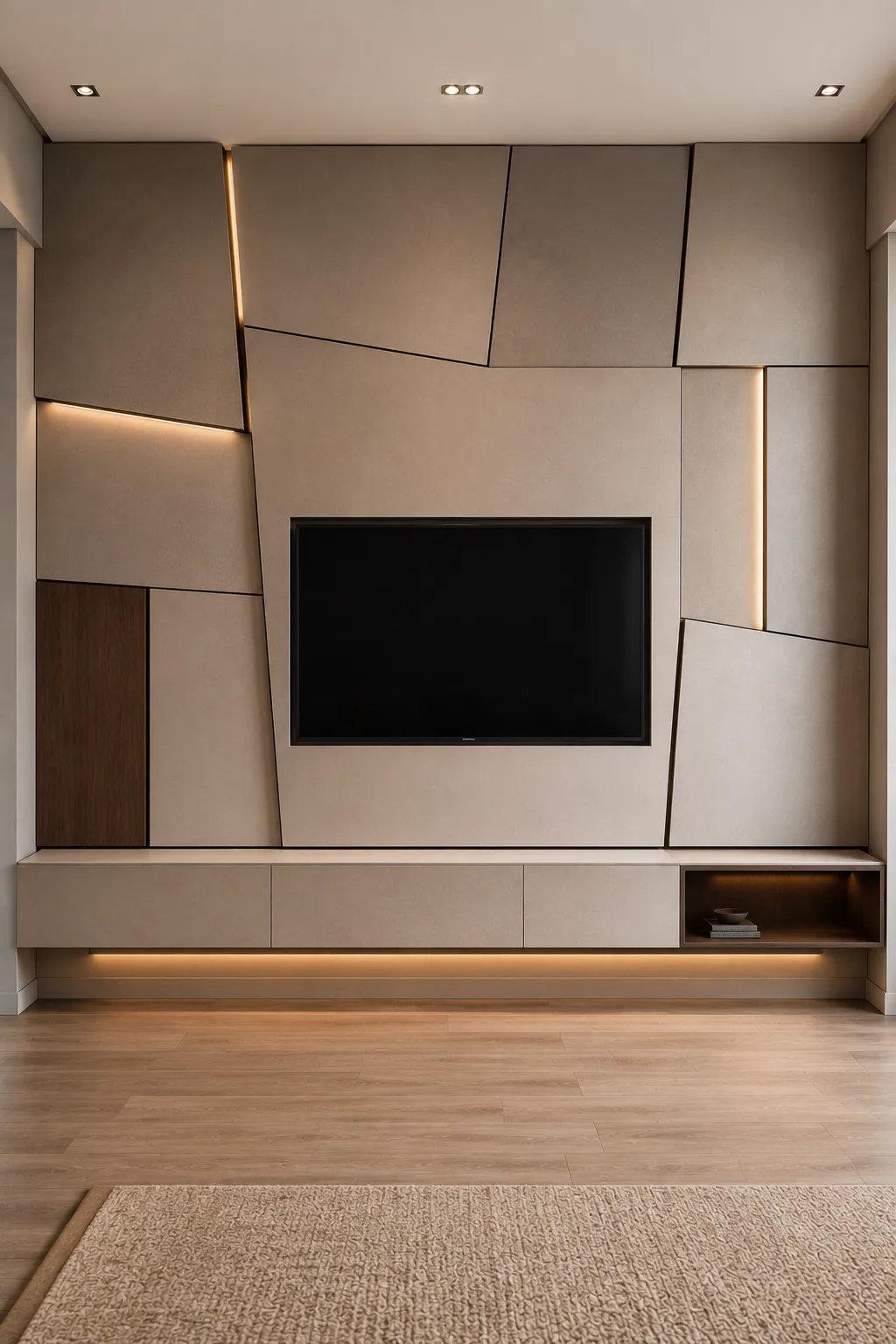
Oversized geometric panels give this TV wall a sharp, tailored character without making the surface overly complicated. Each section follows a slightly different angle, breaking away from a predictable grid while still forming a controlled composition around the television. The larger central panel keeps the screen visually grounded.
Narrow shadow gaps become an important part of the design rather than simply separating the panels. A few of these joints are softly illuminated, creating slim lines of warm light that reveal changes in depth. The small wood section adds another layer of contrast without overwhelming the restrained neutral palette.
A streamlined floating cabinet stretches across the bottom and provides concealed storage without competing with the geometry above. The open niche at one end introduces a practical display area, while under cabinet lighting gives the whole lower section a lighter appearance and reinforces the wall’s dimensional quality.
Pro Tip: Keep geometric panels large and use lighting in only a few selected joints. Too many small shapes or illuminated lines can make the wall feel busy, while oversized panels create a cleaner custom built effect.
13. Concealed Panel Doors That Turn the TV Wall Into Hidden Storage
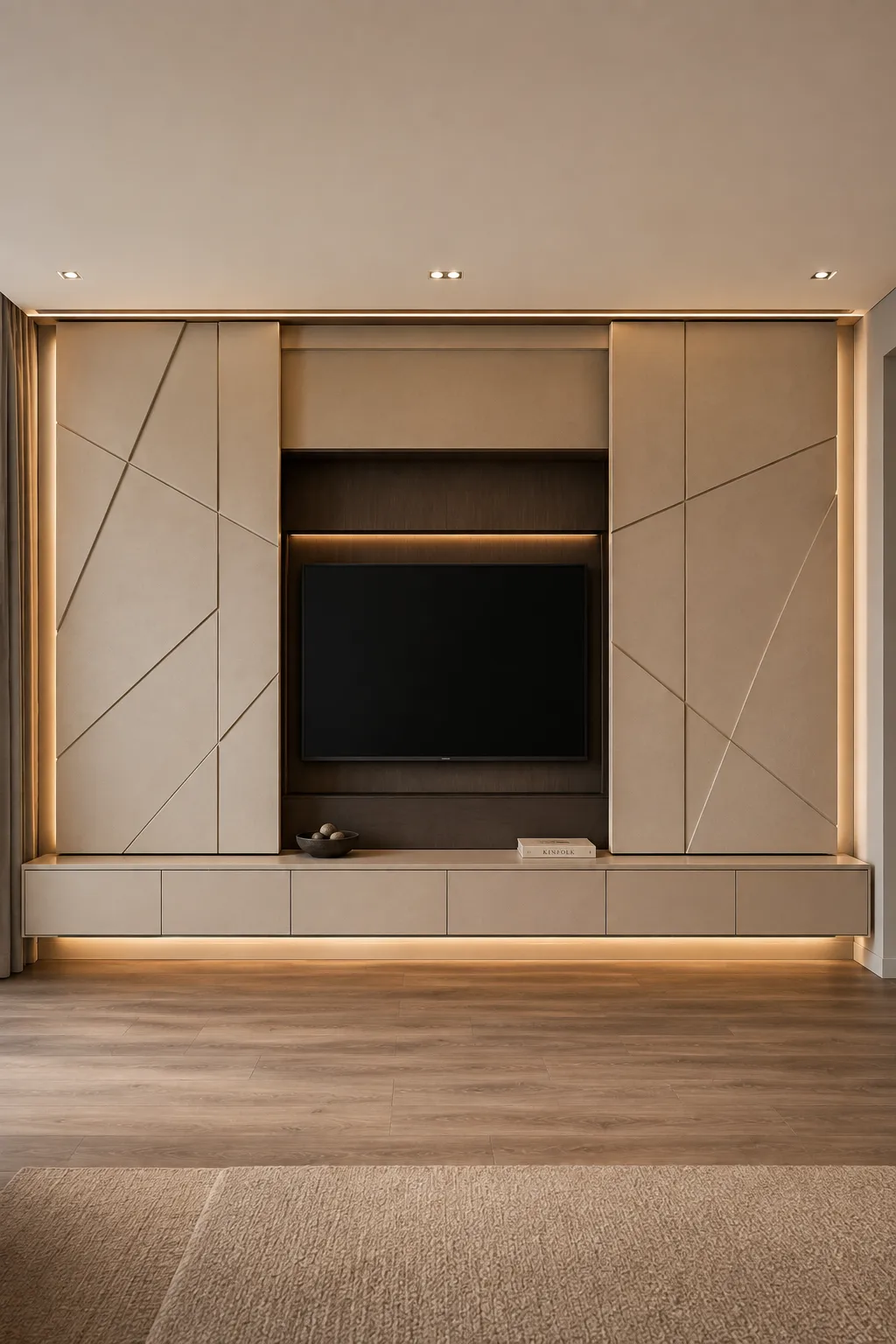
This design makes storage almost disappear by treating the tall side cabinets as part of the wall architecture. Large flush panels frame the recessed television zone, while subtle diagonal grooves add enough detail to keep the broad surfaces from feeling plain. The result is structured, balanced, and impressively streamlined.
The darker central recess gives the television a clear focal point and creates contrast against the lighter cabinetry. Warm lighting tucked above the screen and around the outer frame adds depth without drawing attention away from the clean geometry. When the TV is off, the whole arrangement feels more like custom millwork than an entertainment center.
Behind those tall panels, there is plenty of room for practical storage that would normally require separate furniture. A long run of lower drawers adds another concealed storage layer while visually connecting both sides of the wall. Keeping almost everything behind closed fronts makes this approach especially useful when a polished, clutter free appearance is the priority.
Pro Tip: Use touch latch or push to open hardware on the tall cabinet doors so handles do not interrupt the geometric panel pattern. The cleaner the door lines remain, the more convincingly the storage blends into the architecture.
14. Vertical Architectural Towers That Build a Dramatic Skyline
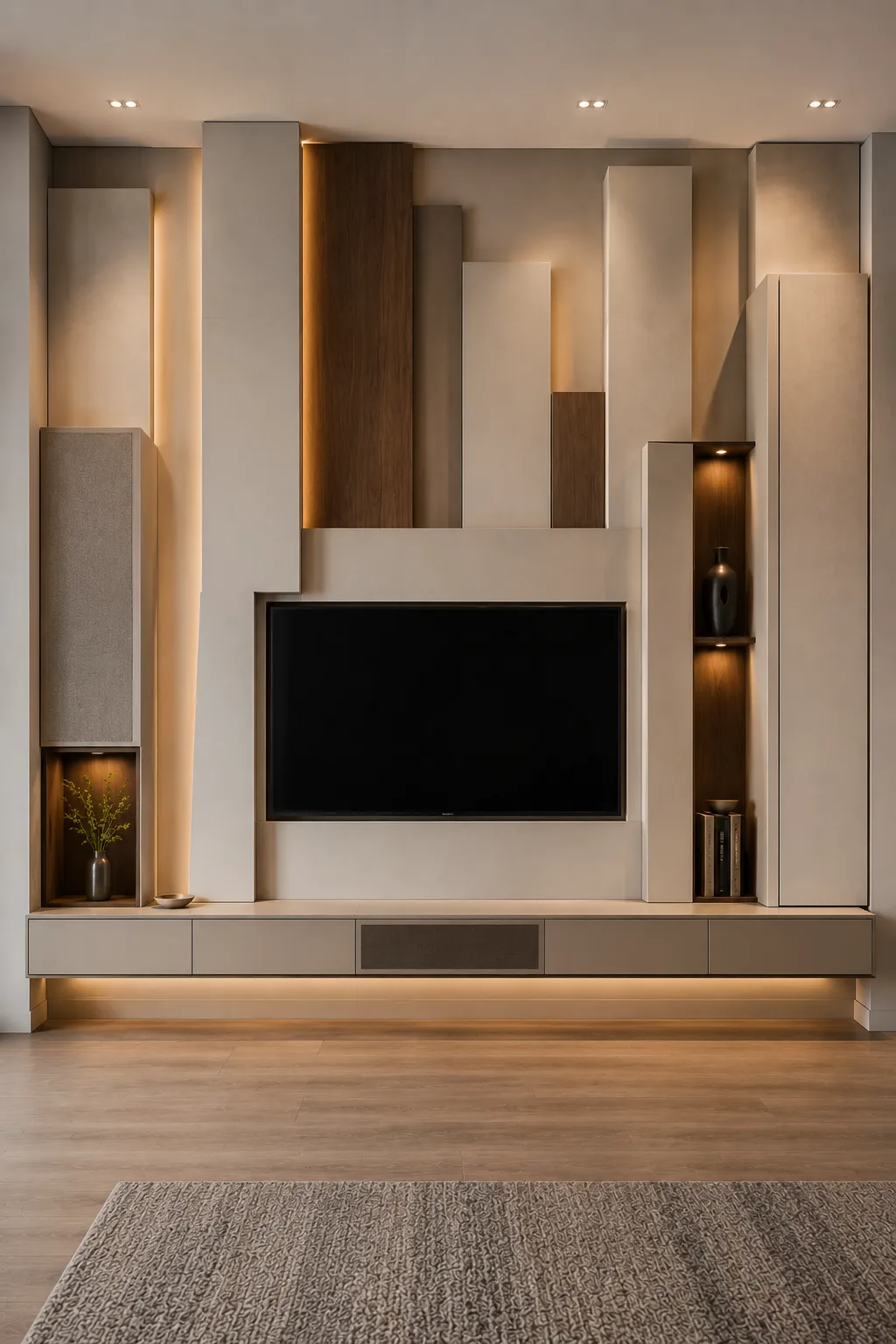
Tall staggered volumes give this TV wall the presence of an abstract architectural skyline. Instead of arranging every section at the same height, narrow and wide forms rise independently across the wall, creating a layered silhouette above and around the television. The variation makes the design feel custom without relying on ornamental details.
Warm wood panels and softly illuminated gaps help separate the individual towers and reveal their different depths. A few recessed niches are worked between the larger forms, creating focused places for decor while maintaining the strong vertical rhythm. The neutral palette keeps the composition sophisticated despite its dramatic scale.
The lower floating cabinet provides a continuous horizontal line that balances all the vertical movement above. Closed drawers conceal everyday media essentials, while the central ventilated section accommodates electronics without disrupting the facade. This combination of storage, display, and dimensional architecture makes the wall both expressive and practical.
Pro Tip: Vary both the height and depth of the vertical towers, but repeat a limited selection of finishes across them. This keeps the skyline effect dynamic while ensuring the overall TV wall still feels cohesive and intentionally designed.
Final Thoughts
A statement TV wall works best when the screen feels integrated into the architecture rather than added as an afterthought. Whether that comes through sculpted ribbons, illuminated recesses, geometric planes, hidden storage, or dramatic vertical forms, the strongest designs combine visual impact with practical details that make sense for everyday living.
You also do not need to rely on one fashionable material to make the wall stand out. Thoughtful proportions, depth, lighting, concealed storage, and a restrained mix of finishes can create far more character. Choose the idea that suits the scale and layout of your room, then refine it around your storage, viewing, lighting, and media needs for a result that feels truly made for the space.