

Table of Contents
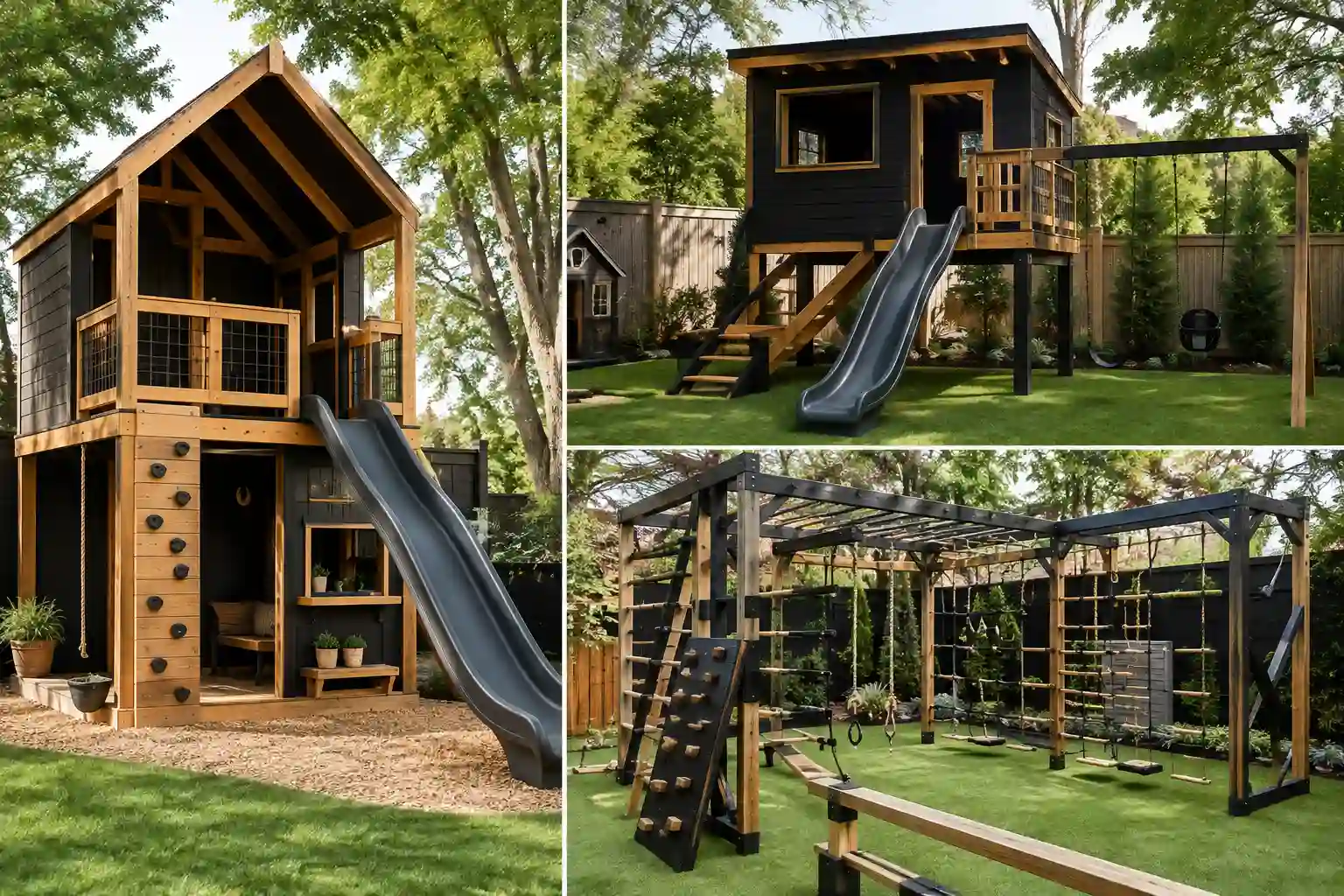
A backyard playground can be more than a place for kids to burn off energy. With the right design, it can become a stylish part of your outdoor space while giving children a fun place to climb, slide, swing, and play.
Today’s DIY playgrounds can look surprisingly modern. Clean lines, warm wood, simple structures, climbing walls, slides, and clever play zones can create a setup that feels intentional rather than bulky or old fashioned.
Whether you have a spacious lawn or a smaller backyard, these ideas offer practical ways to create a play area that feels exciting for kids and fits beautifully into a modern home.
Modern DIY Kids Playground Ideas That Make Outdoor Play More Exciting
These ideas range from compact climbing setups and elevated playhouses to complete backyard adventure zones. Each design combines practical play features with a clean, contemporary look, making it easier to choose a playground that suits your space, budget, and the way your kids love to play.
1. Create an Elevated Playhouse With a Slide and Climbing Wall
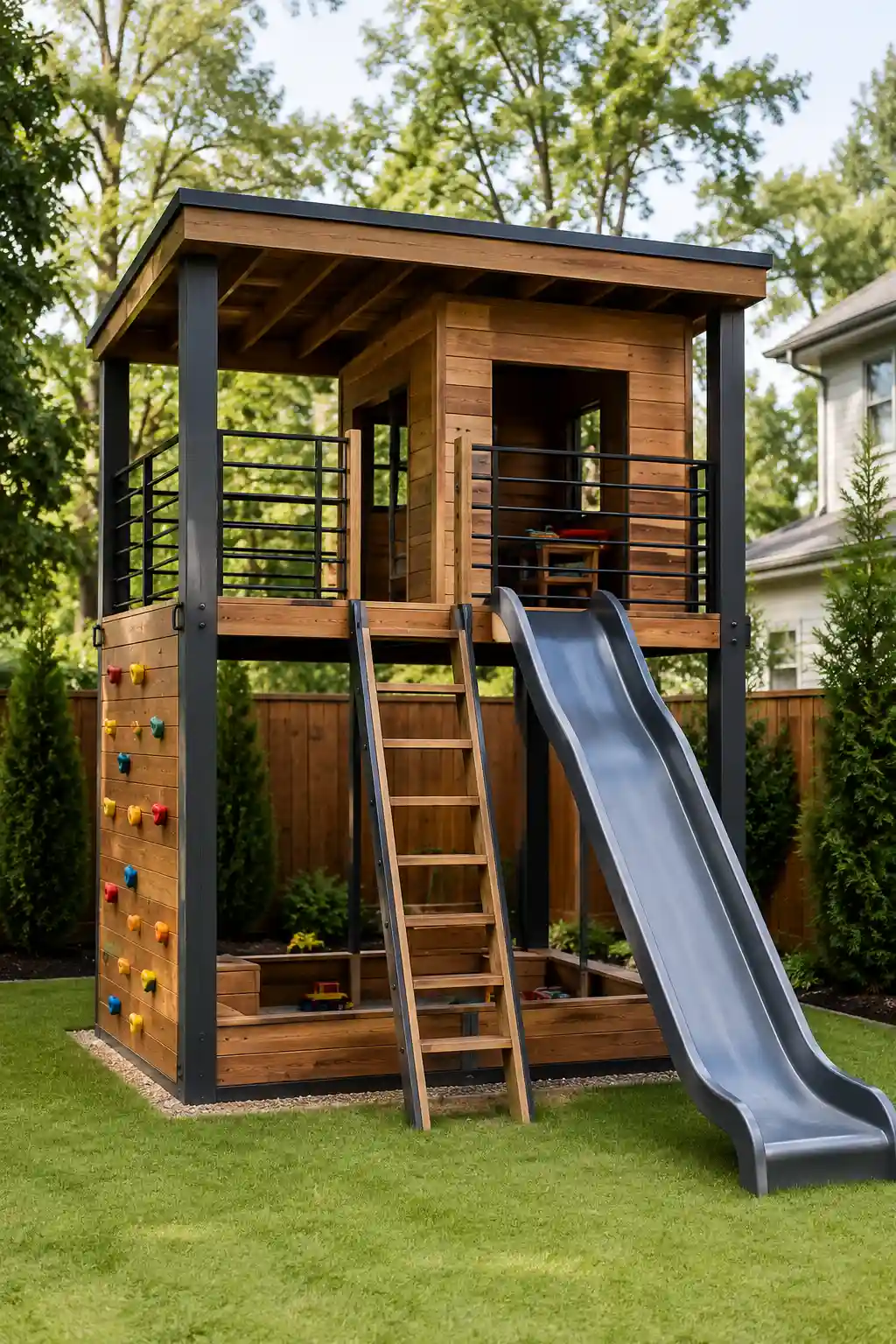
An elevated playhouse can turn an ordinary backyard into a fun little adventure zone without taking up the entire lawn. This design combines a raised wooden cabin with a sturdy climbing wall, ladder, and wide slide, giving kids several ways to move between the ground and upper level. The enclosed play area also creates a private spot for imaginative games.
For a modern look, use warm horizontal wood boards with strong charcoal or black framing. Simple metal railings, a clean flat roof, and colorful climbing holds add personality without making the structure look old fashioned. The open space underneath can be used as a sandbox, toy area, or shaded hideaway where kids can continue playing.
The best part is how many activities fit into one compact structure. Kids can climb up the wall, use the ladder, explore the playhouse, and race down the slide. If you have enough room, you can also add a small bench, storage box, or play counter underneath to make the setup even more useful.
Pro Tip: Keep the climbing wall and ladder securely anchored, and place a soft safety surface around the slide exit and climbing area to create a safer landing zone.
2. Add a Climbing Wall Beside a Raised Playhouse for Active Play
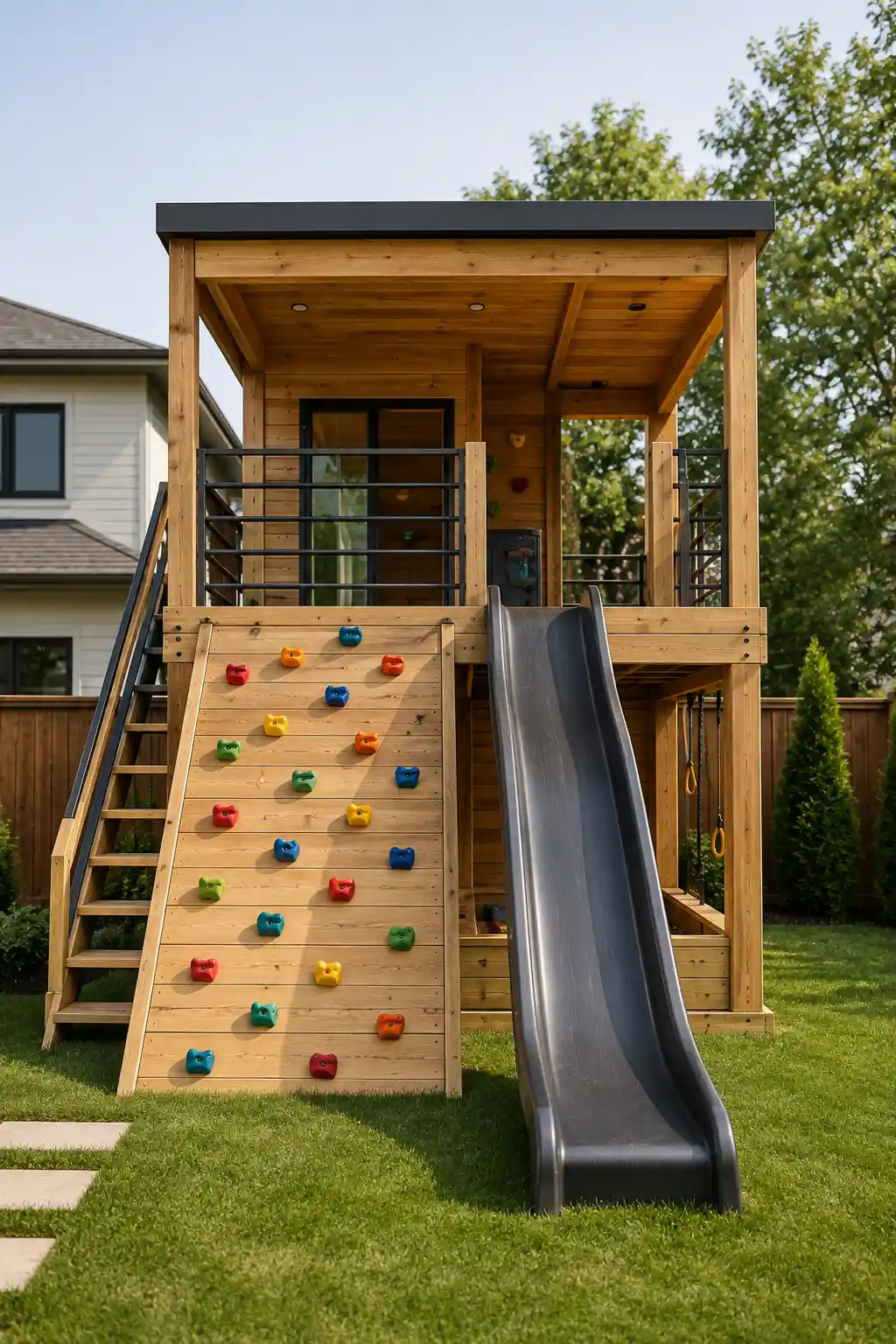
A climbing wall can make a raised playhouse much more exciting while giving kids a fun challenge before they reach the upper level. This design uses a wide angled wall with colorful climbing holds positioned at different heights, creating an active route that feels more adventurous than a standard ladder. Pairing it with a slide gives kids two completely different ways to move through the structure.
For a polished backyard look, build the climbing wall from sturdy wood and frame it with the same material used throughout the playhouse. Keep the surrounding structure simple with clean railings, a flat roof, and a modern slide in a contrasting color. The open space beneath the platform can then become a shaded play area for toys, pretend games, or a small sandbox.
You can also adjust the difficulty of the climbing wall as your children grow. Place some holds closer together for beginners and add higher or more widely spaced holds for older kids. This makes the playground more versatile and gives children a reason to keep using the same structure as their climbing skills improve.
Pro Tip: Secure every climbing hold firmly to the wall and leave enough open space around the climbing route so children have a clear, cushioned landing area if they lose their grip.
3. Turn a Raised Playhouse Into a Complete Backyard Retreat
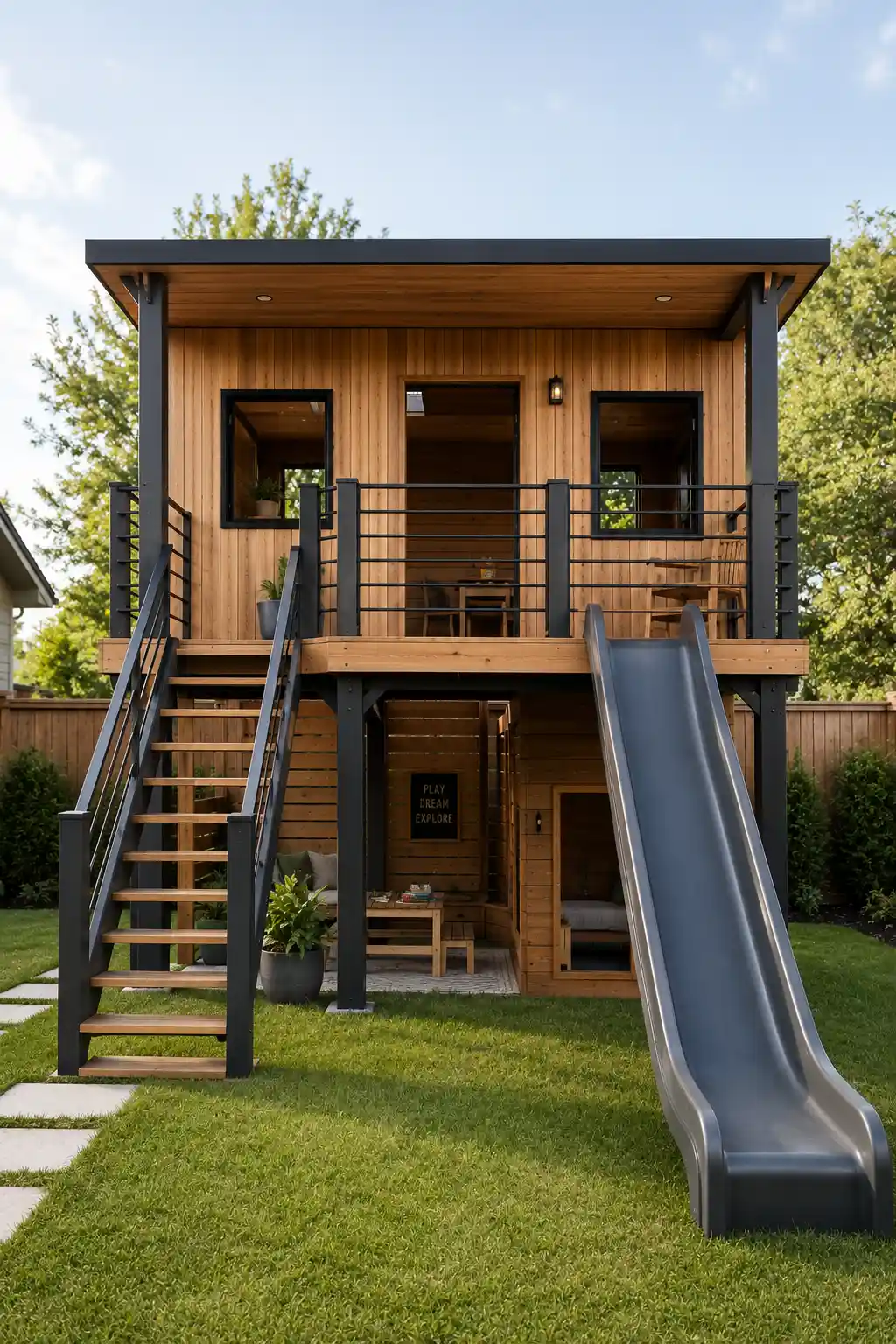
A raised playhouse can do much more than give kids a place to climb and slide. This design creates a full little retreat with an elevated cabin, wide front deck, sturdy staircase, and long slide. The open area underneath adds another layer of play, giving children a shaded space for reading, pretend games, or relaxing with their favorite toys.
The clean wood siding and dark structural framing give this playground a modern architectural feel. Large openings bring plenty of light into the upper playhouse, while the covered deck provides a comfortable spot where kids can look out over the backyard. You can keep the interior simple with cushions, books, toys, shelves, or a small pretend play setup.
Using the space underneath is another smart way to make the structure work harder. Add a small doorway, bench, storage cabinet, or cozy hideaway to turn the lower level into a separate play zone. With the slide on one side and stairs on the other, children can move naturally through the playground without making the design feel crowded.
Pro Tip: Keep the upper deck railing secure and appropriately high, and make sure the staircase has sturdy handrails and evenly spaced steps for safer everyday use.
4. Combine Climbing Walls, Rope Bridges, and a Modern Tower
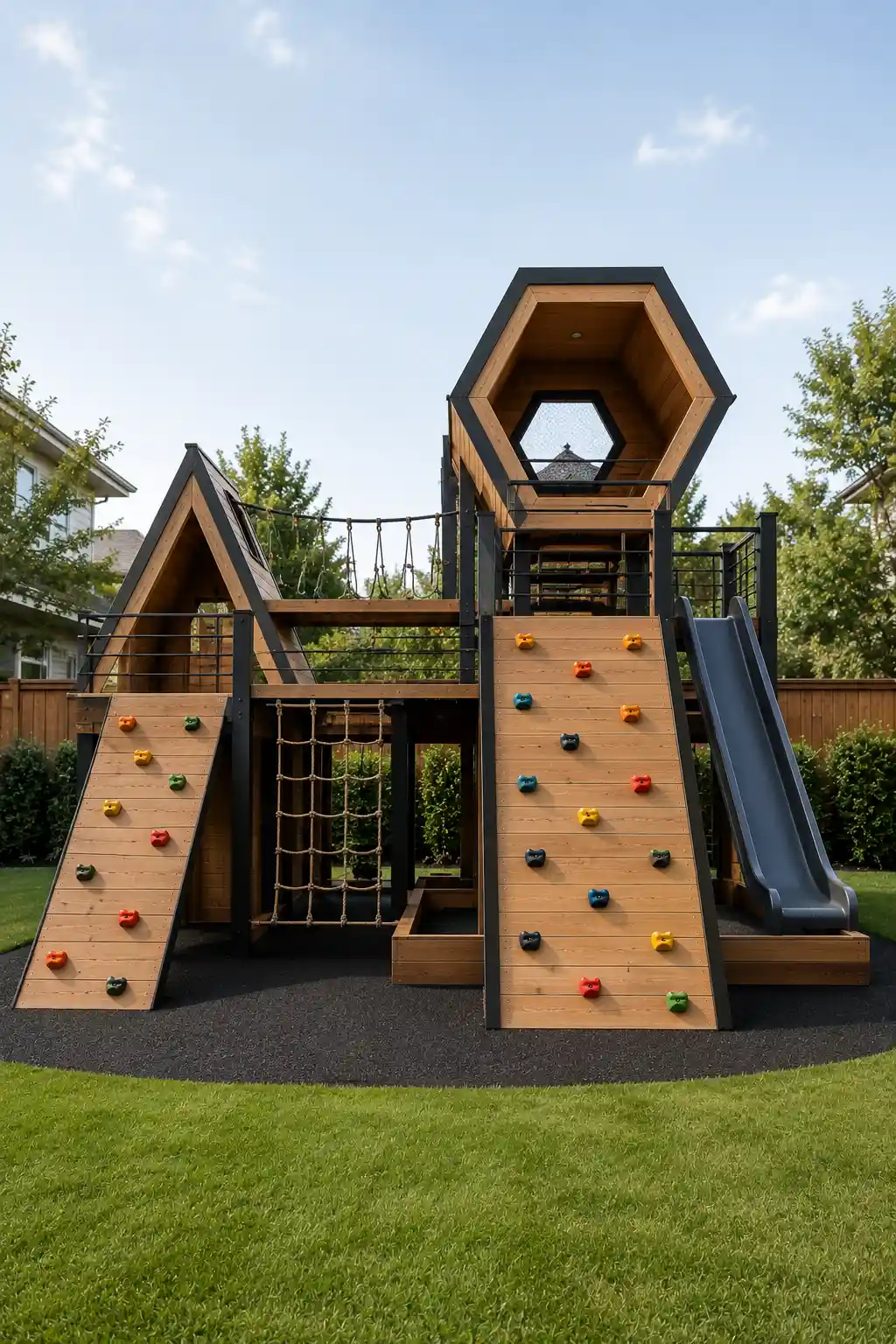
For a bigger backyard, combine several climbing features into one connected adventure playground. This design uses two angled climbing walls, a central rope climbing section, a raised walkway, and a striking geometric play tower. Instead of moving from one isolated activity to another, kids can create their own route through the entire structure.
The different heights and textures make this setup especially engaging. The climbing walls offer a physical challenge, while the rope bridge adds movement and balance. A modern slide on the side gives children a quick way back to the ground, creating a natural loop that keeps the playground fun even after repeated use.
The geometric tower also gives the playground a strong architectural appearance. Use warm wood for the climbing surfaces and platforms, then add dark structural framing to create a crisp contemporary finish. A rubberized safety surface beneath the active zones can make the whole area feel more intentional and easier to maintain.
Pro Tip: Keep each climbing route separated by enough space and use impact-absorbing surfacing beneath climbing walls, rope elements, and other areas where falls are possible.
5. Add a Curved Tube Slide for a More Exciting Exit
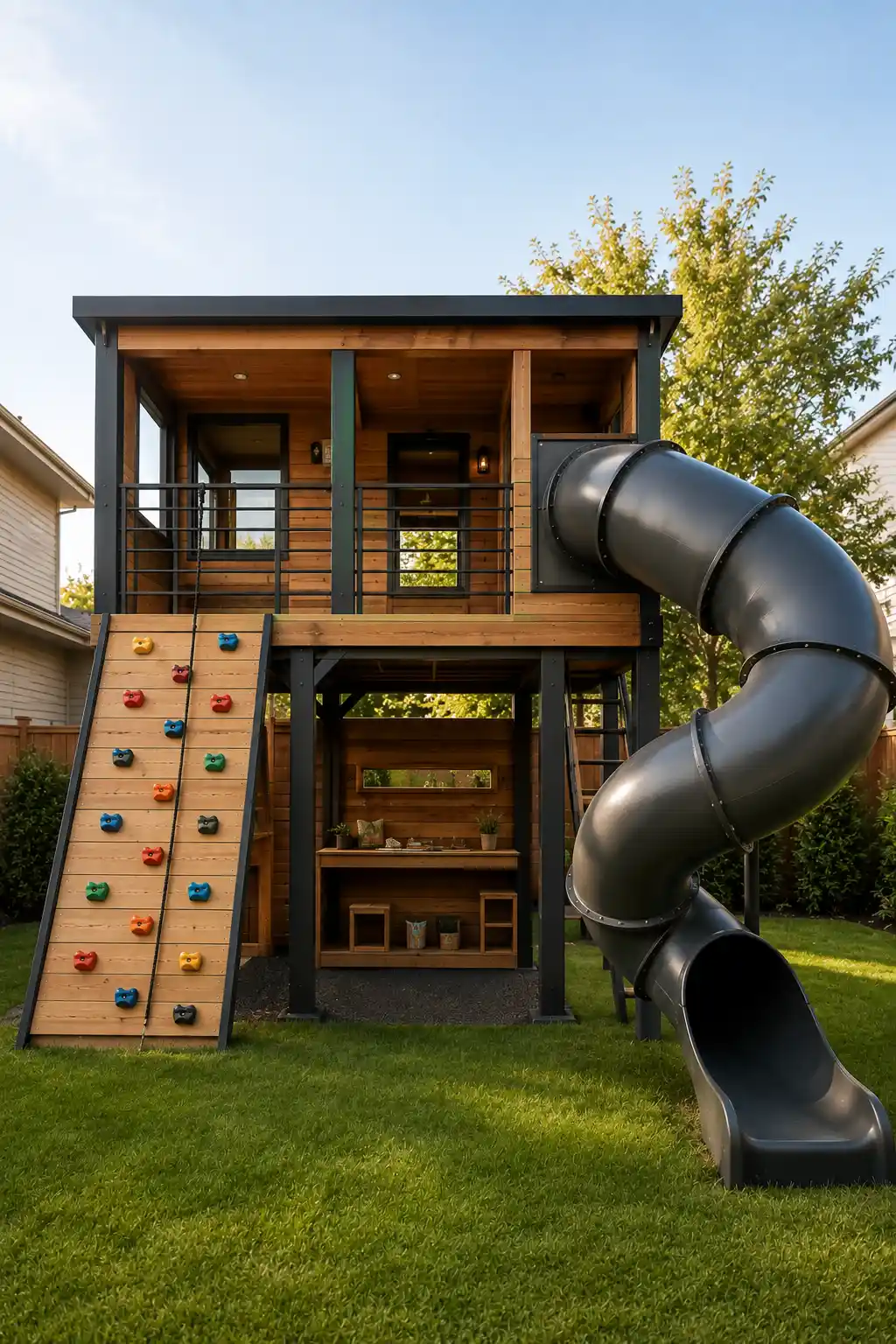
A curved tube slide can instantly make a backyard playground feel like a small adventure park. Instead of a basic straight slide, this design uses a large enclosed slide that curves around the side of the elevated playhouse. The climbing wall provides the route up, while the tube slide creates a more exciting way back to the lawn.
The enclosed design also gives the playground a distinctive modern appearance. Pair a dark tube slide with warm wood siding and charcoal framing for a polished contemporary look. Inside the raised playhouse, you can add a small play counter, bench, or open window so the upper level feels like a real little retreat rather than simply a platform.
This idea works especially well when you want one standout feature to become the focal point of the backyard. The curved slide adds height, movement, and visual interest without requiring several separate pieces of equipment. Just make sure the surrounding area has enough clearance for the slide’s curve and landing zone.
Pro Tip: Check the manufacturer’s installation and clearance requirements for an enclosed slide, and use an appropriate impact-absorbing surface around the exit rather than relying on bare grass alone.
6. Turn the Space Beneath a Playhouse Into a Cozy Hideaway
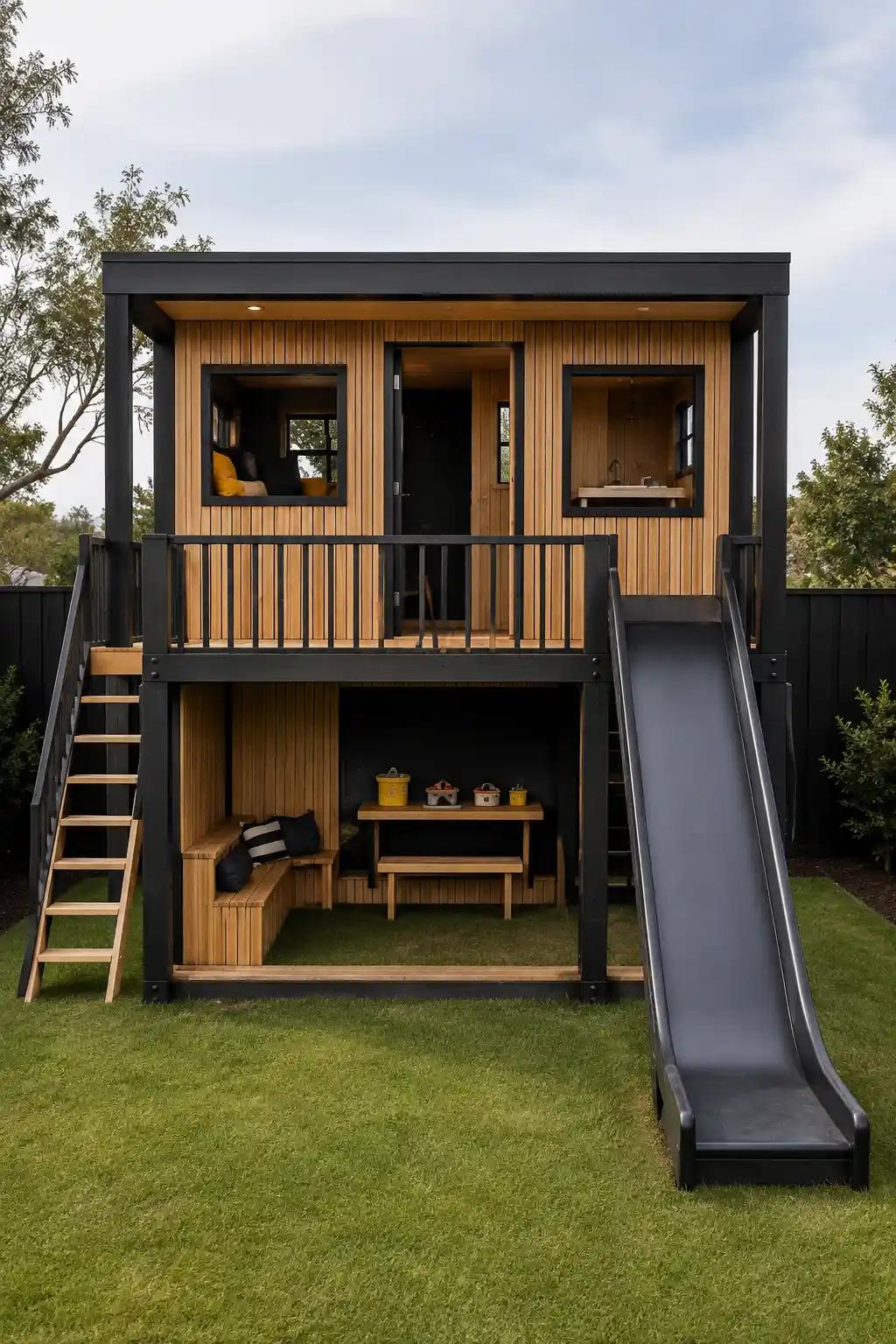
An elevated playground becomes much more useful when the space underneath is designed as part of the play experience. This setup uses the lower level as a cozy hideaway with built-in seating, a small table, and plenty of room for imaginative play. Meanwhile, the upper level provides a private little playhouse with windows, a covered deck, and a slide.
The combination of warm vertical wood siding and dark framing gives this design a polished contemporary appearance. The upper cabin can be kept simple with cushions, books, toys, or a small pretend kitchen, while the lower area works beautifully as a clubhouse. This makes the playground feel like several play spaces in one structure.
A wide slide on one side and a simple ladder on the other also create a clear flow between levels. If you have a compact backyard, this vertical approach is especially practical because it uses the space upward rather than spreading playground equipment across the lawn.
Pro Tip: Keep the lower hideaway well ventilated and avoid filling it with bulky furniture or loose items that could create tripping hazards.
Also Read: 13 Dorm Bedding Ideas For A Fresh And Well-Styled Space
7. Build a Modern Ninja Course With Climbing and Balance Challenges
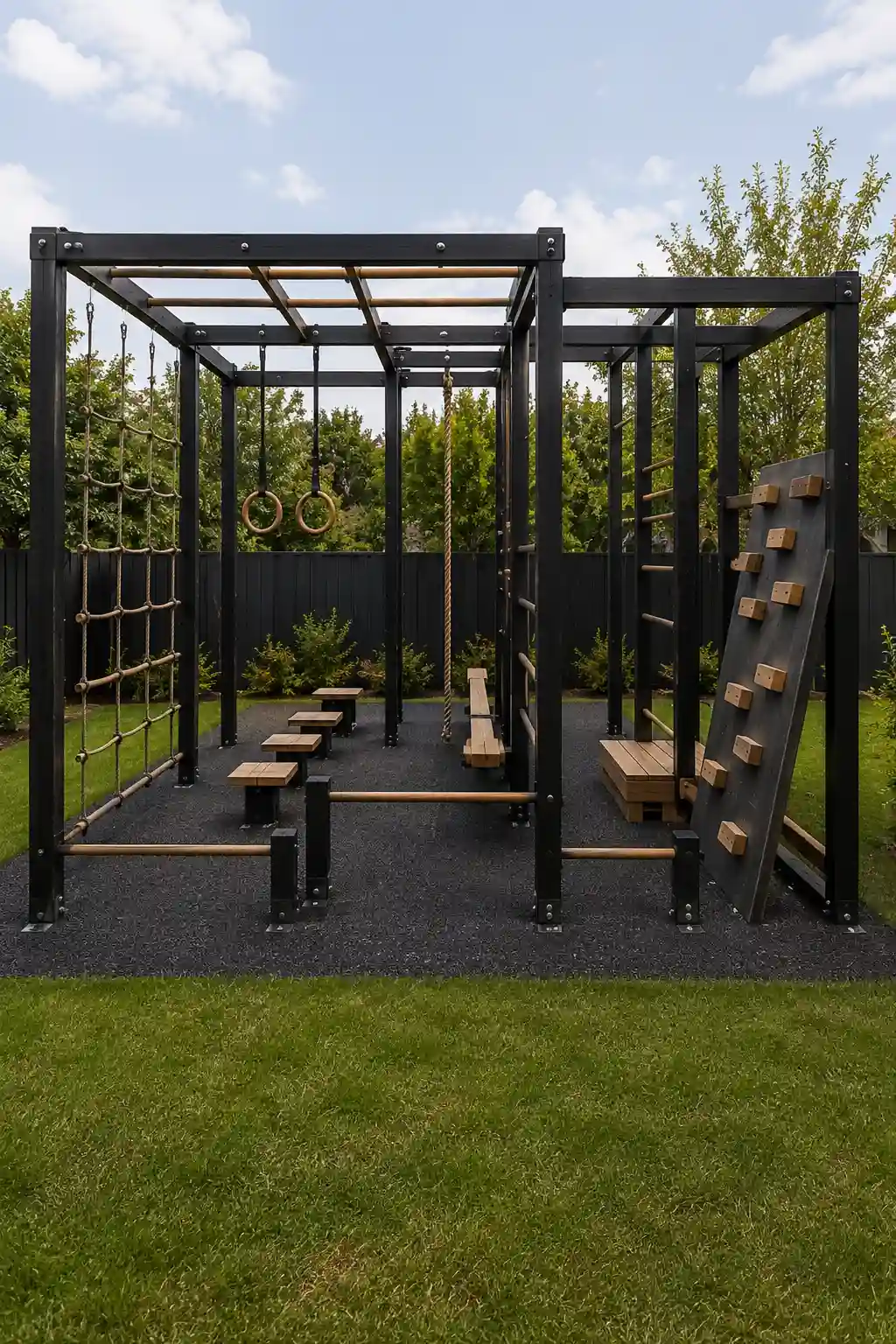
A backyard ninja course is a great option when you want the playground to focus on movement, strength, and coordination. This design combines monkey bars, hanging rings, climbing ropes, stepping platforms, a rope net, and an angled climbing wall into one streamlined structure. The black frame also gives it a sleek appearance that feels much more contemporary than a traditional playground.
You can customize the course around the activities your children enjoy most. Add a series of low stepping blocks for balance, hanging rings for upper-body play, and a climbing wall with different-sized holds for extra challenge. Keeping the obstacles at different heights also creates a natural progression, so younger children can start with easier sections while older kids tackle the more demanding ones.
A rubberized play surface works particularly well underneath a setup like this because so many activities involve climbing, jumping, or hanging. Keep the layout open and organized rather than packing every available space with equipment. That way, children have enough room to move safely between obstacles and the playground remains easy to supervise.
Pro Tip: Design the course around your children’s ages and abilities, and leave adequate clearance between obstacles so swings, rings, climbing routes, and jumping areas don’t overlap.
8. Create a Sandbox Play Zone Beneath an Elevated Playhouse
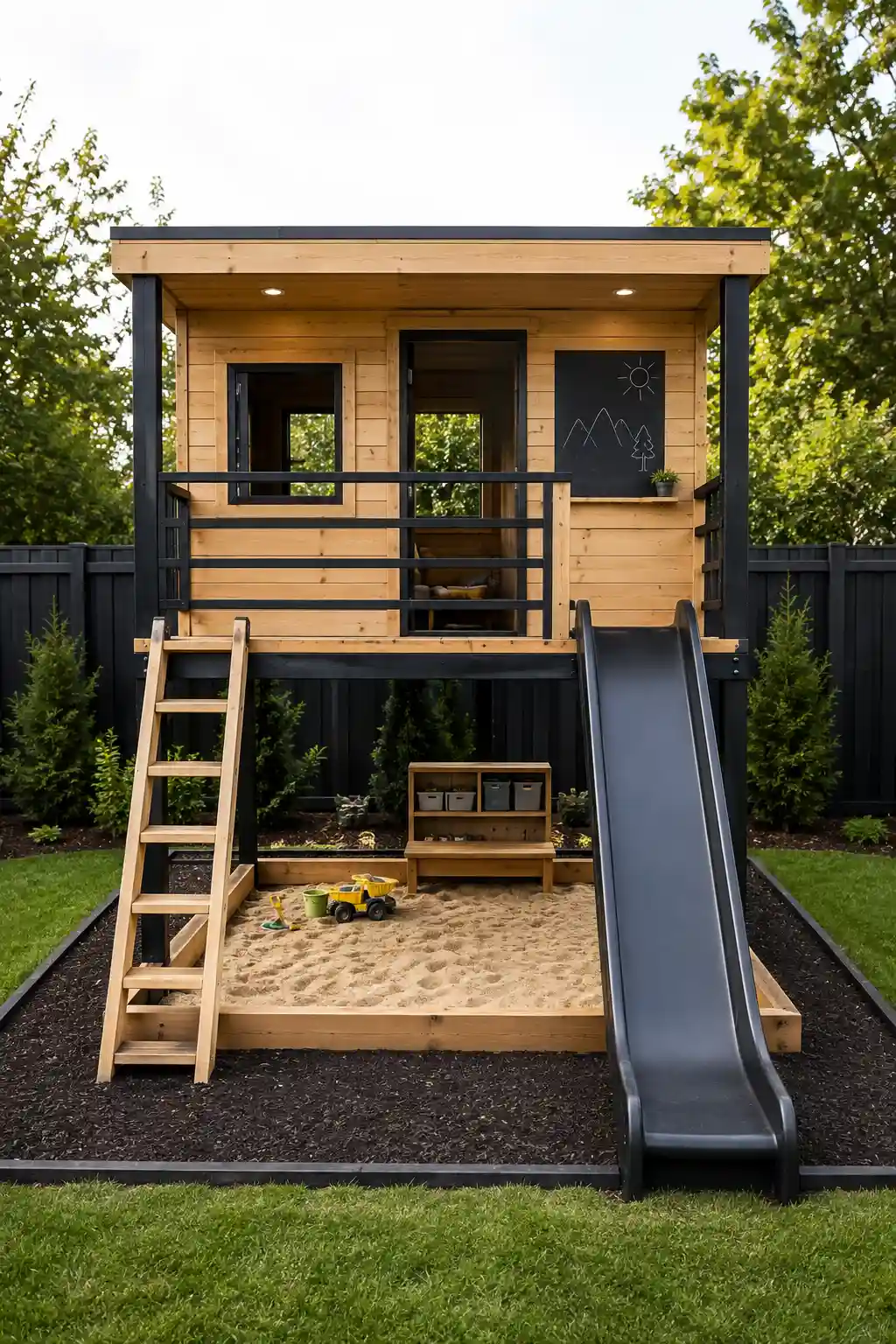
A sandbox underneath an elevated playhouse is a smart way to give younger children their own dedicated play area without needing a separate structure. The raised cabin provides an exciting destination above, while the space below becomes a protected sandbox where kids can dig, build, and create imaginative games.
This design works especially well with a clean modern playhouse featuring warm wood siding, dark framing, a simple ladder, and a wide slide. Add built-in storage along the back of the sandbox for buckets, trucks, molds, and other outdoor toys. A small chalkboard or play counter inside the upper cabin can also encourage creative activities beyond climbing and sliding.
The sandbox can be framed with sturdy timber to keep the sand contained and give the area a finished appearance. Adding some shade from the upper structure makes it more comfortable during sunny afternoons, while the open sides keep the space bright and easy for parents to supervise.
Pro Tip: Use clean, play-grade sand and cover the sandbox when it isn’t being used to keep out leaves, rain, and unwanted debris.
9. Design a Multi-Activity Swing Station for Active Kids
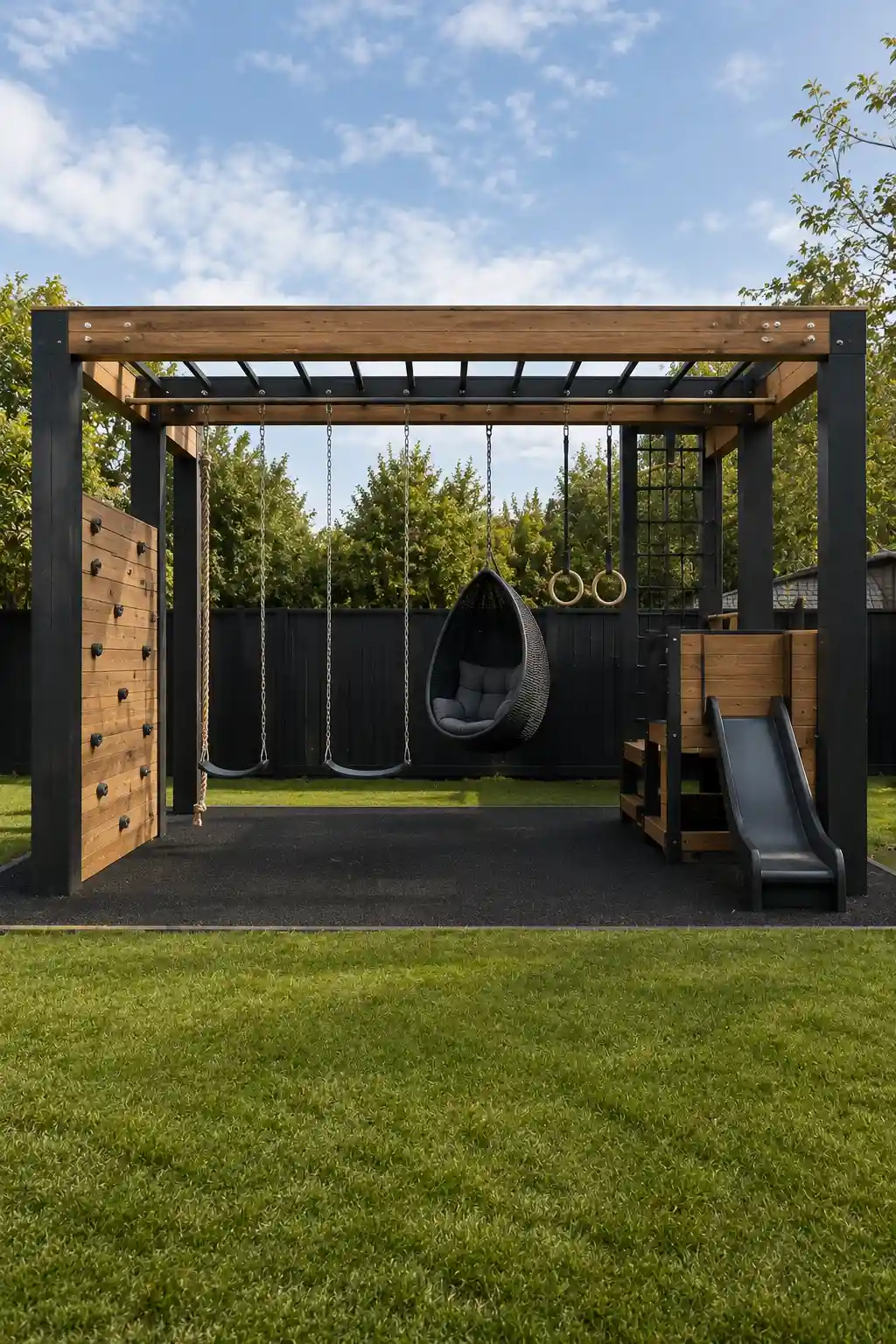
A dedicated swing station can turn a simple backyard corner into a versatile play area without requiring a large enclosed playhouse. This design combines two traditional swings with a hanging pod chair, gym rings, a climbing wall, and a small slide, giving children several ways to move, climb, swing, and relax in one organized structure.
The strong black frame paired with warm wood creates a clean contemporary appearance that works especially well in a modern backyard. You can customize the setup based on the available space, using the main beam for swings and adding rings or a hanging seat to one side. A small climbing wall can provide another activity without making the structure feel overcrowded.
For the ground surface, a dedicated impact-absorbing area helps define the playground and creates a clear boundary between active play and the surrounding lawn. Keep the equipment spaced thoughtfully so children can move between activities without getting in the path of swinging seats or other moving equipment.
Pro Tip: Follow the recommended swing spacing and clearance for the equipment you install, and inspect chains, ropes, connectors, and mounting points regularly for wear.
10. Create a Complete Backyard Playground With Multiple Play Zones
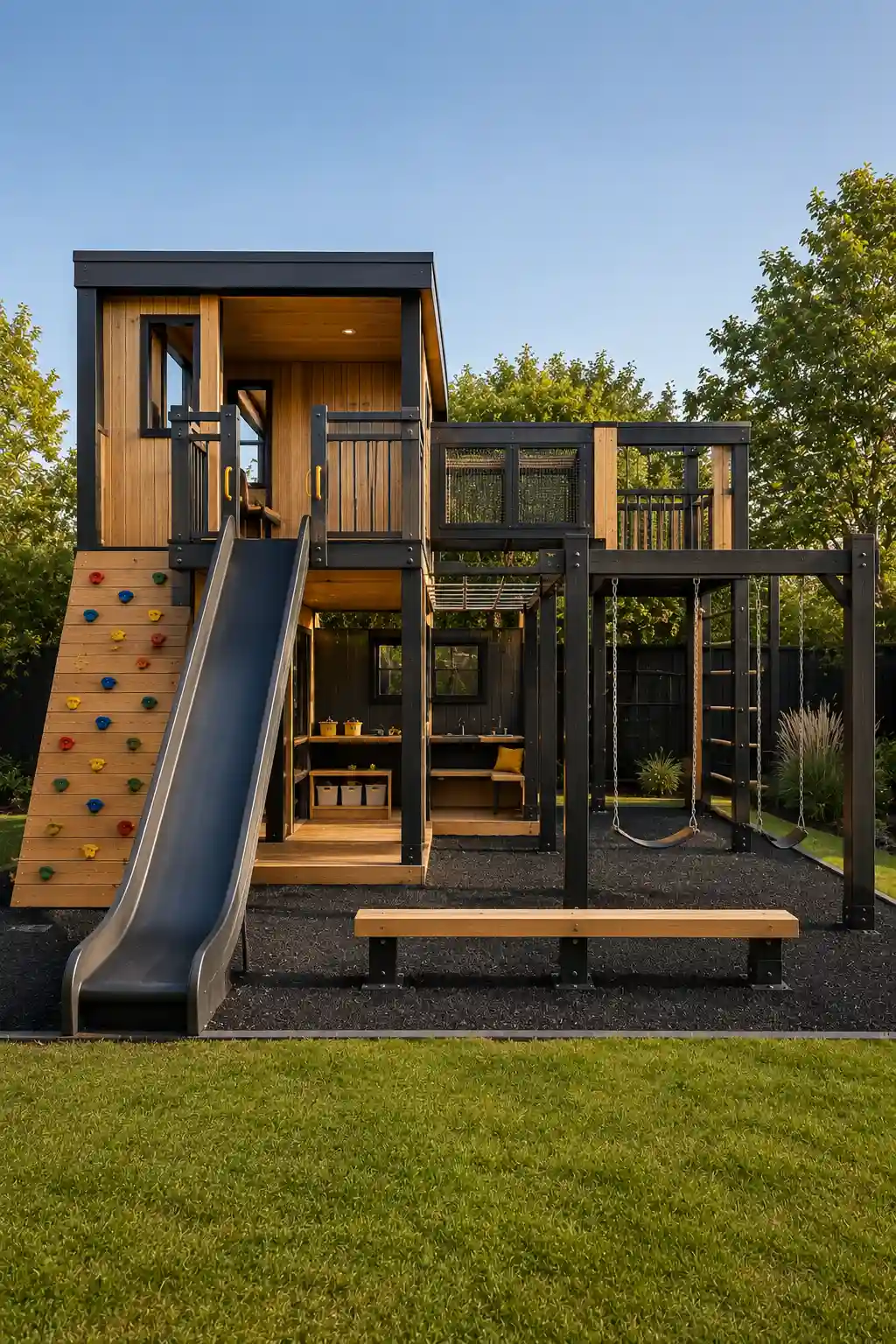
A complete backyard playground can bring several favorite activities together in one cohesive structure. This design combines an elevated playhouse, climbing wall, slide, swings, rope elements, and a lower play area, giving kids plenty of options without scattering separate equipment across the yard.
The raised playhouse creates the main focal point, while the connected platform extends the play space toward the swing section. Beneath the structure, a small activity area can hold a pretend kitchen, toy storage, or a simple craft station. This layered approach makes good use of vertical space and keeps the playground visually organized.
For a modern finish, combine warm wood with matte black framing and simple geometric lines. A dark safety surface around the active zones helps define the playground while contrasting nicely with the surrounding lawn. With thoughtful planning, the result can feel like a custom backyard feature rather than a collection of off-the-shelf equipment.
Pro Tip: Before building, map out the full footprint and required fall zones for every component so slides, swings, climbing areas, and walkways have enough clearance from one another.
Conclusion
A DIY kids playground can be both fun and visually appealing when the design is planned around the way children actually play. From elevated playhouses and climbing walls to sandbox zones, swing stations, and backyard ninja courses, there are plenty of ways to create a setup that feels exciting without looking outdated or bulky.
The best playground is one that fits your backyard, matches your children’s ages and interests, and leaves enough room for safe movement around every activity. With thoughtful planning, durable materials, and a modern design approach, you can turn an ordinary outdoor space into a playful backyard feature that the whole family will enjoy for years.