

Table of Contents
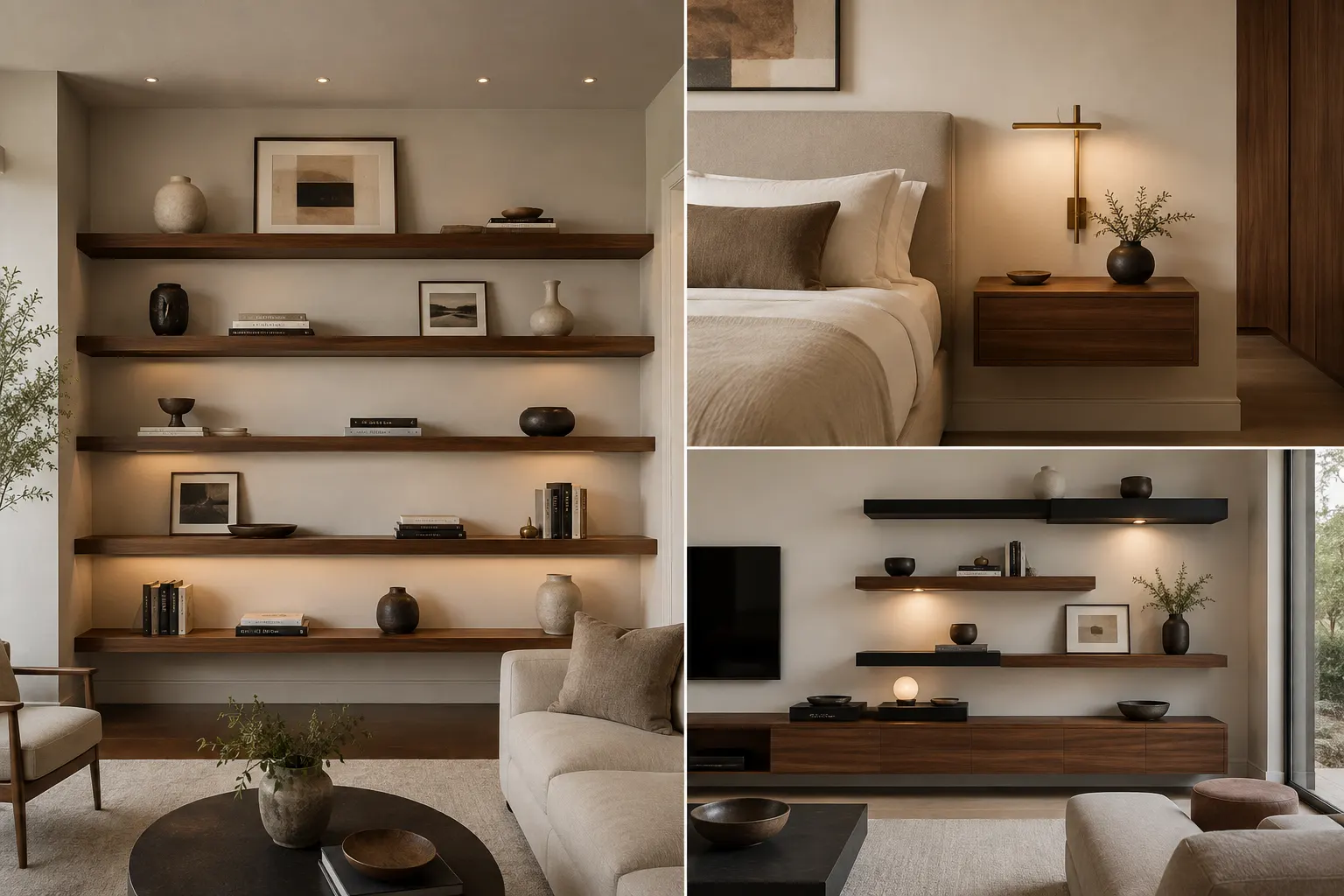
Floating shelves can do more than fill an empty wall. When the shape, finish, and styling are right, they become part of the room’s architecture and give the space a more intentional feel.
The best modern shelf designs keep things clean without looking plain. Warm wood, matte finishes, concealed hardware, and carefully spaced decor can turn a simple DIY project into something that feels genuinely custom.
Whether you’re refreshing a living room, bedroom, home office, or another overlooked wall, these ideas offer practical ways to add storage while keeping the overall look polished and contemporary.
Modern DIY Floating Shelf Ideas With a Designer Feel
These 14 floating shelf ideas take different approaches to shape, placement, materials, lighting, and styling. From staggered walnut shelves and dramatic black finishes to backlit designs and architectural slatted backdrops, each concept offers a distinct way to make a blank wall feel considered, stylish, and complete.
1. Create a Staggered Walnut Shelf Wall With Balanced Layers
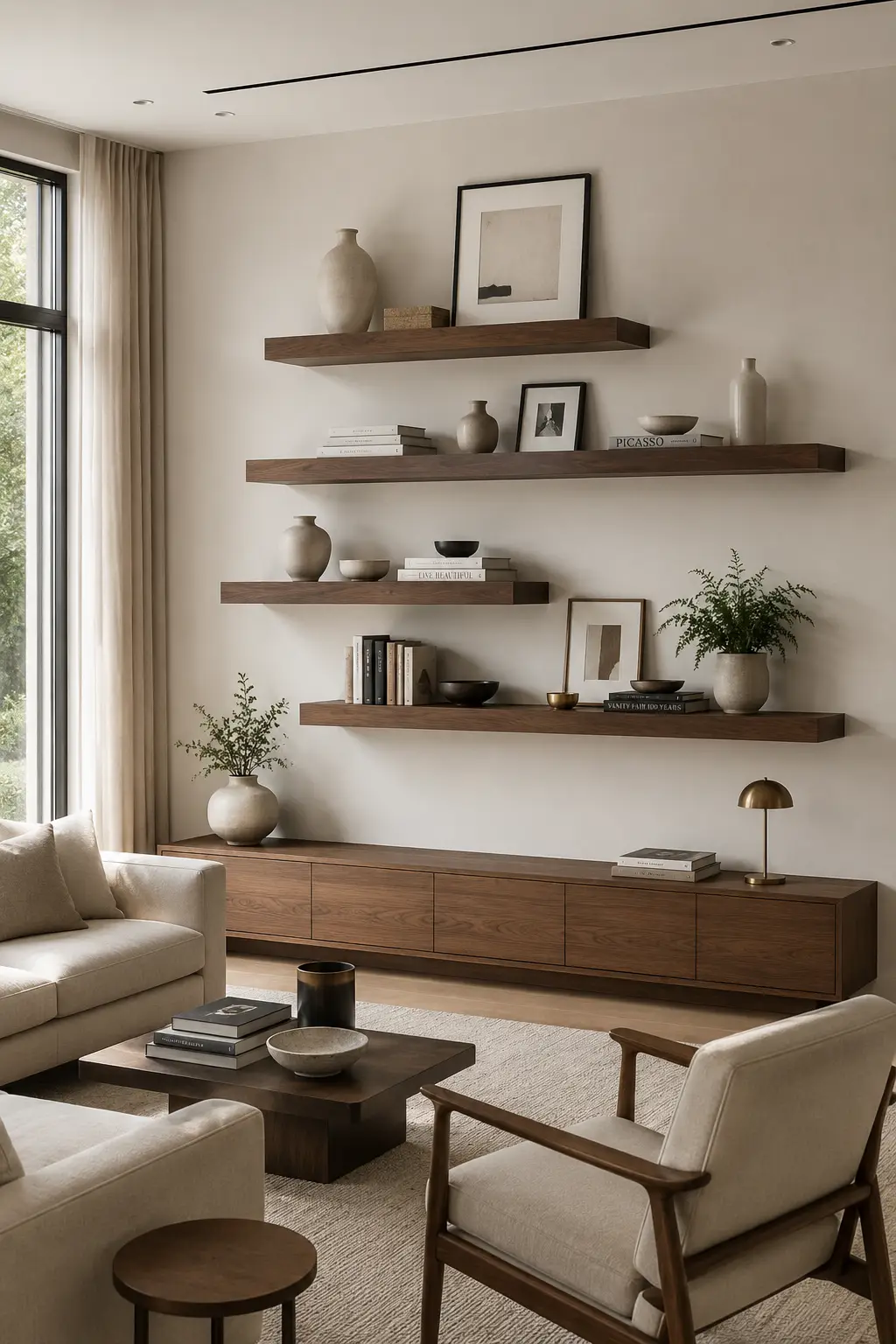
A staggered walnut shelf wall brings warmth and structure to a modern living room without making the space feel overly formal. Instead of using shelves with identical lengths, mix shorter and longer pieces to create a layered arrangement that naturally draws the eye across the wall.
Choose rich walnut boards with a smooth finish and substantial thickness for a more built-in appearance. Mount each shelf at a slightly different height while keeping the spacing deliberate and consistent enough to maintain visual order. Concealed brackets will keep the design clean and preserve the floating effect.
For styling, combine neutral ceramic vases, stacked coffee-table books, framed artwork, and a few sculptural pieces. Vary the placement of these accents so every shelf feels connected but not identical. The result is a warm, curated wall that adds both display space and architectural character to the room.
Pro Tip: Use one or two longer shelves as visual anchors and balance them with shorter shelves above or below. This keeps the staggered arrangement intentional instead of making it look randomly spaced.
2. Add Warm LED Lighting Beneath Floating Shelves
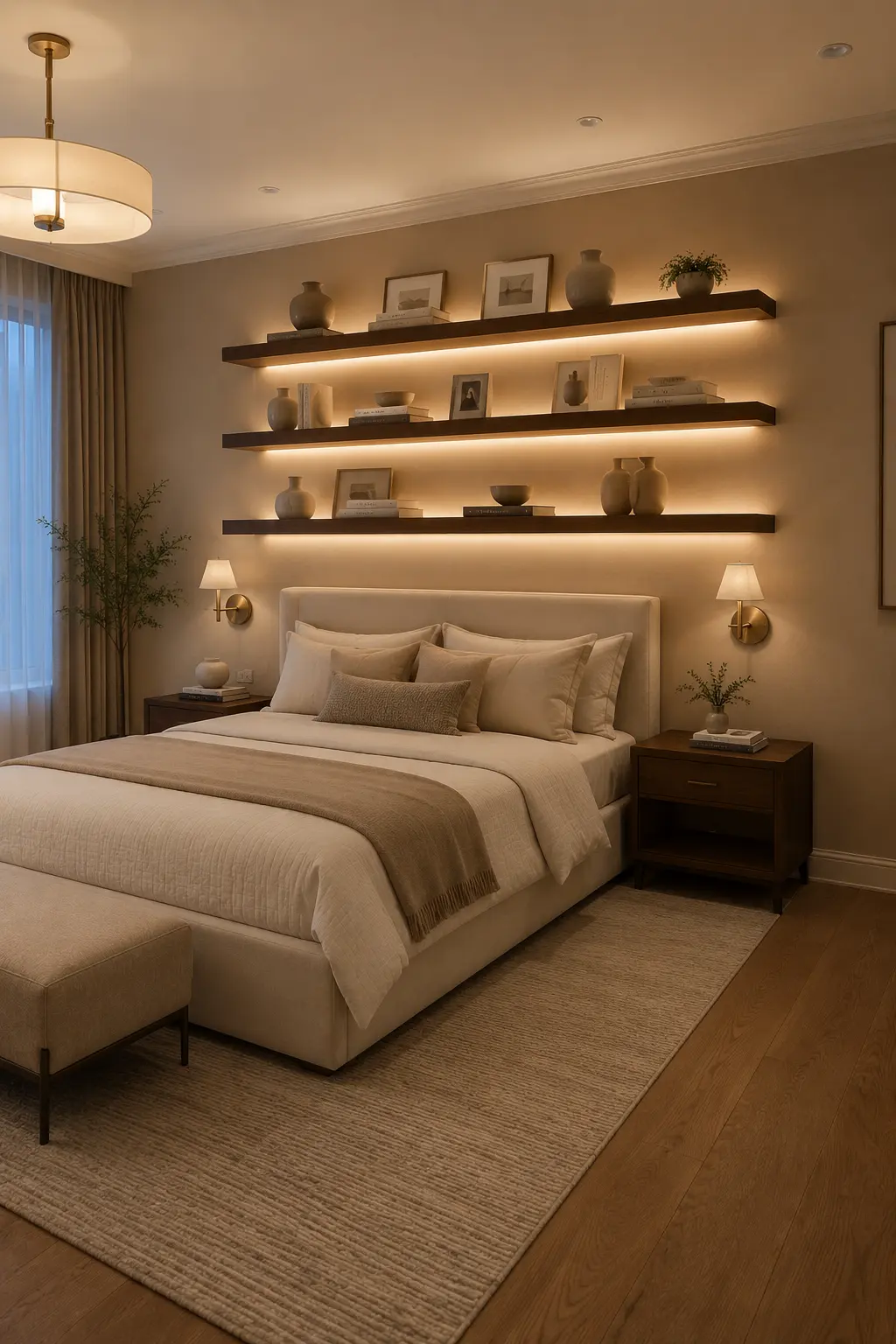
Backlit floating shelves can turn a simple wall into a warm architectural feature, especially in a bedroom where softer lighting helps create a more relaxing atmosphere. Installing a warm-white LED strip beneath each shelf adds a subtle glow that highlights both the shelves and the objects displayed on them.
For a polished result, choose thick walnut or dark wood shelves with concealed mounting hardware and position the LED strips so the light source itself stays hidden. The illumination should wash gently across the wall rather than appear as a bright visible strip, giving the installation a custom-built appearance.
Keep the shelf styling simple so the lighting remains part of the design. Neutral ceramics, framed artwork, stacked books, and small sculptural pieces work beautifully with warm LED illumination. Pair the shelves with soft bedding, warm wall colors, and understated bedside lighting for a cohesive modern bedroom.
Pro Tip: Choose warm-white LEDs around 2700K to 3000K. This creates a soft architectural glow that feels inviting rather than harsh or overly commercial.
3. Use Different Shelf Lengths to Build a Modern Wall Composition
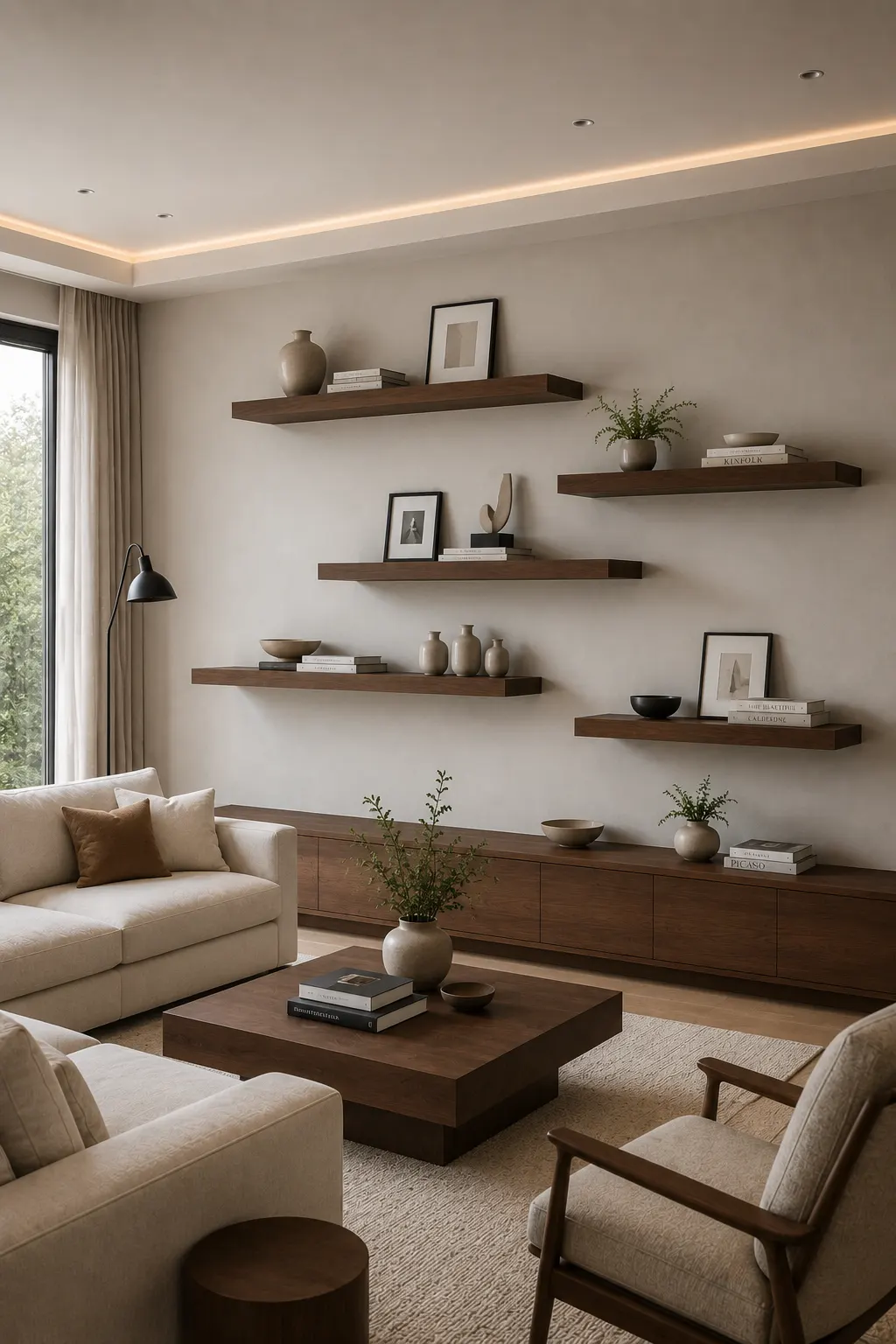
Mixing different shelf lengths creates a more dynamic wall arrangement while keeping the overall look clean and contemporary. Instead of lining every shelf up at the same width, combine long, medium, and shorter shelves to create a composition with more visual movement.
Start by choosing shelves with the same finish and thickness so the varying lengths still feel connected. Arrange them at different heights with generous spacing between each piece. The asymmetry works best when the shelves have enough room around them to stand out rather than appearing crowded together.
For the decor, repeat a few materials and tones across the arrangement to keep everything cohesive. Neutral vases, framed prints, stacked books, and small sculptural objects can be distributed across the shelves without making each level look identical. This approach gives a large blank wall a curated, designer-inspired appearance.
Pro Tip: Before drilling, lay the shelf positions out with painter’s tape on the wall. Step back and view the entire composition from across the room to make sure the lengths and spacing feel balanced.
4. Frame a Modern Floating Shelf Wall With Vertical Slats
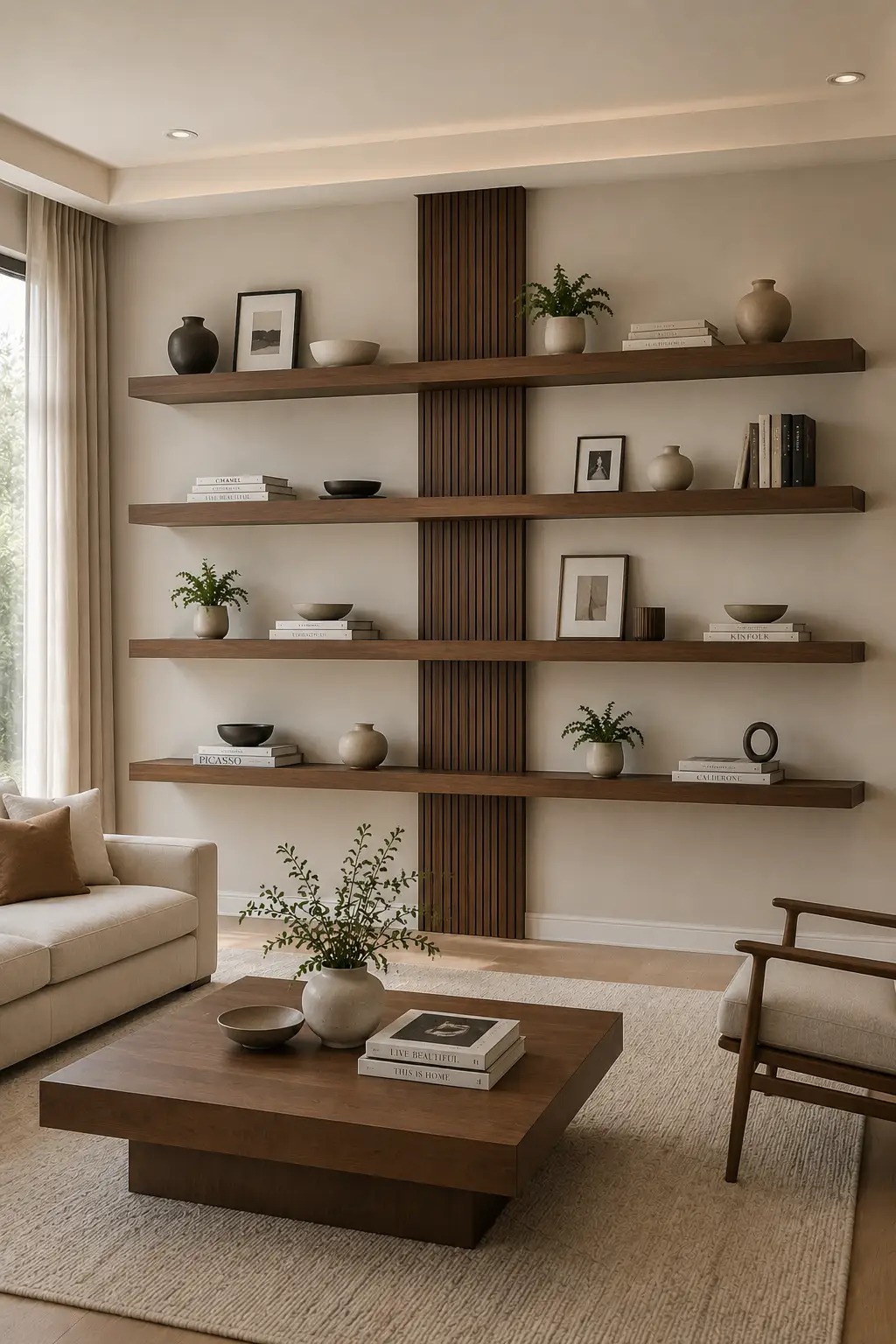
A vertical slatted backdrop can give floating shelves a stronger architectural presence while keeping the overall design clean and contemporary. Instead of covering the entire wall, use a narrower slatted panel behind the shelves to create a defined focal point without turning the space into a full built-in feature.
Choose slim walnut or dark wood slats with consistent spacing and mount them from floor level toward the ceiling for added height. The floating shelves can run across the slatted section and extend beyond it, creating an interesting contrast between the vertical lines and horizontal shelf surfaces.
Keep the shelf decor relatively restrained so the slatted backdrop remains visible. Neutral ceramics, framed artwork, books, and small plants work well against the darker wood. Repeating the walnut tone in nearby furniture can also help the feature wall feel connected to the rest of the room.
Pro Tip: Keep the slatted panel narrower than the full shelf arrangement. Letting the shelves extend beyond the slats creates a more custom architectural look and prevents the wall from feeling visually heavy.
5. Make One Long Floating Shelf the Main Wall Feature
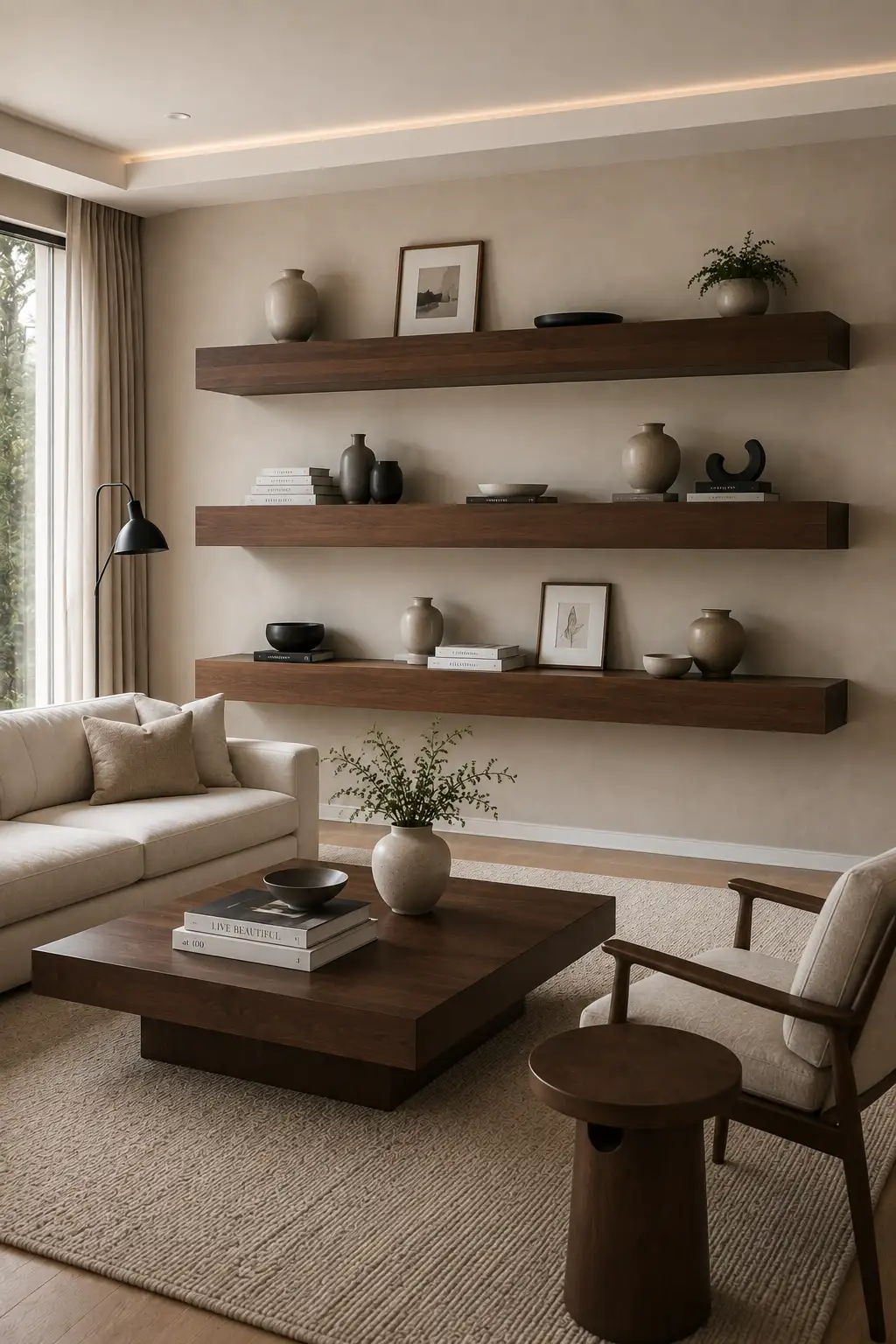
A single long floating shelf can make a blank wall feel wider while giving the room a strong, uninterrupted architectural line. This approach works particularly well in modern living rooms where you want the wall to look polished without adding multiple layers of furniture or built-in cabinetry.
Choose a substantial wooden shelf with a deep profile and clean edges so it feels intentional rather than like a simple storage board. Mount it across most of the wall width using concealed hardware, leaving balanced margins at both ends. A warm walnut finish adds depth against a soft beige, ivory, or light gray wall.
Because the shelf itself becomes the focal point, keep the styling selective. Group a few large ceramic pieces with framed artwork, stacked books, and one sculptural accent rather than filling every inch. The open wall surrounding the shelf gives the arrangement room to breathe and keeps the overall interior feeling modern.
Pro Tip: Aim for the shelf to span roughly two-thirds to four-fifths of the wall width. This creates a strong horizontal statement while leaving enough wall visible around the edges for a balanced composition.
Also Read: 15 Small Home Office Ideas That Instantly Boost Focus
6. Replace Traditional Nightstands With Floating Bedside Shelves
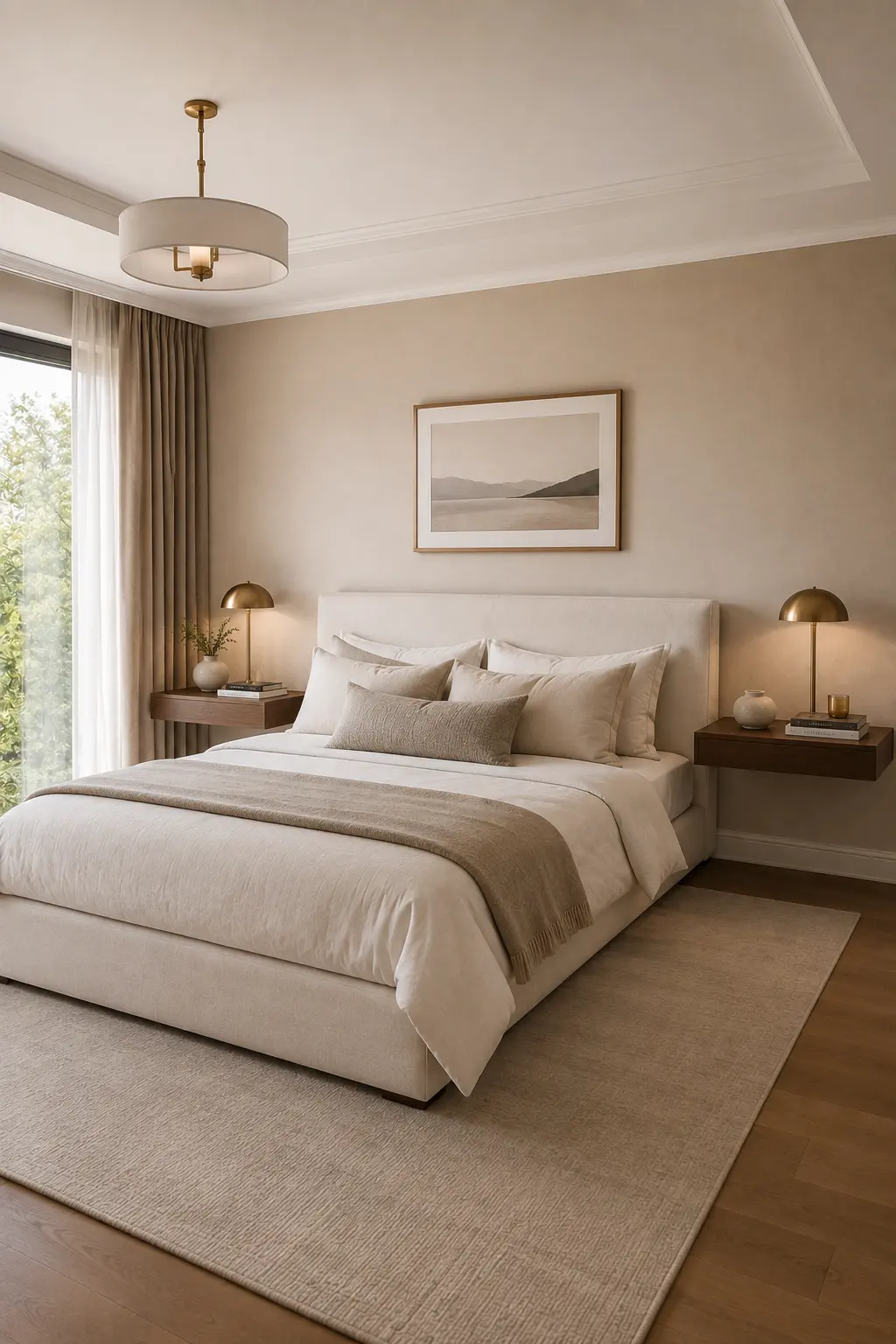
Floating bedside shelves offer a cleaner alternative to bulky nightstands and can make a bedroom feel noticeably more spacious. Mounting a compact shelf on each side of the bed keeps the floor open while still providing enough room for everyday essentials and decorative accents.
Choose shelves that complement the bed frame or other wood finishes in the room. A warm walnut surface works especially well against a soft neutral wall, while concealed brackets keep the installation visually light. Position both shelves at a comfortable height so they align naturally with the mattress and feel like part of the bedroom design.
Use each shelf for only the essentials, such as a compact lamp, a small vase, a few books, or a decorative object. Keeping the surfaces uncluttered helps emphasize the floating effect and allows the bed to remain the main focal point of the room.
Pro Tip: Match the height of both bedside shelves carefully and leave enough clearance around the bed so the shelves look intentional rather than squeezed into the available wall space.
7. Add a Slatted Backdrop to Give Floating Shelves Architectural Depth
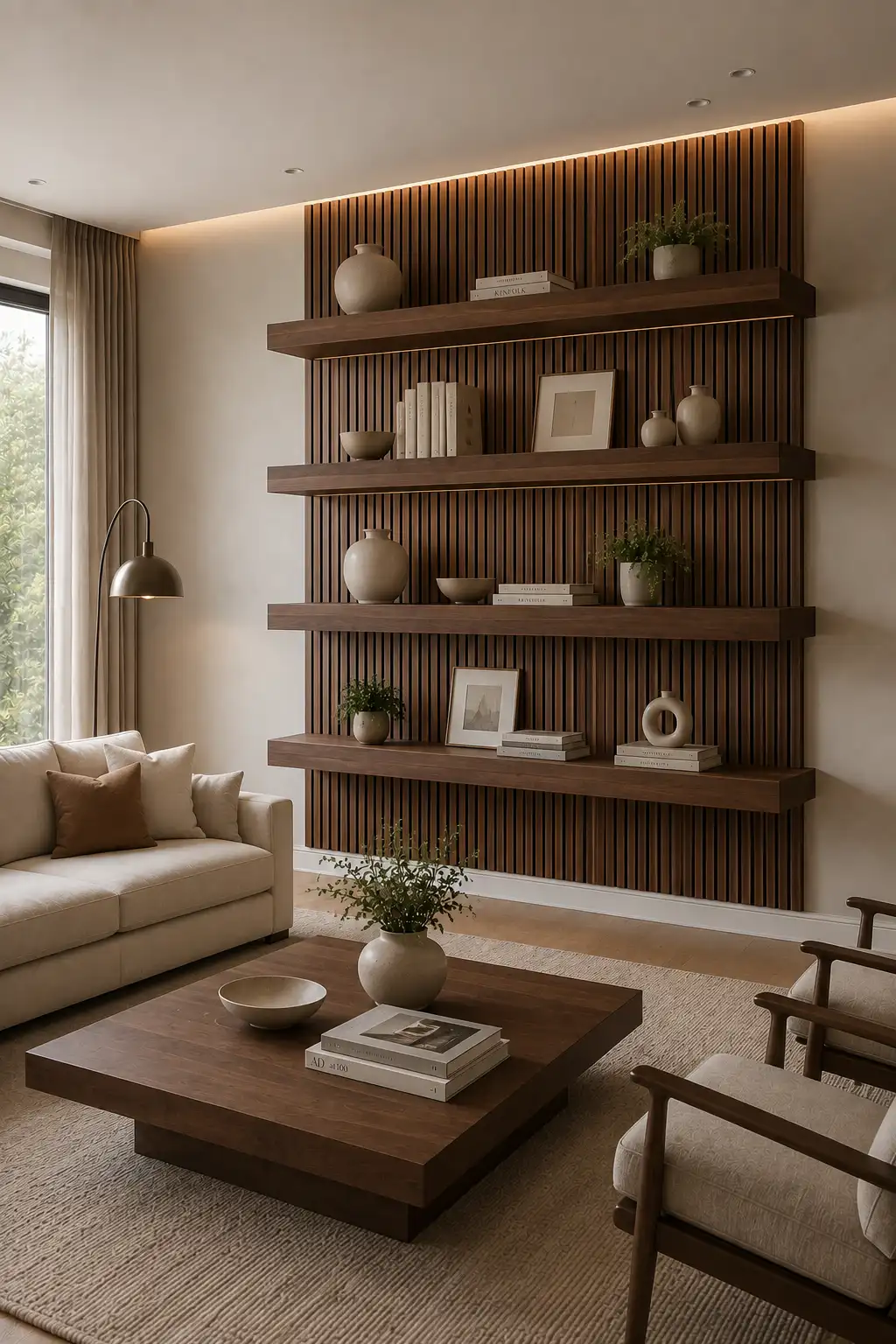
A full slatted backdrop can transform a simple floating shelf installation into a striking architectural feature. The vertical lines add texture and height to the wall, while the horizontal shelves create a strong contrast that makes the entire arrangement feel more structured and intentional.
For a modern finish, use slim walnut slats with consistent spacing and carry the panel across the main section of the wall. Mount thick floating shelves directly over the slats, keeping their finish close to the wood tone of the backdrop. This creates a cohesive layered effect without relying on bulky cabinetry or complicated construction.
Style the shelves with neutral ceramics, books, framed artwork, and a few restrained plants. Because the slatted wall already provides plenty of visual texture, the accessories should remain relatively simple. Repeating the same wood finish in nearby furniture can also make the entire room feel more connected.
Pro Tip: Use concealed lighting along the top or behind the slatted panel to create a subtle glow. It highlights the vertical texture at night and makes the shelf wall feel more like a custom architectural installation.
8. Create a Bold Contrast With Matte Black Floating Shelves
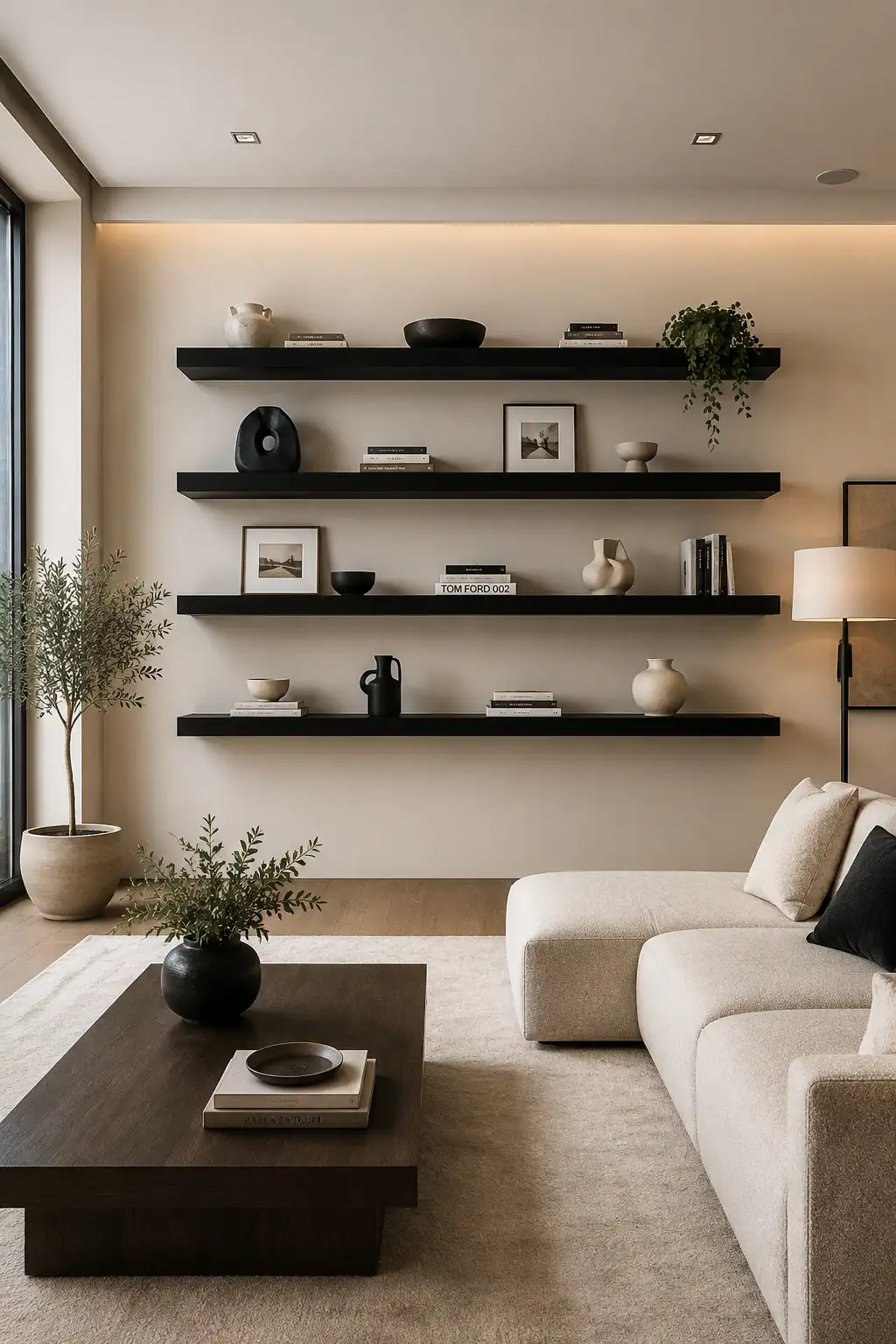
Matte black floating shelves can give a neutral room a sharper, more contemporary character without requiring a major renovation. Against a warm white, cream, or light beige wall, the dark finish creates strong contrast and makes the shelf arrangement immediately stand out.
Choose thick shelves with a smooth matte finish and concealed brackets to keep the design crisp. Arrange several shelves in a clean horizontal composition, using consistent spacing to create a sense of order. The simplicity of the black finish works especially well when the surrounding furniture has soft neutral upholstery and natural wood accents.
For styling, combine black sculptural pieces with cream ceramics, neutral books, framed artwork, and restrained greenery. Repeating small touches of black throughout the room, such as a floor lamp or coffee table accent, helps connect the shelves to the wider interior without making the space feel too dark.
Pro Tip: Pair matte black shelves with a warm-toned wall rather than stark white. The softer contrast feels more sophisticated and helps the black finish look intentional instead of overly harsh.
9. Turn an Entire Wall Into One Continuous Display Shelf
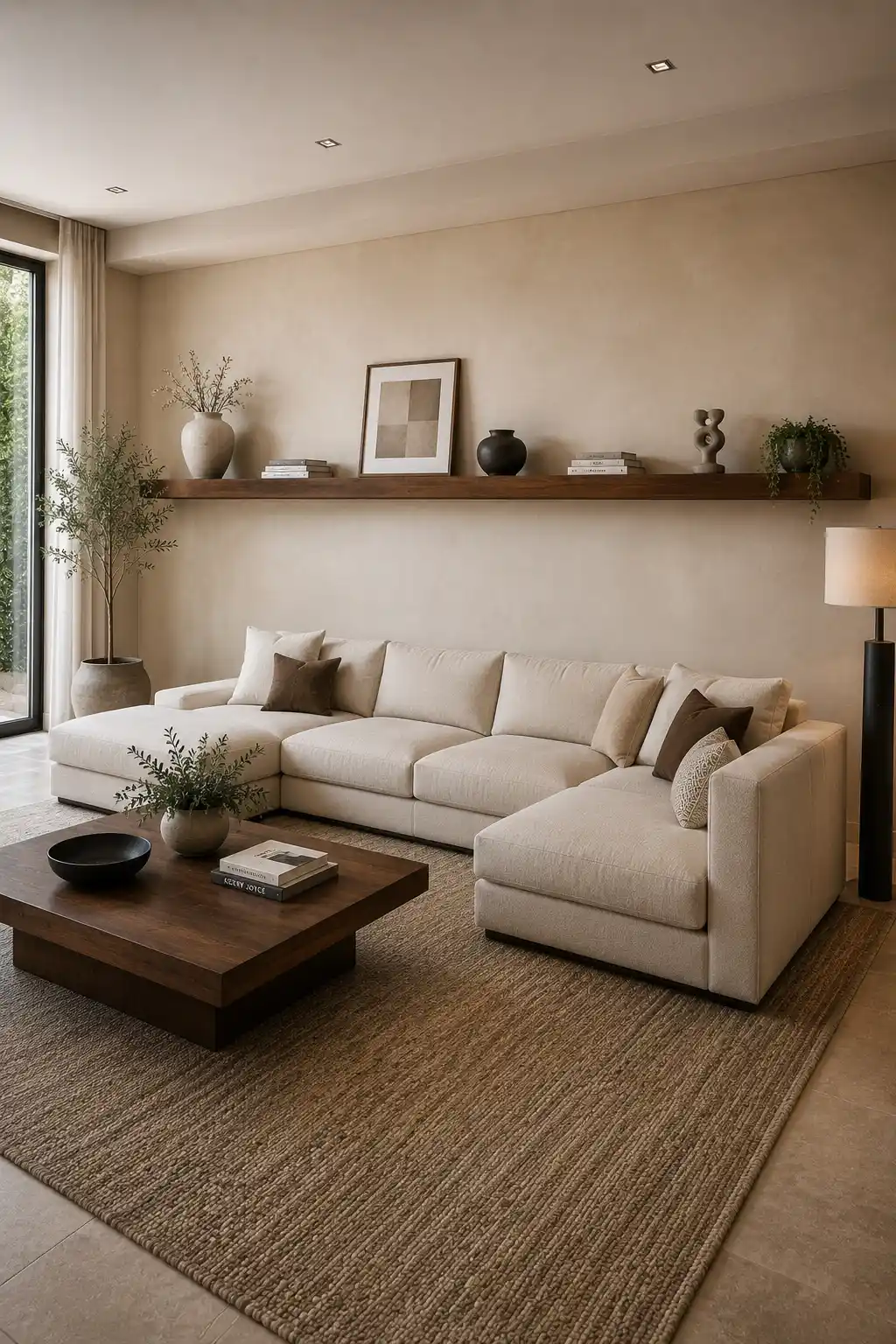
A single continuous floating shelf can make a wide wall feel longer and more intentional while keeping the room visually calm. Rather than breaking the wall into several smaller sections, one substantial shelf creates a clean horizontal line that anchors the furniture below it.
Choose a thick walnut shelf with a smooth finish and concealed supports so it appears to extend effortlessly across the wall. Leave a small, even margin at both ends instead of pushing it completely into the corners. This simple detail gives the installation a more refined, built-in quality.
Use the shelf as a curated display rather than everyday storage. A large framed print, sculptural vase, stacked books, and a trailing plant can create enough variation without overwhelming the long surface. Keeping the lower portion of the wall relatively open also helps the shelf remain the room’s main feature.
Pro Tip: Place your largest decorative piece slightly off-center rather than directly in the middle. Then balance its visual weight with smaller objects spaced farther along the shelf.
10. Wrap Floating Shelves Around a Corner for a Built-In Look
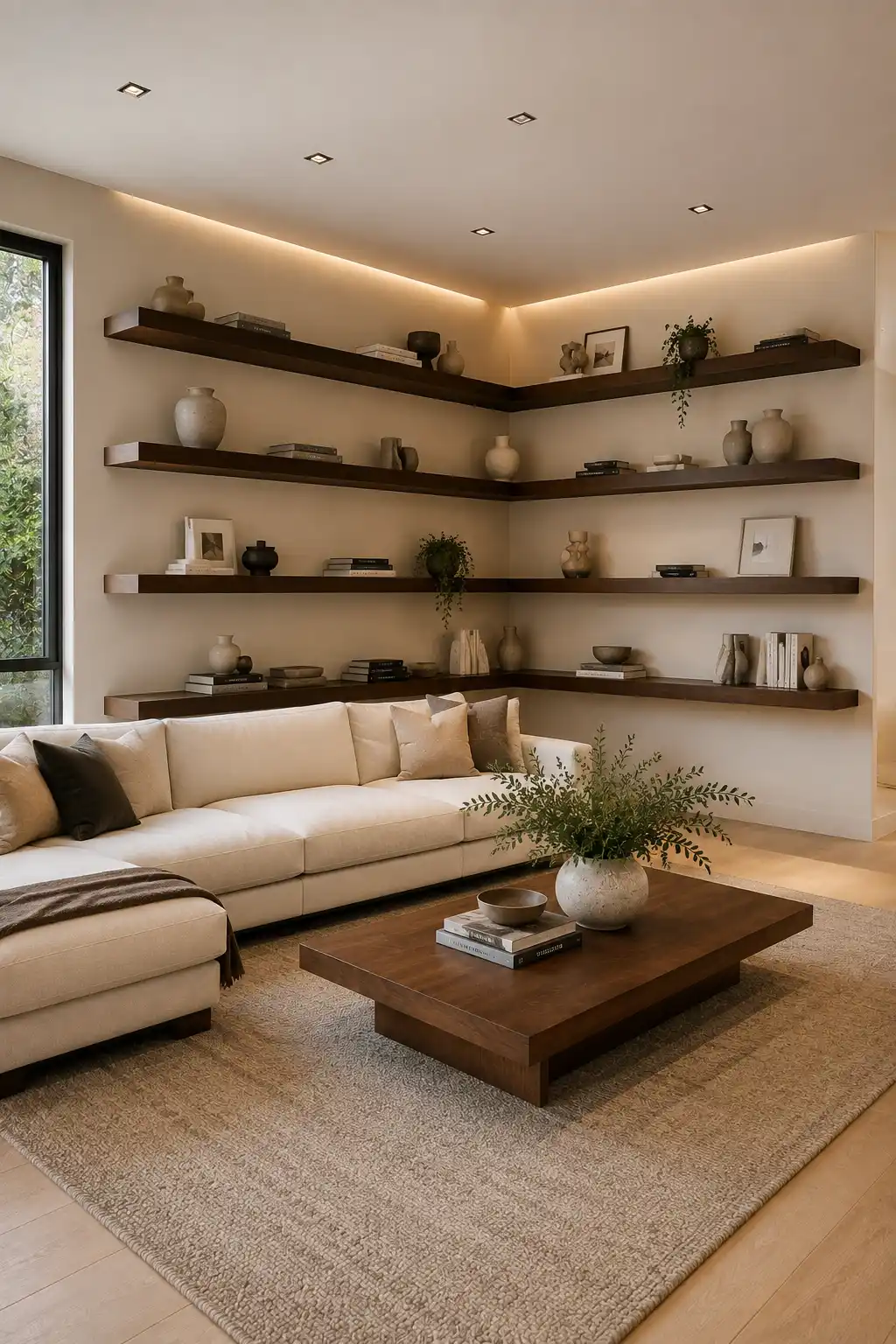
Corner floating shelves are a smart way to turn an awkward or underused corner into a polished architectural feature. Instead of stopping at one wall, the shelves continue around the corner, creating a seamless display that makes the entire area feel more intentional.
Use thick walnut boards with clean edges and concealed supports so the shelves appear to flow naturally from one wall onto the next. Keep the shelves aligned at consistent heights across the corner, allowing the horizontal lines to visually connect both walls. This approach works especially well in large living rooms where a standard shelf arrangement might leave too much unused space.
Style the shelves with a balanced mix of books, ceramic vessels, framed artwork, and a few plants. Avoid placing large objects directly at the corner, as keeping that area relatively open helps emphasize the continuous shape. The result is a sophisticated display wall that feels closer to custom millwork than a simple DIY project.
Pro Tip: Plan the corner joints carefully before cutting the boards. A clean, tight connection at the corner is what makes the shelves look professionally built rather than like two separate shelf systems.
11. Let a Large Artwork Anchor a Floating Shelf Arrangement
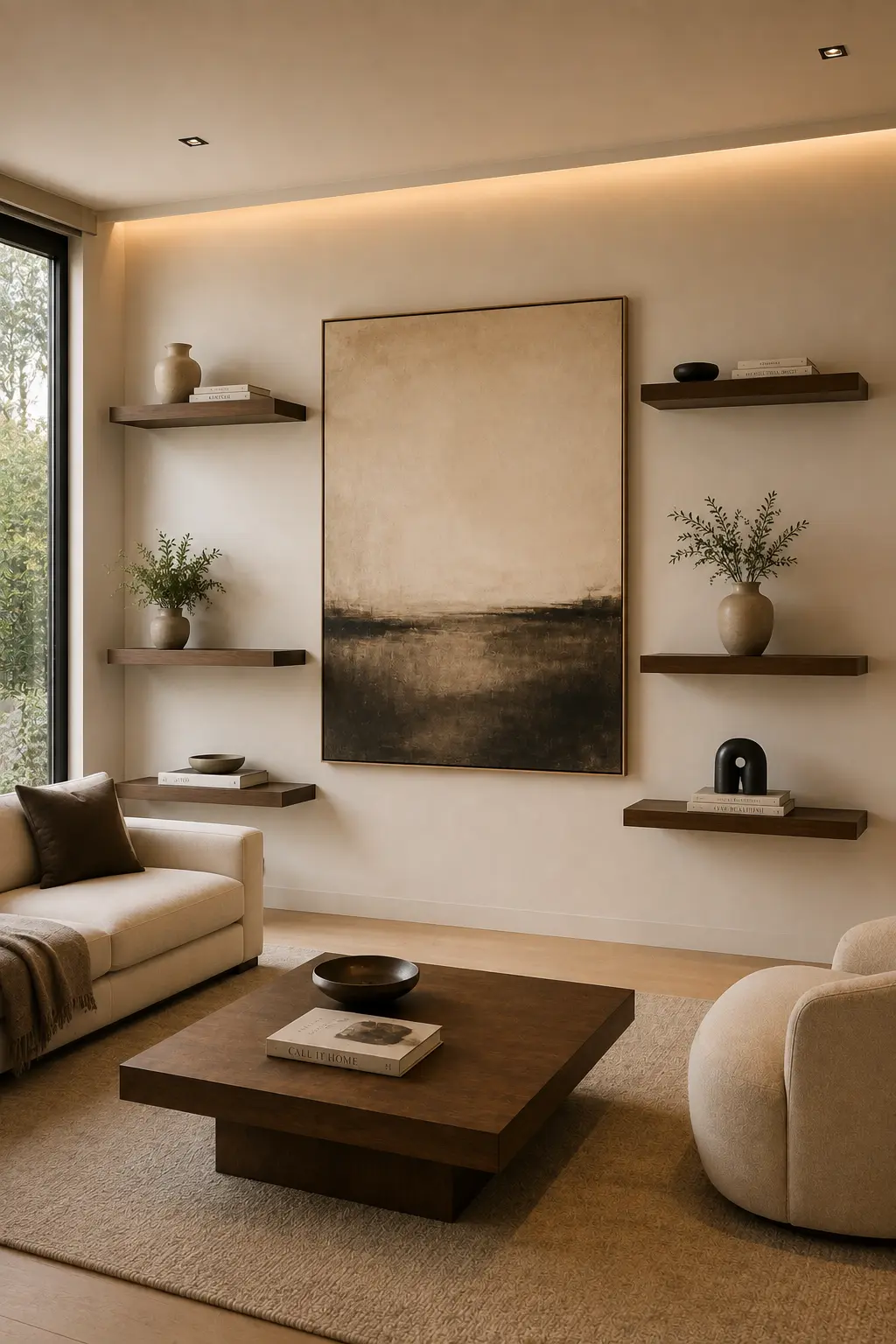
Pairing floating shelves with one large statement artwork creates a balanced wall composition that feels curated rather than overly functional. The artwork becomes the visual anchor, while the smaller shelves around it add dimension and provide space for carefully selected decorative pieces.
Choose a large framed artwork with a simple contemporary composition and place it prominently in the center of the wall. Surround it with shorter floating shelves in a symmetrical or lightly staggered arrangement. Matching the shelf finish to other wood elements in the room helps tie the entire composition together.
Keep the objects on the shelves understated so they support the artwork instead of competing with it. Neutral vases, small sculptures, stacked books, and restrained greenery are enough to add texture and interest. The open wall around the arrangement is just as important because it gives the artwork and shelves room to breathe.
Pro Tip: Choose the artwork first and plan the shelf positions around its proportions. This makes it much easier to create a balanced composition without the shelves visually overpowering the main piece.
12. Mix Walnut and Matte Black Shelves for Layered Contrast
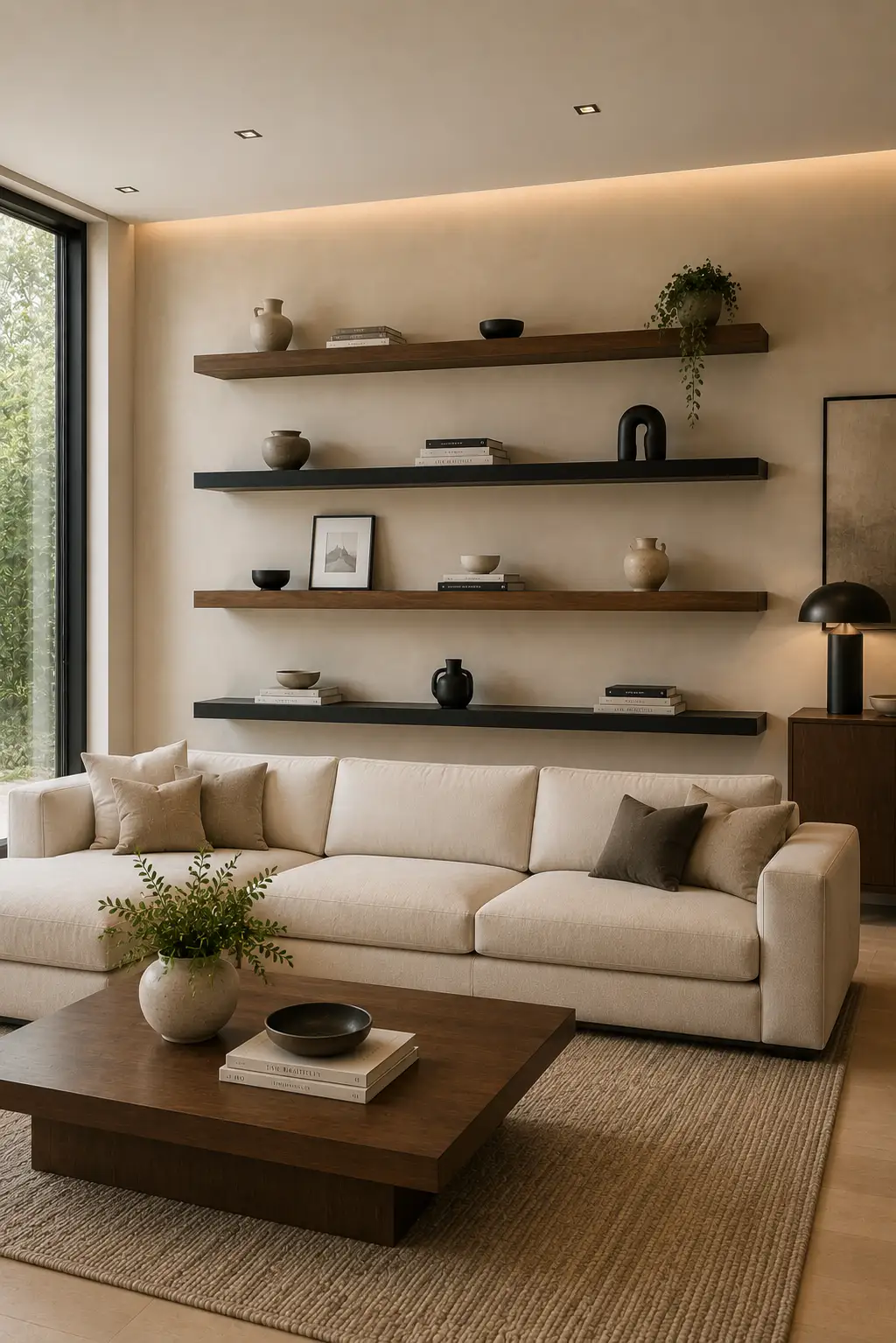
Combining walnut and matte black floating shelves creates a stronger visual rhythm than using one finish throughout the entire wall. The warm wood brings depth and softness, while the black shelves add definition and a sharper contemporary edge.
Use the two finishes in an intentional pattern rather than placing them randomly. For example, alternate walnut and black shelves vertically while keeping their thickness and spacing consistent. This keeps the composition cohesive and gives the wall a designer-inspired appearance without requiring complicated construction.
Keep the accessories relatively neutral so the contrasting shelf finishes remain the main feature. Cream ceramics, black sculptural pieces, framed artwork, and stacked books can repeat the colors already present in the shelves. A warm beige wall and light upholstery will help soften the darker elements and keep the room feeling balanced.
Pro Tip: Repeat the black finish in one or two other parts of the room, such as a floor lamp or side table. Small visual echoes make the two-tone shelf arrangement feel connected to the rest of the interior.
13. Balance a TV Wall With Floating Shelves on Both Sides
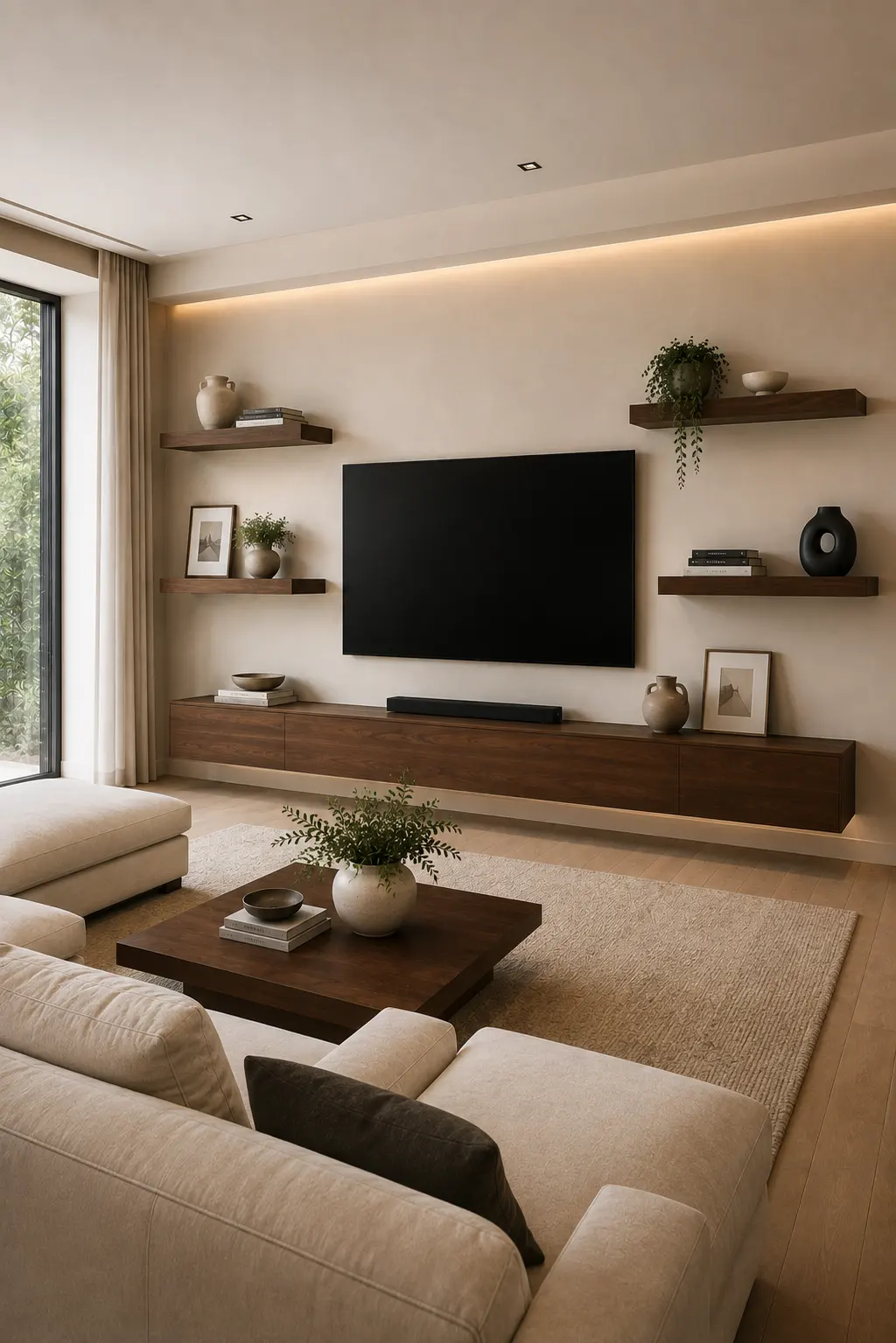
Floating shelves can make a TV wall feel more balanced while adding display space without introducing bulky cabinets around the screen. Placing shorter shelves on both sides creates a structured composition that frames the television and keeps the overall wall feeling open.
Use shelves with a consistent finish, thickness, and depth so they look like part of one coordinated installation. Position them at different heights around the TV rather than creating a rigid grid, leaving enough breathing room between the shelves and screen. A warm walnut finish works especially well against a soft neutral wall.
Keep the decoration simple and symmetrical in visual weight rather than identical on every shelf. Combine books, framed artwork, ceramic vases, and one or two sculptural objects while leaving some areas open. This gives the TV wall personality without allowing the accessories to compete with the screen.
Pro Tip: Keep the shelves noticeably shorter than the TV width and leave a clear visual gap around the screen. This makes the television feel intentionally framed instead of crowded by the surrounding decor.
14. Style a Full Floating Shelf Wall With Curated Symmetry
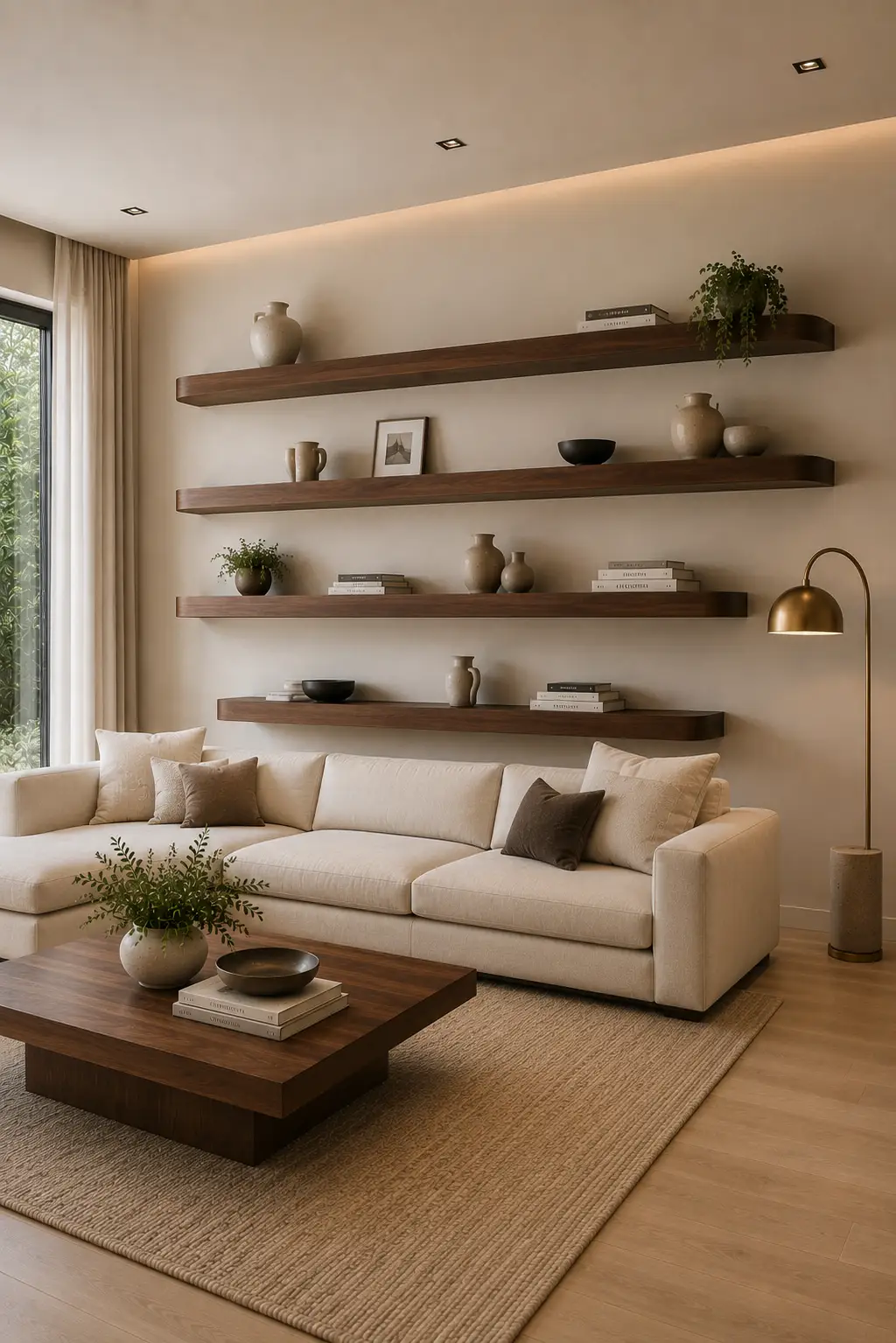
A full wall of floating shelves can create a dramatic focal point while still feeling calm when the arrangement follows a clear visual rhythm. Using several long shelves at carefully planned heights gives a large blank wall purpose and provides plenty of room for both decoration and practical display.
Choose shelves with the same walnut finish, depth, and thickness to create continuity across the entire installation. Rather than making every shelf identical in length, introduce subtle variations that give the wall movement while maintaining an overall horizontal structure. Concealed hardware keeps the design sleek and prevents visible brackets from interrupting the clean lines.
The styling should feel curated instead of crowded. Spread ceramic vessels, books, framed artwork, sculptural objects, and small plants across the shelves, varying the height and grouping of each piece. Repeating similar colors and materials throughout the arrangement helps the entire wall feel cohesive and gives the room a polished, designer-inspired finish.
Pro Tip: Keep the vertical gaps between shelves generous enough for taller decorative pieces. Consistent breathing room makes a multi-shelf wall feel organized and sophisticated.
Final Thoughts
Floating shelves can completely change the character of a room when they’re treated as part of the overall interior design rather than simply added for storage. From warm walnut arrangements and concealed LED lighting to bold black finishes, slatted backdrops, and carefully framed artwork, there are plenty of ways to create a look that feels modern and intentional.
The key is to focus on proportion, spacing, finish, and restraint. Choose a shelf design that complements your room, keep the mounting details hidden, and style each surface with enough variety to feel interesting without creating clutter. With the right approach, even a simple DIY floating shelf project can give a blank wall a polished, designer-inspired finish.