

Table of Contents
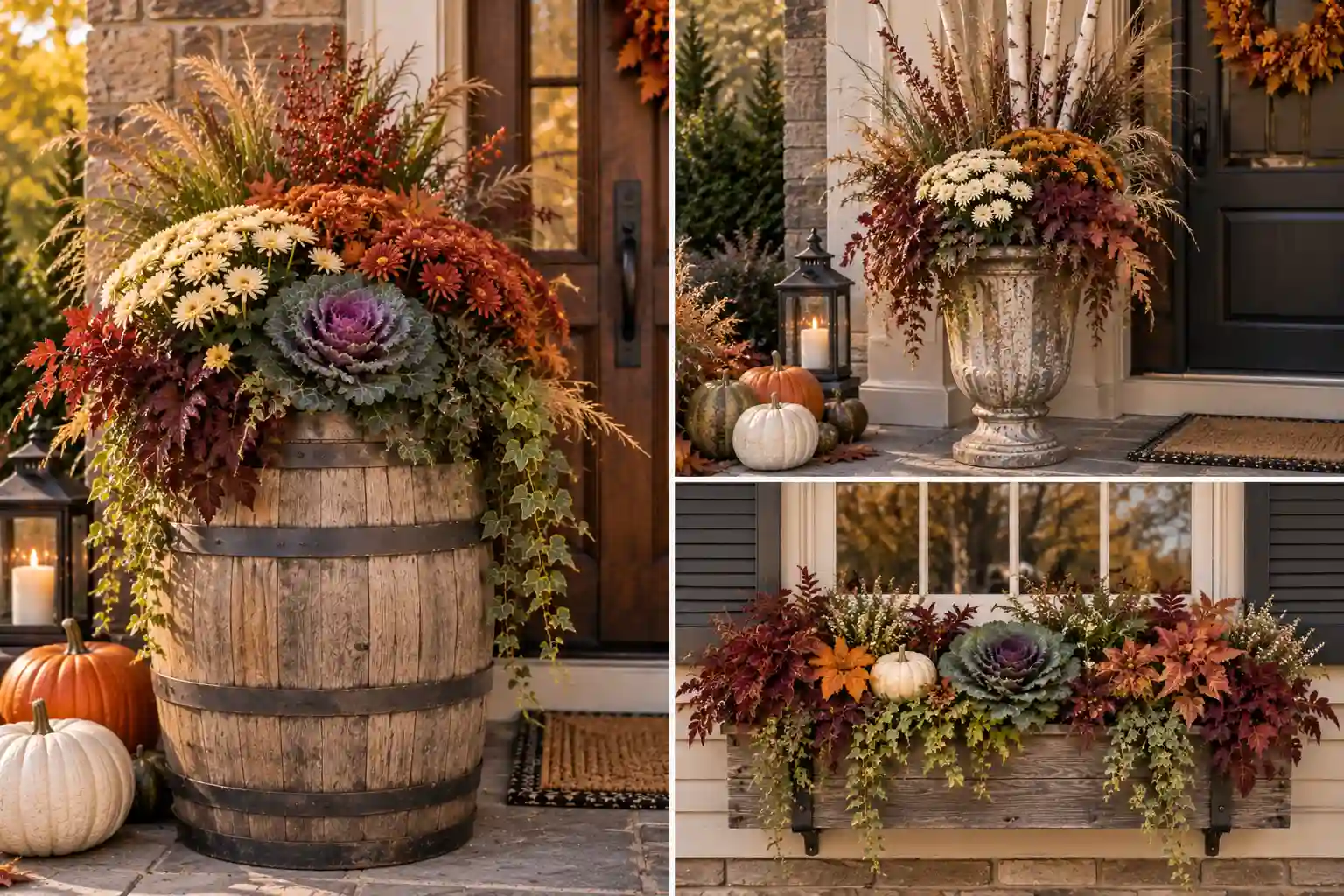
A porch does more visual work for a home’s curb appeal in fall than almost any other season, since the plants themselves, mums, cabbage, grasses, gourds, carry so much seasonal character on their own. The right planter combination can make an entryway feel genuinely welcoming with surprisingly little effort once the underlying structure is right.
Below are 16 fall planter ideas, each explained with the reasoning behind why it works, the materials involved, and simple steps for putting it together yourself.
16 Fall Planter Ideas and How to Build Them
Nearly every idea on this list builds on the same underlying structural principle, which is explained in detail toward the end of this guide, so pay attention to how often that formula reappears.
1. Whiskey Barrel With Cabbages, Mums, and Straw
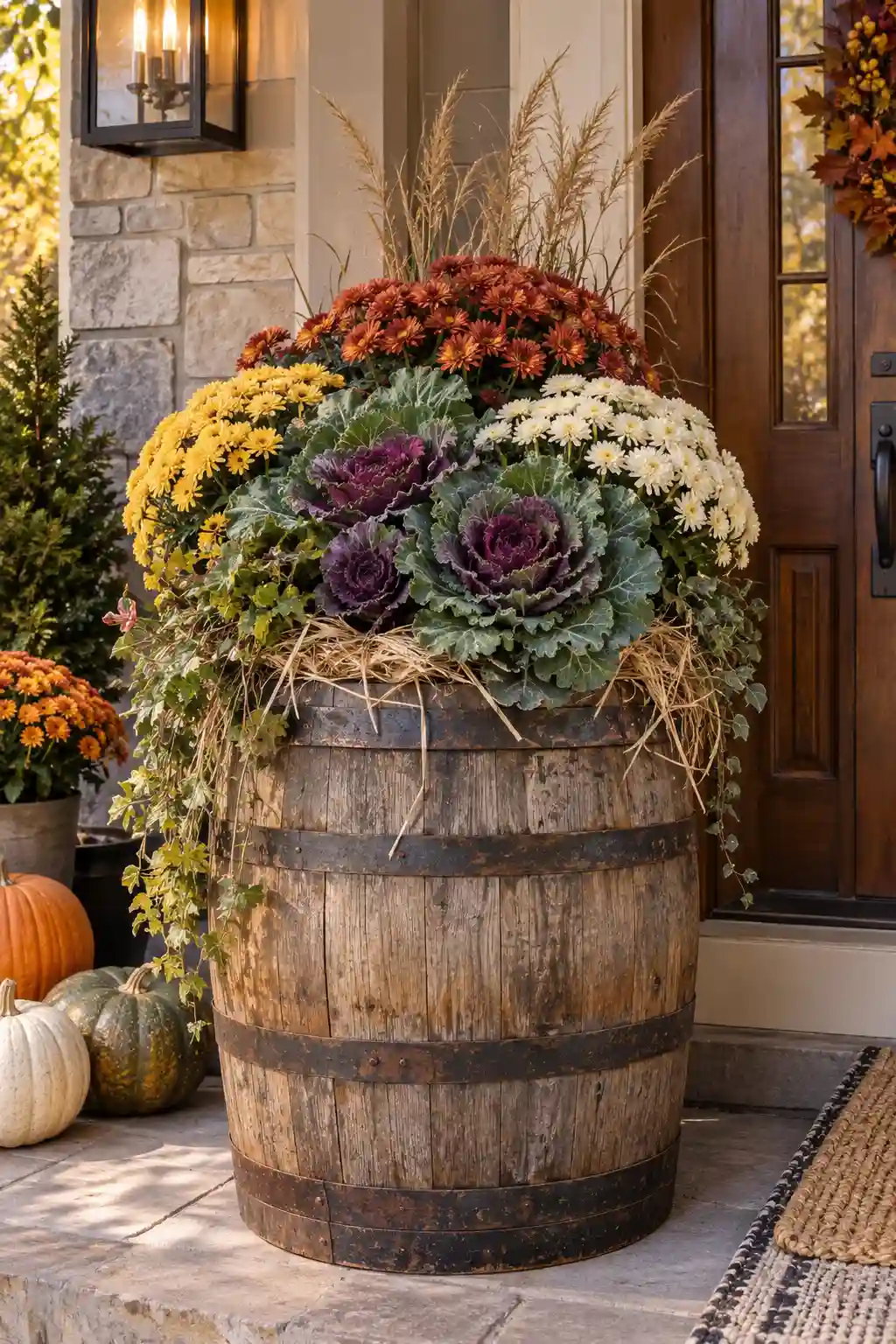
The barrel’s rustic wood grain, combined with straw filler, gives instant farmhouse texture, making this a great choice for porches that need one large statement piece rather than several small pots scattered around.
- A whiskey barrel planter, real or a faux resin version
- Ornamental cabbage for structural, ruffled texture
- Mums in a fall-appropriate color for bloom
- Loose straw tucked around the base as filler
How to Make It: Fill the barrel most of the way with potting soil, plant the cabbage toward the center as the tallest visual anchor, tuck mums around the perimeter, and pack loose straw into any visible gaps at the surface for texture.
2. Ornamental Cabbage, Pansies, and Trailing Ivy
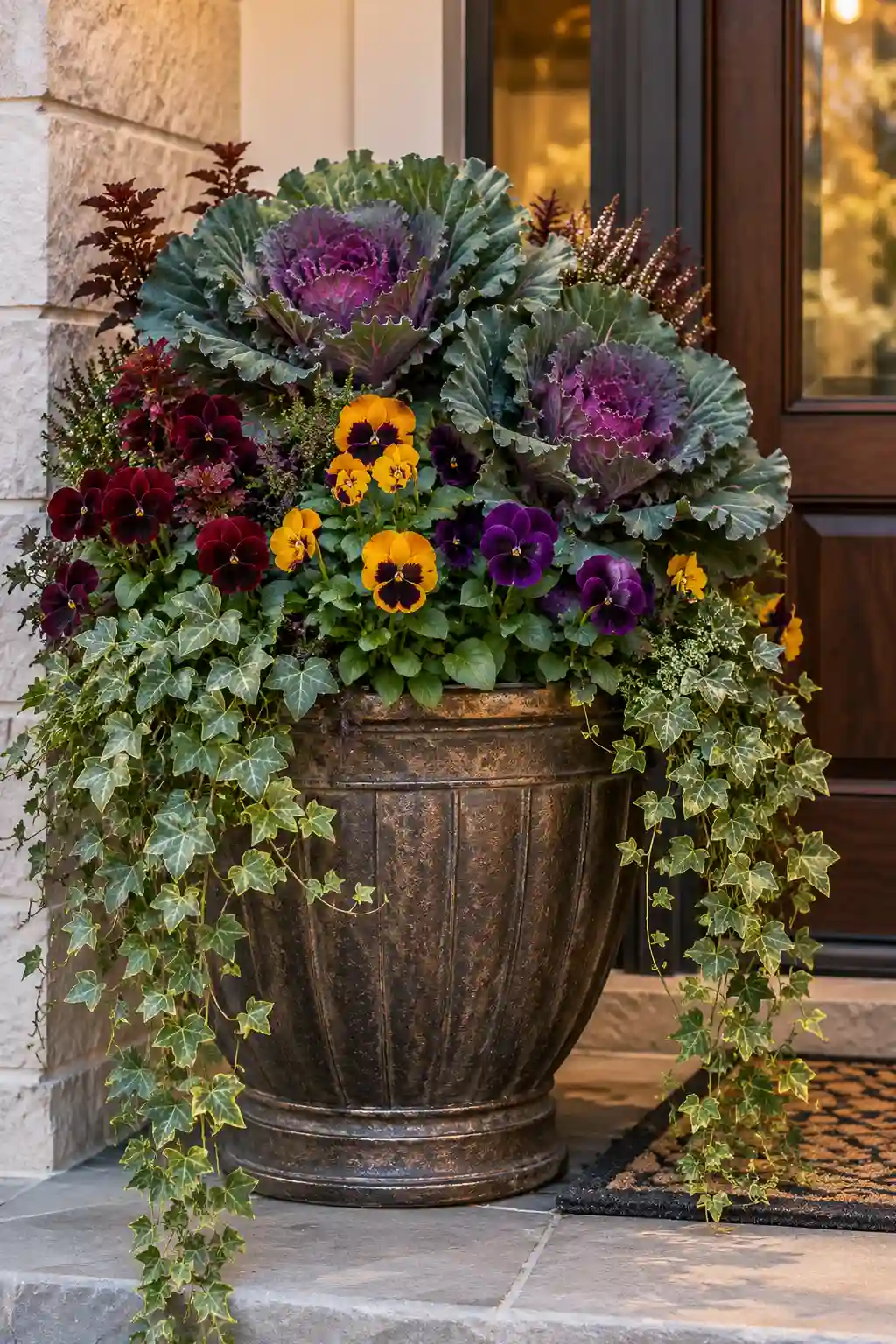
Cabbage’s bold purple and green ruffled leaves hold their shape through cold snaps, which means this particular combination stays genuinely photo-ready considerably longer than a planter built from flowers alone.
- Ornamental cabbage as the structural centerpiece
- Pansies in a complementary fall color for bloom
- Trailing ivy to soften the container’s edge
How to Make It: Position the cabbage centrally in the pot, ring it with pansies for color, and plant ivy near the rim so it can trail naturally over the container’s edge as it grows.
3. Tall Urns With Birch Branches, Grasses, and Mums
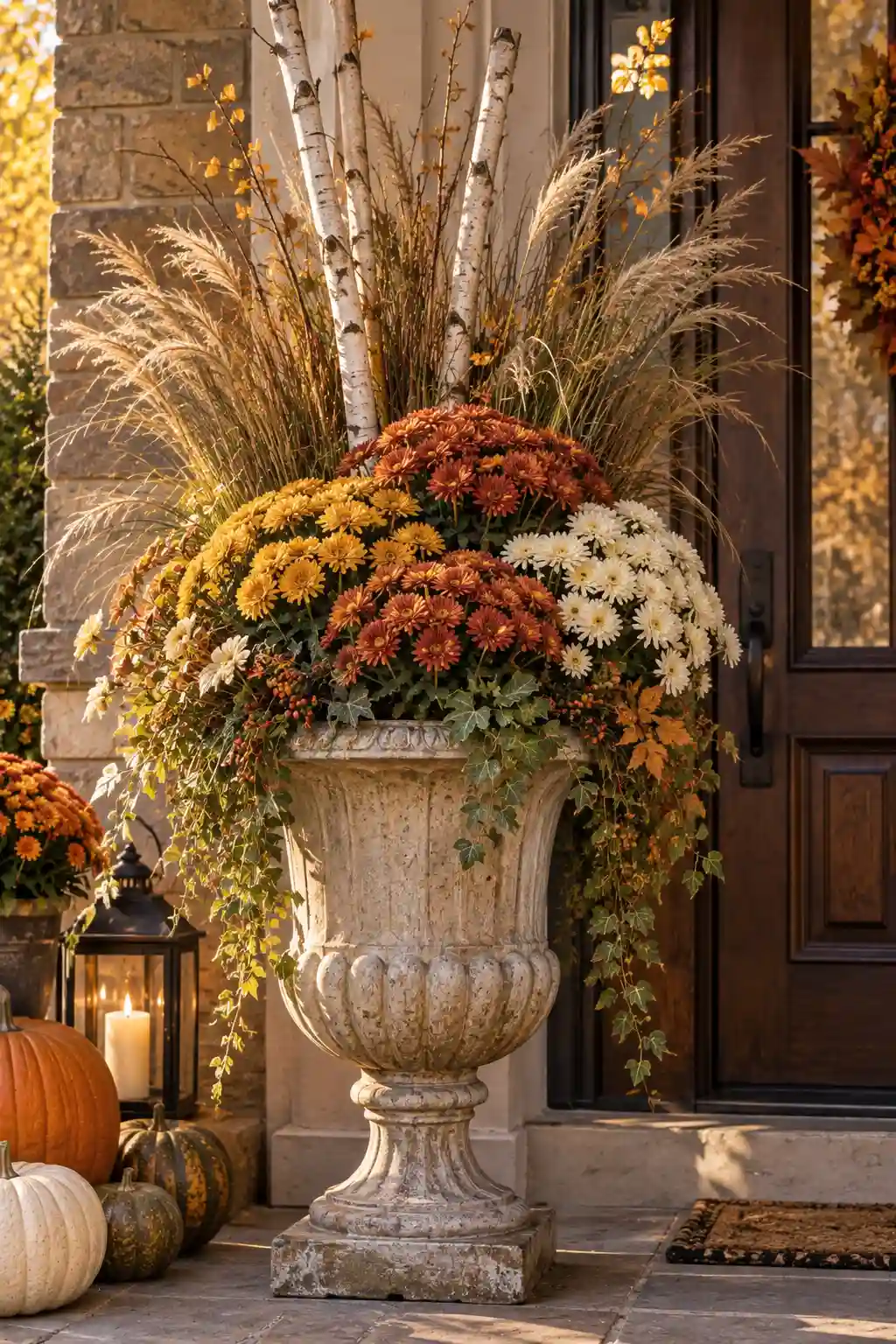
Adding height at the back of the arrangement, through branches or ornamental grasses, keeps a single urn from looking flat or one-dimensional when viewed from the street.
- A tall urn planter
- Birch branches for vertical height and texture
- Ornamental grasses for movement
- Mums positioned toward the front for color
How to Make It: Insert the birch branches toward the back of the urn first for height, add grasses around them for fullness, and finish by planting mums toward the front where they will be the most visible from the street.
4. Overflowing Window Boxes With Mini Pumpkins and Coleus
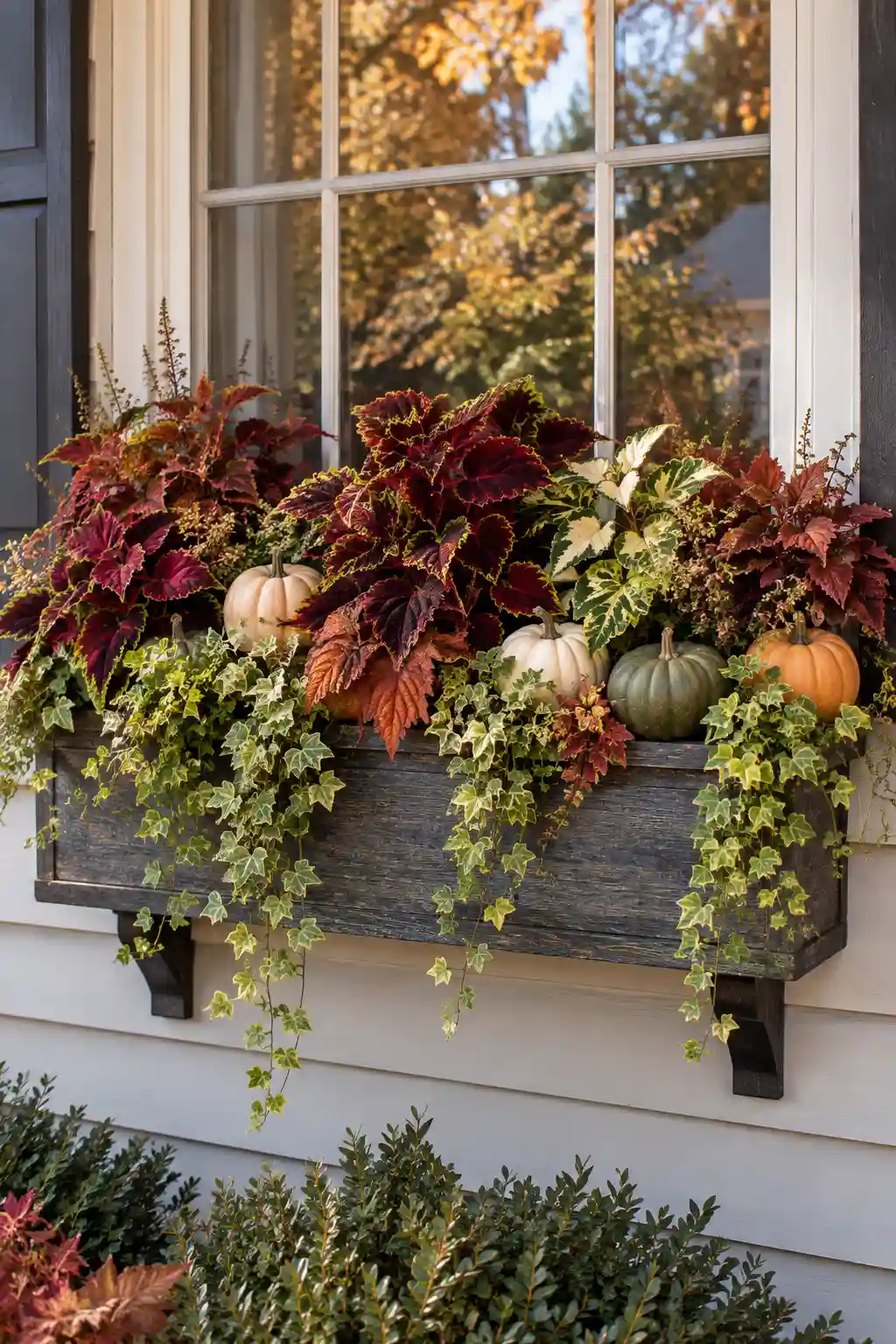
Packing window boxes tightly, rather than spacing plants out evenly, creates the lush, abundant look that genuinely reads best from a distance, which matters considerably for a window box viewed primarily from the street or sidewalk.
- A window box sized for your specific window
- Coleus in fall-toned foliage colors
- A few mini pumpkins tucked among the plants
How to Make It: Plant coleus closely together across the entire length of the box rather than spacing them out, then nestle a few mini pumpkins directly into the soil between plants once everything is established.
5. Repurposed Crates or Buckets as Planters
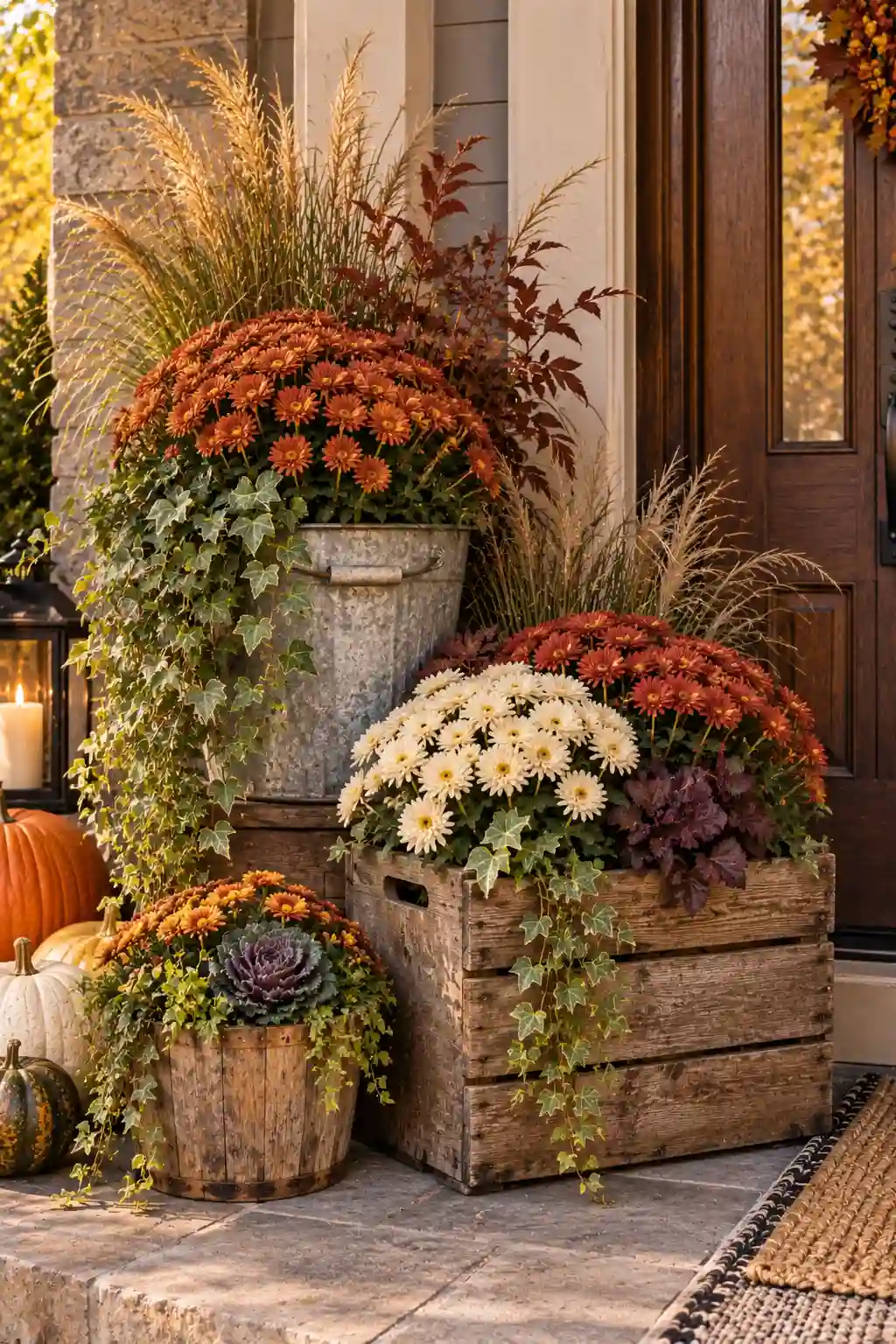
Using what you already own, vintage crates, galvanized buckets, or similar containers, gives genuine texture and history that a twenty-dollar plastic pot simply cannot replicate.
- A vintage wooden crate or galvanized bucket
- Drainage holes drilled into the base if not already present
- A plastic liner or nursery pot inside, if you prefer not to drill directly into the container
- Plants suited to the container’s specific depth
How to Make It: Drill a few drainage holes into the base of the crate or bucket if none exist, add a layer of potting soil, and plant directly inside or place a nursery pot with existing plants inside the container instead.
6. Mums, Pumpkins, and Cornstalks, the Classic Combo
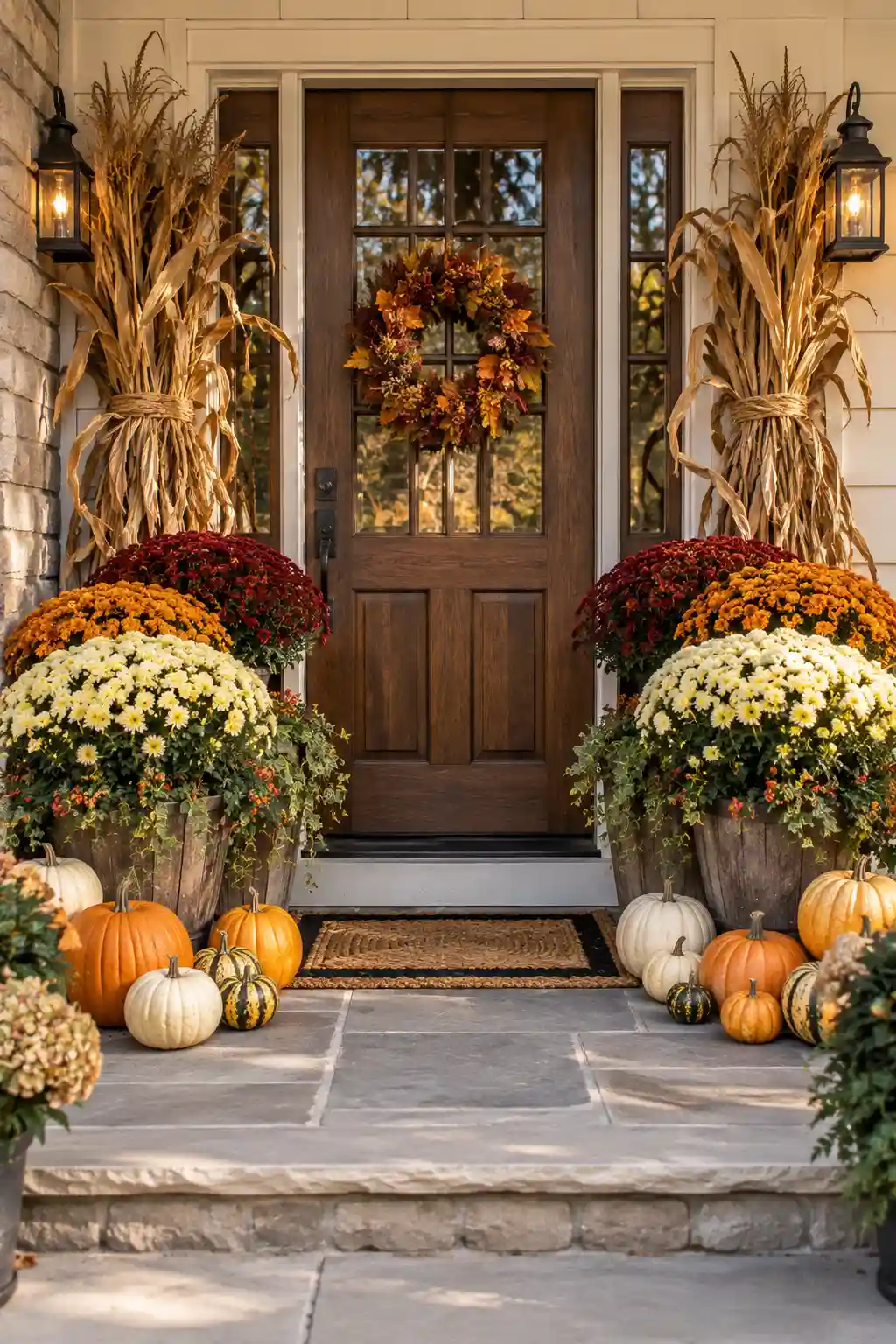
This is genuinely the loudest fall look available, since it hits all three major seasonal signals at once, bloom, gourd, and stalk. Mums also bloom for weeks, which means this combination holds up considerably longer than many other seasonal displays.
- Potted mums in fall colors
- A few pumpkins or gourds of varying sizes
- Dried cornstalks bundled together
How to Make It: Secure the cornstalks upright behind or beside the planter using stakes or twine, arrange the potted mums in front, and place pumpkins around the base to fill in any remaining gaps.
7. The Thriller, Filler, Spiller Formula
Also Read: 17 Stylish DIY Keychain Ideas To Make At Home This Year
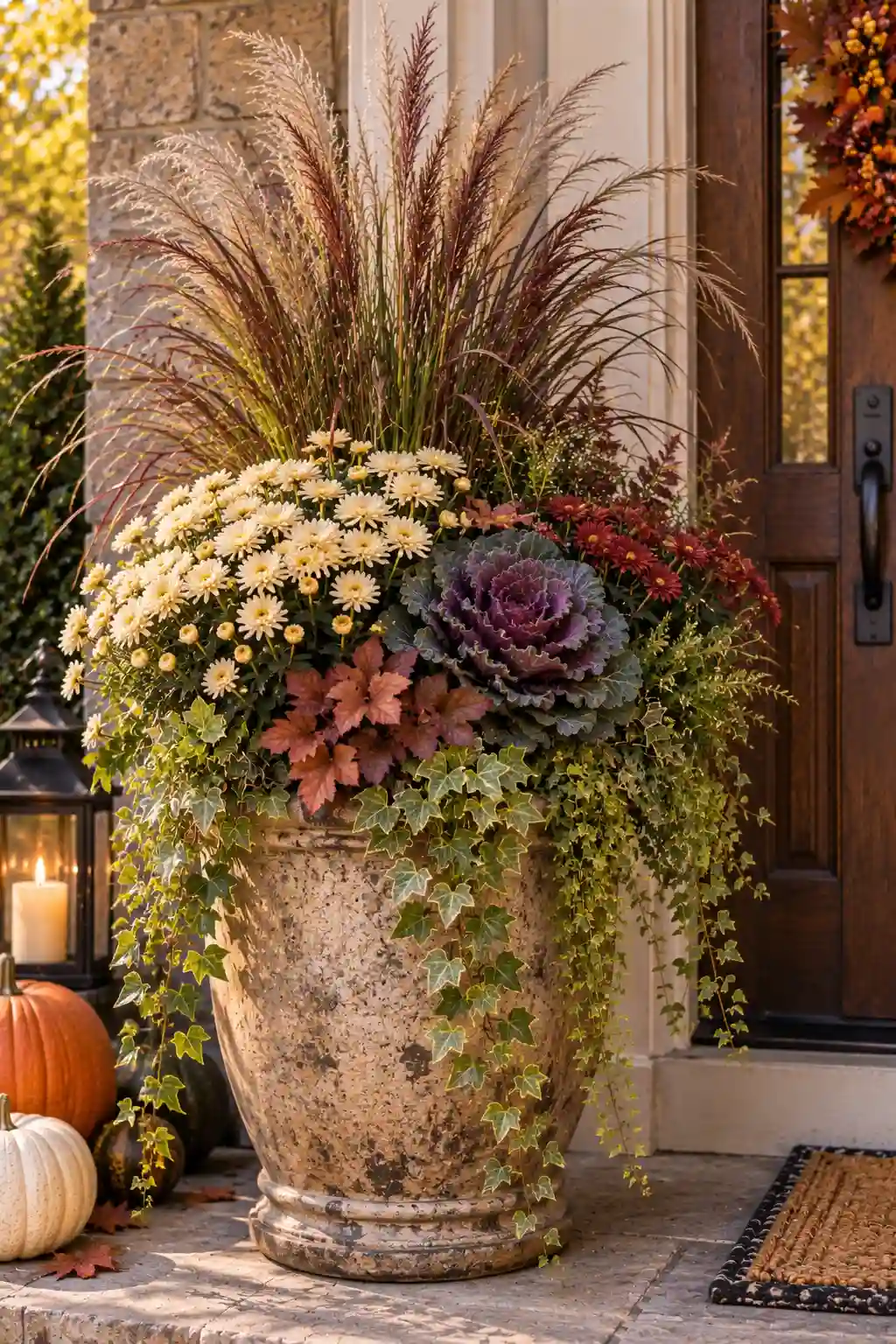
This is the classic florist structure underneath most of the ideas on this list: one tall plant, one rounded mid-height plant, and one trailing plant over the rim. Following this structure is what makes even a single pot look professionally arranged.
- One tall, upright plant as the thriller
- One rounded, bushier plant as the filler
- One trailing plant as the spiller
How to Make It: Plant the tall thriller toward the center or back of the pot first, surround it with the rounded filler plant to build volume, and finish by planting the trailing spiller near the rim so it can cascade naturally over the edge.
8. Carved Pumpkin as the Planter Itself
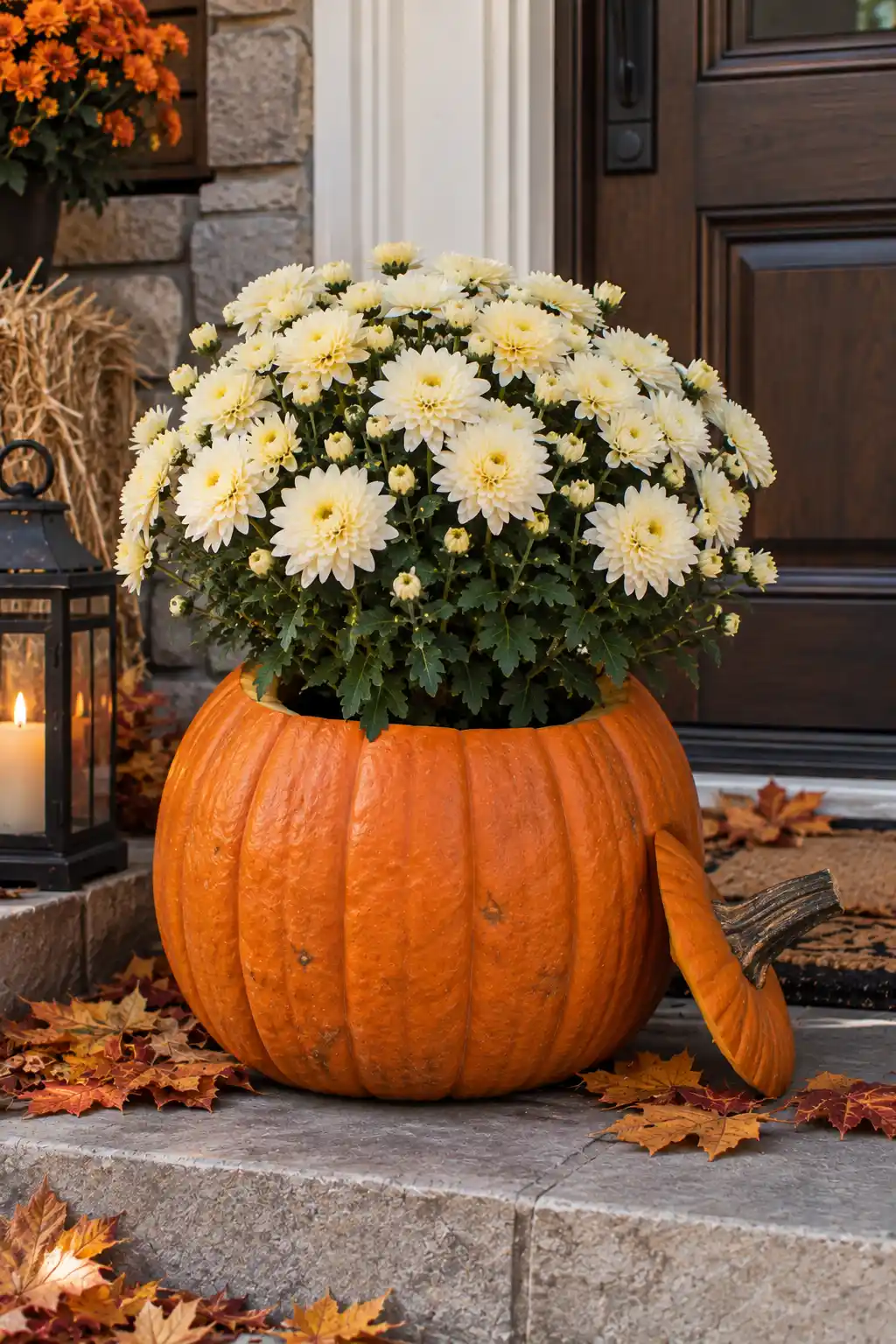
Dropping a potted mum, still in its plastic nursery pot, inside a hollowed pumpkin delivers instant charm with zero repotting required, making this one of the fastest upgrades on this entire list.
- One larger pumpkin, hollowed out
- A mum still in its plastic nursery pot
- A knife or pumpkin carving tool for hollowing
How to Make It: Cut the top off the pumpkin and hollow out the interior enough to fit the nursery pot, then simply drop the potted mum inside without removing it from its original plastic container.
9. Galvanized Wash Tubs With Grapevine Trees
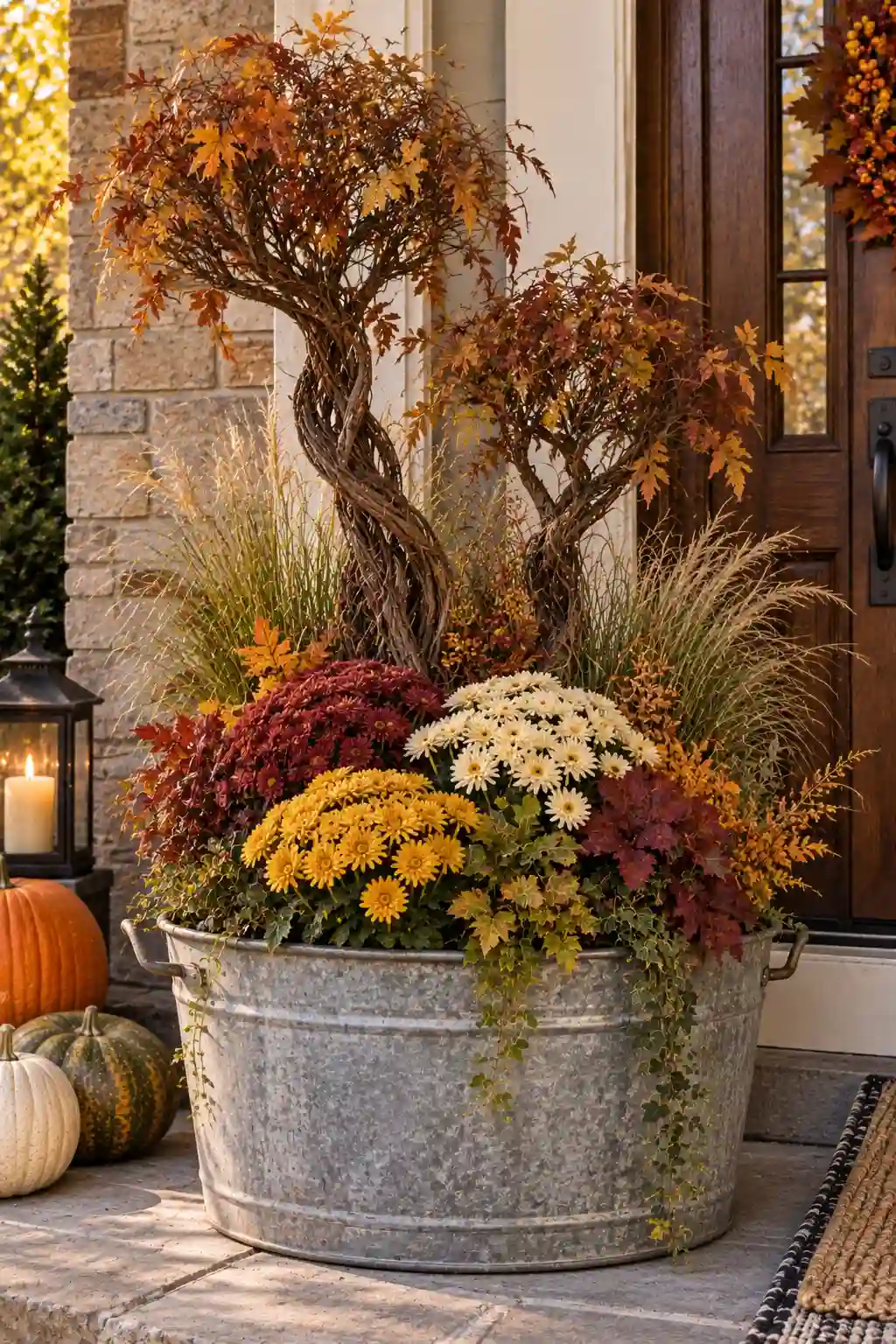
The metal tub’s cool tone against warm fall foliage creates genuine visual contrast, and grapevine trees add a sculptural focal point that goes beyond a purely flower-based arrangement.
- A galvanized wash tub
- One or two grapevine tree forms
- Small mums or seasonal flowers to fill in around the base
How to Make It: Position the grapevine tree centrally in the tub, secure it in place with soil or floral foam, and fill in around the base with small mums or seasonal flowers to complete the arrangement.
10. Faux Galvanized Planters With Mums and Carried-Over Summer Ivy
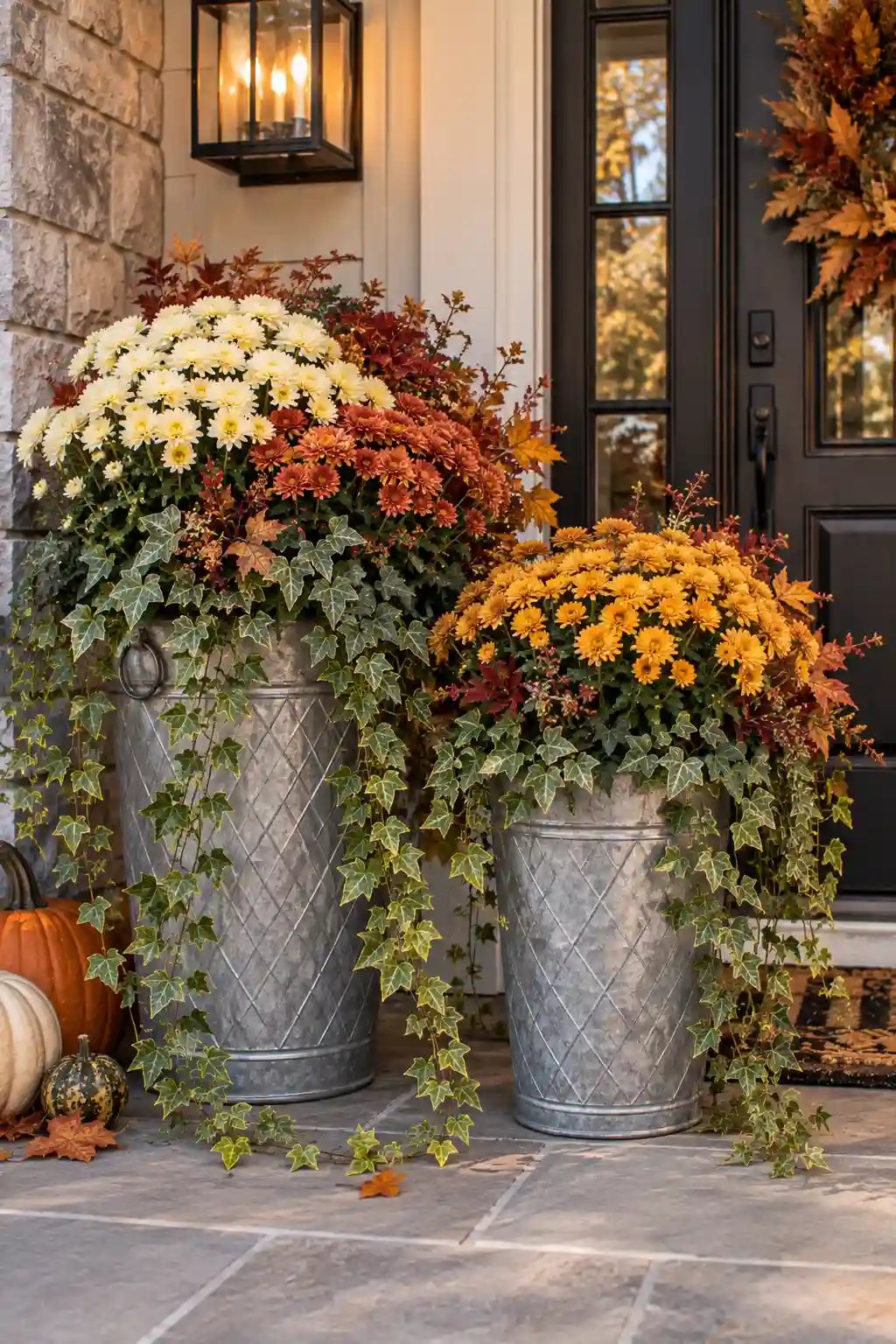
Reusing ivy that has already been growing since summer saves money and keeps the pot looking considerably fuller and more mature than starting an entirely new arrangement from scratch.
- A faux galvanized planter
- Existing ivy already established from a summer arrangement
- Fresh mums to swap in for faded summer blooms
How to Make It: Remove any faded summer flowers from the existing arrangement while leaving the established ivy in place, then plant fresh mums into the newly available space.
11. Layered Container Stacking
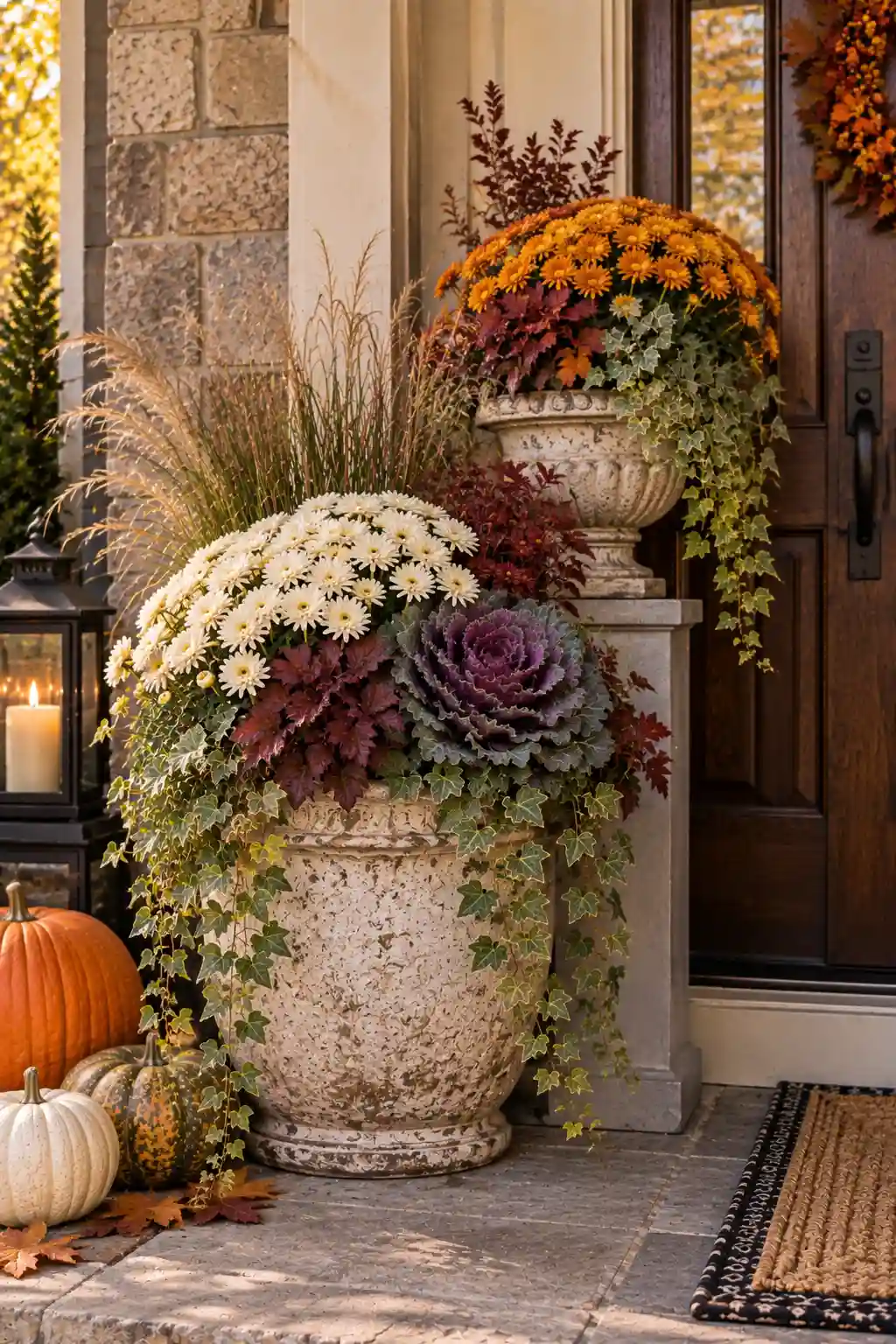
Setting a smaller pot on top of or directly beside a larger one adds genuine vertical interest on narrow porches where floor space is limited and a single wide arrangement simply will not fit.
- One larger base planter
- One smaller planter to stack or position beside it
- A stable platform or riser if stacking directly
How to Make It: Secure a stable riser or overturned pot as a base if stacking, place the smaller planter on top or directly beside the larger one, and style both with coordinating plants so they read as one cohesive arrangement.
12. Rust, Gold, Burgundy, and Cream Color Palette
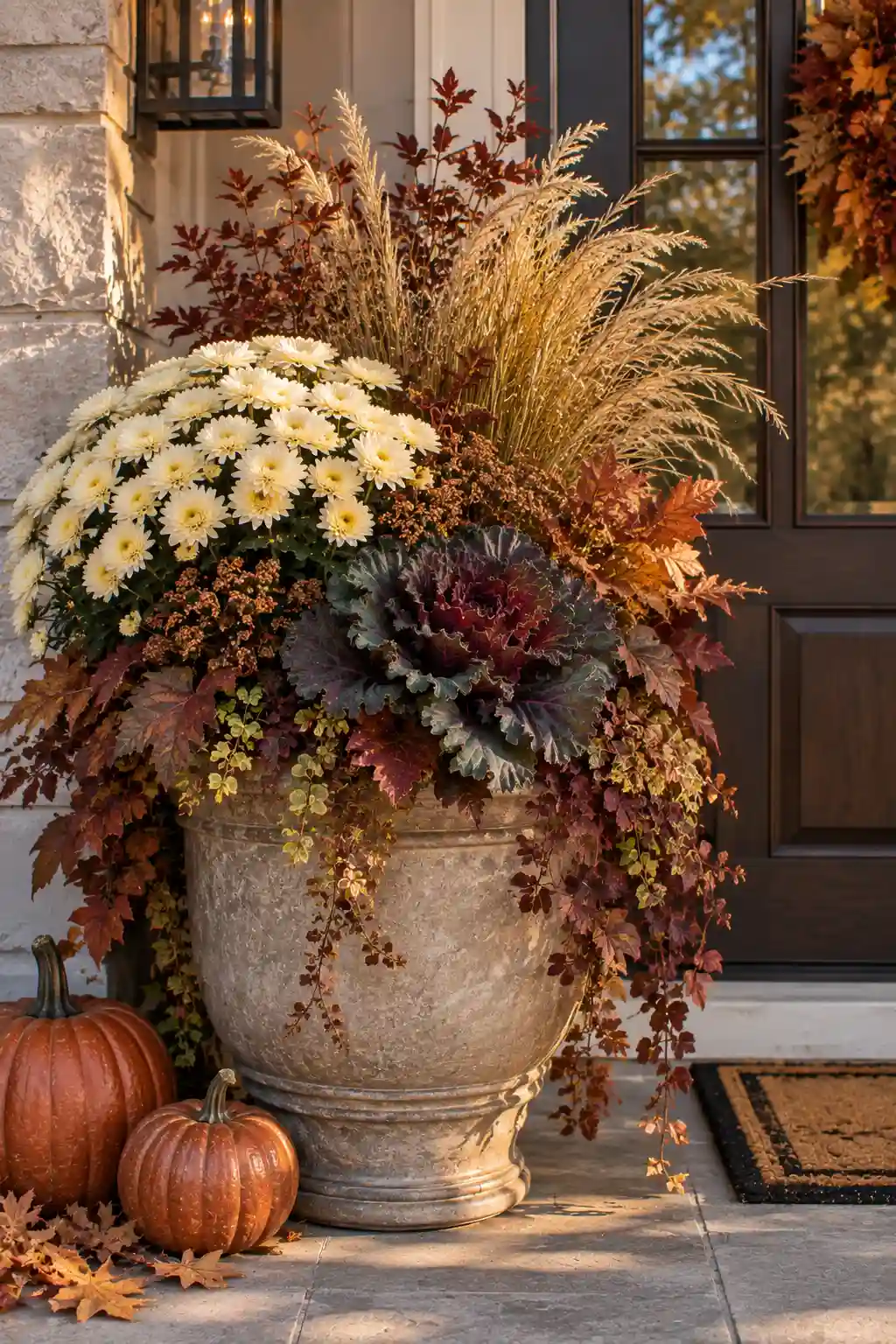
These specific tones read as genuinely autumnal far more convincingly than bright summer colors, making this a reliable rule to follow whenever choosing flowers or ribbon accents for any fall arrangement.
- Flowers or foliage in rust, gold, burgundy, or cream
- Ribbon or bow accents in matching tones, if desired
- Avoidance of bright summer colors like hot pink or turquoise
How to Make It: Select every plant and accessory for the arrangement from within this specific color family before planting, checking swatches or samples together if needed to confirm they genuinely coordinate.
13. Cold-Hardy Plant Choices
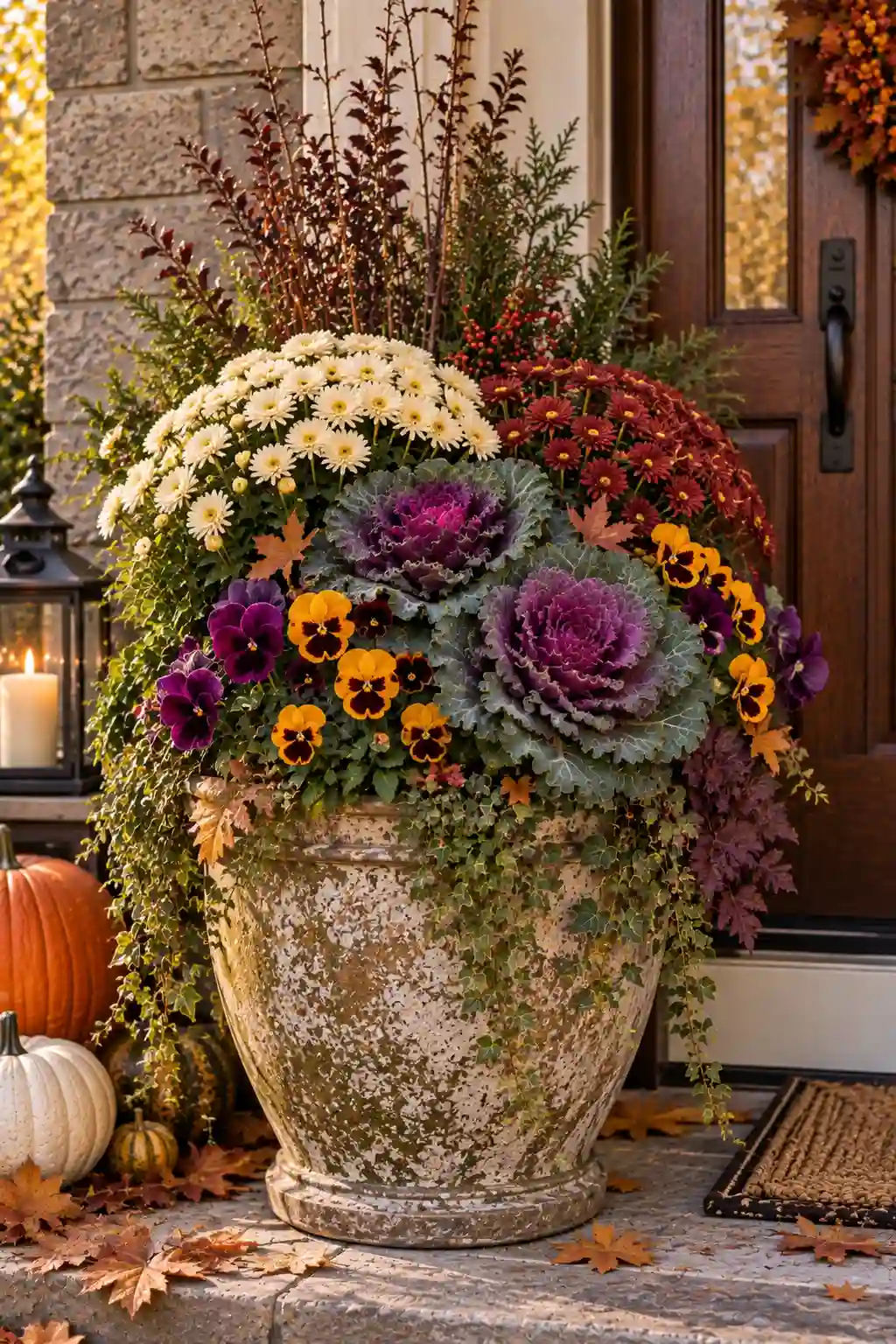
Picking plants that genuinely shrug off a light frost, ornamental kale, pansies, and many mum varieties, means the planter still looks good well into November instead of dying off after the very first cold night.
- Ornamental kale
- Pansies
- Cold-hardy mum varieties specifically rated for your growing zone
How to Make It: Check the cold hardiness rating on plant tags before purchasing, and prioritize kale, pansies, and hardy mums specifically if you want the arrangement to last through several cold snaps rather than just the first mild weeks of fall.
14. Mixed Leaf Shapes and Textures
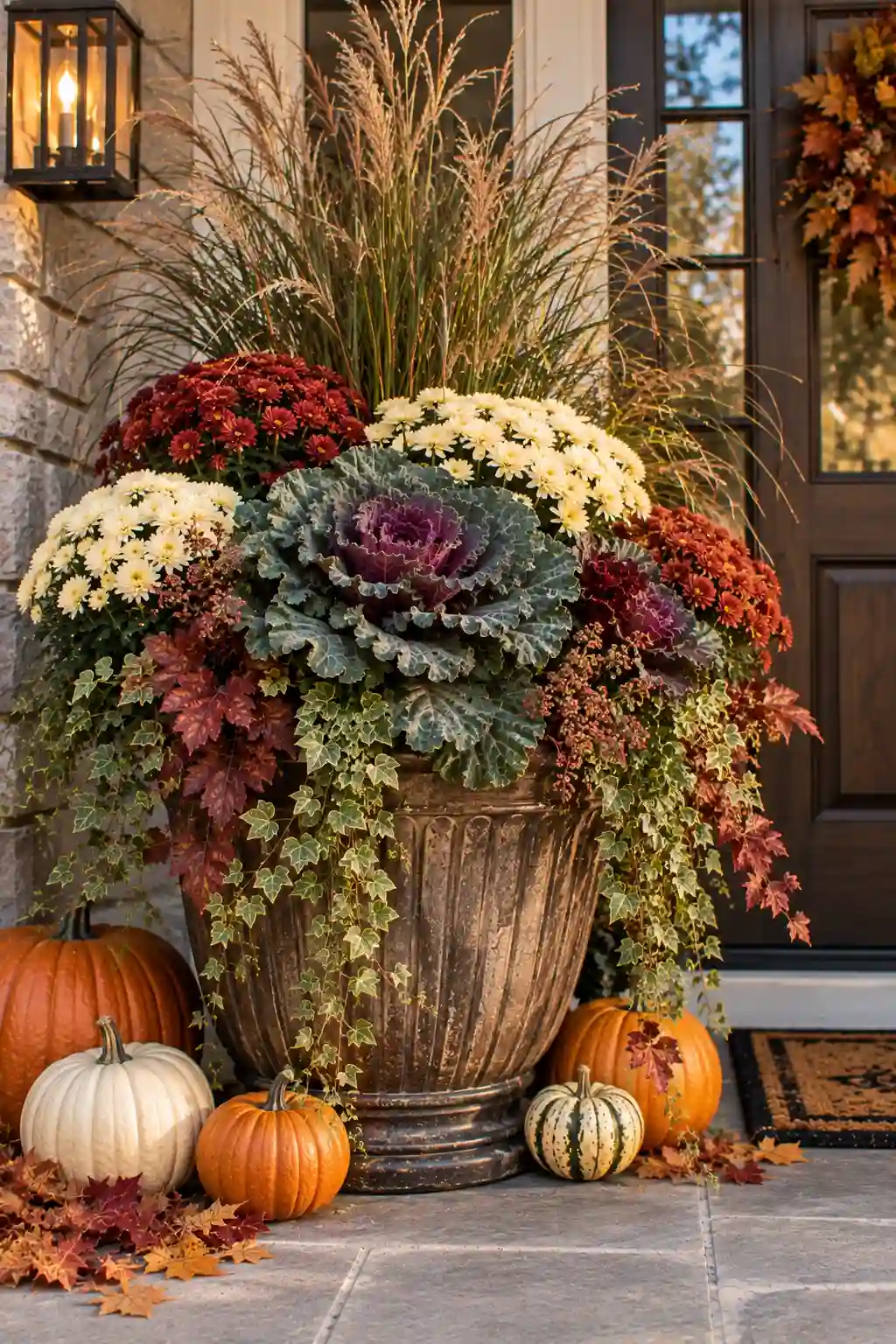
Combining spiky grasses, ruffled cabbage, and smooth pumpkin skin keeps a planter visually interesting even after the blooms themselves have faded, since texture alone continues carrying the arrangement.
- Spiky ornamental grasses
- Ruffled ornamental cabbage
- Smooth-skinned pumpkins or gourds
How to Make It: Choose at least three distinctly different leaf or surface textures when planning the arrangement, positioning them near each other so the contrast is genuinely visible rather than blending together.
15. Bittersweet or Dried Floral Sprigs Tucked In
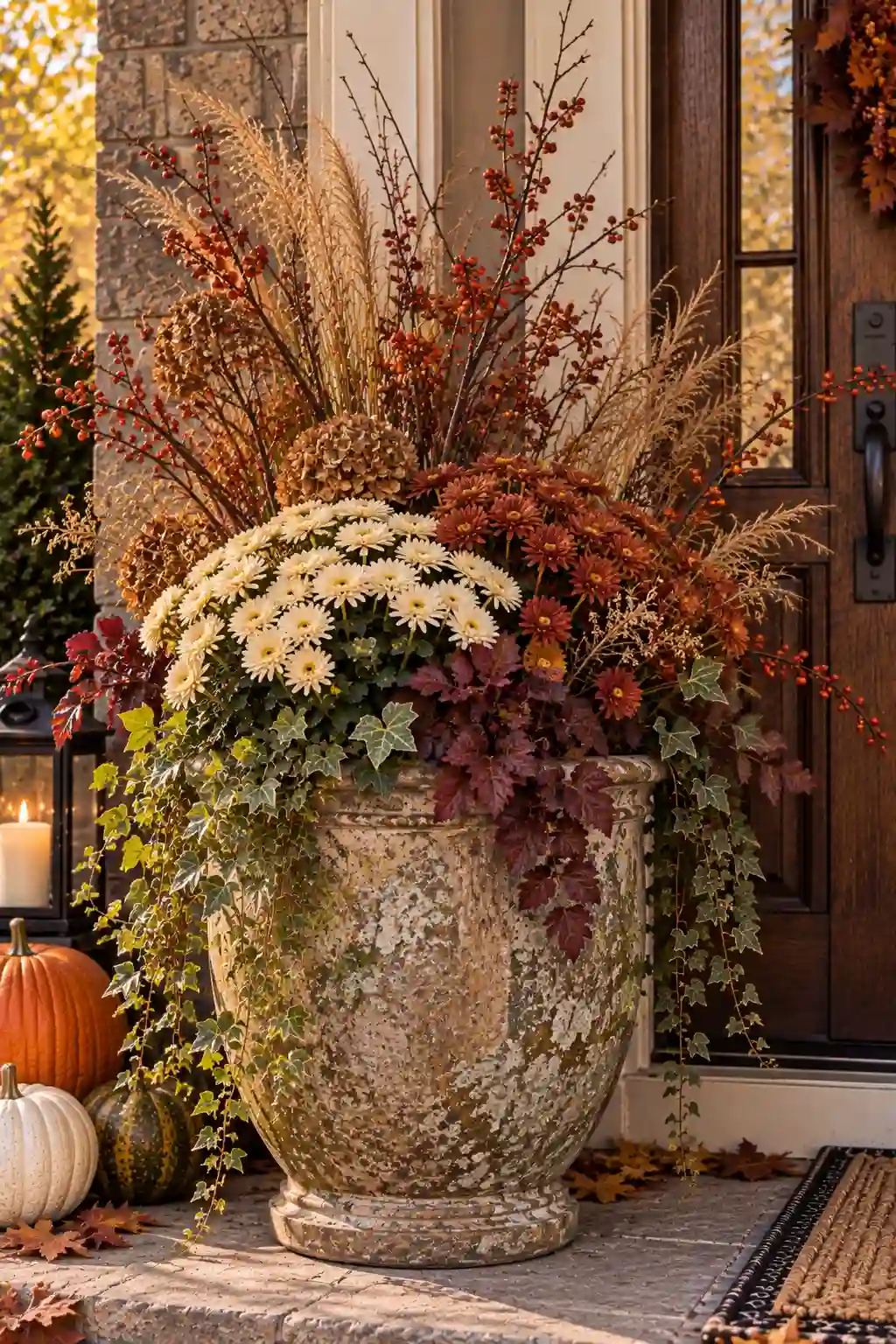
This is a genuinely low-effort accent that adds a pop of texture and color, and unlike fresh flowers, it does not need replacing for weeks at a time.
- A few stems of bittersweet or another dried floral sprig
- Floral wire or picks for securing the stems in place
How to Make It: Trim the dried stems to a length that suits the arrangement, then tuck them directly into the soil or secure them with a floral pick among the existing plants.
16. Flanking the Front Door Symmetrically
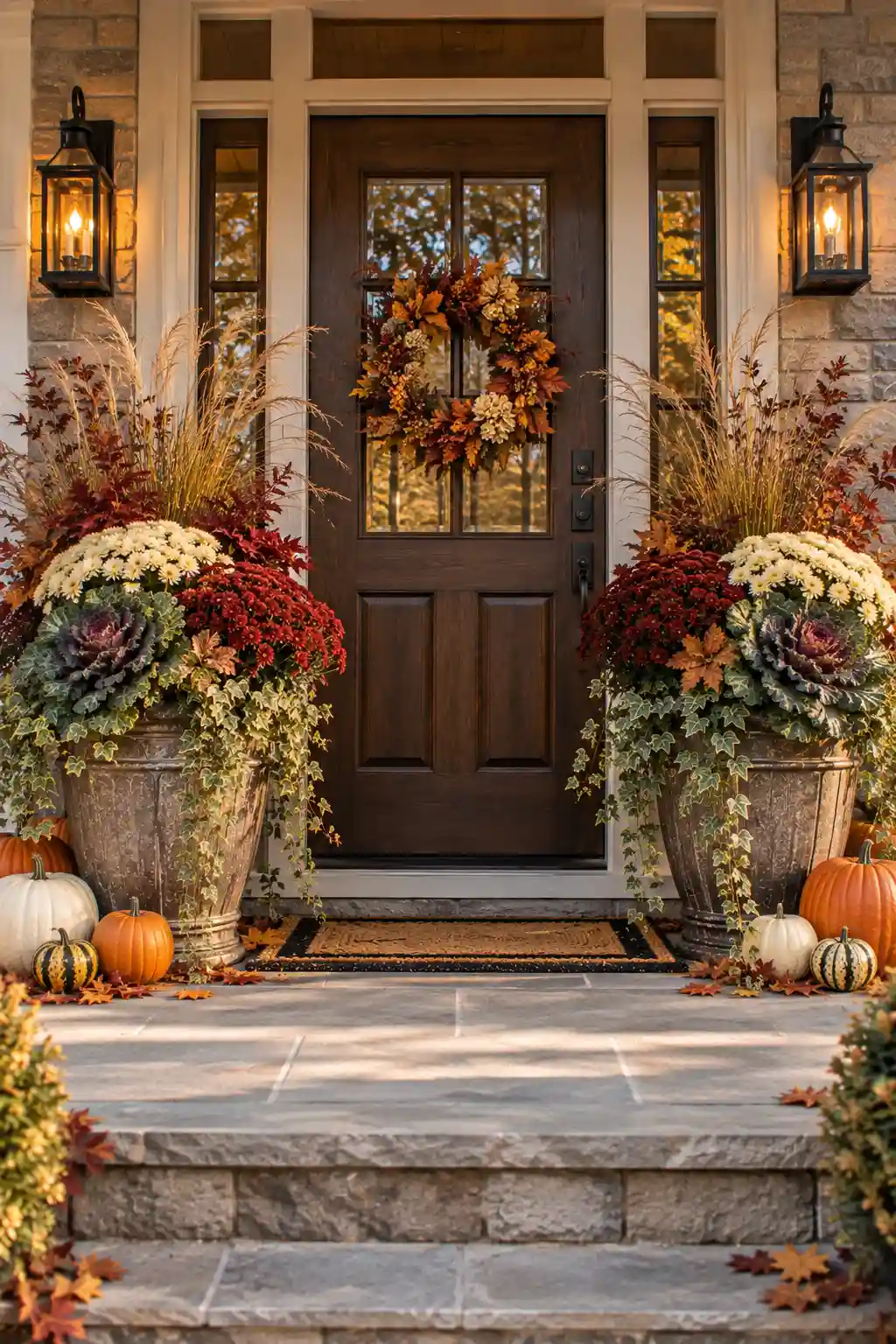
Two matching, or nearly matching, planters positioned on either side of the entry instantly reads as intentional and genuinely welcoming, compared to a single random pot placed off to one side.
- Two matching or closely coordinating planters
- Identical or near-identical plant arrangements in each
- Level, even placement on either side of the entry
How to Make It: Build or purchase two arrangements as close to identical as possible, then position one on each side of the front door at an equal distance, checking that both sit at the same height for a genuinely symmetrical finish.
The Formula Behind Almost Every Idea on This List
The thriller, filler, spiller structure from idea seven is genuinely the backbone most of these other 15 ideas build on top of, whether or not it is explicitly called out in each individual description.
- A tall, vertical element establishes the arrangement’s height
- A fuller, rounded element fills the middle of the composition
- A trailing element softens the container’s edge
Getting this basic three-part structure right is what makes almost any container and plant combination on this entire list look genuinely pulled together, rather than simply plants placed randomly into a pot.
Final Thoughts
A porch full of fall planters does not require a completely different approach for every single container. As these 16 ideas show, most of the visual variety actually comes from swapping materials, a barrel instead of an urn, a pumpkin instead of a plastic pot, while relying on the same underlying thriller, filler, spiller structure and a consistently warm color palette throughout.
Start with whichever container style matches your porch’s existing look, apply the three-part planting structure, and choose plants from the rust, gold, burgundy, and cream palette for a display that reads as intentional and lasts well into the colder weeks ahead.