

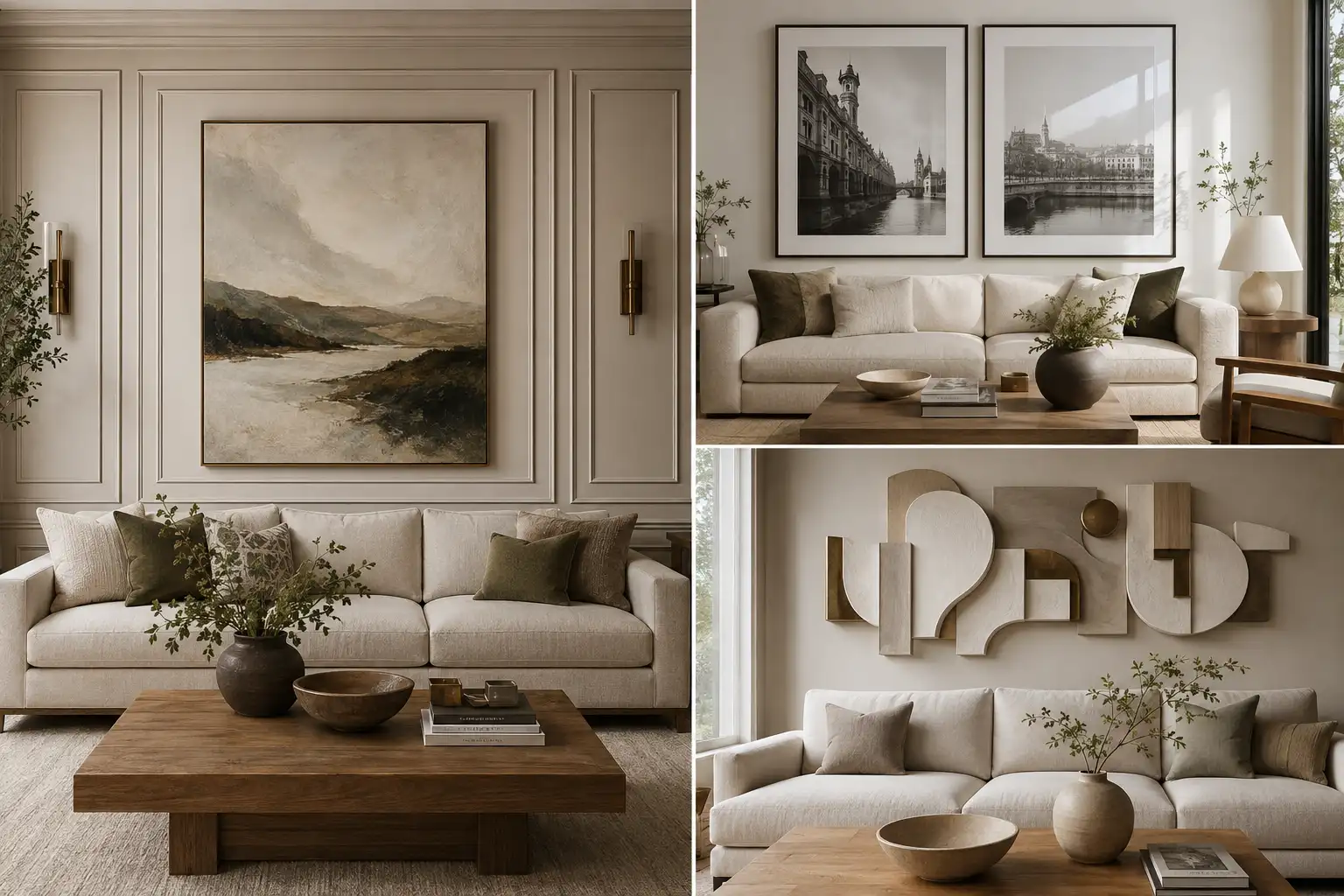
Table of Contents
A living room wall can do far more than hold a few framed prints. With the right scale, texture, and placement, it can shape how the entire room feels and give even simple furniture a more considered setting.
The most compelling walls often combine decoration with architectural character. Oversized artwork, refined molding, sculptural pieces, mirrors, fluted panels, and thoughtful lighting can introduce depth without making the space feel crowded.
These ideas focus on sophisticated choices that feel intentional and visually strong. Whether you prefer subtle detailing or a dramatic focal wall, there are plenty of ways to create impact while keeping the room polished and inviting.
The Living Room Wall Decor Ideas That Can Transform a Living Room
The following 16 ideas approach wall decor from different perspectives, from statement artwork and curated photography to dimensional surfaces and architectural treatments. Each one offers a distinct way to add character, improve proportion, and make the living room feel more complete without relying on excessive decoration.
1. Make Oversized Artwork the Anchor of the Wall
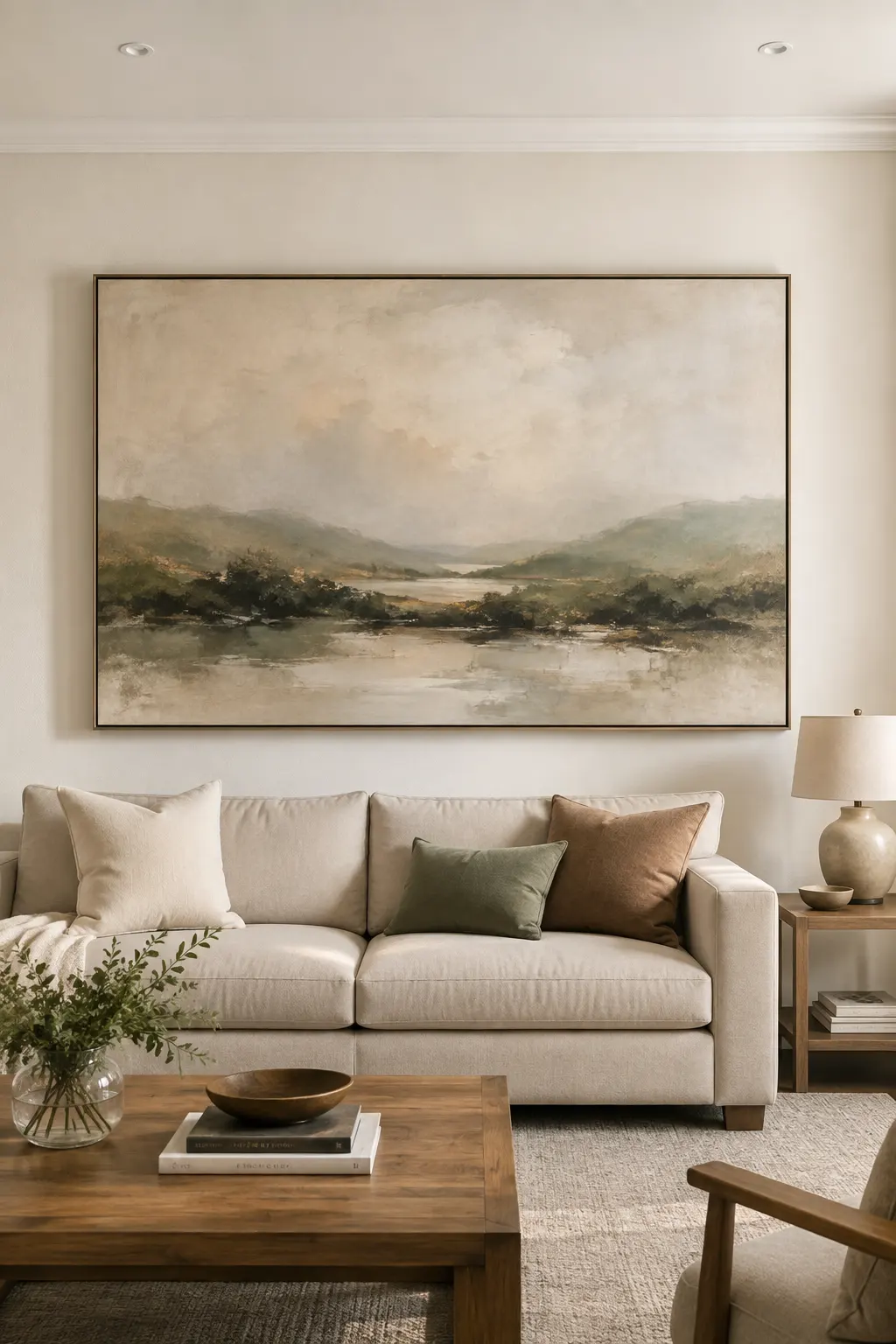
An oversized piece of artwork can completely change how a living room wall feels. A large landscape or abstract painting creates a strong focal point above the sofa while giving the room a more finished, intentional appearance. It also fills a broad wall without relying on several smaller decorative pieces.
For a sophisticated result, choose artwork with colors that connect naturally with the rest of the room. Soft greens, warm beige, cream, muted brown, and subtle earthy tones work especially well in neutral interiors. A slim frame can define the artwork without competing with the image itself.
Scale is what makes this approach particularly effective. The artwork should feel substantial in relation to the sofa rather than floating in the middle of a large empty wall. Keeping the surrounding decor restrained allows the painting to command attention while maintaining a calm, polished atmosphere.
Pro Tip: Hang oversized artwork close enough to the sofa that they feel visually connected, and choose a width that complements the furniture rather than overwhelming it.
2. Create a Gallery Like Moment With a Large Triptych
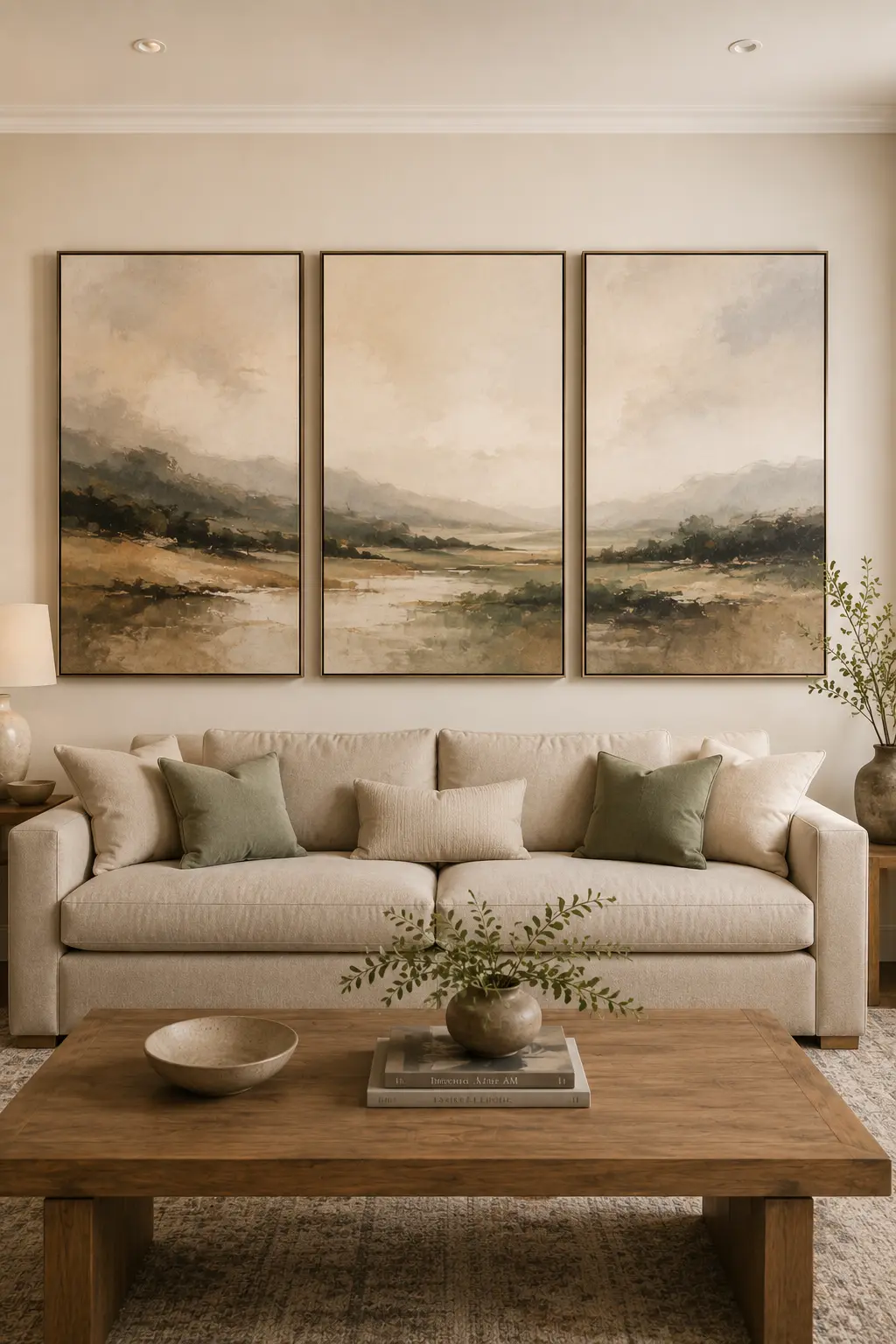
A three piece artwork arrangement brings structure to a wide living room wall while making the space feel thoughtfully composed. When the panels share one continuous visual theme, they read almost like a single expansive work of art. This creates presence without making the wall feel crowded or overly decorated.
Tall panels are particularly effective above a long sofa because they introduce height while still following the width of the furniture. Keep the spacing between each piece consistent so the composition feels balanced. Slim frames also help maintain a clean appearance and allow the artwork itself to remain the main attraction.
For a softer, sophisticated atmosphere, choose artwork with a restrained palette that echoes colors already present in the room. Muted landscapes, tonal abstracts, and atmospheric scenes can introduce depth while blending naturally with neutral upholstery, warm wood furniture, and subtle accent colors.
Pro Tip: Keep all three panels at the same height and use narrow, even spacing between them so the triptych reads as one cohesive statement rather than three separate pictures.
3. Add Dimension With Sculptural Wall Art
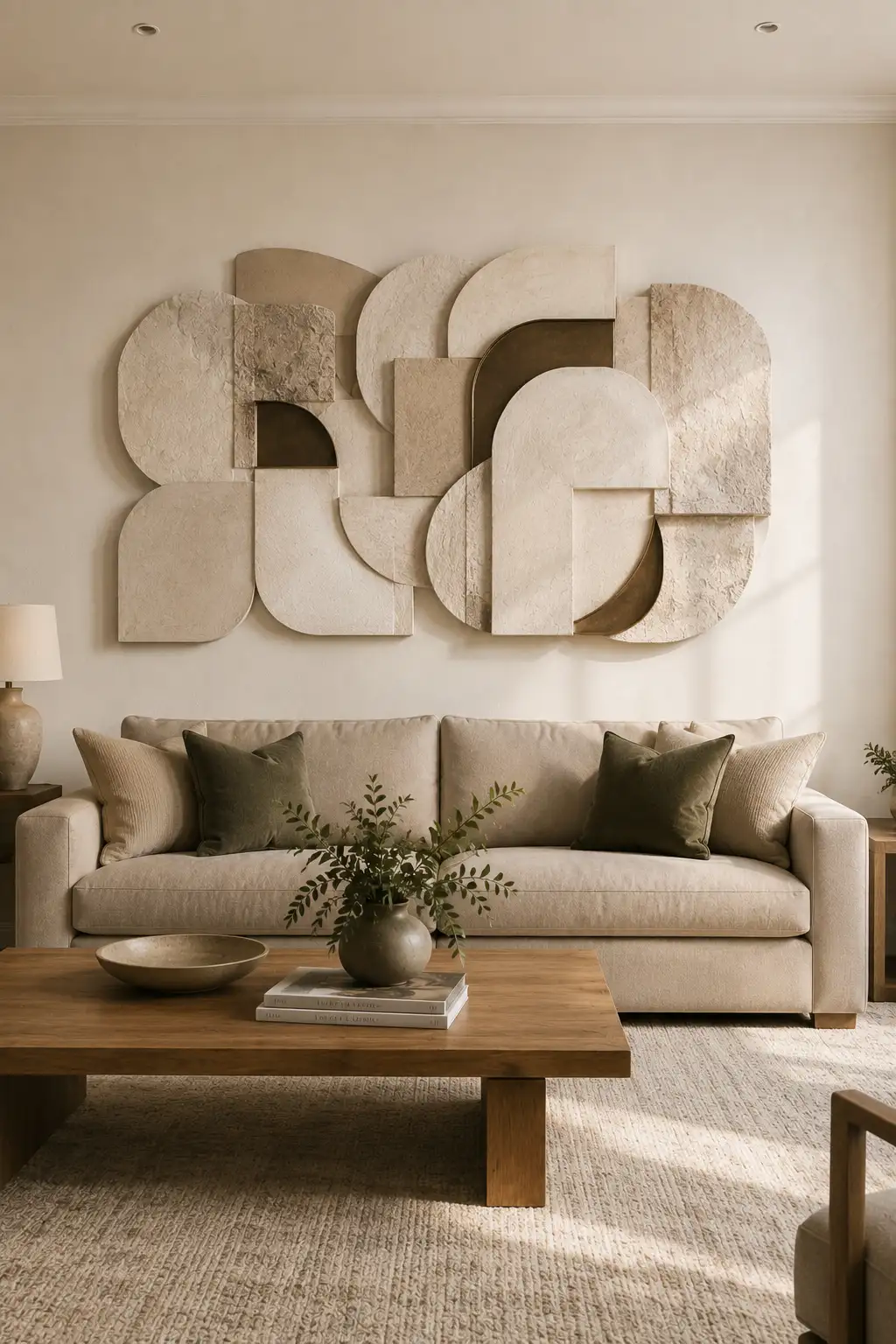
Sculptural wall art brings a different kind of presence to a living room because it goes beyond a flat framed piece. Layered forms, curved shapes, and raised surfaces create depth across the wall, turning an otherwise simple backdrop into a more architectural focal point.
A tonal design works particularly well when you want the effect to feel sophisticated rather than overly decorative. Shades of ivory, warm beige, taupe, and bronze can sit beautifully against a neutral wall while still creating enough contrast to define each individual shape.
Natural light makes this idea even more effective. As daylight moves across the room, the raised surfaces cast changing shadows that emphasize the artwork’s texture and form. Keeping the sofa and surrounding accessories understated allows those sculptural details to remain the strongest visual feature.
Pro Tip: Position dimensional wall art where natural side light can reach it, as soft highlights and shadows will make its layered construction far more noticeable.
4. Give Framed Art a Gallery Feel With Picture Lights
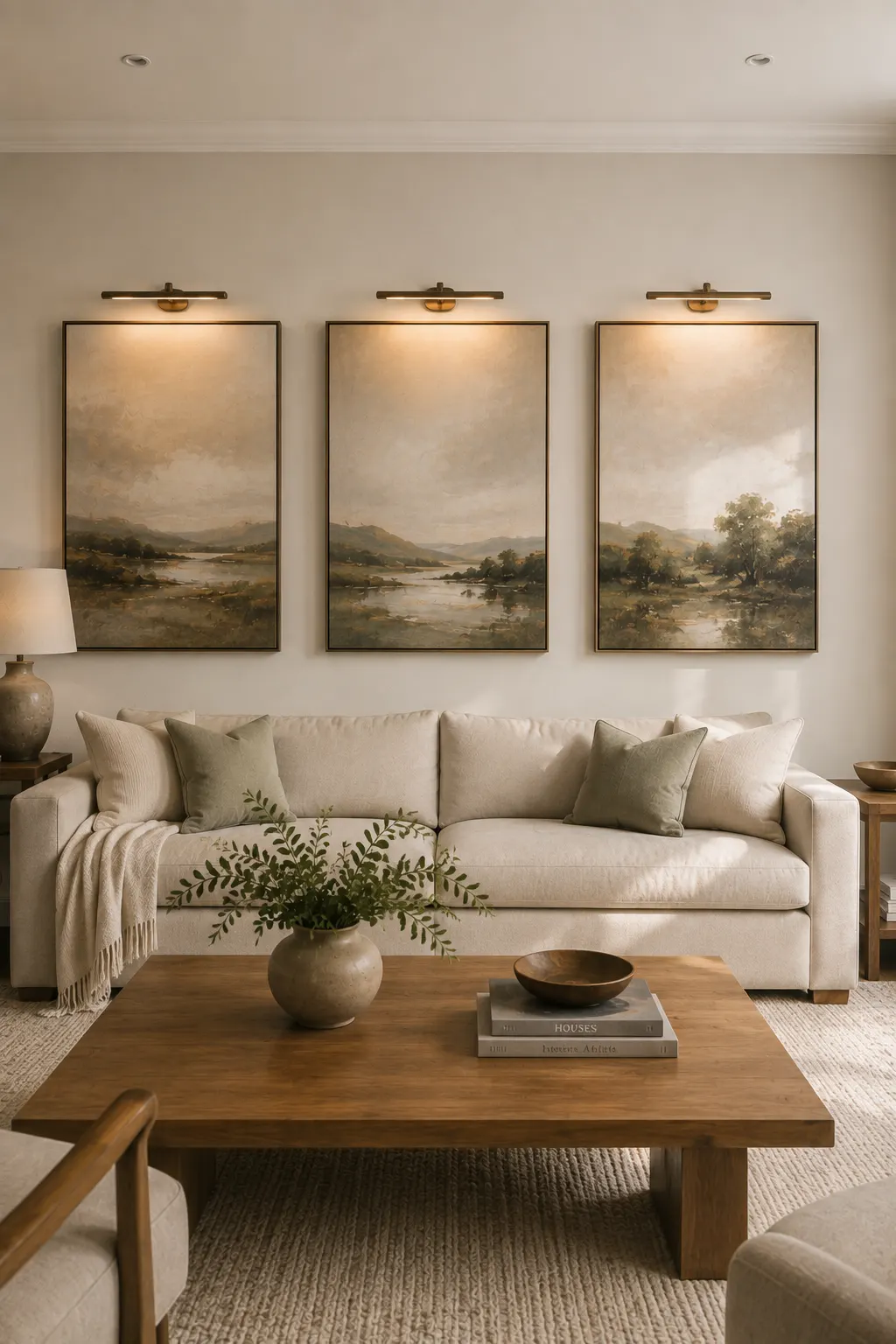
Picture lights can turn a simple artwork arrangement into a much more polished wall feature. Placing a slim light above each framed piece gives the composition a gallery inspired quality while drawing attention to details that might otherwise disappear into the background.
This approach works especially well with a series of coordinated paintings. Keeping the frames consistent and aligning the lights directly above them creates a sense of rhythm across a wide living room wall. Warm brass or bronze finishes can also introduce a subtle decorative accent without becoming too dominant.
The lighting becomes particularly effective in the evening, when each artwork receives its own soft pool of illumination. During the day, the fixtures still contribute structure and character, making the wall feel thoughtfully designed even when the lights are switched off.
Pro Tip: Choose picture lights slightly narrower than the artwork below them and use warm illumination to enhance the art without creating harsh glare.
5. Layer Framed Art Along a Long Picture Ledge
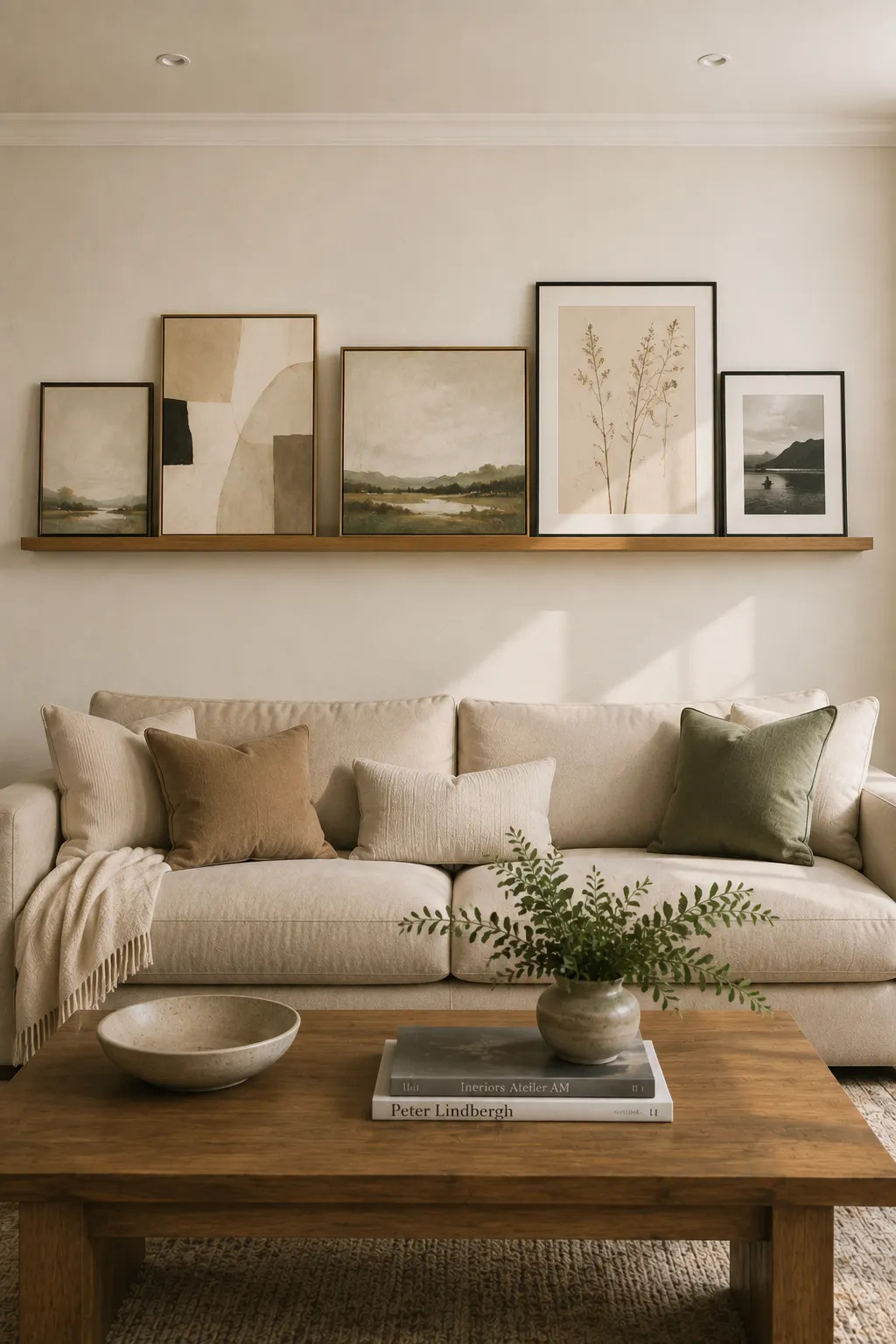
A long picture ledge offers a more relaxed way to display artwork while still giving the living room wall a carefully considered look. Instead of hanging every frame individually, several pieces can rest along one continuous shelf, creating a strong horizontal feature above the sofa.
Mixing different frame sizes makes the arrangement feel collected rather than overly uniform. Combine abstract art, landscapes, botanical studies, and photography while keeping the colors connected. Allowing a few frames to overlap slightly can also add depth without making the display feel cluttered.
The ledge itself should remain slim so it supports the artwork without becoming the main attraction. Warm wood works beautifully against a light neutral wall and can connect the display with a coffee table or other wood finishes elsewhere in the living room.
Pro Tip: Start with one or two larger frames as visual anchors, then layer smaller pieces around them to create an arrangement that feels balanced but not perfectly symmetrical.
6. Build Drama With a Dark Wall and Light Artwork
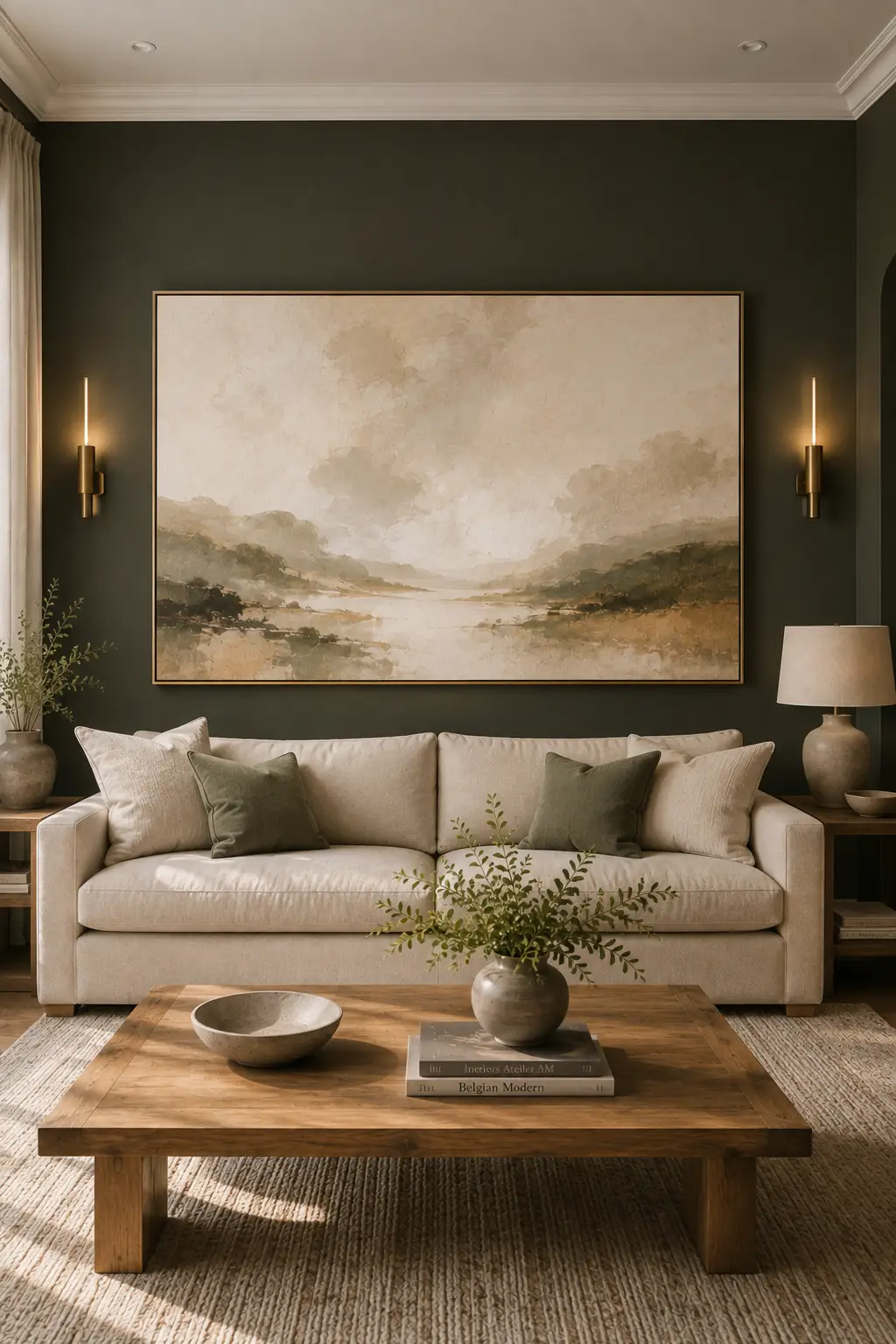
A deep accent wall can bring striking architectural presence to a living room without requiring elaborate decoration. Rich olive, charcoal, or earthy green creates a strong backdrop, while oversized light artwork introduces contrast and keeps the overall composition from feeling too heavy.
The key is balancing the darker wall with lighter elements throughout the seating area. A cream sofa, pale artwork, and warm wood furniture soften the depth of the paint while allowing it to remain a defining feature. This contrast can also make a large living room feel warmer and more intimate.
Slim wall sconces placed beside the artwork add another layer to the arrangement. Their warm light draws attention toward the center of the wall and creates a polished evening atmosphere. Keeping accessories restrained ensures the combination of color, artwork, and lighting remains the focus.
Pro Tip: When using a dark wall, repeat its color subtly through cushions or smaller accents while keeping the largest furniture pieces light to maintain visual balance.
Also Read: 16 Small Bedroom Storage Ideas You’ll Wish You Found Sooner
7. Turn Built In Wall Niches Into a Curated Display
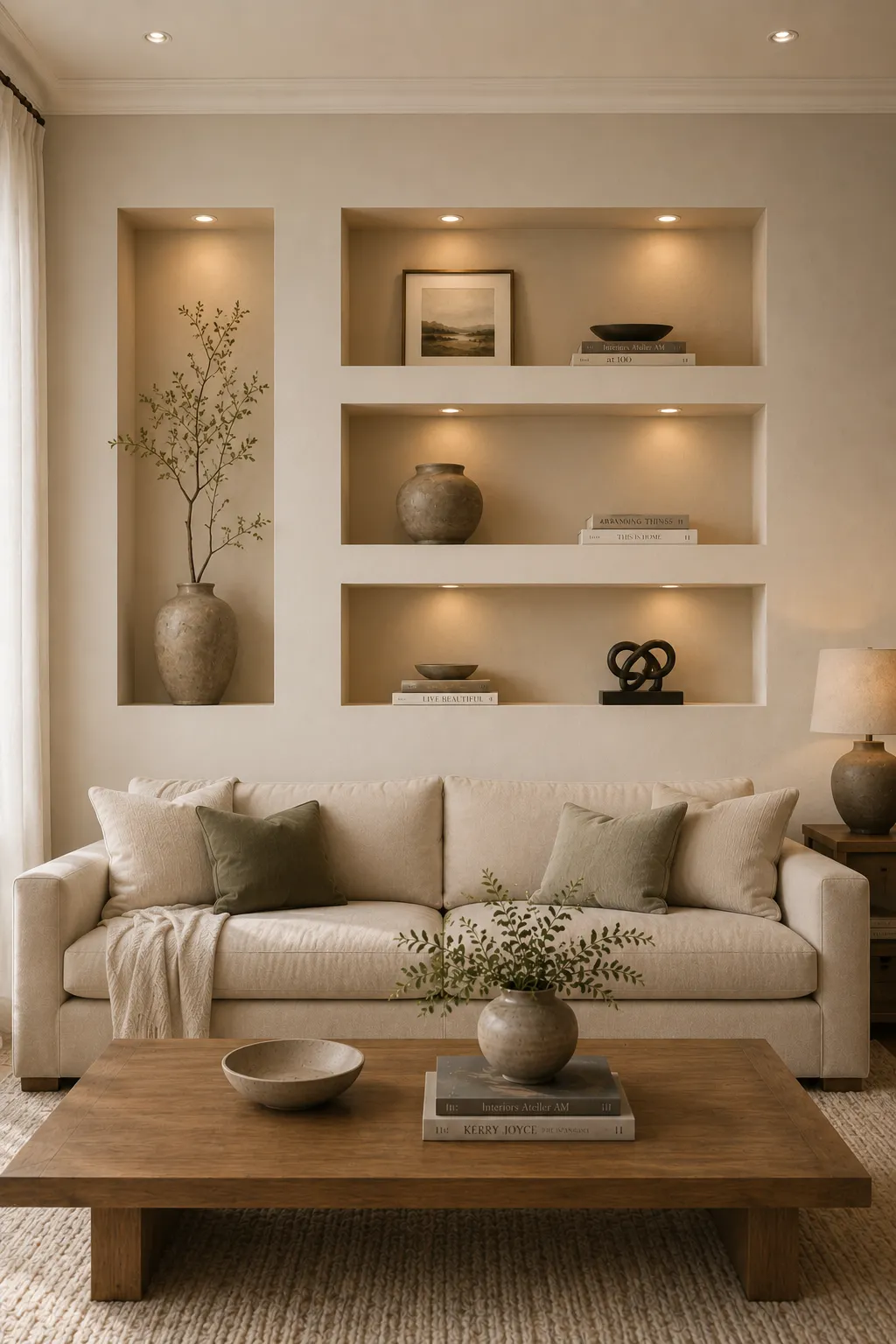
Built in niches can make wall decor feel like part of the architecture rather than something added afterward. Recessed sections introduce depth to a flat living room wall while creating dedicated spaces for artwork, ceramics, books, and sculptural objects without requiring bulky shelving.
The strongest arrangements leave plenty of breathing room around each piece. A tall niche can hold a substantial vase with natural branches, while wider openings work beautifully for framed art, stacked books, or a single sculptural accent. Keeping the selection limited gives every object more visual importance.
Integrated lighting adds another dimension by softly illuminating each recess and emphasizing its depth. Warm light works particularly well with cream or beige walls, creating gentle shadows and an inviting atmosphere after dark. Repeating similar materials and tones across the niches keeps the overall composition cohesive.
Pro Tip: Avoid filling every inch of a built in niche. Leaving intentional open space around larger objects will make the display feel more refined and architecturally considered.
8. Frame the Feature Wall With Elegant Picture Molding
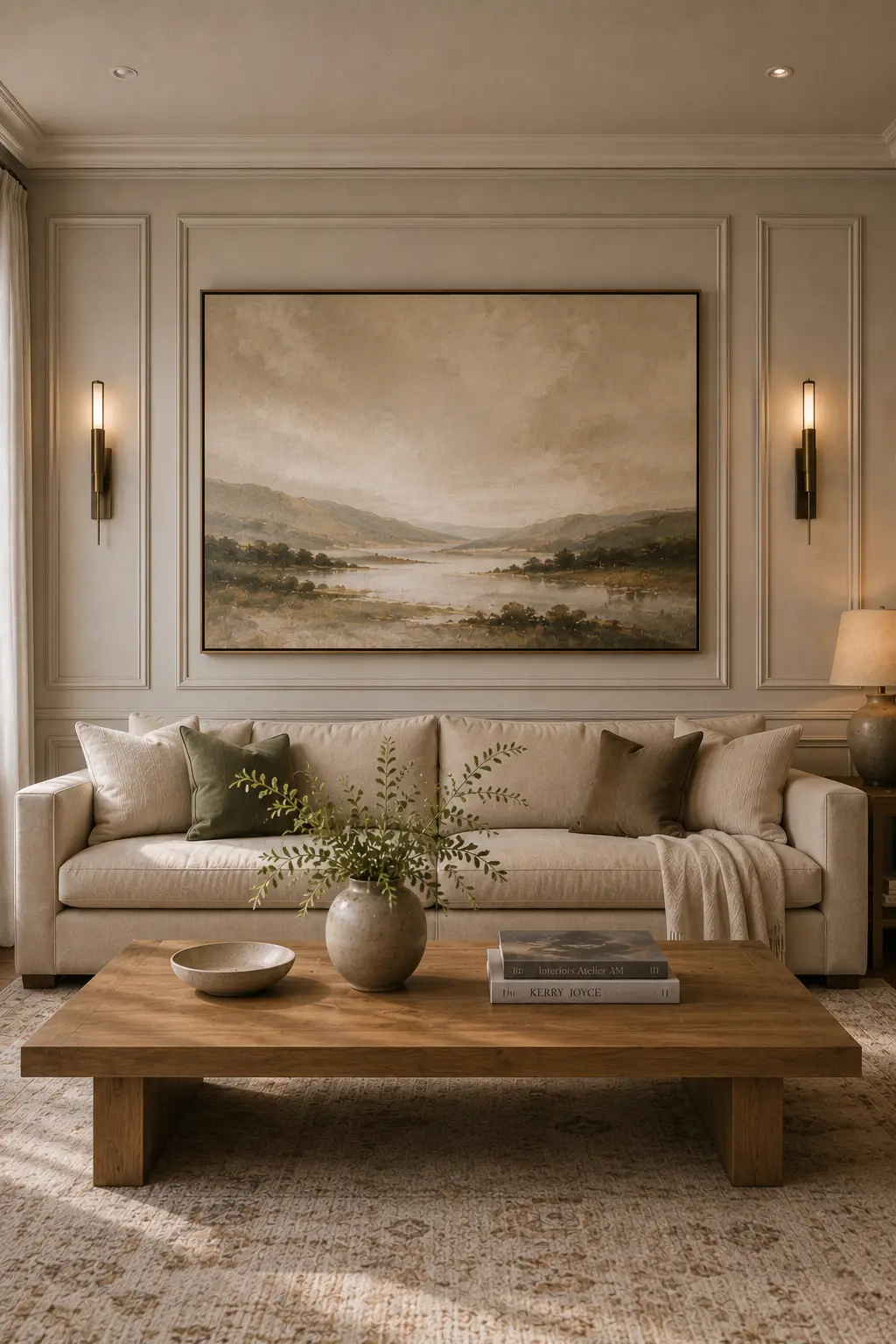
Picture frame molding can give a living room wall architectural depth without introducing another material or bold color. Large rectangular panels create structure around the sofa and artwork, making the entire arrangement feel integrated into the room rather than simply placed against a blank wall.
Painting the molding and wall in the same warm neutral shade keeps the effect refined and understated. A large artwork can then sit inside the central panel, while narrower side panels provide natural positions for sconces. This creates balance without requiring additional decorative objects.
The proportions of the molding matter just as much as the detailing itself. Larger panels tend to suit contemporary living rooms because they provide breathing room around the artwork and furniture. Slim profiles also keep the treatment elegant rather than making it feel overly traditional or ornate.
Pro Tip: Plan the molding around the sofa and artwork before installation so the central panel frames both elements naturally and the wall reads as one complete composition.
9. Create a Refined Focal Point With Molding and Sconces
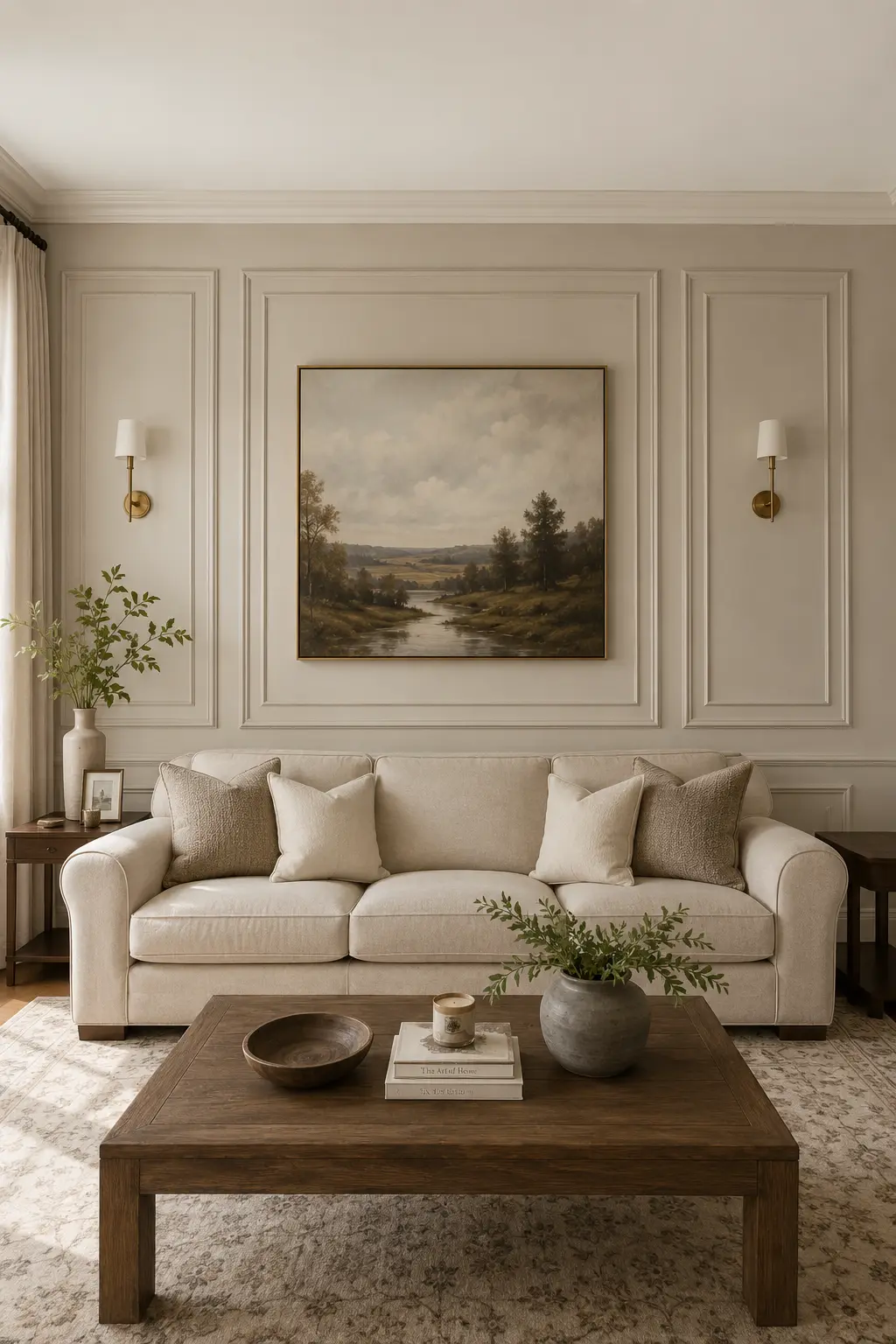
Combining picture frame molding with artwork and wall sconces creates a feature wall that feels complete from every angle. The molding establishes the architectural framework, while a substantial painting in the center gives the eye a natural focal point above the sofa.
Matching side panels bring order to the composition without making the wall feel overly decorated. A pair of understated sconces can sit within these panels, adding height and symmetry while introducing another layer of warm light. Brass finishes work especially well with cream walls and deeper wood tones.
Keep the artwork large enough to hold its own within the central molding panel. A landscape or tonal painting can soften the structured lines and introduce color without disrupting the calm palette. With fewer decorative elements, each detail has more room to make an impression.
Pro Tip: Center the artwork within the main molding panel rather than simply centering it over the sofa, then position the sconces at matching heights for a more architecturally balanced result.
10. Introduce Warm Architectural Rhythm With Wood Slat Panels
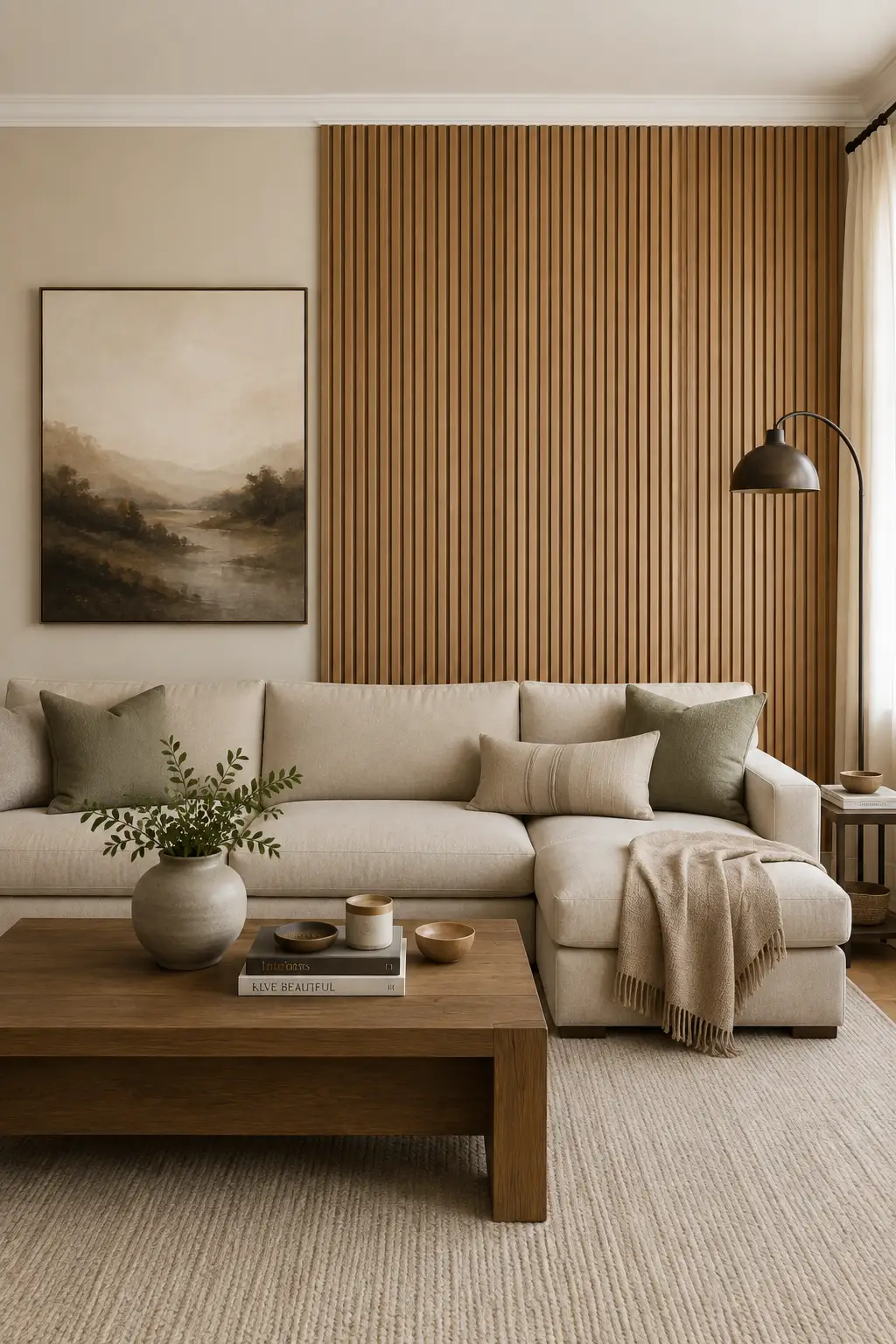
Vertical wood slats can transform a plain living room wall by adding texture, height, and a stronger architectural presence. Rather than covering the entire surface, using them across one broad section creates an intentional feature while leaving enough painted wall visible for the room to feel balanced.
A warm oak finish works especially well with cream upholstery and soft neutral walls. The repeated vertical lines naturally draw the eye upward, which can make the ceiling appear taller. Pairing the slatted section with a large piece of artwork on the adjoining plain wall also keeps the composition from becoming too repetitive.
The surrounding furniture should remain relatively simple so the wood grain and linear detailing can take center stage. Warm timber furniture can subtly echo the wall treatment, while muted green or earthy accents introduce contrast without competing with the natural tones.
Pro Tip: Use wood slats on only part of the feature wall when you want architectural texture without overwhelming the room, and repeat the same wood tone elsewhere for a more connected look.
11. Open Up the Wall With an Oversized Designer Mirror
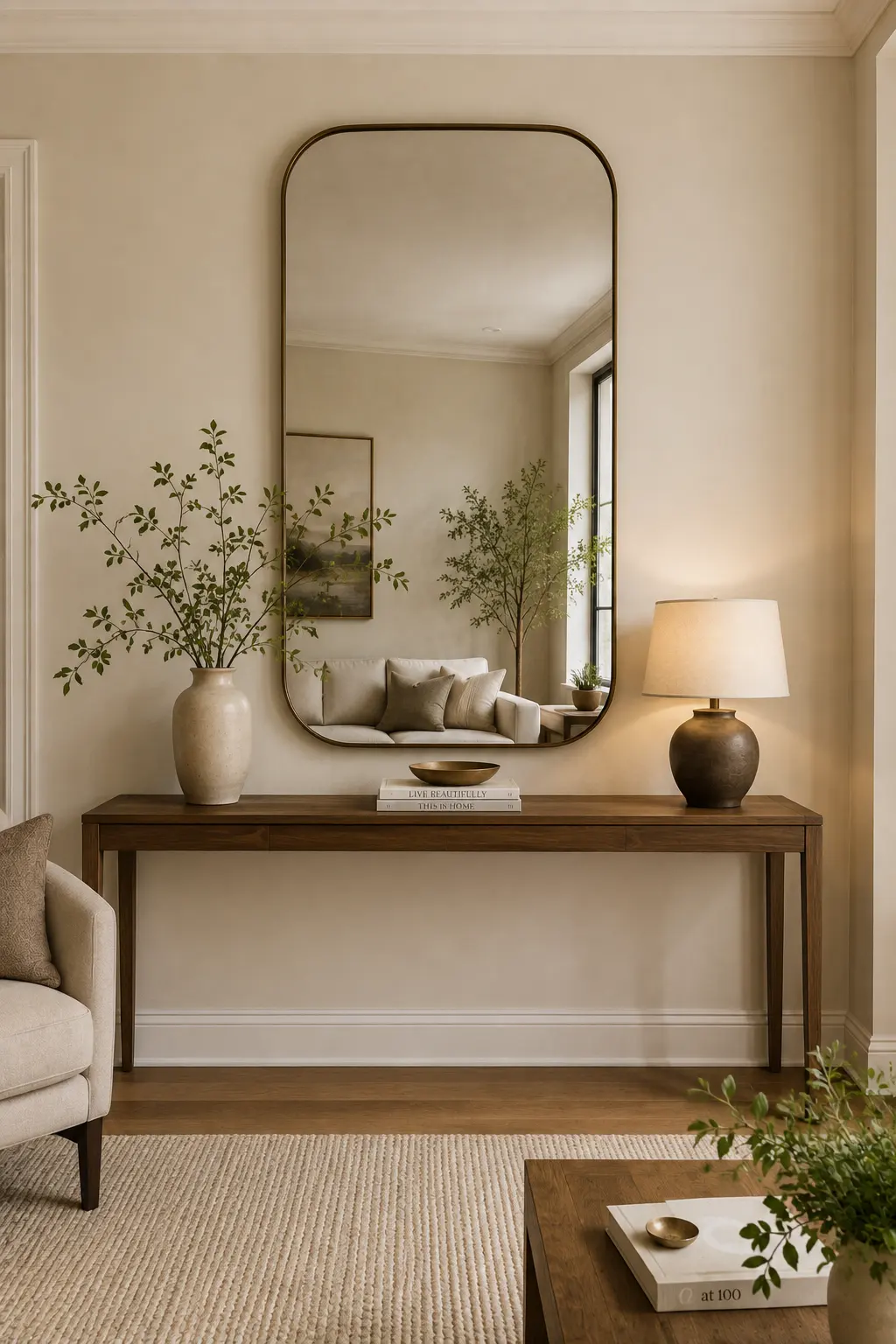
An oversized mirror can make a living room wall feel taller, brighter, and more spacious without adding visual clutter. A large rounded rectangular design brings a softer architectural shape to a plain wall while creating enough presence to work as the main decorative feature.
Placing the mirror above a slim console gives the arrangement a clear foundation. Warm wood, a ceramic vase, a table lamp, and a few carefully chosen objects can add interest below without competing with the mirror. Keeping the styling restrained helps the whole composition feel polished and intentional.
The reflection is also part of the design, so consider what the mirror will capture from across the room. Positioning it opposite attractive furniture, artwork, greenery, or a source of natural light can add another layer of depth while making the living area feel more open.
Pro Tip: Choose a mirror that feels substantial compared with the console below it, and position it where it can reflect natural light rather than a busy or less attractive part of the room.
12. Build a Collected Gallery Wall With Varied Art
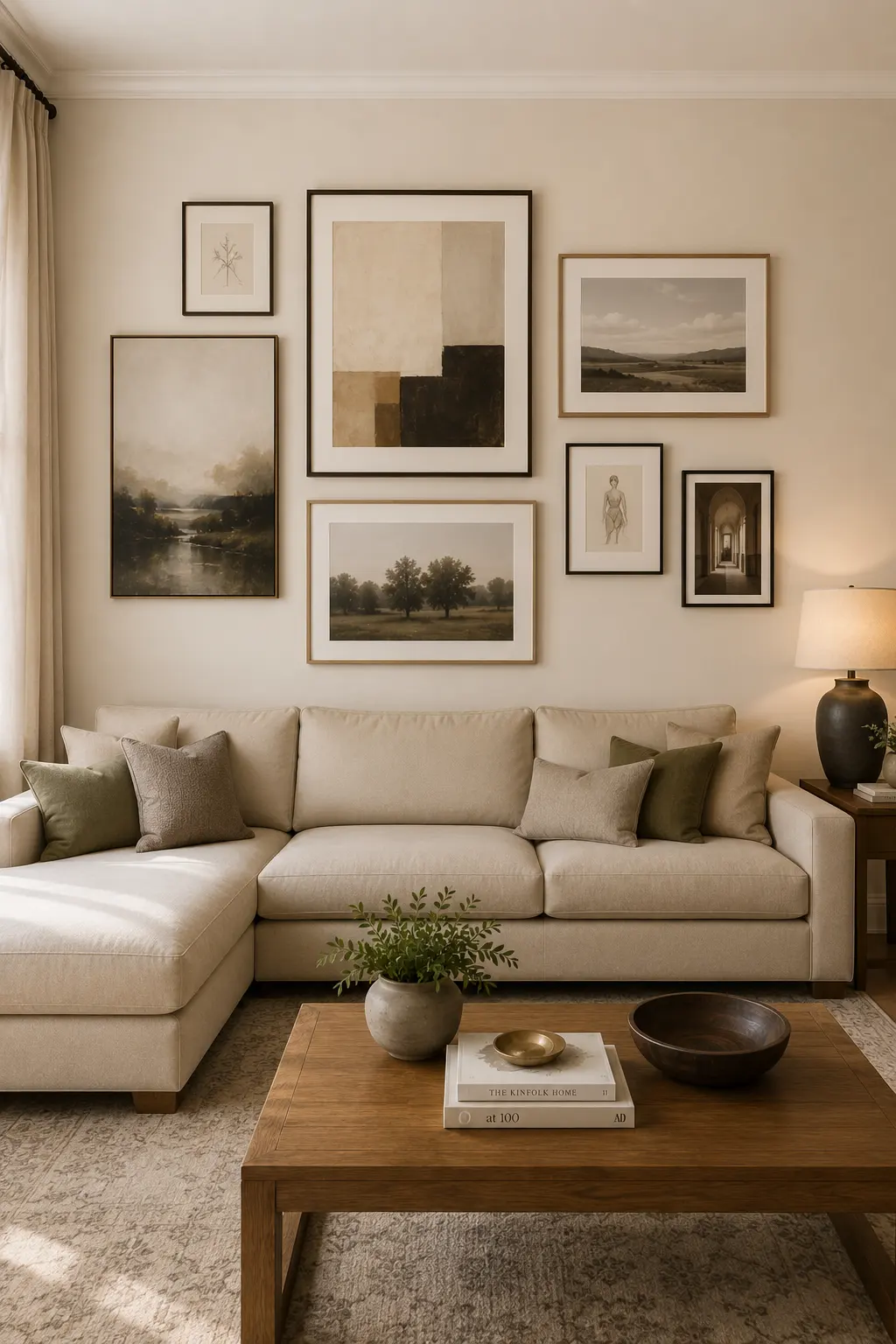
A gallery wall can bring personality to a living room while giving a large blank surface a stronger sense of purpose. Mixing landscapes, abstract artwork, photography, and delicate sketches creates visual variety, making the arrangement feel collected rather than purchased as one matching set.
Varying the frame sizes is what gives this approach its character. Start with one or two larger pieces to anchor the composition, then position smaller works around them to create an asymmetrical balance. Slim black, bronze, and warm wood frames can add subtle contrast while keeping the overall display cohesive.
A restrained color palette helps multiple artworks sit comfortably together. Soft neutrals, earthy greens, warm browns, and black accents can connect very different subjects without making the wall feel busy. Leaving consistent breathing room between frames also keeps the finished arrangement polished.
Pro Tip: Arrange the entire gallery on the floor before hanging anything, then build outward from the largest artwork so the final composition feels balanced without looking overly symmetrical.
13. Let a Textured Wall Become Part of the Decor
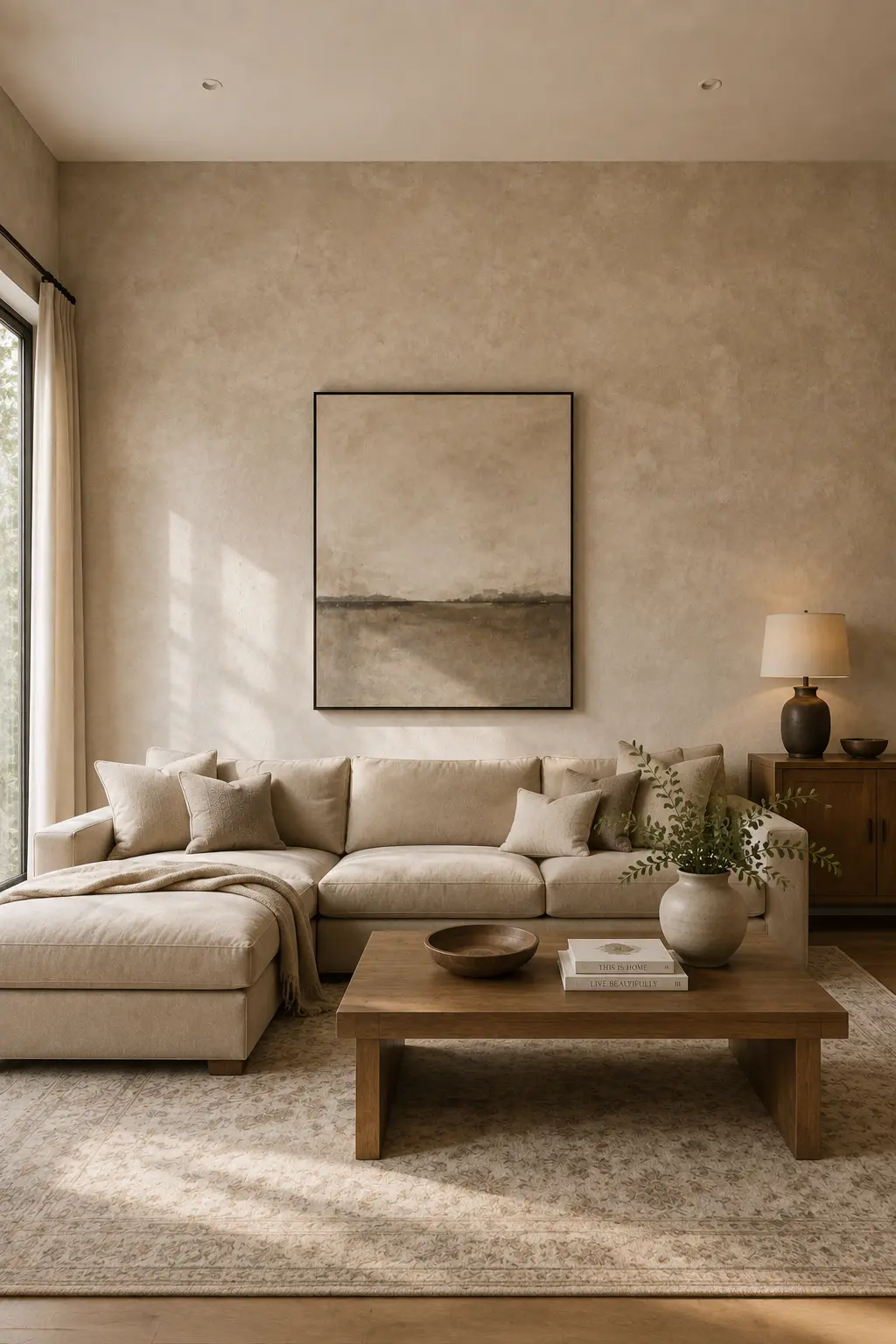
A subtly textured wall can create visual interest before any artwork is added. Soft variations in tone and finish give the surface more depth than standard flat paint, allowing natural light to reveal gentle movement across the wall throughout the day.
This treatment works especially well when the rest of the composition stays restrained. One substantial piece of artwork can provide a focal point while still leaving enough exposed wall for the texture to remain visible. Neutral upholstery and warm wood furniture reinforce the understated, sophisticated character.
Warm beige, putty, mushroom, and soft taupe tones are particularly effective because they add dimension without demanding too much attention. The result feels architectural and layered, yet the wall remains quiet enough to support furniture, artwork, and lighting rather than competing with them.
Pro Tip: Keep artwork and accessories minimal on a textured feature wall so enough of the finish remains exposed for its tonal variation and natural depth to make an impact.
14. Create Full Wall Depth With Floor to Ceiling Fluting
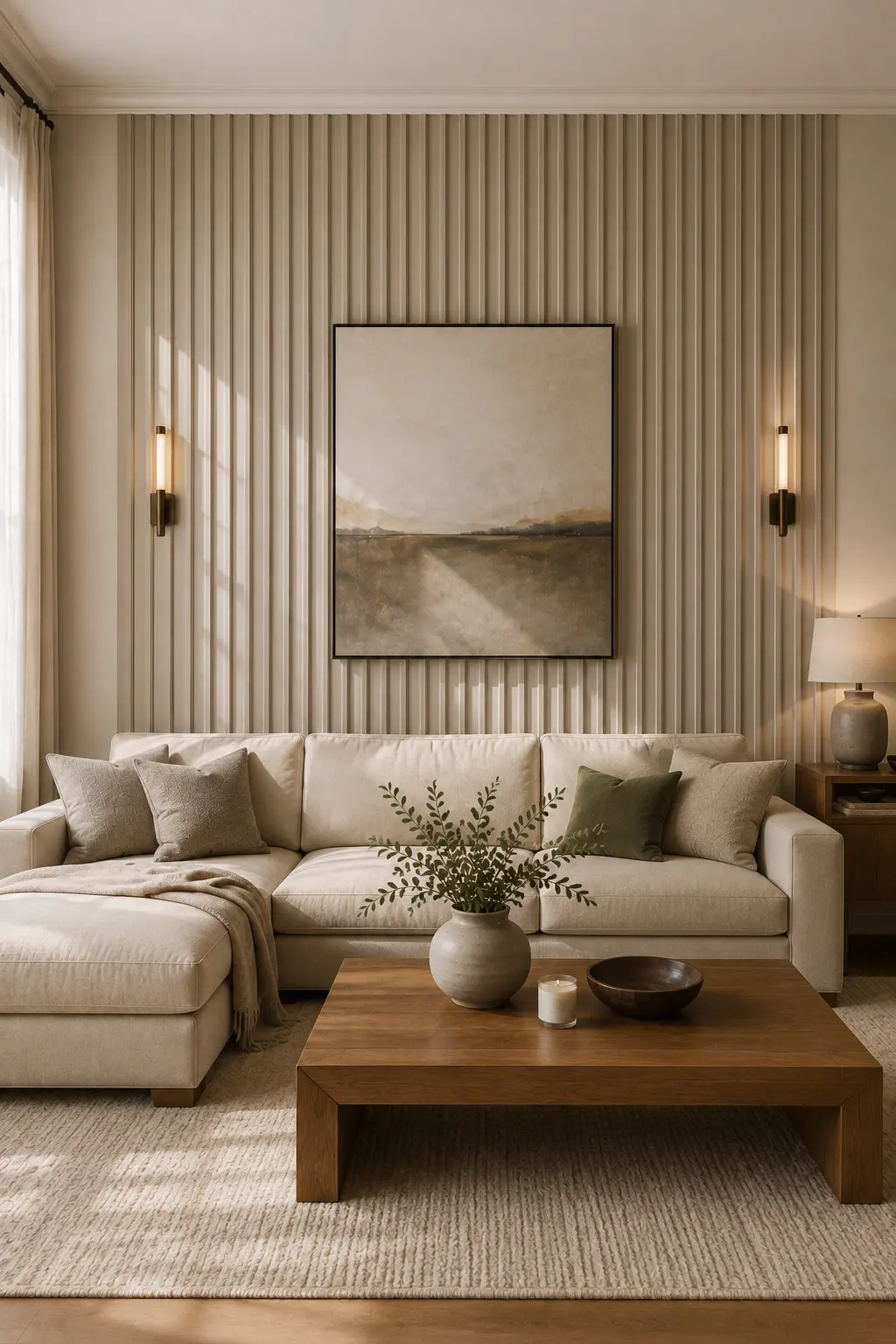
Floor to ceiling fluted panels can turn an ordinary living room wall into a strong architectural feature. The repeated vertical grooves create depth and rhythm across the entire surface, giving the room character even before artwork or lighting is introduced.
Using a soft neutral finish keeps the treatment sophisticated and allows the texture to provide the visual interest. A large framed artwork centered over the sofa breaks up the vertical lines, while slim wall sconces on either side create balance and draw attention across the full width of the wall.
Natural daylight makes the fluting especially effective because every raised section catches light differently. This creates subtle highlights and shadows that shift throughout the day, adding dimension without introducing bold colors or excessive decoration.
Pro Tip: Paint fluted panels in a shade close to the surrounding walls when you want noticeable architectural texture without making the feature wall feel too dominant.
15. Make Black and White Photography Feel Monumental
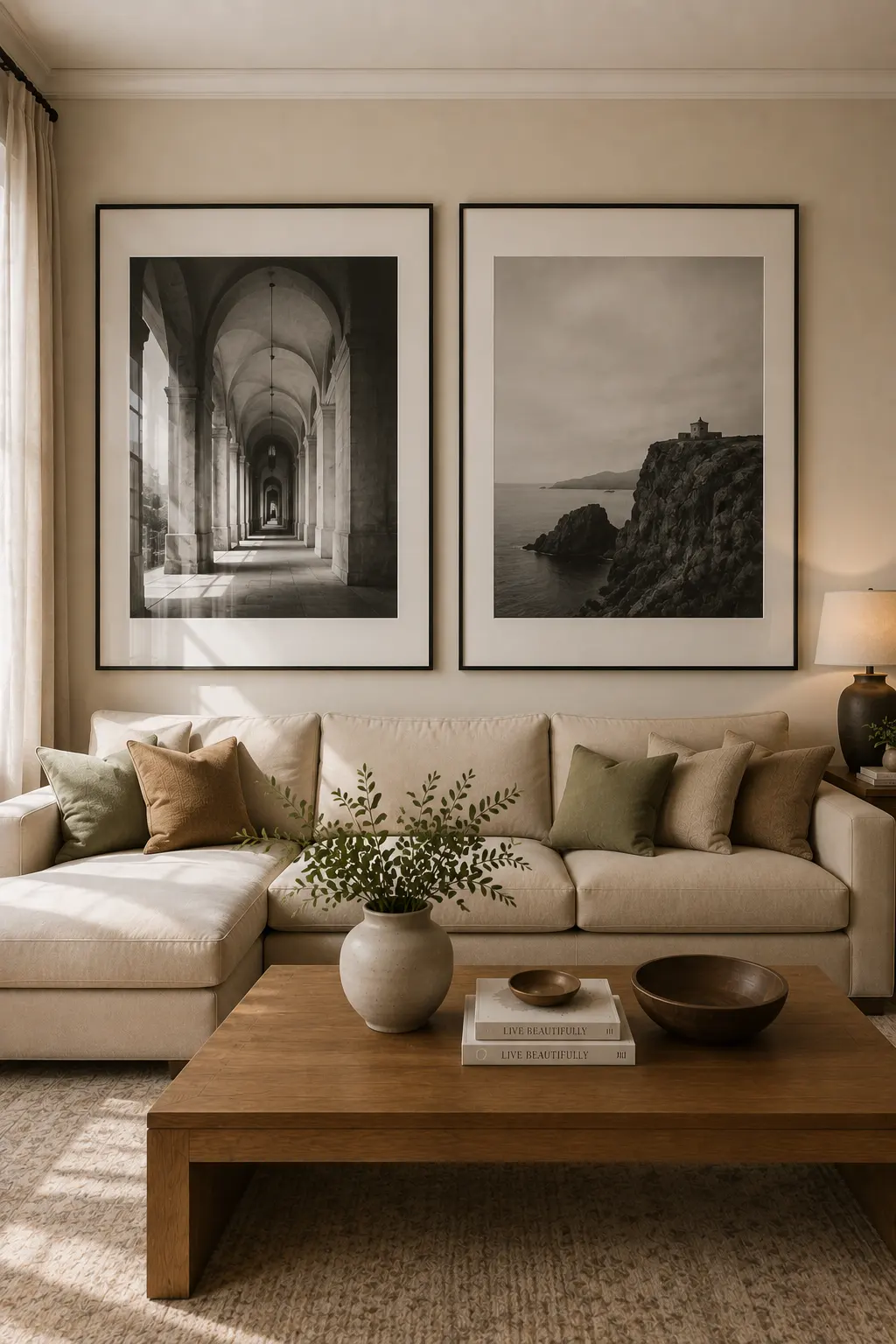
Large scale black and white photography can give a living room wall a strong editorial presence without introducing more color. Architectural scenes, dramatic landscapes, and travel photography work especially well because their depth and contrast can become a focal point from across the room.
Using two equally sized photographs creates a clean, deliberate composition above a wide sofa. Generous white matting gives each image breathing room, while slim dark frames provide definition against a warm neutral wall. The pairing feels substantial without requiring an entire gallery arrangement.
Choose photographs that complement each other without being too similar. One image might emphasize architectural lines while another focuses on a dramatic natural setting. This contrast adds interest, yet the shared monochrome palette keeps the overall wall sophisticated and cohesive.
Pro Tip: Use oversized mats around black and white photography to create a gallery quality presentation and prevent detailed images from feeling visually heavy.
16. Bring Tactile Impact With Oversized Textured Artwork
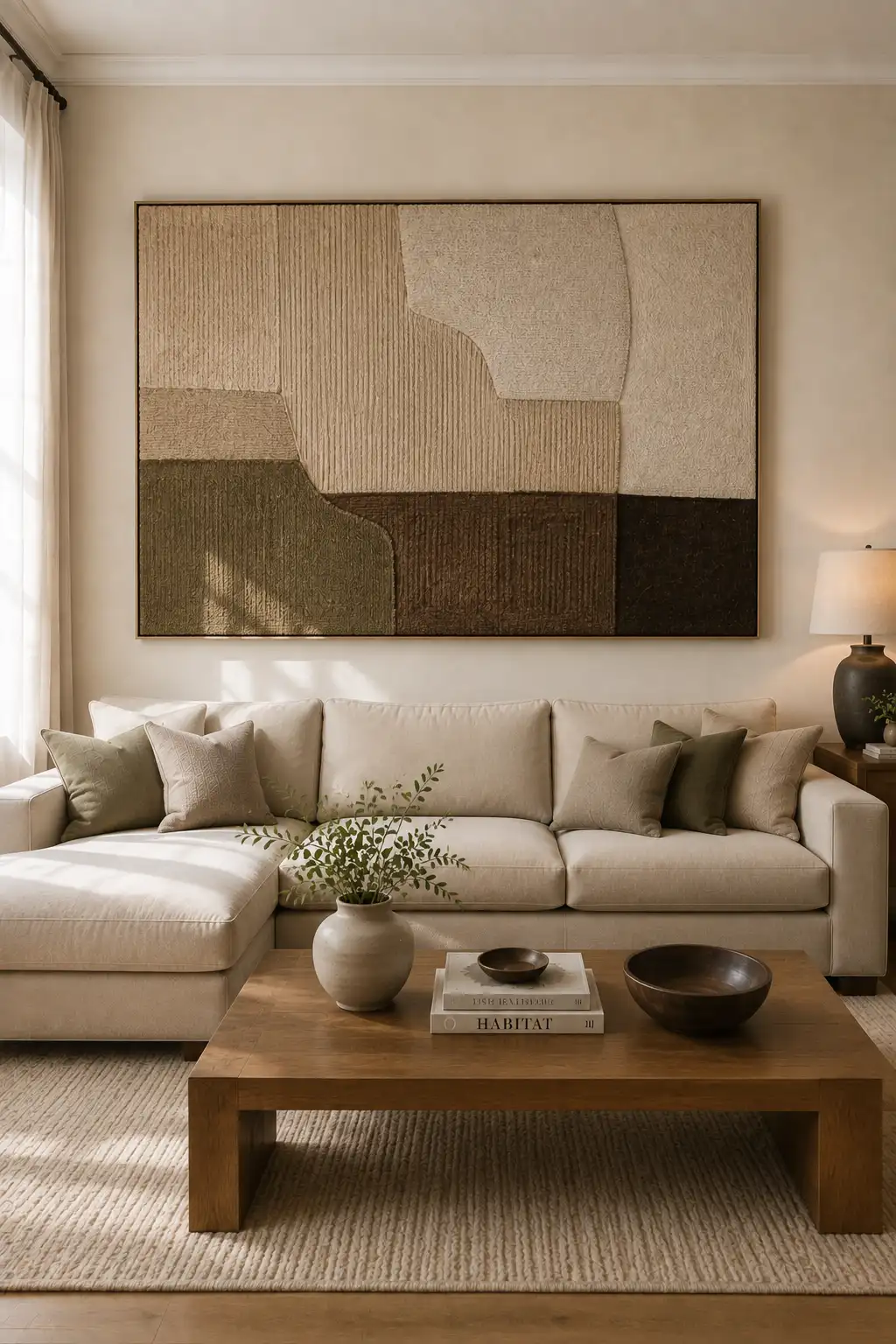
Oversized textured artwork can make a living room wall feel substantial without relying on a complicated arrangement. Raised surfaces, carved lines, and layered geometric forms create depth that changes with the light, giving a single piece enough presence to anchor the entire seating area.
A restrained palette of cream, taupe, olive, brown, and charcoal keeps the artwork sophisticated while allowing its texture to become the main feature. These earthy tones can also connect naturally with neutral upholstery and warm wood furniture, making the composition feel cohesive rather than overly coordinated.
Scale is especially important with this approach. A wide piece positioned above a sectional can fill much of the available wall and create a strong horizontal connection with the furniture below. With such a dominant artwork in place, the rest of the room can remain relatively understated.
Pro Tip: Position textured artwork where daylight can move across its surface, as side lighting will emphasize the raised details and give the piece greater visual depth.
A More Considered Approach to Living Room Walls
The most memorable living room walls rarely depend on decoration alone. Scale, texture, lighting, proportion, and architectural detail all influence how a wall relates to the furniture and the rest of the room. Whether you choose oversized artwork, molding, fluted panels, a statement mirror, or a carefully arranged gallery, the goal is to create a feature that feels intentional rather than simply filling empty space.
You also do not need to combine several ideas to create impact. One well chosen treatment can often give a room more character than layers of smaller accessories. Start with the architecture and proportions of your space, choose a focal point that suits them, and keep the surrounding details restrained enough to let that feature stand out.