

Table of Contents
A well organized laundry room can make everyday chores feel far more manageable. Thoughtful storage and a practical layout keep essentials close at hand while giving everything a proper place.
Even a compact laundry area has opportunities for better organization. Cabinets, hidden hampers, folding surfaces, and clever built in features can turn overlooked corners into useful storage without making the room feel crowded.
The best setups balance function with a polished appearance. These ideas focus on practical improvements that help reduce clutter, simplify your routine, and create a laundry space that feels intentionally designed.
Smart Laundry Room Organization Ideas
From floor to ceiling cabinetry and dedicated folding counters to hidden hampers and compact pull out storage, the following ideas tackle different parts of the laundry routine. Each one offers a practical way to use available space more effectively while keeping the room neat, functional, and visually refined.
1. Take Storage All the Way Up With Floor to Ceiling Cabinets
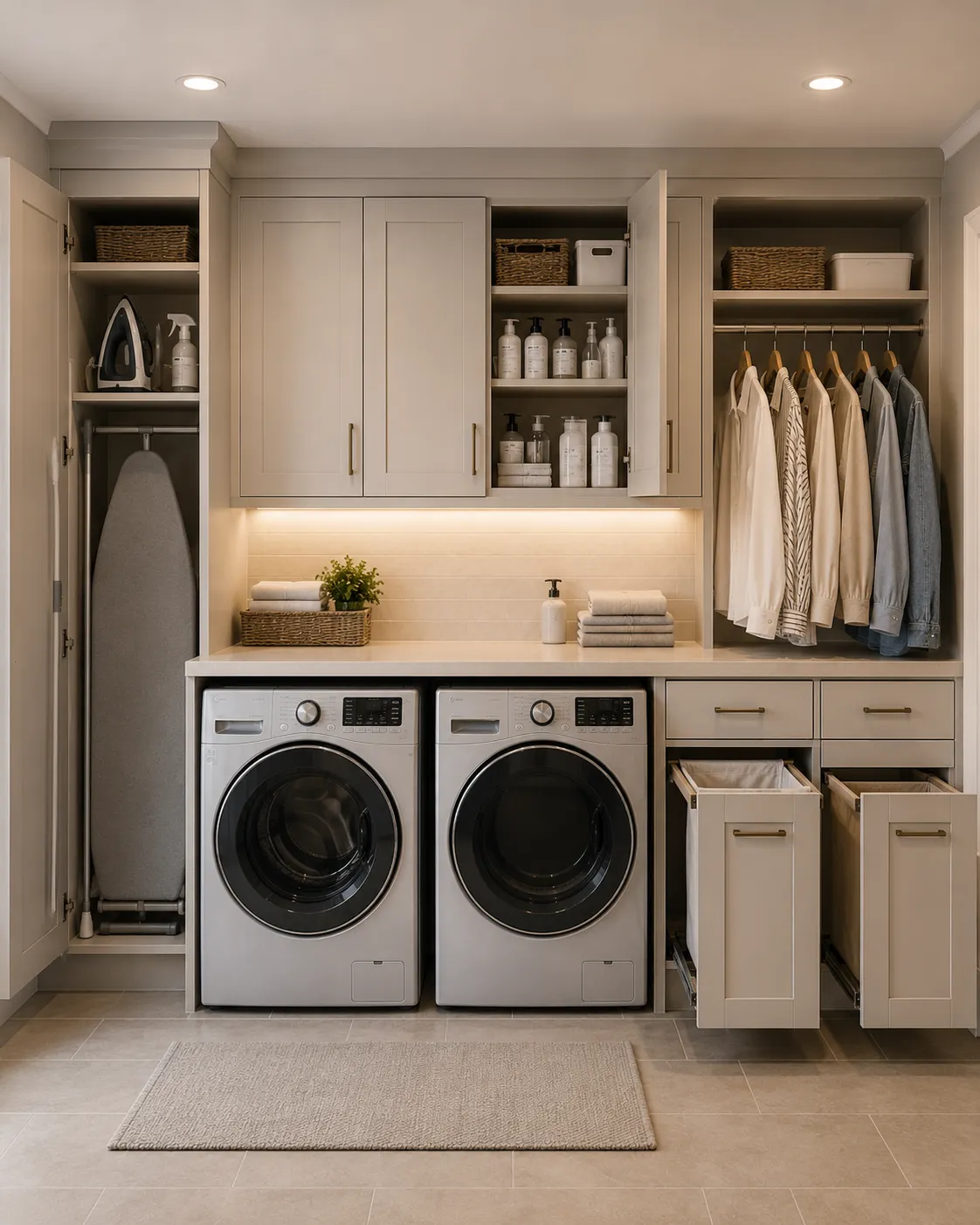
Floor to ceiling cabinetry can turn an underused laundry wall into a hardworking storage zone. By extending cabinets upward, you gain room for laundry products, cleaning supplies, ironing essentials, and household extras without sacrificing valuable floor space.
Plan the interior around how often you use each item. Keep detergent, stain removers, fabric care products, and fresh towels on easy to reach shelves, while baskets and less frequently used supplies can sit higher up. A dedicated tall compartment can also keep an ironing board neatly tucked away.
Mixing closed cabinets with a few open functional sections makes the setup even more useful. A hanging area for freshly washed clothes, concealed hampers, and a clear countertop can bring several laundry tasks together while maintaining a clean and polished appearance.
Pro Tip: Add lighting beneath the upper cabinets to brighten the countertop and make sorting, treating stains, and folding clothes easier without relying only on overhead lighting.
2. Tuck an Ironing Station Into a Wall Cabinet
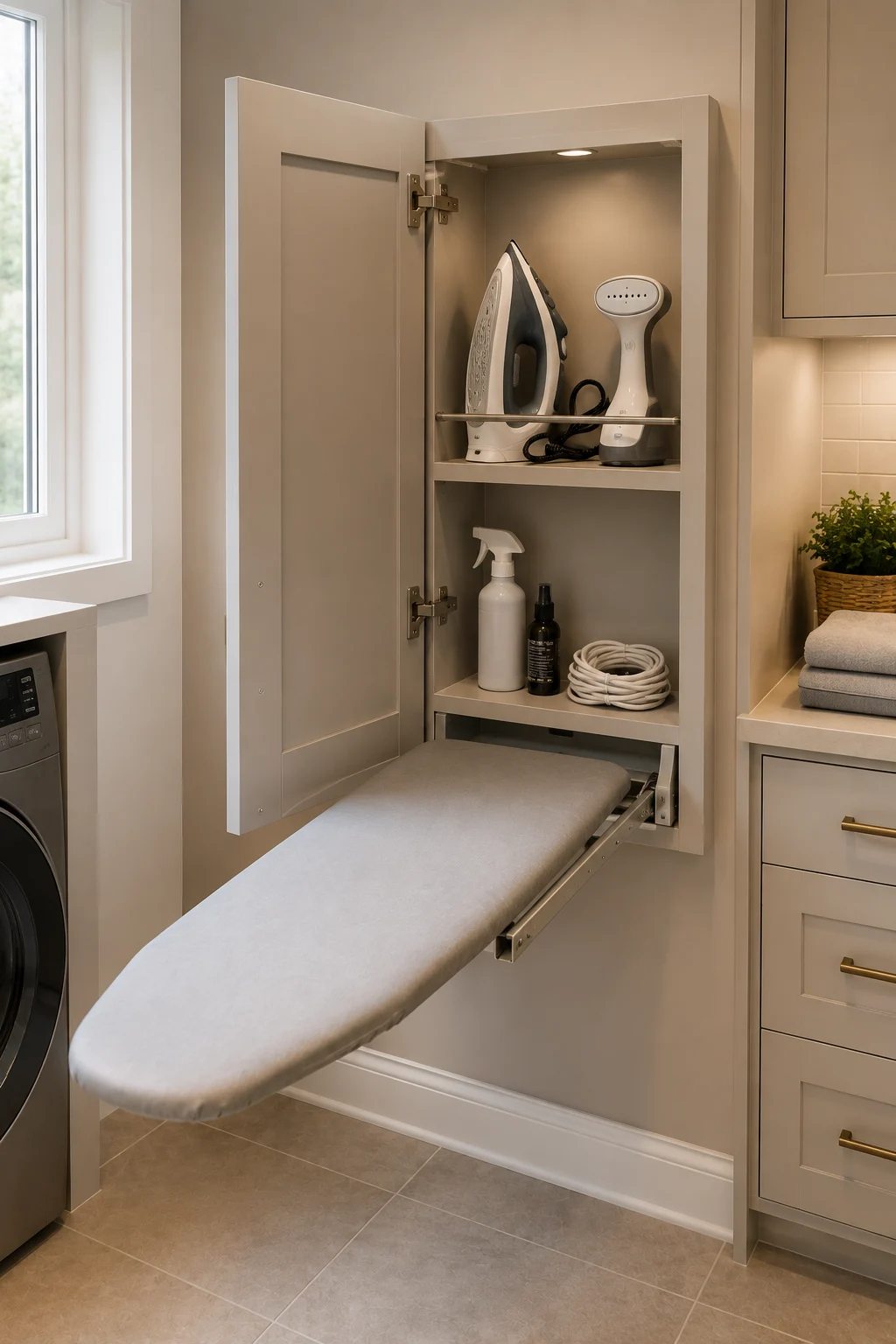
A built in ironing station gives an everyday laundry essential a permanent home without leaving a bulky board in the way. Mounted inside a shallow wall cabinet, the ironing board can fold down when needed and disappear neatly once the job is finished.
Use the cabinet space above the board to keep the iron, handheld steamer, fabric spray, and other pressing essentials together. Having everything in one dedicated spot means you can handle wrinkles immediately instead of carrying supplies between rooms.
This setup is especially useful when floor space is limited because it relies almost entirely on vertical wall space. When closed, the cabinet blends into the surrounding storage and helps the laundry area maintain a streamlined, thoughtfully planned appearance.
Pro Tip: Install an electrical outlet inside or directly beside the cabinet so the iron and steamer can be used without running visible cords across the laundry area.
3. Hide Laundry Hampers Inside Pull Out Cabinets
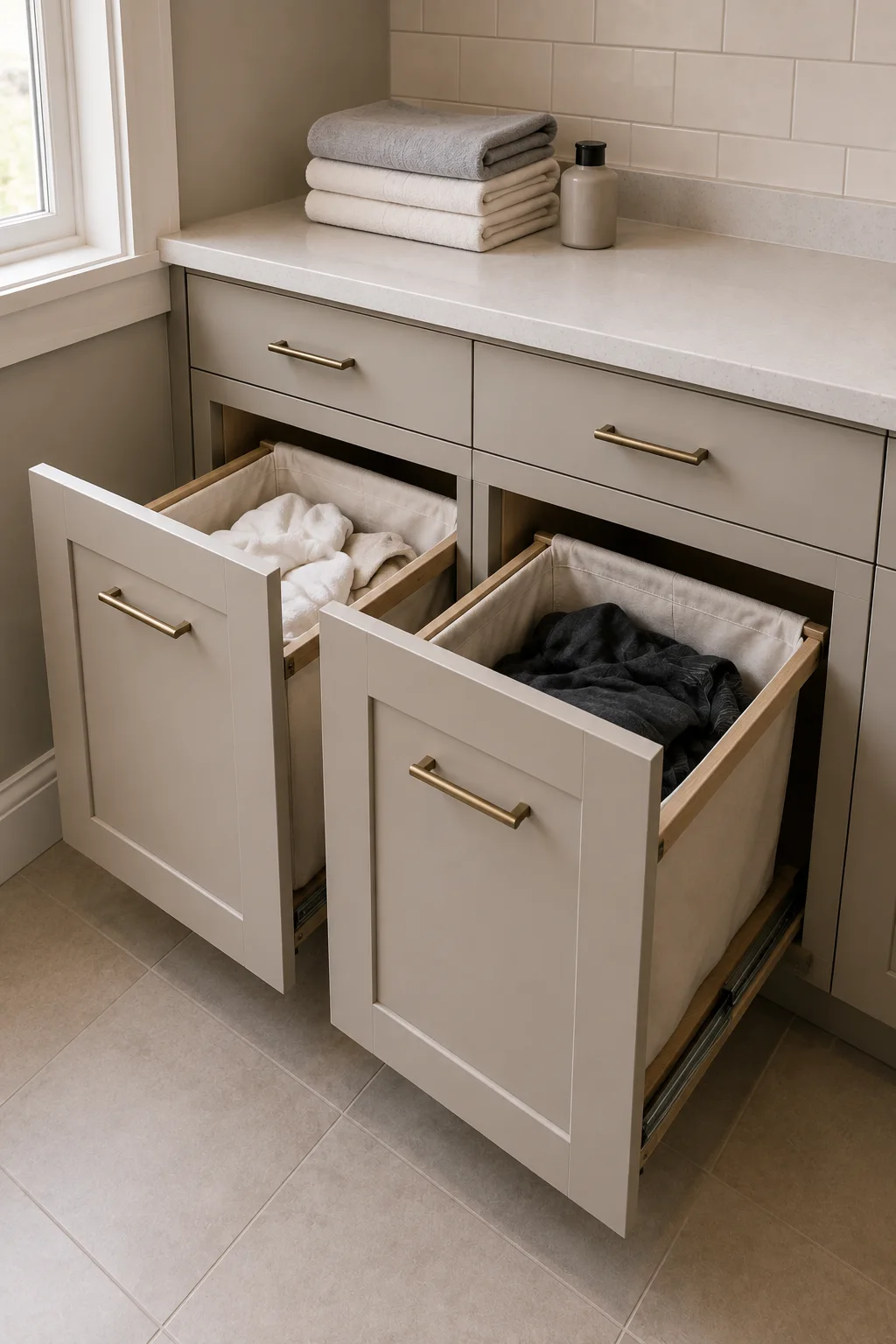
Built in pull out hampers keep dirty laundry organized without leaving baskets scattered across the floor. When tucked inside lower cabinetry, they create a much cleaner appearance while keeping laundry close to the washer and sorting area.
Use two separate compartments to sort clothes before wash day begins. One hamper can hold whites and lighter fabrics while the other collects dark clothing, making it easier to start a load without sorting through one large pile first.
Placing the hampers beneath a countertop makes the area even more practical. You gain a useful surface for folding towels or sorting clothes above, while the laundry stays completely concealed below when the cabinet fronts are pushed closed.
Pro Tip: Choose removable fabric hamper liners so you can lift an entire load out at once and wash the liners occasionally to keep the storage area fresh.
4. Create a Dedicated Hanging Zone Between Cabinets
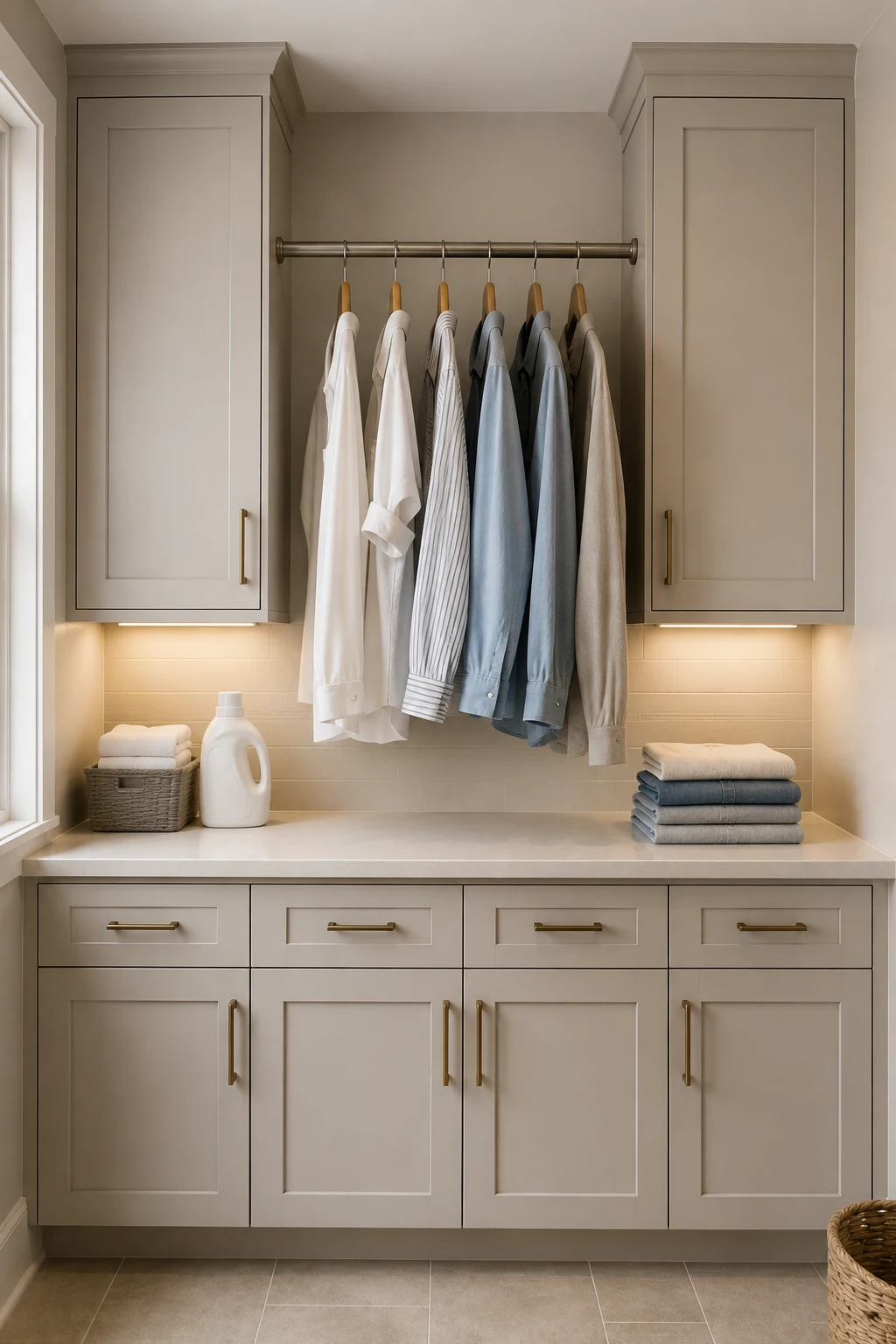
A hanging rail between two upper cabinets turns an open section of wall into a practical spot for freshly washed clothes. Shirts, blouses, and other pieces can go straight onto hangers, helping them dry neatly while reducing wrinkles before they reach the closet.
Positioning the rail above a countertop makes the area work even harder. Clothes can be folded or sorted directly below, while drawers and lower cabinets provide concealed storage for smaller laundry supplies, extra linens, and everyday essentials.
The surrounding cabinetry also gives the hanging zone a built in appearance rather than making it feel like an added accessory. Keeping the rail simple and matching its finish with the cabinet hardware creates a polished setup that fits naturally into the room.
Pro Tip: Leave enough clearance between the hanging rail and countertop for longer shirts to hang freely without touching folded clothes, bottles, or other items below.
5. Turn the Space Above Your Machines Into a Folding Station
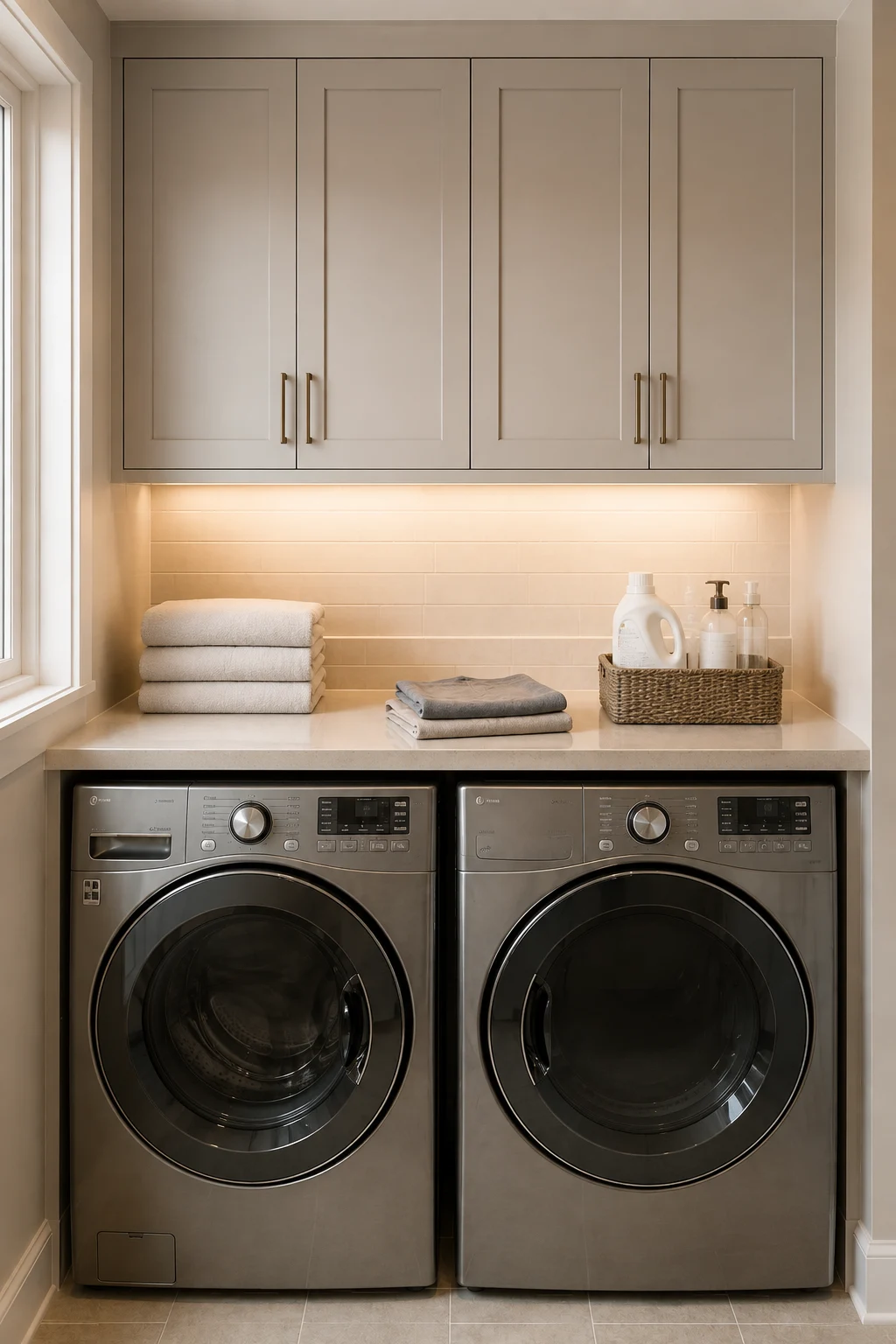
A fitted countertop above front loading machines creates an instant work surface in an area that would otherwise go unused. It gives you a comfortable place to fold clothes as they leave the dryer, keeping clean laundry from piling up elsewhere in the home.
Pair the countertop with upper cabinets to make the entire wall more efficient. Detergent refills, stain treatments, dryer supplies, and extra linens can stay behind closed doors, while the counter remains clear enough for sorting and folding everyday loads.
Good lighting makes this setup even more practical. Under cabinet lights brighten the work surface without taking up any room, while a simple backsplash helps protect the wall and gives the laundry area a finished, thoughtfully designed appearance.
Pro Tip: Keep only the laundry products you use every day on the countertop and store everything else inside the cabinets so you always have plenty of open space for folding.
6. Use Upper Cabinets to Keep Laundry Supplies Under Control
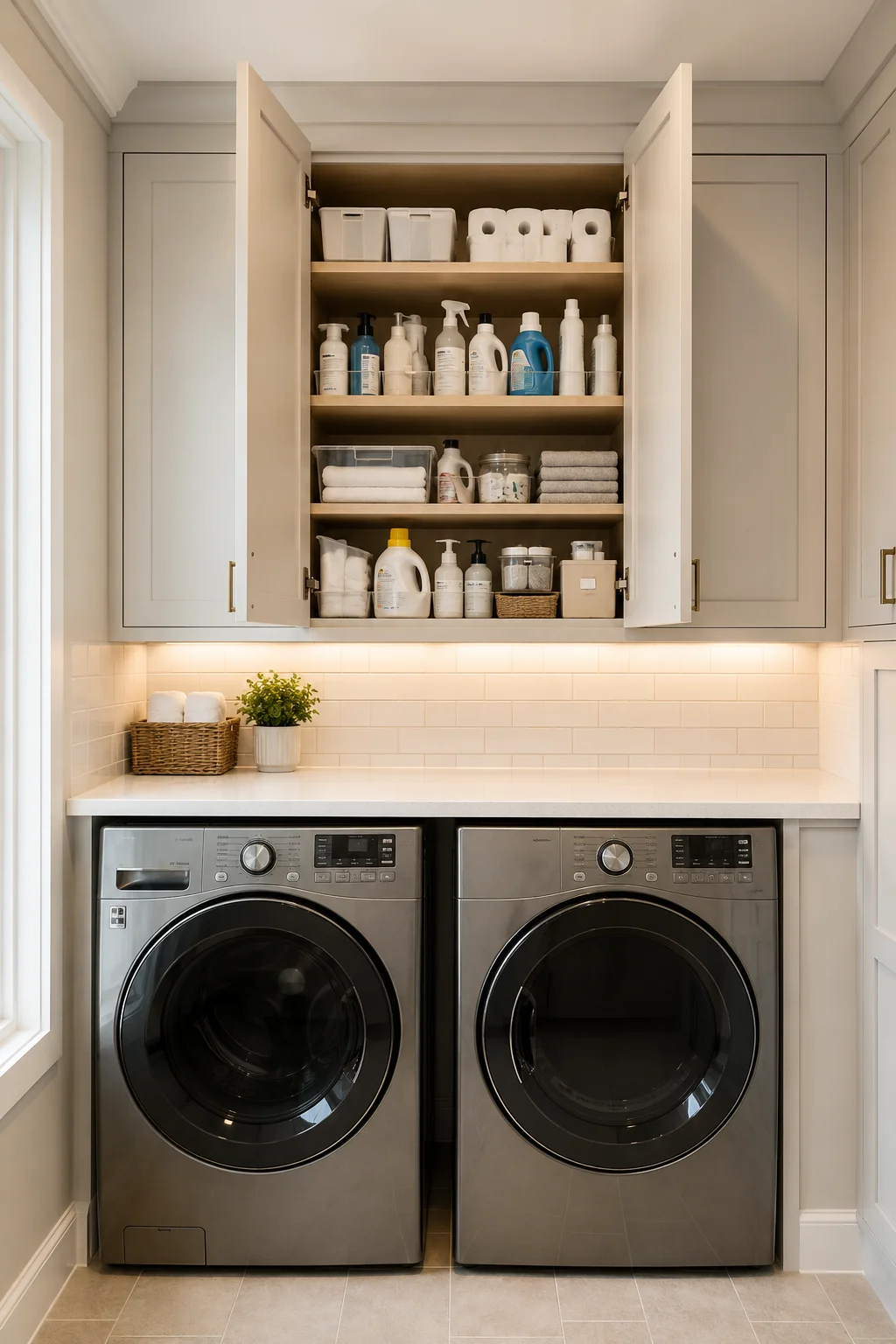
Upper cabinets above the washer and dryer make use of valuable wall space while keeping everyday laundry products close to where they are needed. Instead of crowding the countertop with bottles and containers, supplies can stay organized behind closed doors.
Arrange the shelves according to your routine. Keep detergent, stain removers, fabric care products, and cleaning sprays on the easiest shelves to reach, while bulk refills, extra towels, and household supplies can be stored higher up.
Clear bins and small organizers can help group similar products without making the cabinet feel cluttered. Once the doors are closed, everything disappears from view, leaving the washing area looking calm, clean, and thoughtfully organized.
Pro Tip: Avoid overfilling deep shelves. Keep frequently used products toward the front and group backup supplies together so nothing gets forgotten at the back of the cabinet.
Also Read: 16 Small Bedroom Storage Ideas You’ll Wish You Found Sooner
7. Organize Everyday Laundry Supplies in Deep Drawers
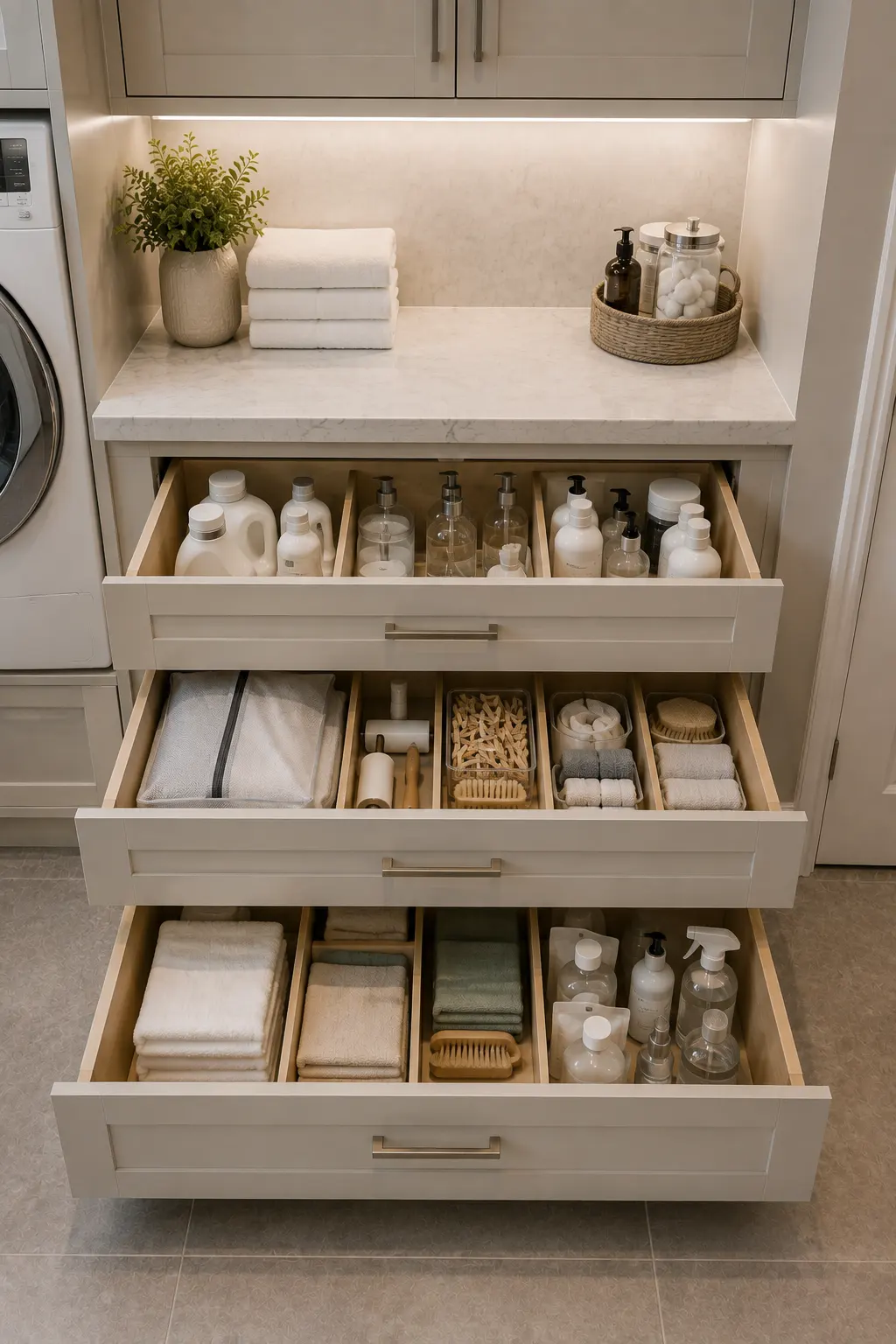
Deep drawers can turn a crowded collection of laundry essentials into an organized system where everything has a dedicated place. Unlike deep cabinets, drawers bring the contents forward, so bottles, cloths, brushes, and smaller accessories are easier to see and reach.
Use internal dividers to create separate sections based on purpose. Detergents and fabric care products can fill one drawer, while lint rollers, mesh bags, cleaning brushes, and smaller tools stay together in another. A deeper bottom drawer works well for towels and backup supplies.
Keeping these items below the countertop also leaves the work surface open for folding and sorting clothes. Once the drawers are closed, all those everyday products disappear from sight, giving the laundry area a cleaner and more refined finish.
Pro Tip: Place the products you reach for most often in the top drawer and reserve lower drawers for bulk supplies and extras you only need occasionally.
8. Make the Most of Under Sink Storage With Pull Out Trays
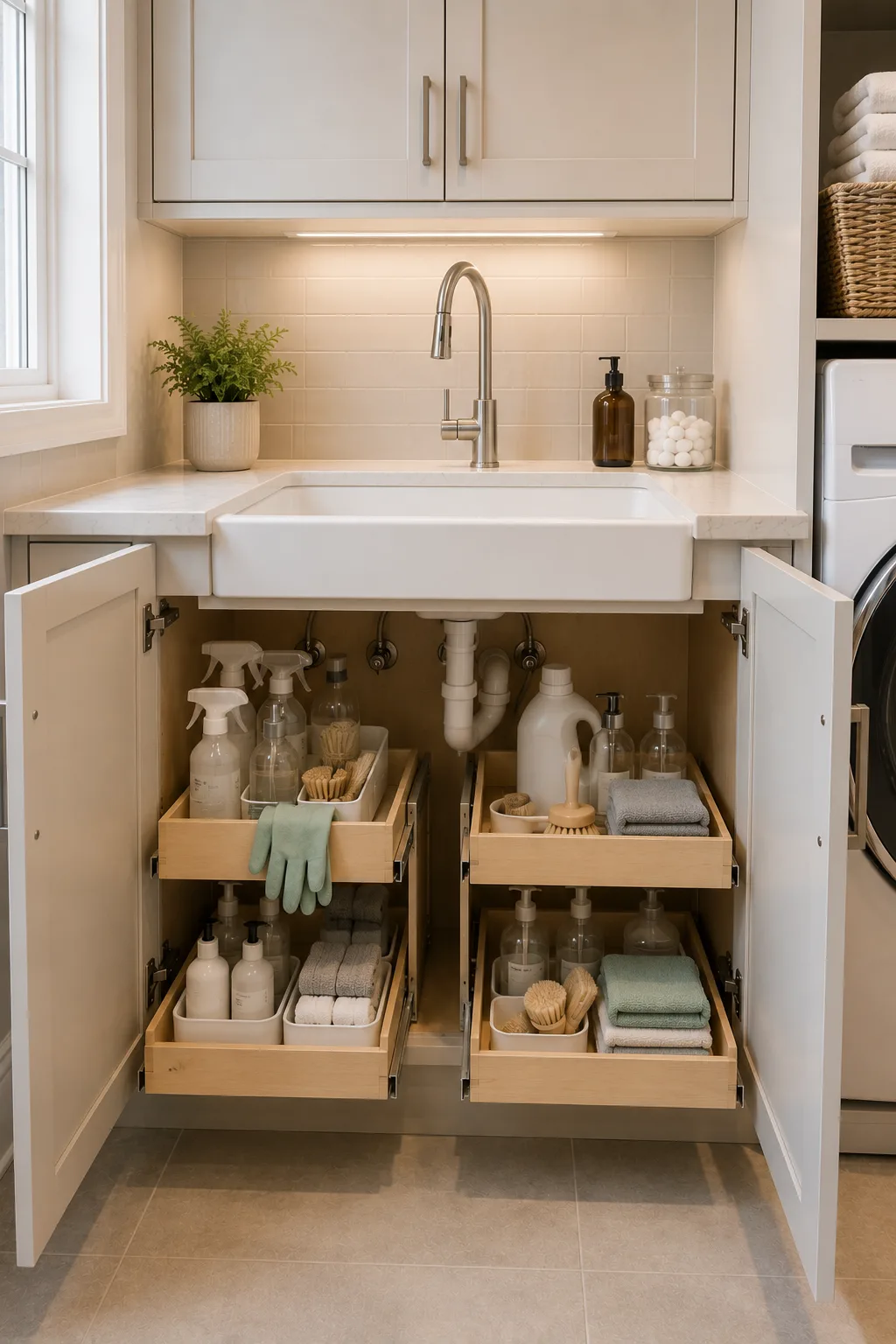
The cabinet beneath a laundry sink can easily become a cluttered spot, especially when plumbing takes up much of the usable space. Pull out trays create defined storage zones around the pipes and make cleaning products much easier to reach.
Use separate trays for stain removers, cleaning sprays, brushes, gloves, cloths, and other sink essentials. Instead of reaching into the back of a deep cabinet, each tray slides forward so you can quickly see and grab exactly what you need.
Planning the organizers around the plumbing is what makes this setup work well. Different tray heights and widths can use the available space efficiently while keeping valves and pipes accessible whenever maintenance is needed.
Pro Tip: Store liquids and cleaning sprays on washable or removable trays so small leaks and spills can be cleaned up without damaging the inside of the cabinet.
9. Fill Narrow Gaps With a Slim Pull Out Supply Cabinet
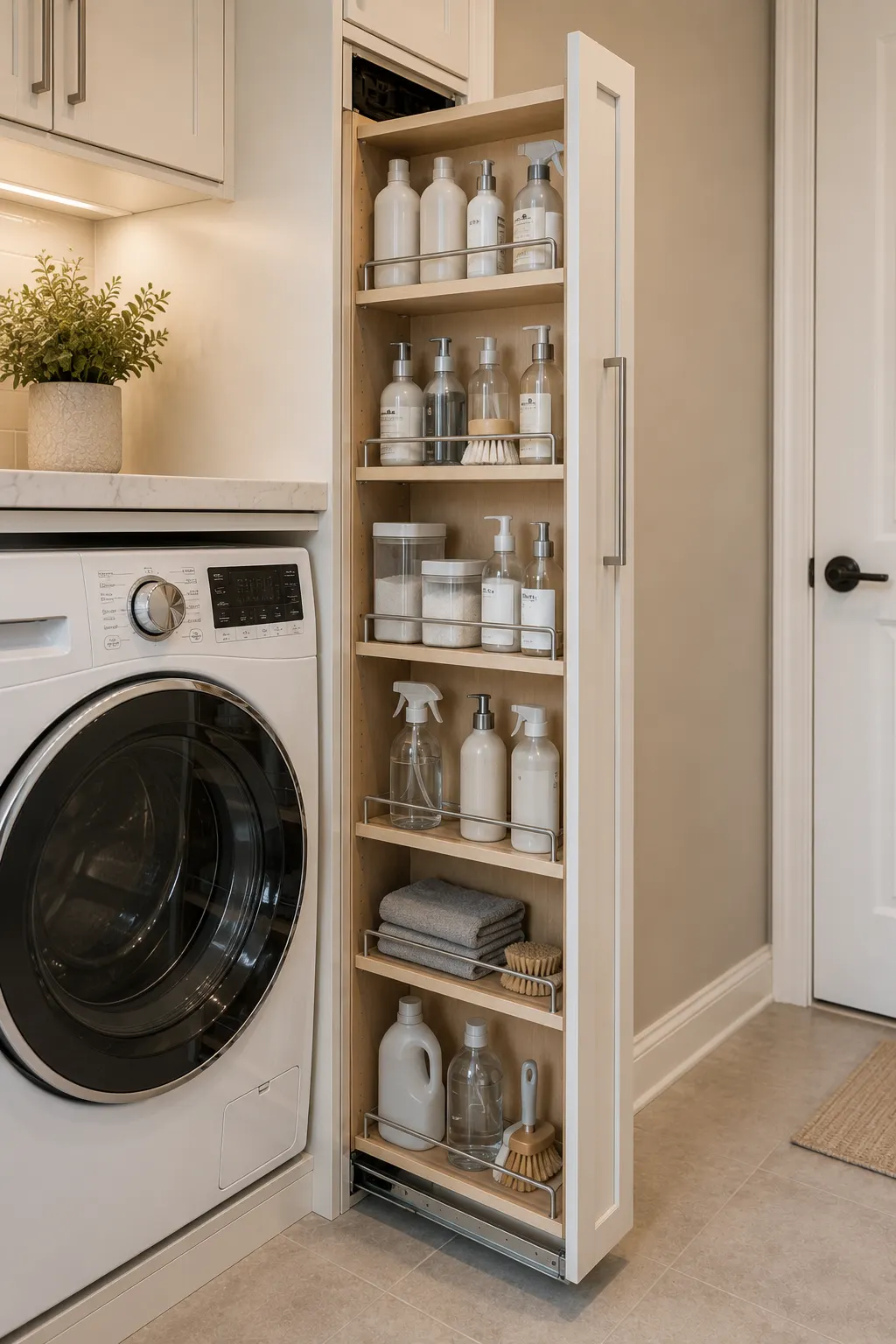
A narrow gap beside the washer can hold far more than you might expect. A slim pull out cabinet turns those leftover inches into vertical storage for detergents, stain treatments, cleaning sprays, brushes, and other laundry essentials that often clutter larger cabinets.
Multiple shallow shelves keep products visible instead of letting bottles disappear behind one another. Small guard rails along each shelf also help keep everything secure as the cabinet slides in and out, making the setup practical for frequently used supplies.
Because the entire unit disappears behind a single cabinet front, it adds useful storage without making the laundry area look crowded. It is an especially smart solution for compact rooms where adding another full size cabinet simply is not possible.
Pro Tip: Arrange heavier bottles on the lowest shelves and lighter products higher up to keep the pull out cabinet balanced and easier to use.
10. Add a Pull Out Drying Rack That Disappears After Use
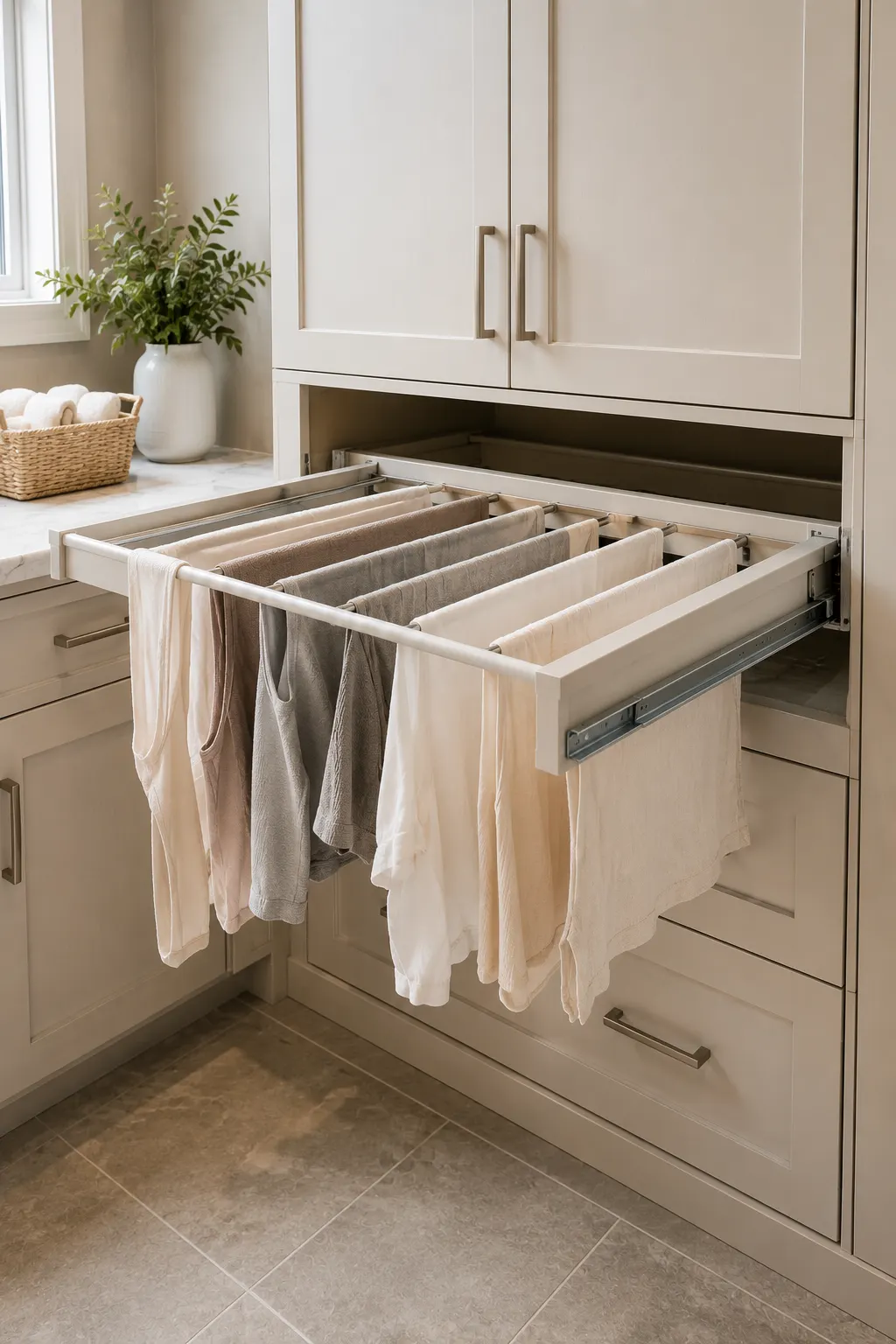
A pull out drying rack gives delicate clothes a dedicated place to air dry without leaving a freestanding rack in the middle of the room. Built directly into the cabinetry, it slides out when needed and tucks away neatly once the laundry is dry.
Multiple rails provide enough room for shirts, lightweight tops, towels, and other pieces that should stay out of the dryer. Spacing garments across separate bars also improves airflow and keeps wet fabrics from bunching together while they dry.
Integrating the rack beneath or between cabinets keeps the setup visually streamlined. When closed, it becomes part of the cabinetry, making this a particularly useful solution for smaller laundry rooms where permanent drying space would take up too much room.
Pro Tip: Install the rack where fully extended clothes will have enough clearance to hang freely without blocking cabinet doors, walkways, or access to the washer and dryer.
11. Build a Sorting Station With Dedicated Laundry Cubbies
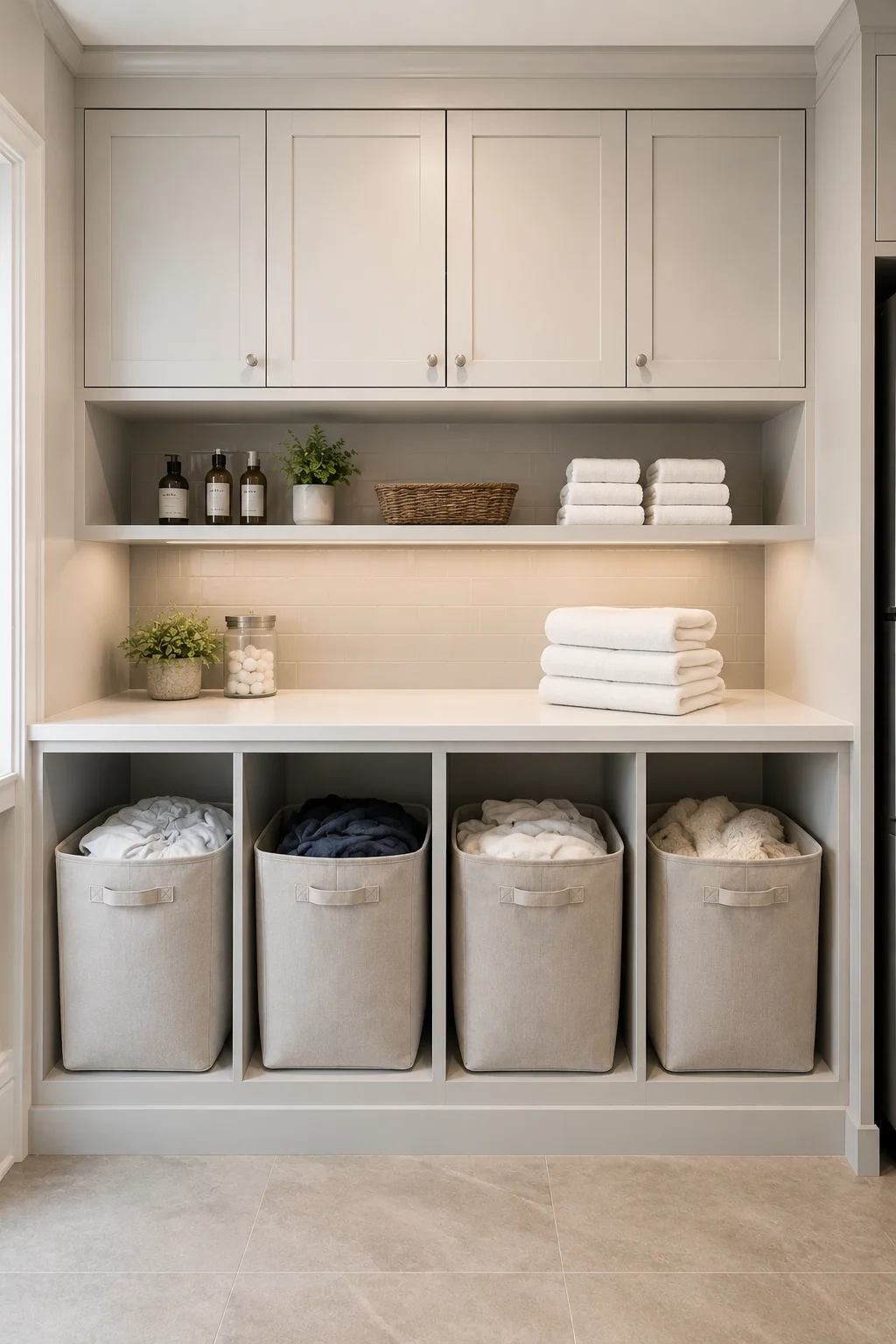
Built in cubbies give laundry baskets a permanent place instead of letting them collect around the floor. Giving each basket its own compartment keeps the area orderly while creating a simple sorting system that everyone in the household can follow.
Use separate baskets for whites, darks, colors, towels, or delicate items depending on how you normally divide your loads. Sorting clothes as they enter the laundry room can save time later and makes it easy to see when one category is ready for washing.
A countertop above the cubbies adds another useful layer to the setup. It provides space for folding clean clothes and sorting fresh loads, while upper cabinets can handle supplies you would rather keep out of sight. Together, these features create one efficient laundry station.
Pro Tip: Choose removable baskets that fit comfortably inside each cubby with a little clearance around the sides, making them easier to lift out when it is time to start a load.
12. Bring Every Laundry Essential Together in One Storage Wall
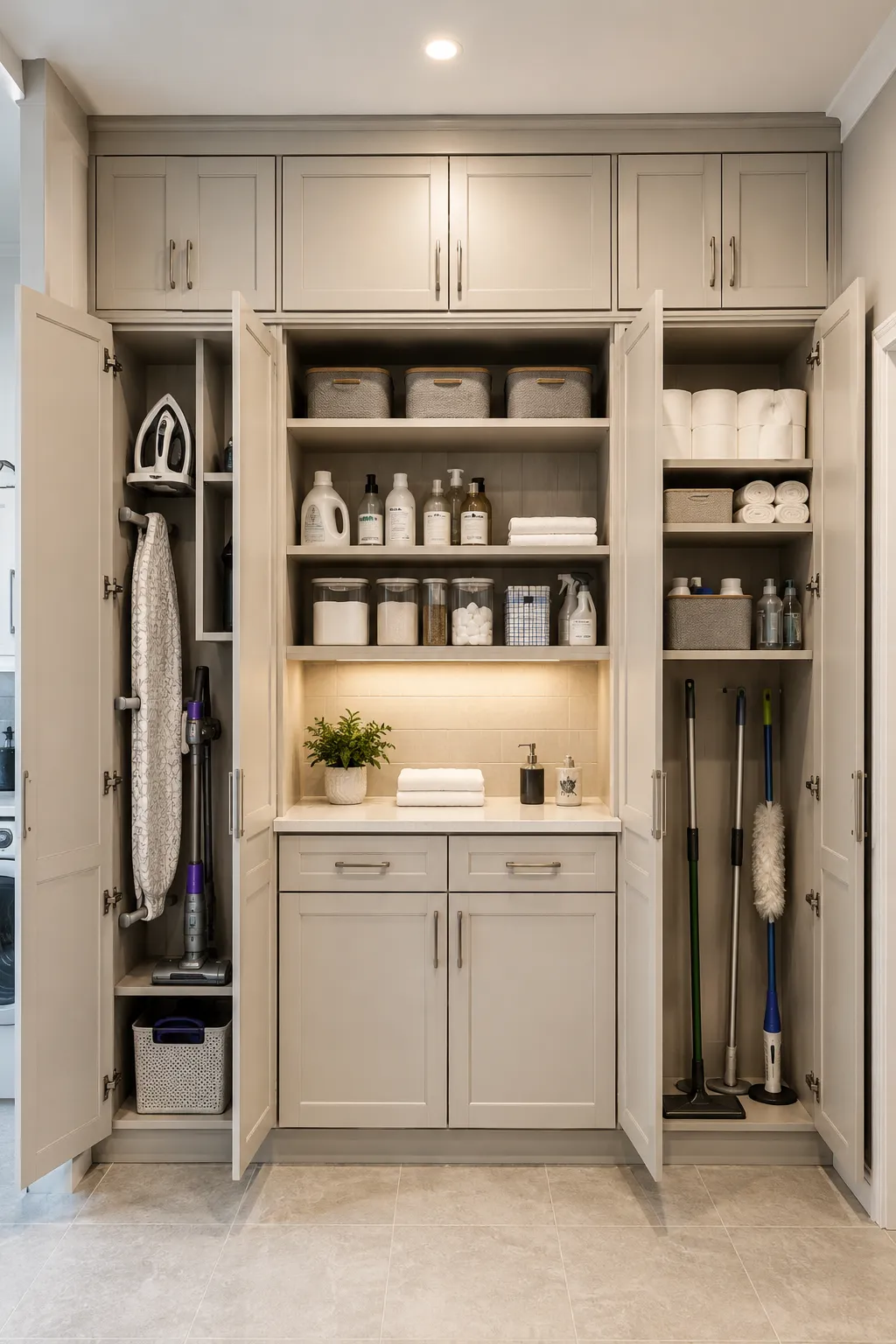
A full storage wall can bring laundry supplies, cleaning tools, and everyday household essentials into one organized zone. Combining tall cabinets, upper storage, open shelving, and lower cabinetry makes better use of the wall while keeping everything conveniently close together.
Give each section a specific purpose instead of filling cabinets wherever space is available. Shelves can hold detergents, towels, and refill containers, while tall compartments are ideal for an ironing board, vacuum, mop, duster, and other items that are difficult to store neatly.
Closed doors are what make a hardworking setup like this feel polished. Once everything is put away, cleaning tools and bulk supplies disappear from view, while a small central countertop remains available for quick sorting, folding, or treating clothes before washing.
Pro Tip: Group supplies by task and store them in the cabinet closest to where they are used. This makes the entire laundry routine more efficient and prevents one cabinet from becoming a catchall for everything.
A Smarter Laundry Room Starts With Better Organization
A well organized laundry room is not simply about adding more storage. The real difference comes from giving every part of the routine a logical place, from sorting dirty clothes and storing detergent to air drying delicate pieces and folding fresh laundry. Even one or two thoughtful changes can make the space easier to use every day.
Start with the areas that currently create the most clutter or frustration, then choose solutions that fit the space you already have. With practical cabinetry, hidden storage, dedicated work surfaces, and a few carefully planned details, even a modest laundry room can feel more efficient, orderly, and beautifully put together.