

Table of Contents
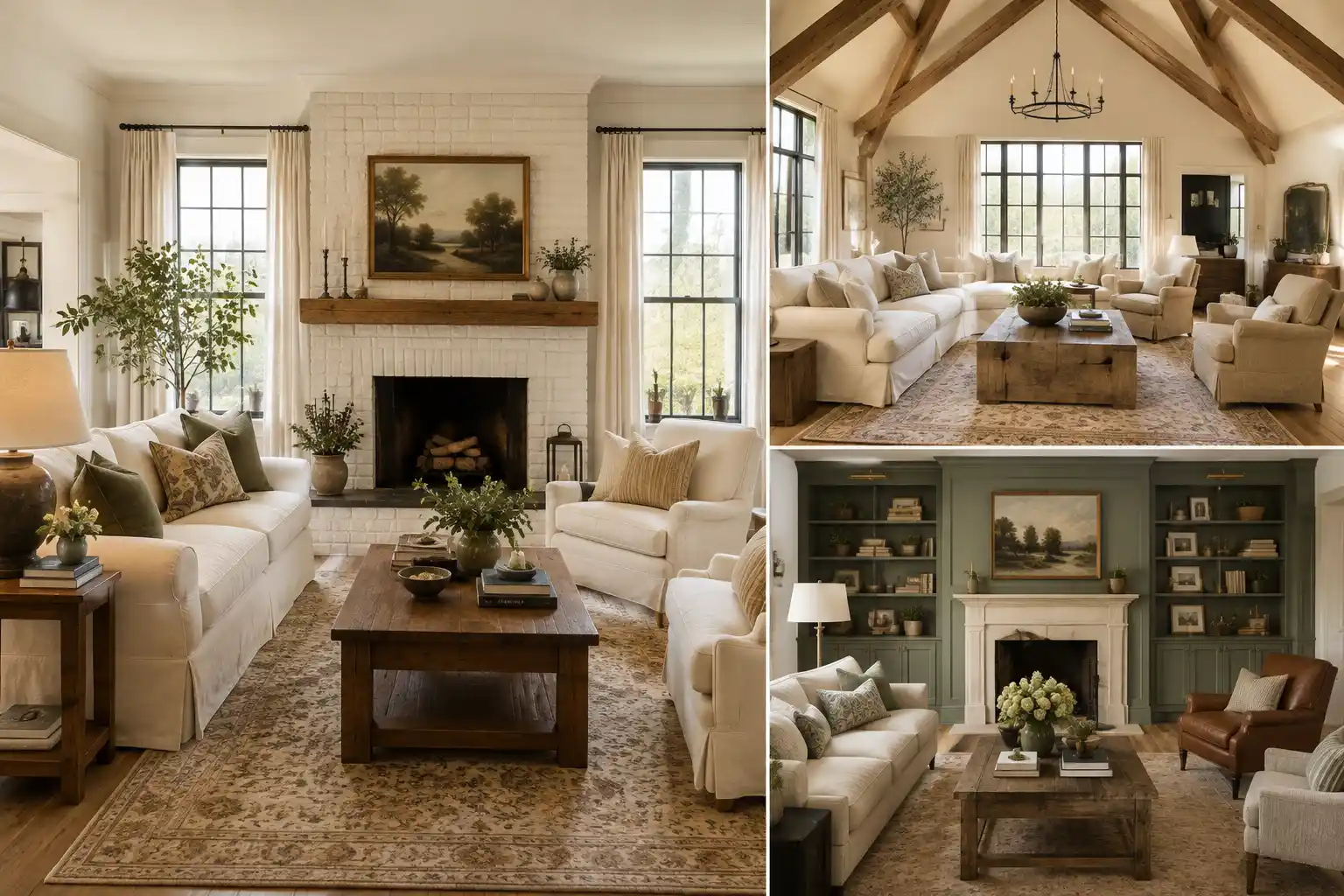
There’s something unmistakable about a Joanna Gaines living room. It feels comfortable without looking overly styled, polished without losing its warmth, and thoughtfully finished without appearing too perfect.
Much of that character comes from the way materials and furnishings work together. A worn wood table can sit beside a tailored sofa, while aged brass, painted brick, built ins, warm neutrals, and traditional pieces give the room a sense of history.
The goal isn’t to make everything match. It’s about choosing pieces that complement one another and allowing different textures, finishes, and architectural details to build a room that feels as though it has evolved naturally over time.
Top 20 Joanna Gaines Living Room Ideas
The 20 ideas ahead look at different ways to bring that collected quality into a living room, from statement fireplaces and exposed beams to leather seating, built ins, warm wood, muted color, and classic architectural details. Each offers a different approach while keeping the overall feeling comfortable, considered, and timeless.
1. Layer Warm Whites With Rich Natural Wood
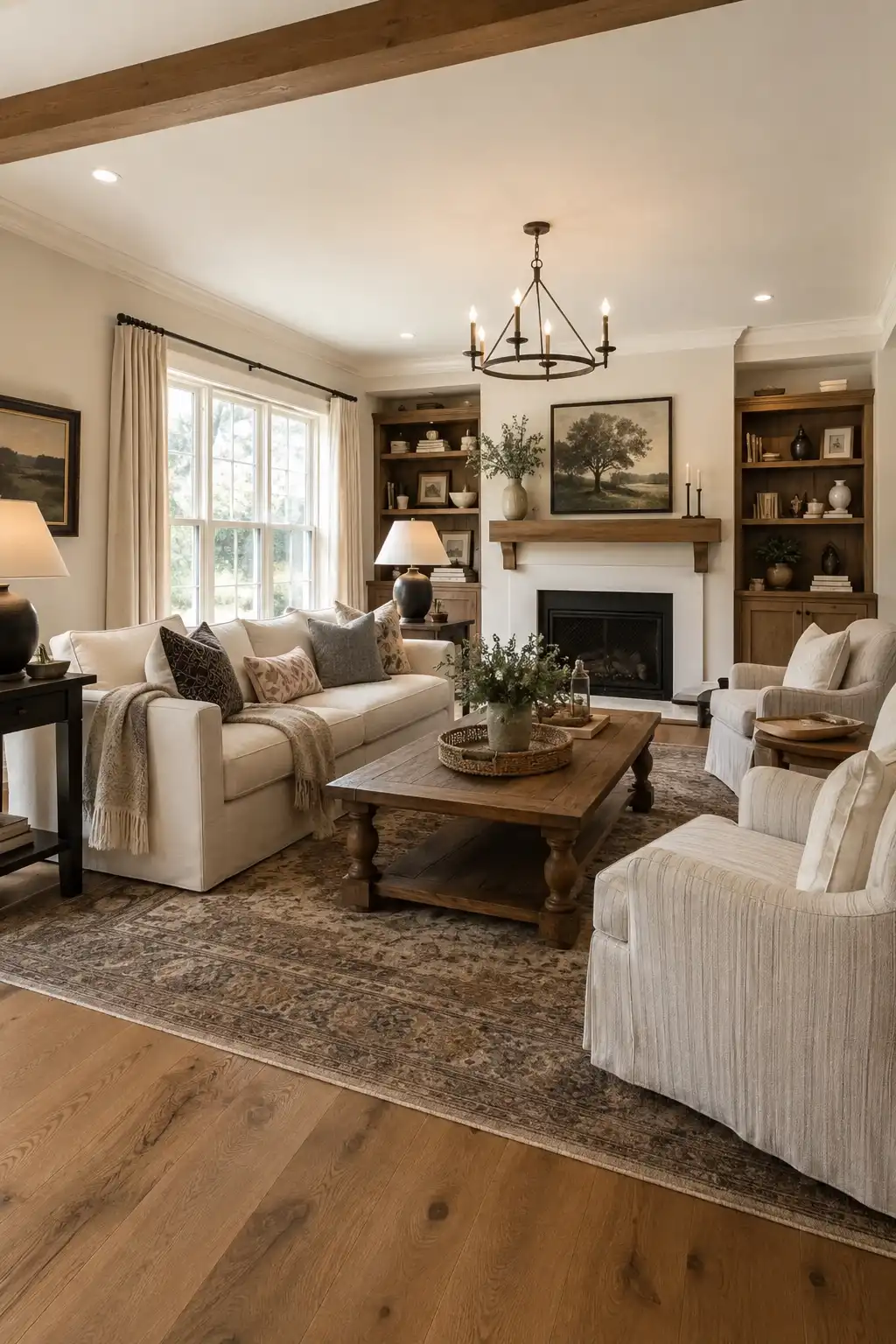
Warm white walls set a soft, welcoming tone in this living room, while the natural wood brings in the character. Instead of relying on bright white everywhere, the creamy upholstery and subtle wall color create a warmer backdrop that feels comfortable and established.
The substantial wood coffee table becomes an anchor in the center of the room. Its deeper finish works naturally with the hardwood flooring, mantel, exposed ceiling beam, and built in shelving. Because the wood tones aren’t perfectly matched, the space has the layered quality of a room collected over time.
A traditional patterned rug adds another layer beneath the neutral seating, while the fireplace creates a strong focal point. Classic lamps, landscape artwork, books, pottery, and simple greenery fill out the room without making it feel overdecorated. Together, these details give the neutral palette depth and personality.
Pro Tip: When working with warm whites, introduce several natural wood finishes throughout the room. Repeating wood in the floor, furniture, shelving, and smaller details helps the space feel connected without looking overly coordinated.
2. Let Exposed Wood Beams Define the Entire Room
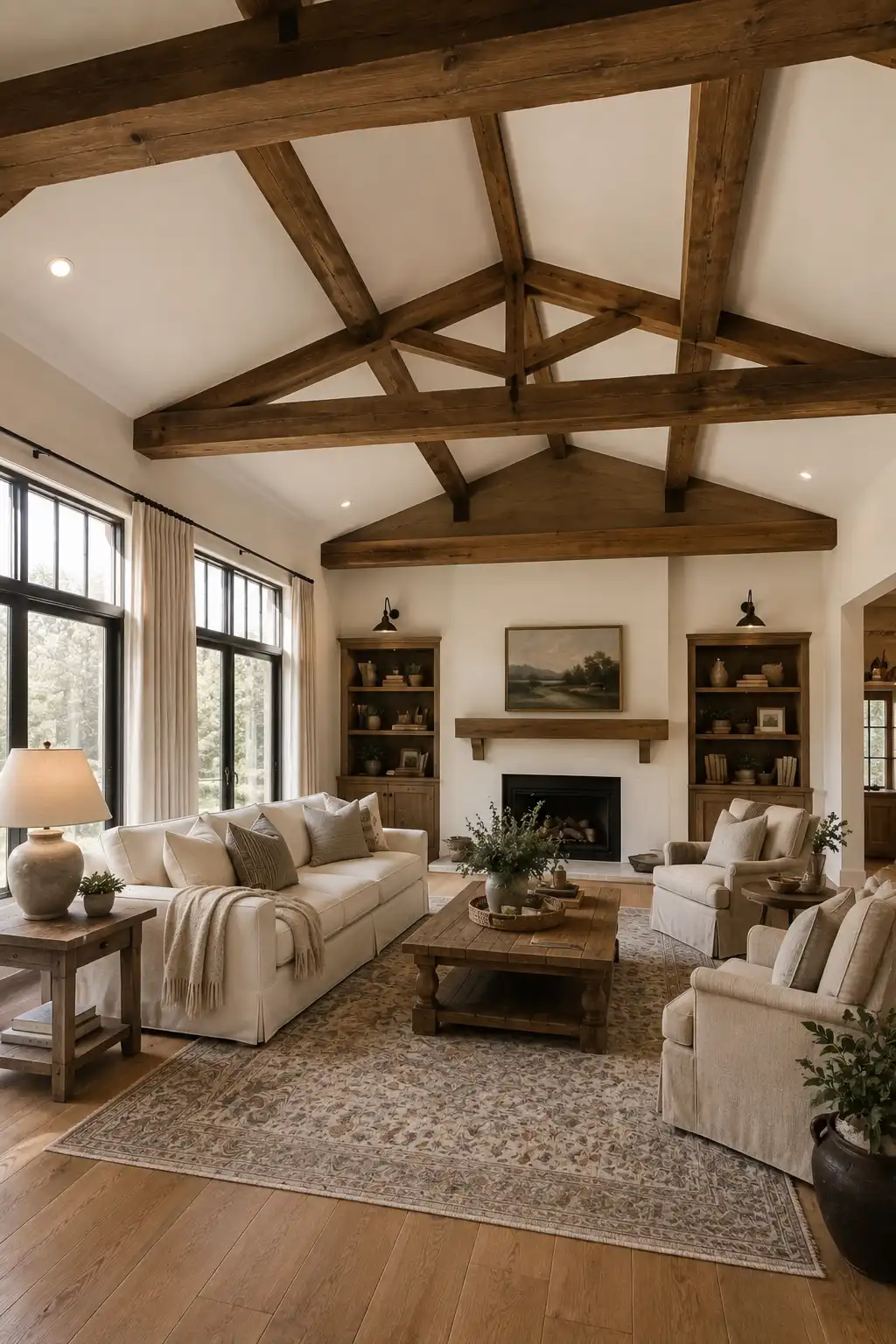
A vaulted ceiling already gives a living room a sense of openness, but exposed wood beams turn that height into a defining feature. Here, the substantial timber framework draws the eye upward and gives the bright ceiling warmth, depth, and architectural character without relying on extra decoration.
The same wood tone appears again through the fireplace mantel, built in shelving, coffee table, and flooring. Repeating the material at different heights helps connect the dramatic ceiling to the furniture below. Warm white walls and cream upholstery keep the heavier timber from making the room feel dark.
The seating arrangement stays classic and comfortable, with a generous sofa, upholstered armchairs, and a softly patterned traditional rug grounding the space. Large black framed windows introduce contrast and plenty of daylight, while simple artwork, pottery, books, and greenery make the finished room feel thoughtfully collected.
Pro Tip: When ceiling beams are this visually strong, keep the larger furniture and wall colors restrained. This allows the architecture to command attention while smaller wood details create continuity throughout the room.
3. Frame the Fireplace With Timeless Built In Shelving
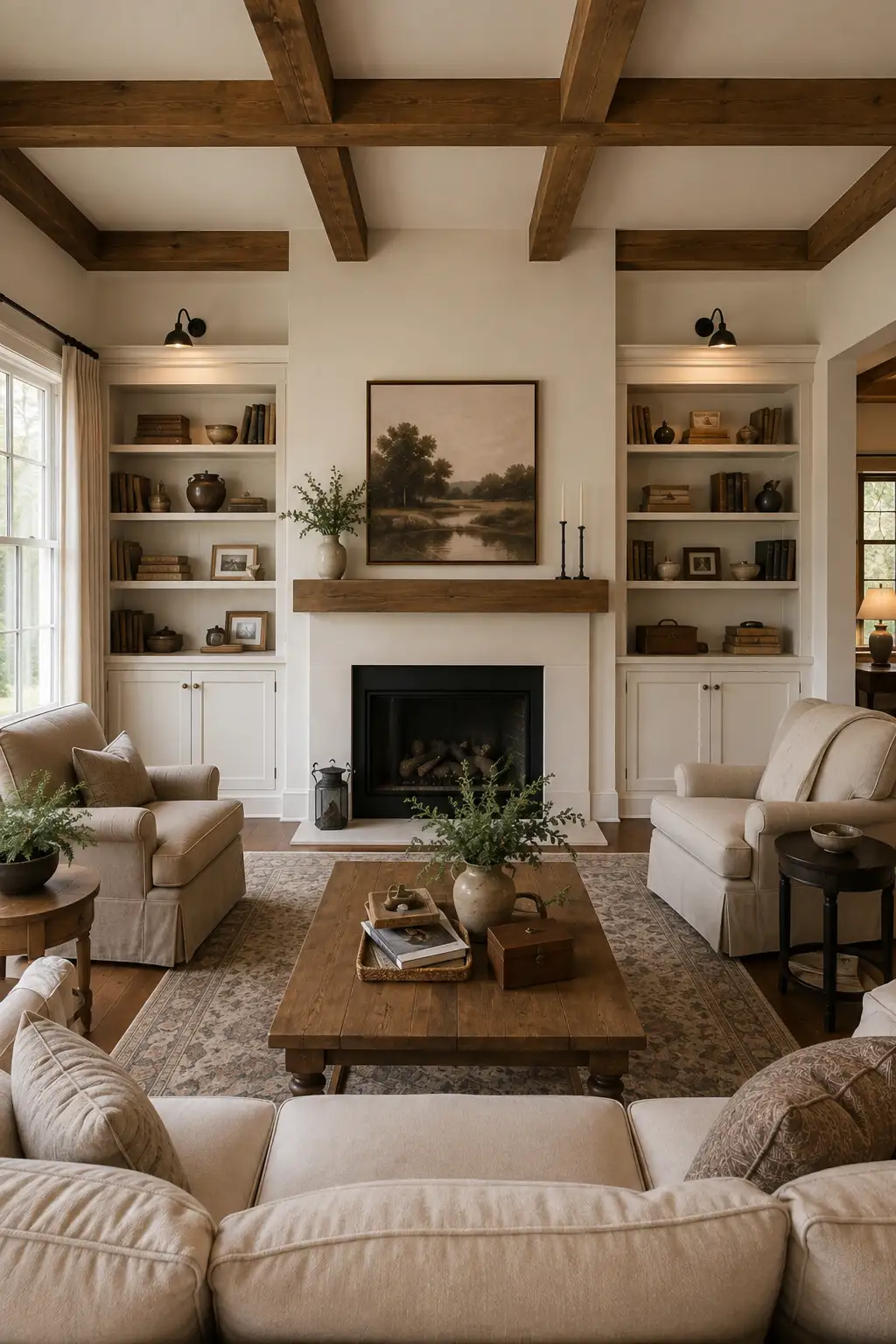
A centered fireplace feels even more substantial when it becomes part of a larger architectural wall. Here, matching built in bookcases frame the firebox and create a balanced focal point, while the warm white finish allows the cabinetry to blend naturally with the surrounding walls.
The open shelves bring personality without overwhelming the room. A restrained mix of aged books, pottery, framed pictures, and collected objects gives each shelf character, while closed cabinets below keep everyday storage out of sight. Small sconces above the bookcases add another traditional detail and a softer layer of light.
Natural wood keeps the symmetrical arrangement from feeling too formal. The thick mantel, exposed ceiling beams, and substantial coffee table introduce warmth against the creamy upholstery and white cabinetry. A muted traditional rug and landscape artwork complete the composition with pattern and understated color.
Pro Tip: Leave some breathing room when styling built in shelves. Mixing books and meaningful objects with intentionally open areas creates a more collected, sophisticated look than filling every shelf.
4. Make Oversized Windows Part of the Living Room Design
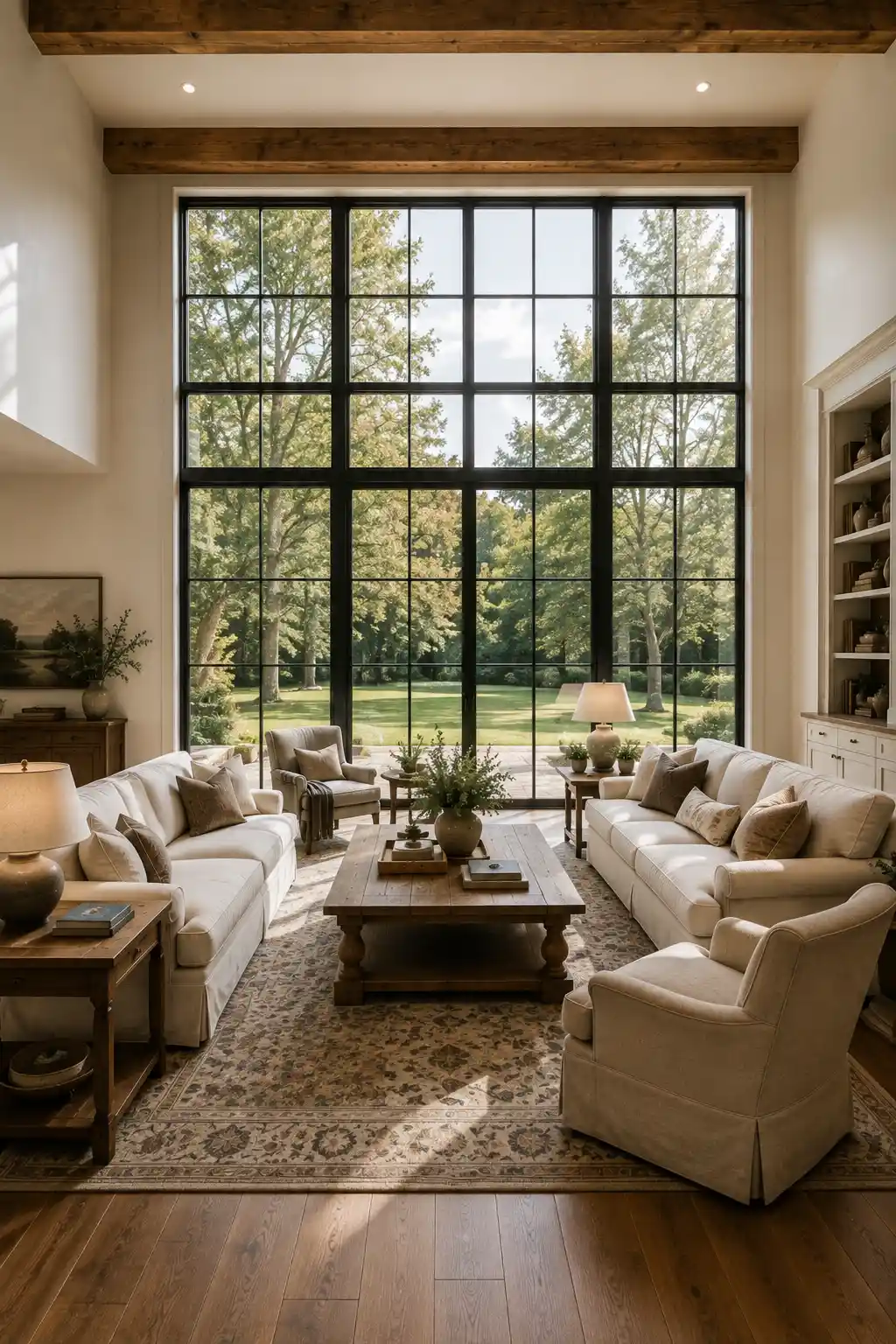
Floor to ceiling windows can do more than brighten a living room. In this space, the dramatic black framed glazing becomes an architectural focal point of its own, drawing the garden into the room and giving the neutral interior a stronger sense of scale and openness.
Keeping the furniture quiet allows that view to remain the star. Two cream sofas and classic upholstered chairs create a comfortable conversation area without competing with the windows. Warm wood tables, a traditional patterned rug, and understated neutral pillows soften the contrast created by the dark window frames.
Natural light also brings out the subtle differences between the room’s materials. The grain of the hardwood floor, aged finish of the coffee table, soft upholstery, and muted rug all become more noticeable in daylight. The result feels polished and thoughtfully layered while still being relaxed enough for everyday living.
Pro Tip: When a living room has statement windows, keep tall furniture away from the glass. Lower seating preserves the sightline and lets natural light travel deeper into the room.
5. Crown a Vaulted Ceiling With a Statement Chandelier
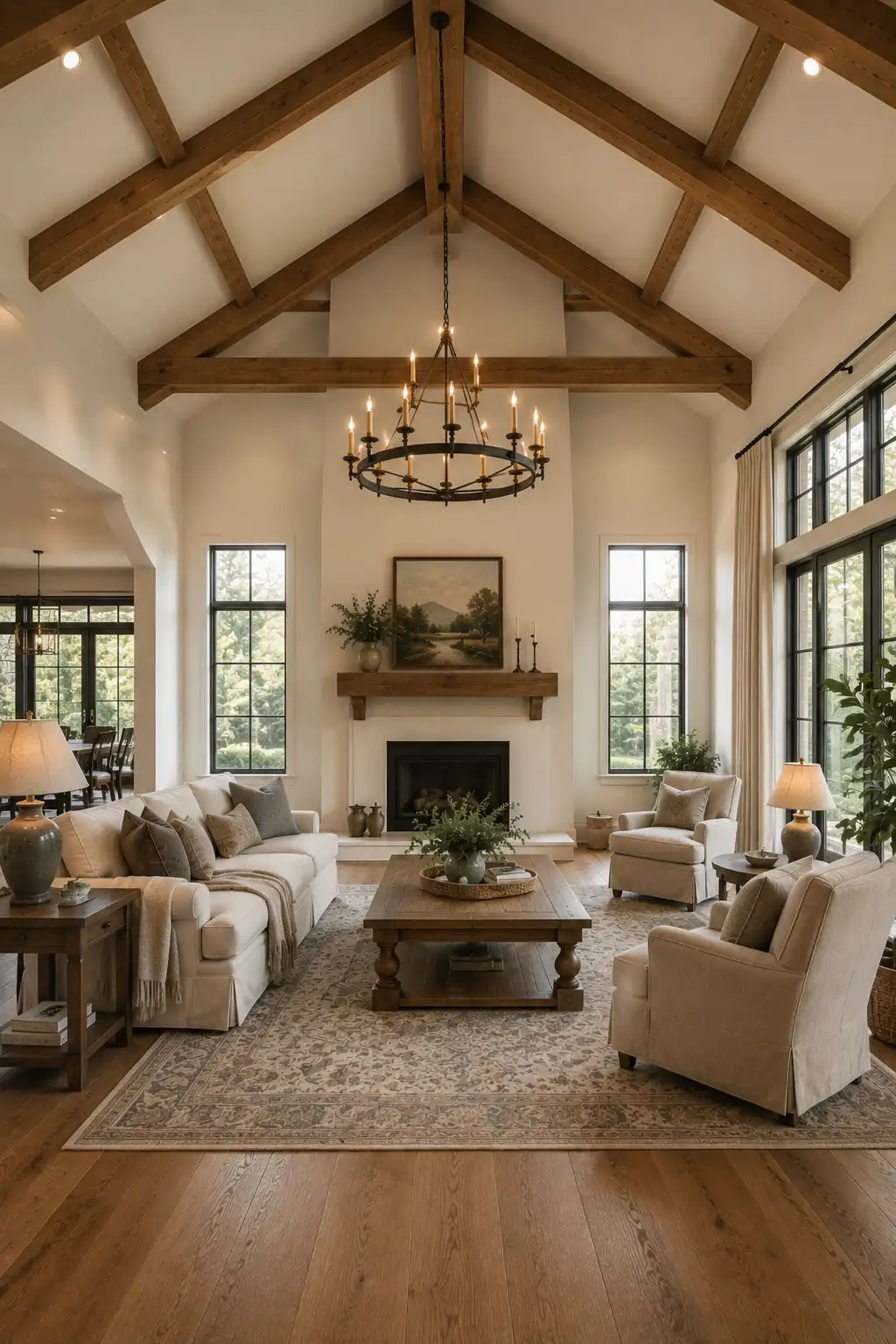
A soaring vaulted ceiling creates impressive height, but the right lighting makes that extra space feel intentional. Here, a large circular chandelier hangs at the center of the room, drawing the eye upward while giving the expansive ceiling a strong visual anchor.
Exposed wood beams add structure and warmth across the crisp white ceiling. Their natural finish is repeated through the substantial fireplace mantel, coffee table, side tables, and hardwood flooring. This repetition keeps the tall room connected from ceiling to floor rather than letting the upper half feel separate.
Below, creamy upholstered seating and a faded traditional rug soften all that architectural scale. Tall black framed windows bring in natural light and introduce just enough contrast, while the centered fireplace and landscape artwork maintain a calm sense of balance throughout the room.
Pro Tip: In a vaulted living room, choose a chandelier with enough width and visual weight to suit the ceiling height. A fixture that is too small can easily disappear in such a large volume.
6. Add Quiet Elegance With Classic Wall Molding
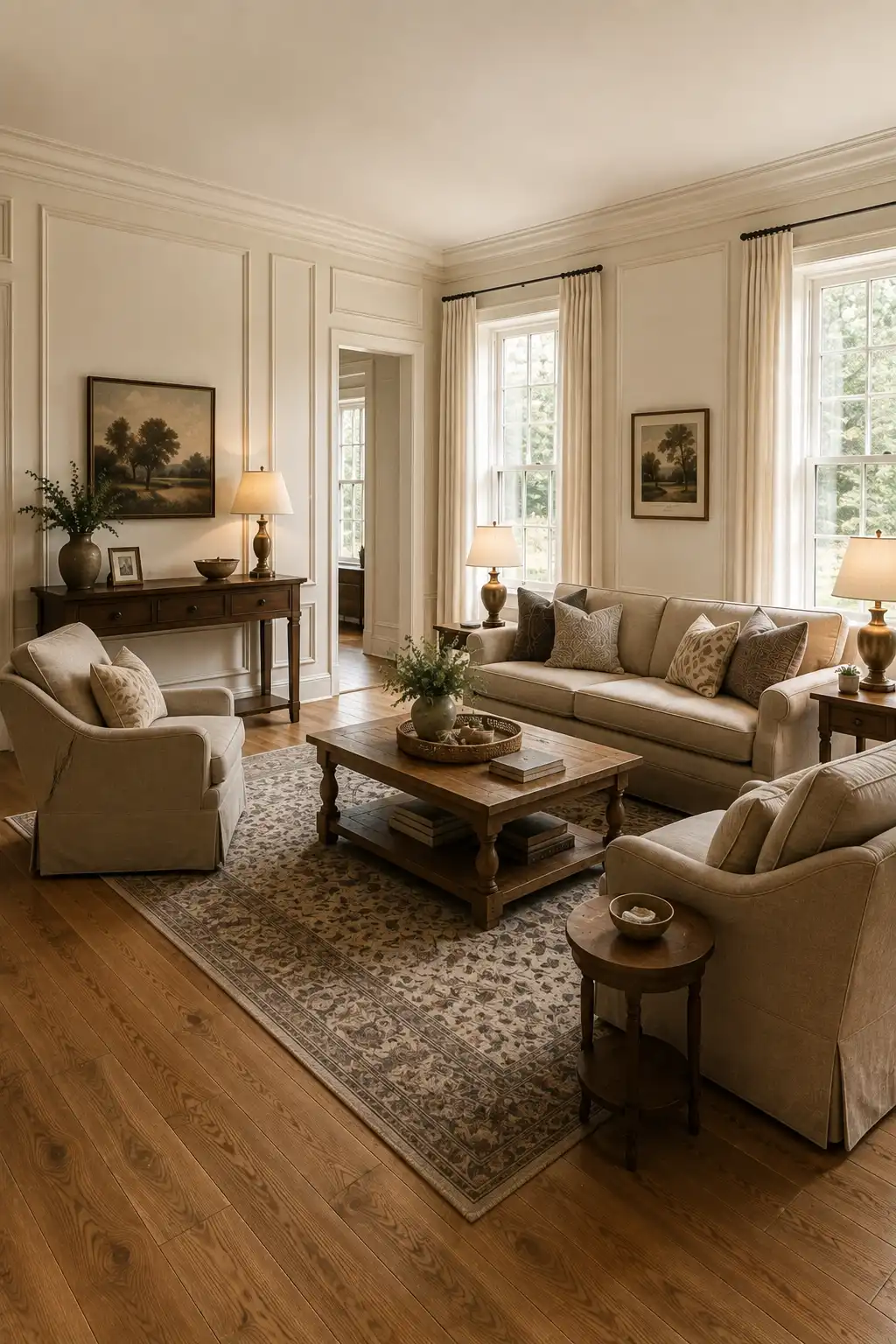
Picture frame molding gives a neutral living room depth without asking for bold color or busy decoration. Here, the warm cream walls and matching trim create subtle architectural interest, making the room feel established and refined while keeping the overall palette soft.
Traditional furniture works naturally with that backdrop. A tailored neutral sofa and matching armchairs form an inviting conversation area around the substantial wood coffee table. The patterned rug introduces gentle detail underfoot, while the warm hardwood flooring keeps the lighter upholstery from washing out the room.
The finishing touches are restrained but meaningful. Dark wood furniture, brass lamps, landscape artwork, full length curtains, and a few patterned pillows add contrast in small doses. Nothing dominates, which allows the architecture, furniture, and collected details to work together as one cohesive space.
Pro Tip: Paint wall molding and the surrounding wall the same color for a quieter, more sophisticated finish. The shadows around the trim will create enough dimension without adding another color to the palette.
Also Read: 13 Backyard Decor Ideas Made For Slow, Sun Soaked Afternoons
7. Give the Room History With a Statement Antique Cabinet
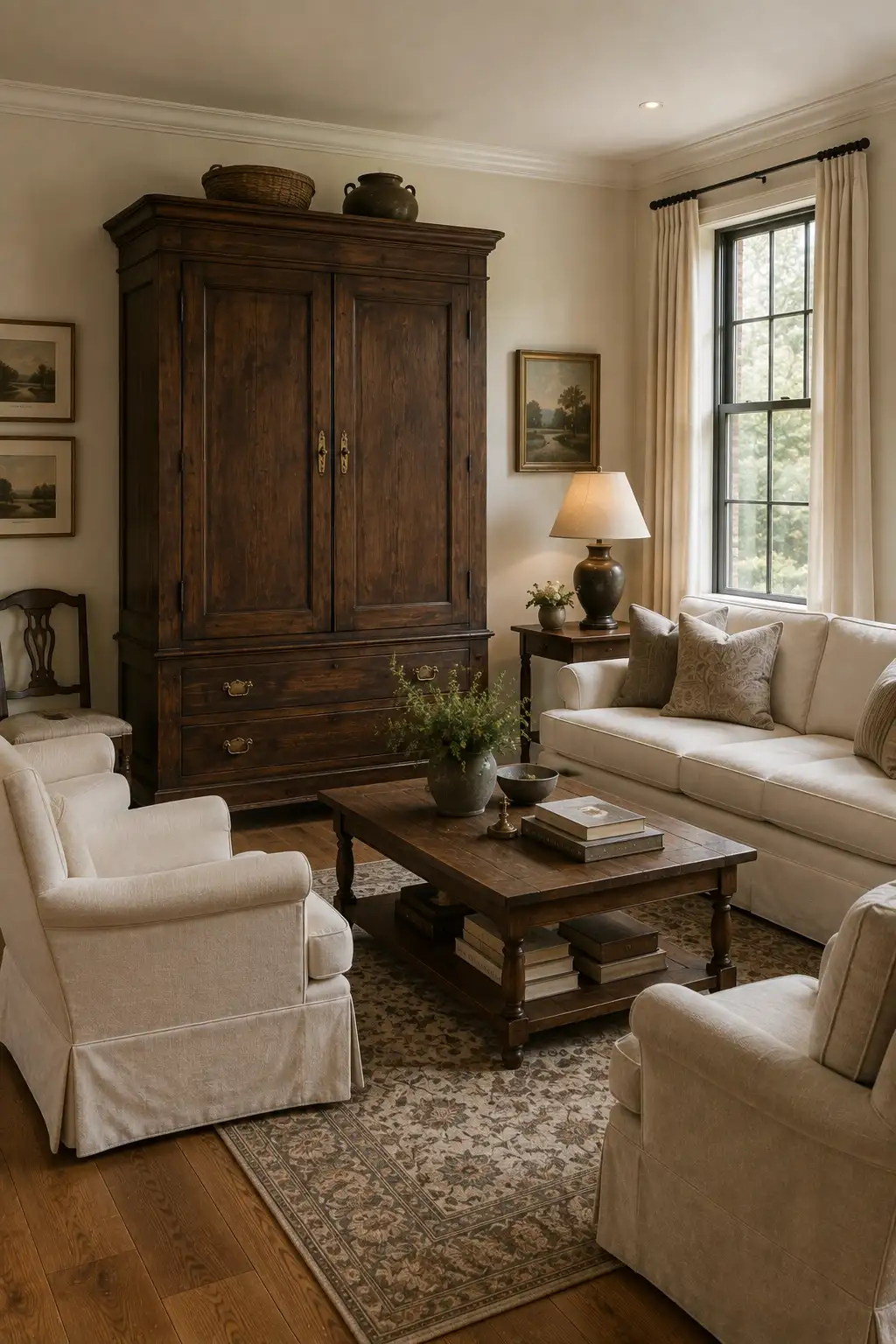
A substantial antique cabinet can instantly make a living room feel as though it has evolved over time. The dark wood piece here stands confidently against the warm neutral walls, bringing depth and character without requiring the rest of the room to lean heavily into vintage styling.
The contrast is especially effective beside the cream sofa and upholstered armchairs. Their lighter fabrics keep the room fresh, while the aged cabinet, wooden coffee table, and hardwood flooring introduce several layers of richer brown. Traditional brass hardware adds a small detail that reinforces the cabinet’s established character.
Around it, the styling remains simple and considered. Landscape artwork, classic lamps, stacked books, pottery, and a softly patterned rug complement the older piece rather than competing with it. This mix of polished upholstery and furniture with visible age gives the room its collected quality.
Pro Tip: Let one substantial antique piece command attention instead of filling the room with vintage furniture. Pairing it with simpler, newer pieces creates contrast and keeps the space feeling timeless rather than themed.
8. Build a Sophisticated Palette Around Warm Greige Walls
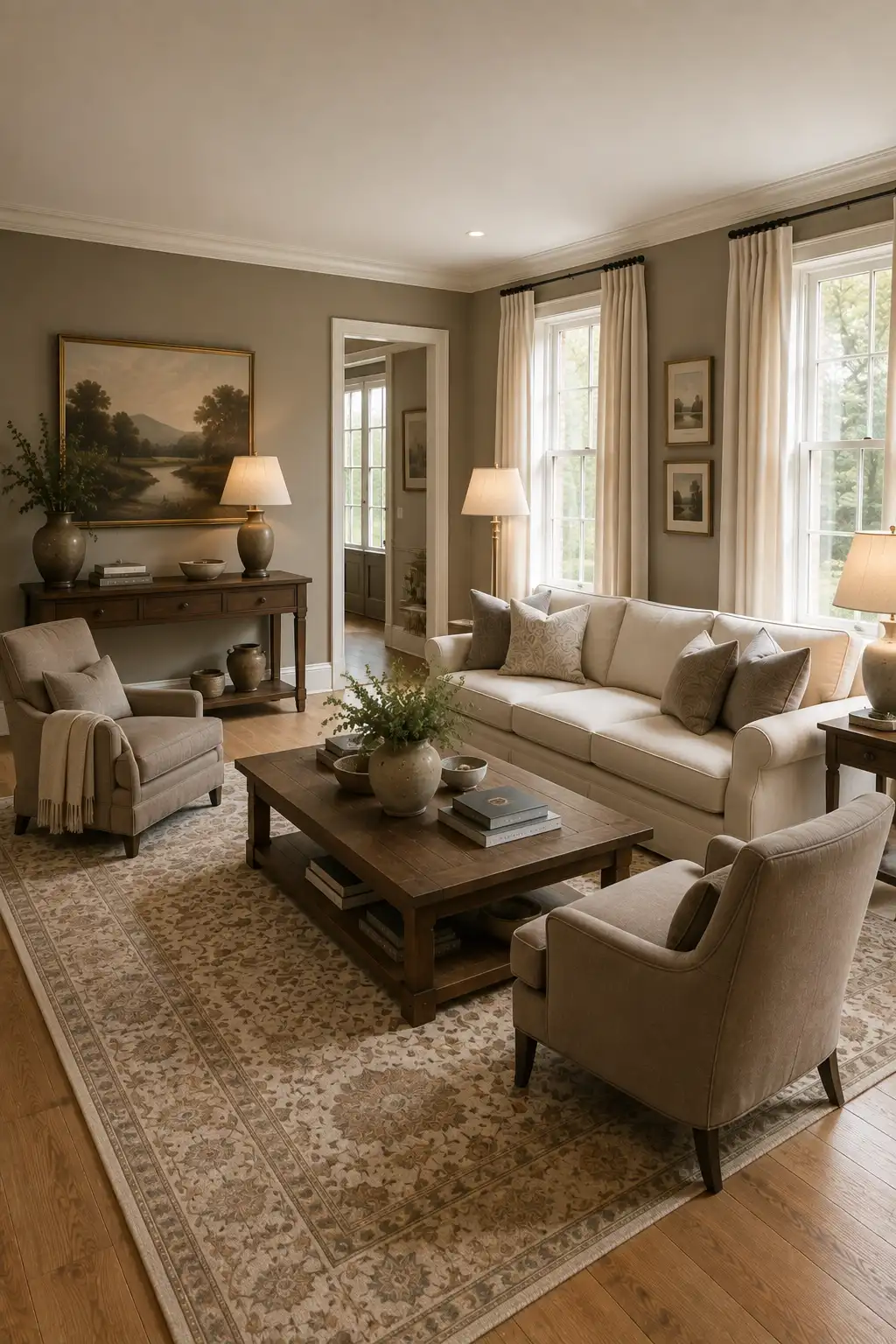
Warm greige gives this living room more depth than plain white while remaining quiet enough to support a collected mix of furniture. The brown undertones in the wall color work especially well with the hardwood flooring and dark wood pieces, creating a warm backdrop rather than a cool gray effect.
Cream upholstery keeps the room feeling light, while taupe armchairs bridge the gap between the pale sofa and deeper wall color. A substantial dark wood coffee table anchors the seating arrangement, and the softly patterned traditional rug introduces detail without disrupting the restrained palette.
Classic finishing touches keep the neutrals from becoming predictable. Brass lamps, landscape artwork, dark wood furniture, ivory curtains, pottery, and subtle greenery provide small shifts in color and texture. The result feels layered and established without needing a bold accent color to create interest.
Pro Tip: Choose greige paint with noticeably warm undertones when pairing it with natural wood. Cooler gray shades can fight against golden oak, while warmer greige helps the entire palette feel more cohesive.
9. Add Definition With Black Framed French Doors
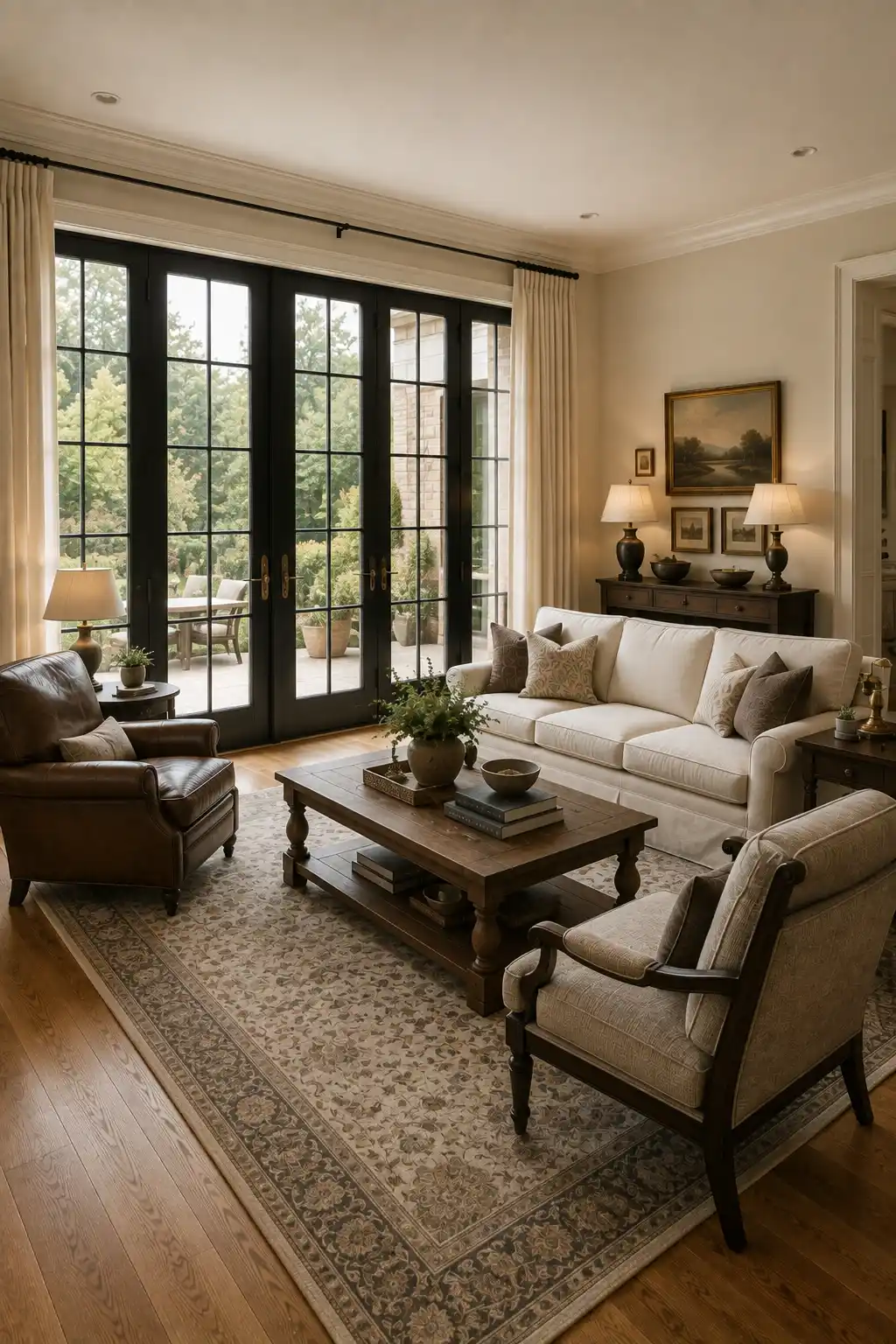
Black framed French doors bring a crisp architectural edge to an otherwise warm and traditional living room. The dark frames immediately draw attention toward the garden while creating strong contrast against the creamy walls, ivory curtains, and pale upholstered sofa.
The furniture keeps that contrast from feeling too sharp. A rich brown leather chair introduces another deeper tone, while the carved wood coffee table, console, and side tables spread warmth throughout the room. A classic upholstered armchair and faded patterned rug soften the arrangement with quieter texture.
What makes the look feel collected is the balance between old and new details. Traditional landscape art, brass accents, table lamps, layered books, and warm wood sit comfortably beside the cleaner black doors. Nothing feels overly matched, yet the repeated dark accents give the room a clear visual rhythm.
Pro Tip: Repeat the dark tone of black French doors in just a few smaller details, such as curtain rods, frames, or furniture accents. This makes the doors feel connected to the room without letting black dominate the palette.
10. Bring Soft Sage Built Ins Around a Classic Fireplace
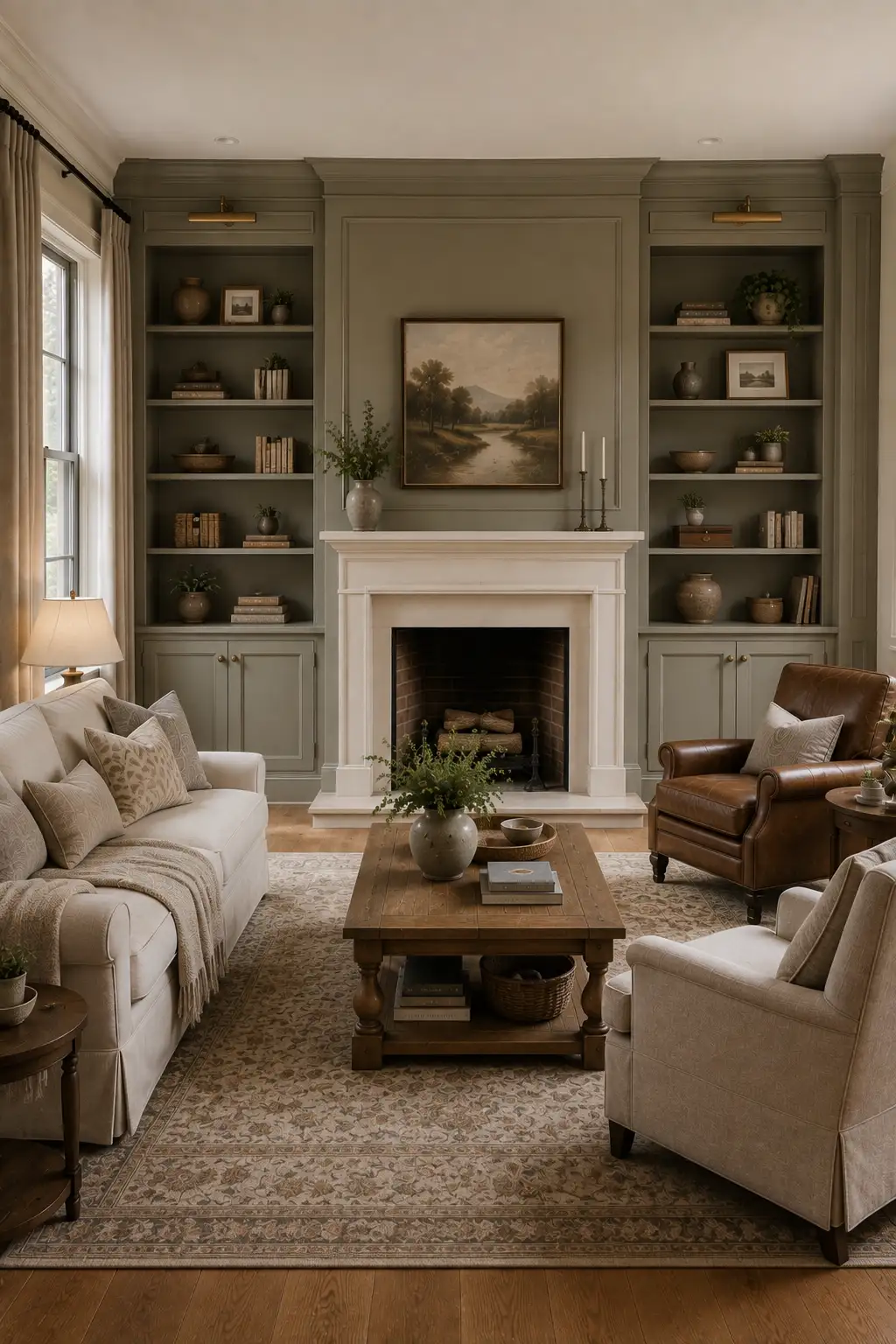
Muted sage cabinetry gives this living room a richer identity without overwhelming its traditional character. Wrapping the color around the fireplace and carrying it across the built ins creates one cohesive feature wall, while the crisp white mantel keeps the center feeling bright and defined.
The shelves add another layer through books, pottery, framed artwork, and small collected pieces. Because the styling is restrained, the cabinetry still feels architectural rather than decorative. Aged brass picture lights and hardware introduce a warmer finish that sits beautifully against the subdued green.
Cream upholstery provides a light counterpoint, while the cognac leather chair adds depth and a slightly aged quality. The substantial wood coffee table, traditional rug, landscape artwork, and warm flooring bring the palette together, creating a room that feels refined but comfortably lived in.
Pro Tip: Choose a sage with gray or brown undertones rather than a bright green. Muted shades pair more naturally with warm wood, leather, brass, and creamy neutrals.
11. Warm Up a White Brick Fireplace With Cognac Leather
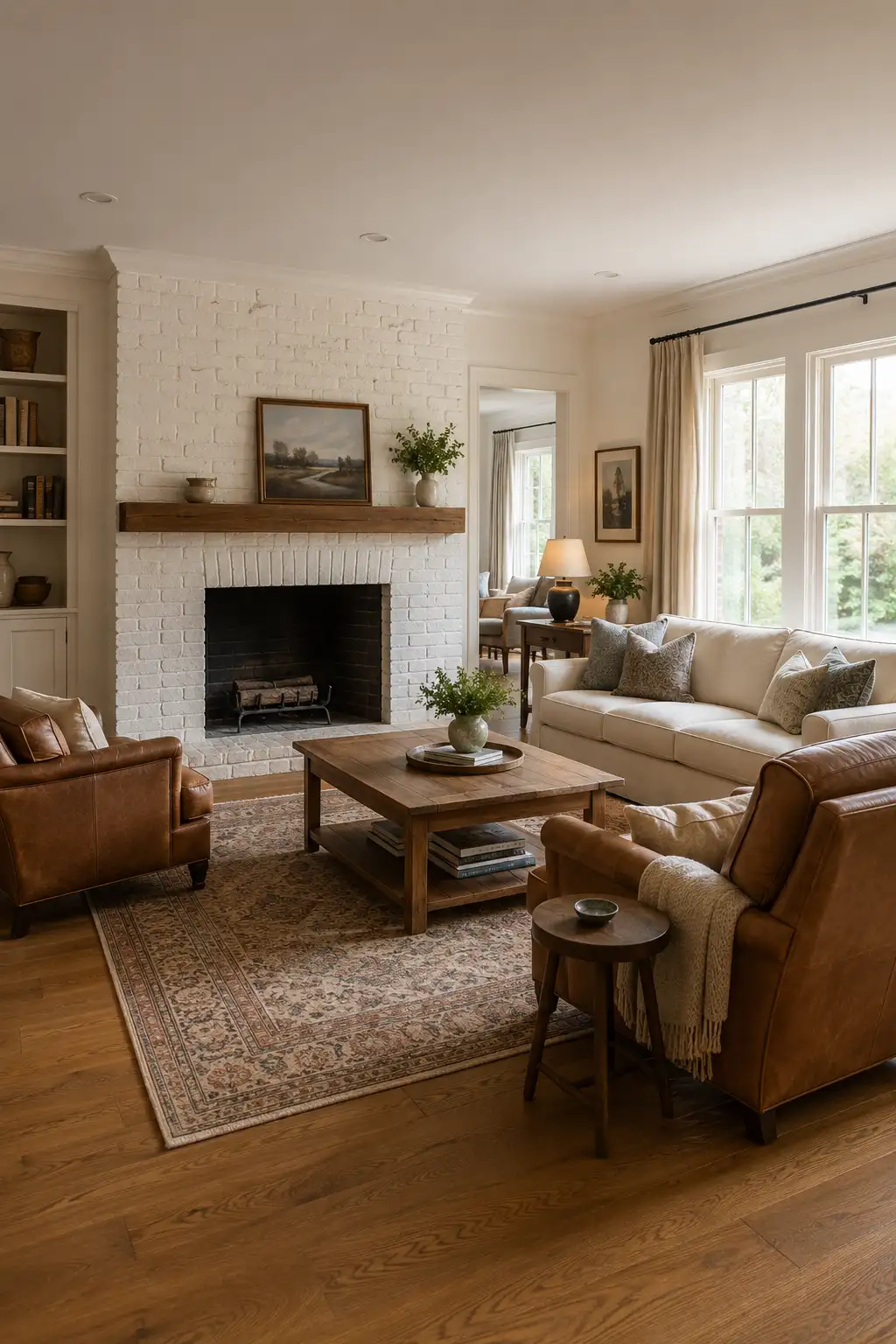
A painted white brick fireplace creates a bright focal point while still preserving the texture and character of the original masonry. The substantial wood mantel adds warmth across the center, giving the fireplace enough contrast to stand out against the surrounding creamy walls.
Cognac leather chairs bring a deeper, richer layer to the room. Their warm brown finish works naturally with the hardwood flooring and solid wood coffee table, while the cream sofa prevents the palette from becoming too heavy. Together, the mix feels comfortable and collected rather than perfectly matched.
A faded traditional rug grounds the conversation area and introduces subtle pattern beneath the furniture. Landscape artwork, books, greenery, simple pottery, and softly glowing table lamps finish the room without distracting from its strongest materials. The balance of brick, leather, wood, and linen gives the space lasting character.
Pro Tip: Pair white painted brick with warm brown materials such as cognac leather and medium toned wood. The contrast highlights the brick texture while keeping an all neutral room from feeling flat.
12. Anchor the Room With Rich Cognac Leather Sofas
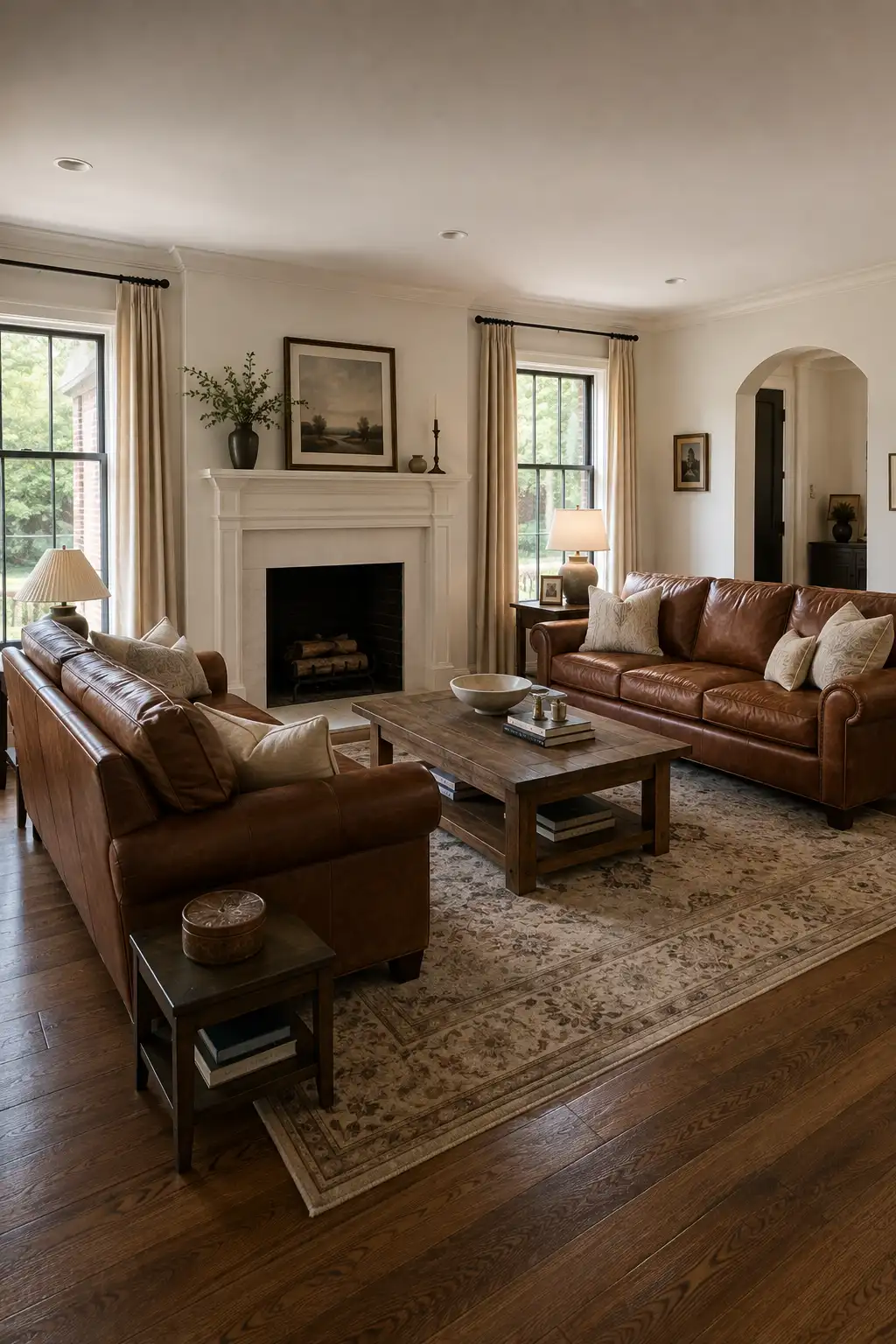
Cognac leather brings instant warmth to a neutral living room, especially when it appears on substantial seating rather than a small accent piece. Here, two leather sofas create a strong conversation area, with their rich brown tone standing out beautifully against the creamy walls and classic white fireplace.
The surrounding wood finishes deepen that sense of warmth without making the room feel overly dark. A substantial wood coffee table, darker side tables, and hardwood flooring create several shades of brown, while the faded traditional rug breaks up those heavier finishes with a softer pattern underfoot.
Cream pillows, simple landscape artwork, traditional lamps, and understated mantel decor keep the leather from pushing the room too far into a masculine or rustic direction. Tall windows and light curtains bring in plenty of daylight, allowing the natural grain and gentle creases of the leather to become part of the room’s character.
Pro Tip: When using large leather sofas, surround them with lighter walls, textiles, and rugs. The contrast keeps rich cognac tones feeling warm and sophisticated rather than visually heavy.
13. Break Up Warm Neutrals With Dusty Blue Accent Chairs
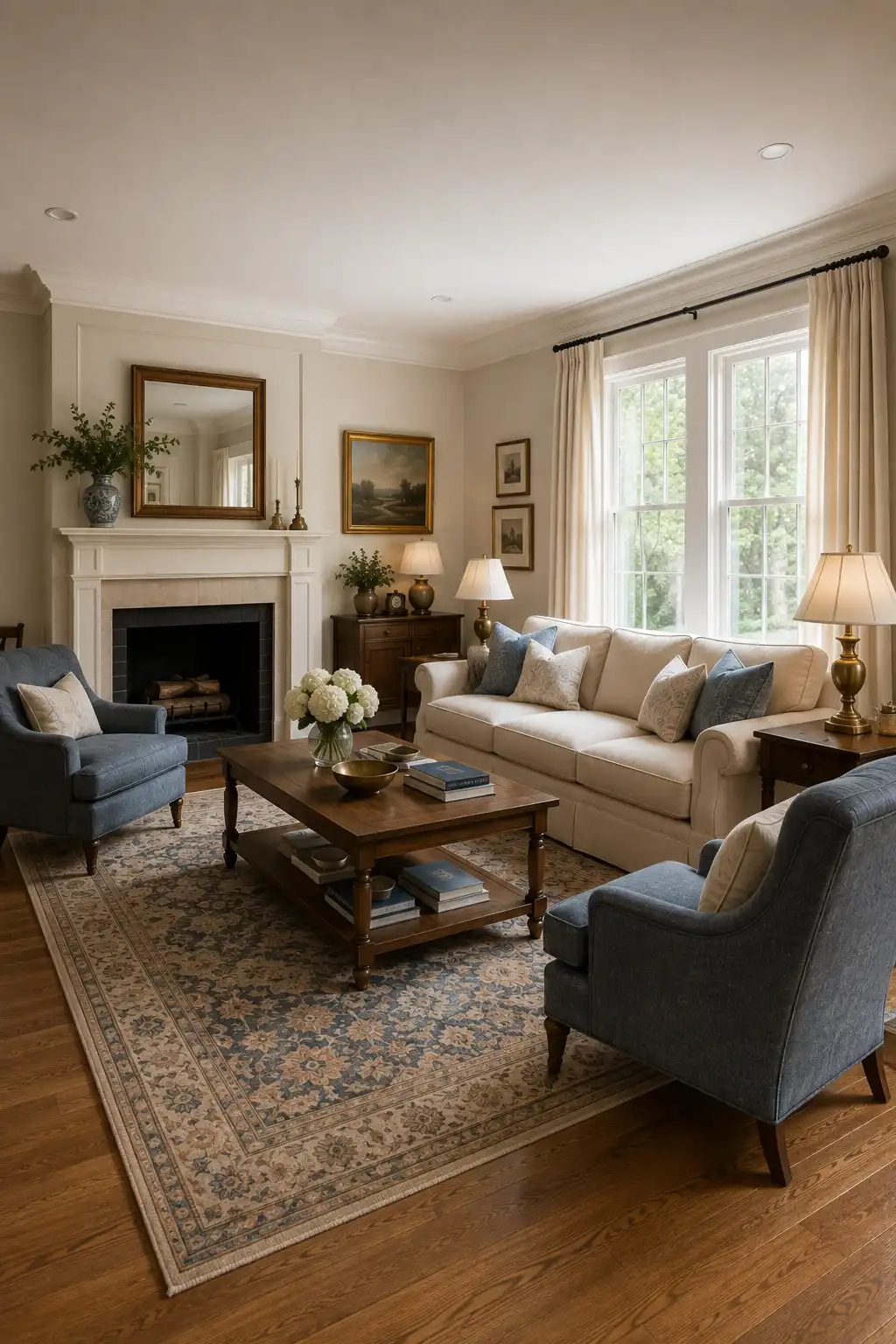
A mostly neutral living room gains much more personality when one muted color is introduced with intention. Here, dusty blue armchairs add a gentle contrast to the cream sofa and warm walls, giving the seating arrangement definition without making the palette feel overly colorful.
The blue appears again in smaller details, including the patterned rug and accent pillows. This repetition helps the color feel connected to the room rather than added as an afterthought. Warm wood from the coffee table, flooring, and case furniture balances the cooler blue and keeps the overall atmosphere inviting.
Traditional elements give the palette a timeless foundation. The classic fireplace, brass lamps, framed landscapes, full length curtains, and wood framed mirror create a sense of history around the newer upholstery. Together, these pieces make the room feel layered and collected rather than designed around a strict matching set.
Pro Tip: When adding color to a warm neutral room, choose a muted shade and repeat it two or three times. Dusty blue works especially well because it adds contrast while still sitting comfortably beside cream, brass, and natural wood.
14. Use Shiplap to Give a Neutral Fireplace More Character
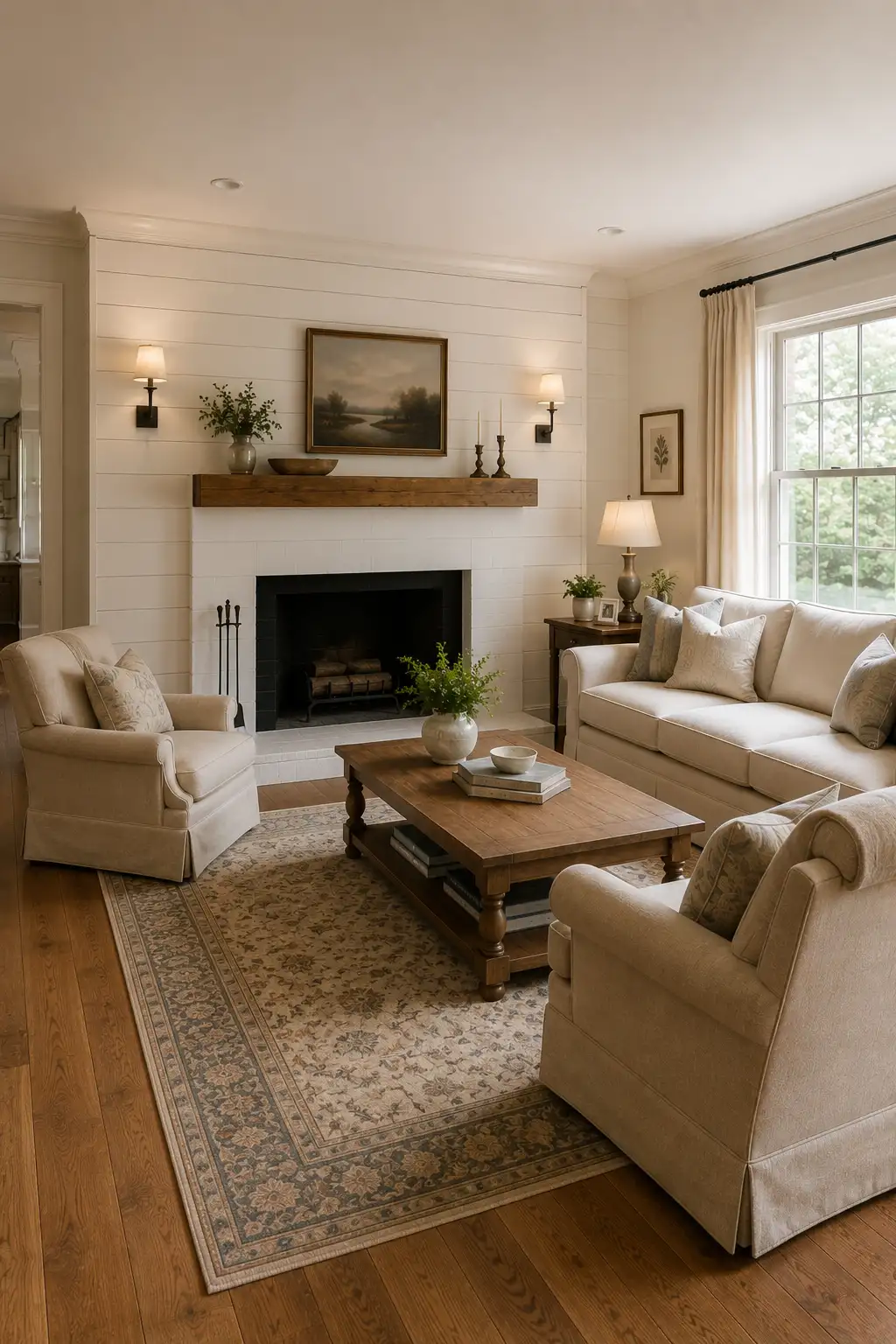
White shiplap adds quiet architectural detail to this fireplace wall without taking away from the room’s calm neutral palette. The horizontal lines create texture from floor to ceiling, giving a simple white surface more presence while still allowing the fireplace to remain the natural focal point.
A thick wood mantel introduces just enough contrast against the painted surround. Its warm finish connects naturally with the hardwood floor and substantial coffee table, helping the brighter wall feel grounded. Simple sconces, landscape artwork, pottery, and candlesticks add interest without crowding the mantel.
Cream seating keeps the rest of the room soft and comfortable, while a traditional patterned rug brings subtle color and age beneath the furniture. Instead of filling the space with decorative accents, the design relies on texture, warm wood, classic proportions, and a few carefully chosen pieces to create its collected character.
Pro Tip: Keep shiplap in the same warm white family as the surrounding walls when you want a timeless look. The subtle shadow lines provide plenty of texture without turning the feature wall into a competing focal point.
15. Make a Small Living Room Feel Intimate With Symmetry
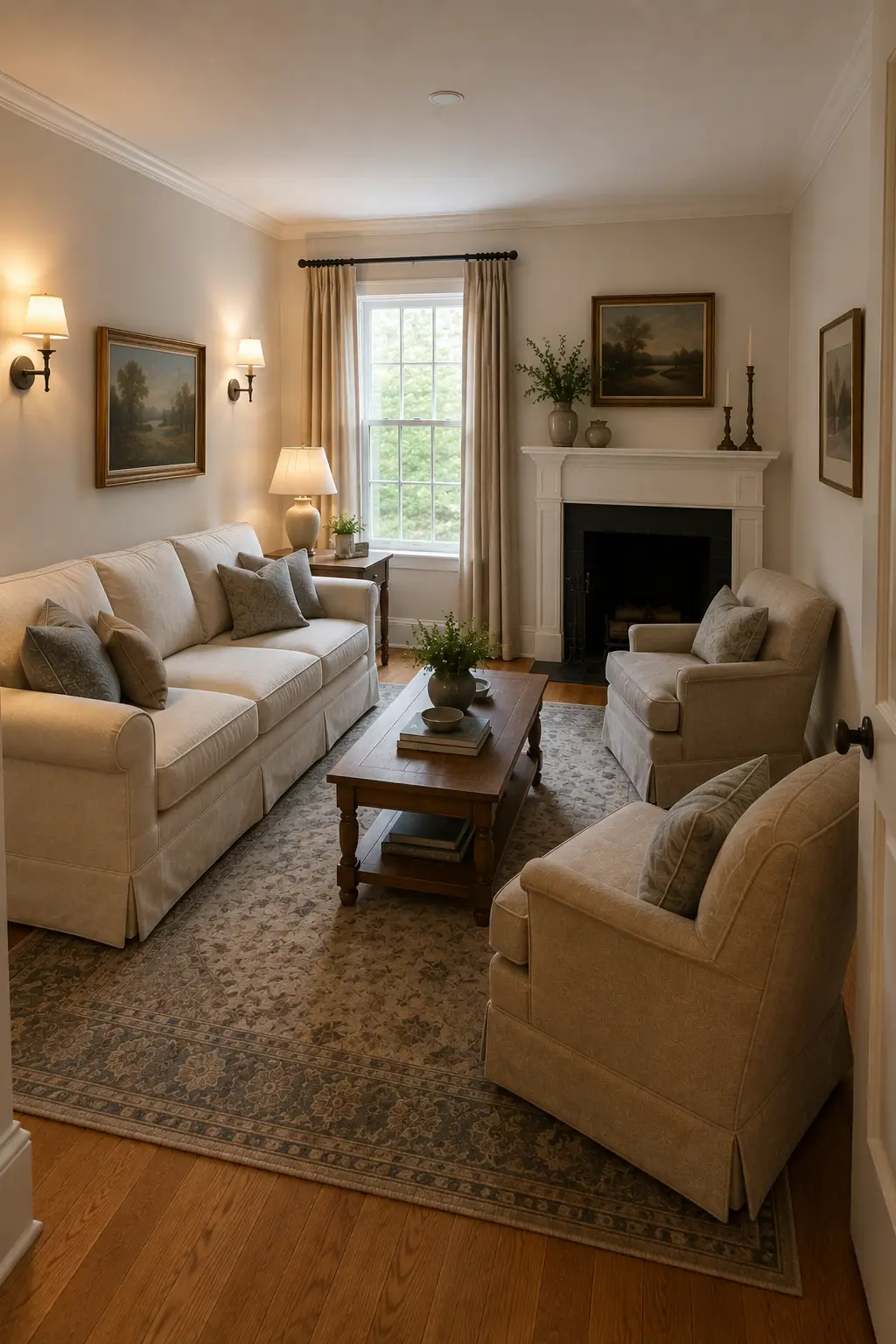
A smaller living room doesn’t need an elaborate layout to feel thoughtfully designed. Here, the sofa and pair of upholstered armchairs form a simple conversation area around the coffee table, while the centered fireplace gives the room a clear focal point and keeps the arrangement visually organized.
The restrained palette also helps the limited footprint feel calm rather than crowded. Cream upholstery blends softly with the warm walls and curtains, while the dark patterned rug and wood coffee table add enough contrast to define the seating zone. Nothing feels oversized or out of proportion with the room.
Classic details bring character without using valuable floor space. Wall sconces, framed landscape paintings, traditional lamps, candlesticks, and simple greenery add interest vertically, leaving the furniture arrangement comfortable and practical. The result feels intimate, collected, and suited to everyday living.
Pro Tip: In a small living room, build the layout around one strong focal point and keep furniture proportions consistent. A balanced arrangement will often make the space feel more generous than adding extra pieces.
16. Turn a Black Brick Fireplace Into a Dramatic Focal Point
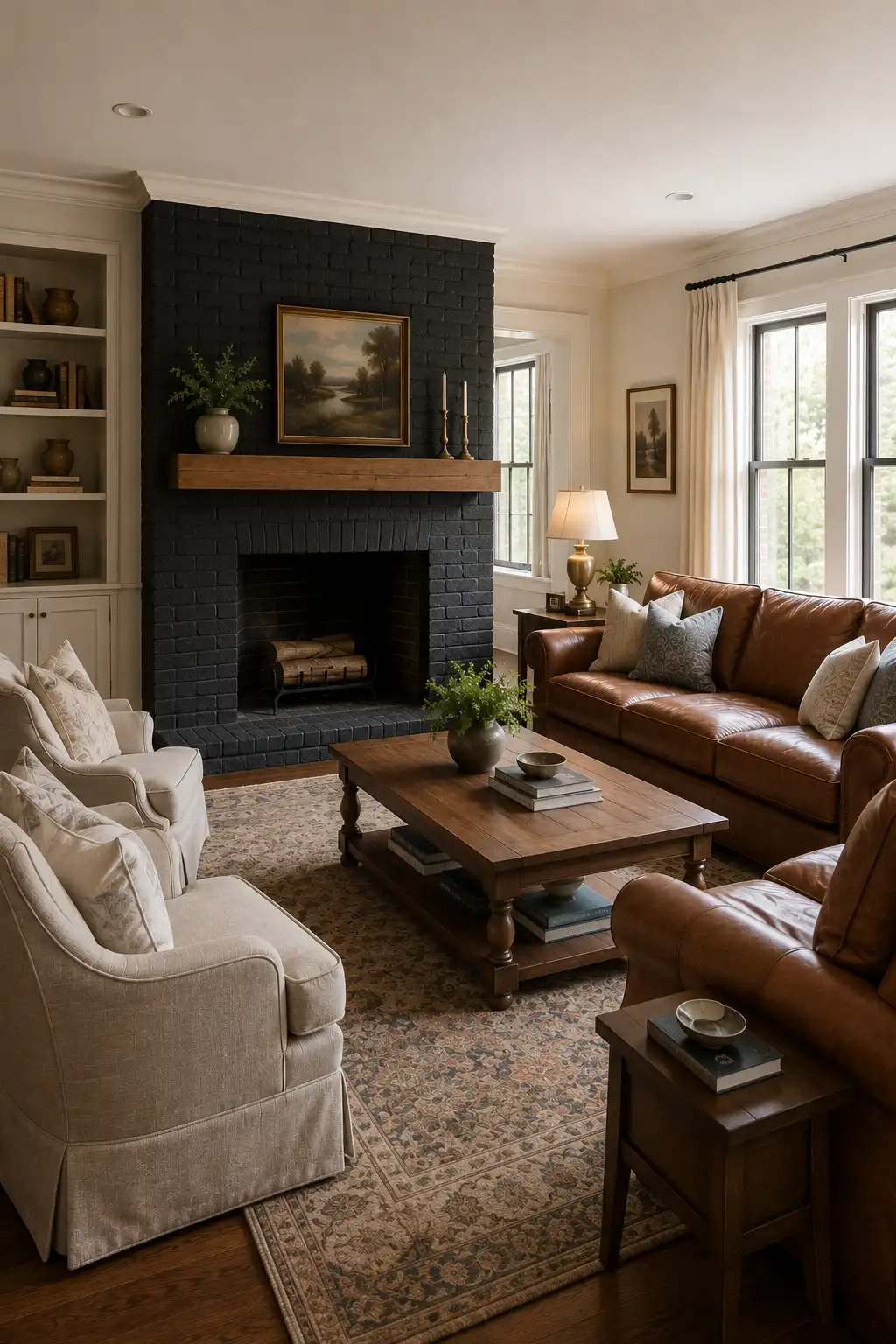
Painting a brick fireplace deep black gives a traditional living room an unexpected sense of drama. The original brick texture remains visible, but the darker finish creates a strong architectural anchor against the warm cream walls and lighter built in cabinetry surrounding it.
A thick natural wood mantel softens the black and connects the fireplace to the rest of the room. Its warm tone is echoed in the substantial coffee table and hardwood flooring, while cognac leather seating adds another rich layer. Cream upholstered chairs provide the contrast needed to keep the composition balanced.
The surrounding details stay classic and restrained. Landscape artwork, aged brass candlesticks, pottery, books, and a faded patterned rug bring softness and history around the darker feature. Rather than making the room feel severe, the black fireplace gives all of those warmer materials more definition.
Pro Tip: If you choose a black fireplace, repeat dark tones sparingly elsewhere and bring in plenty of warm wood, cream textiles, and natural light. This keeps the contrast sophisticated instead of making the room feel heavy.
17. Create Calm With a Perfectly Balanced Fireplace Layout
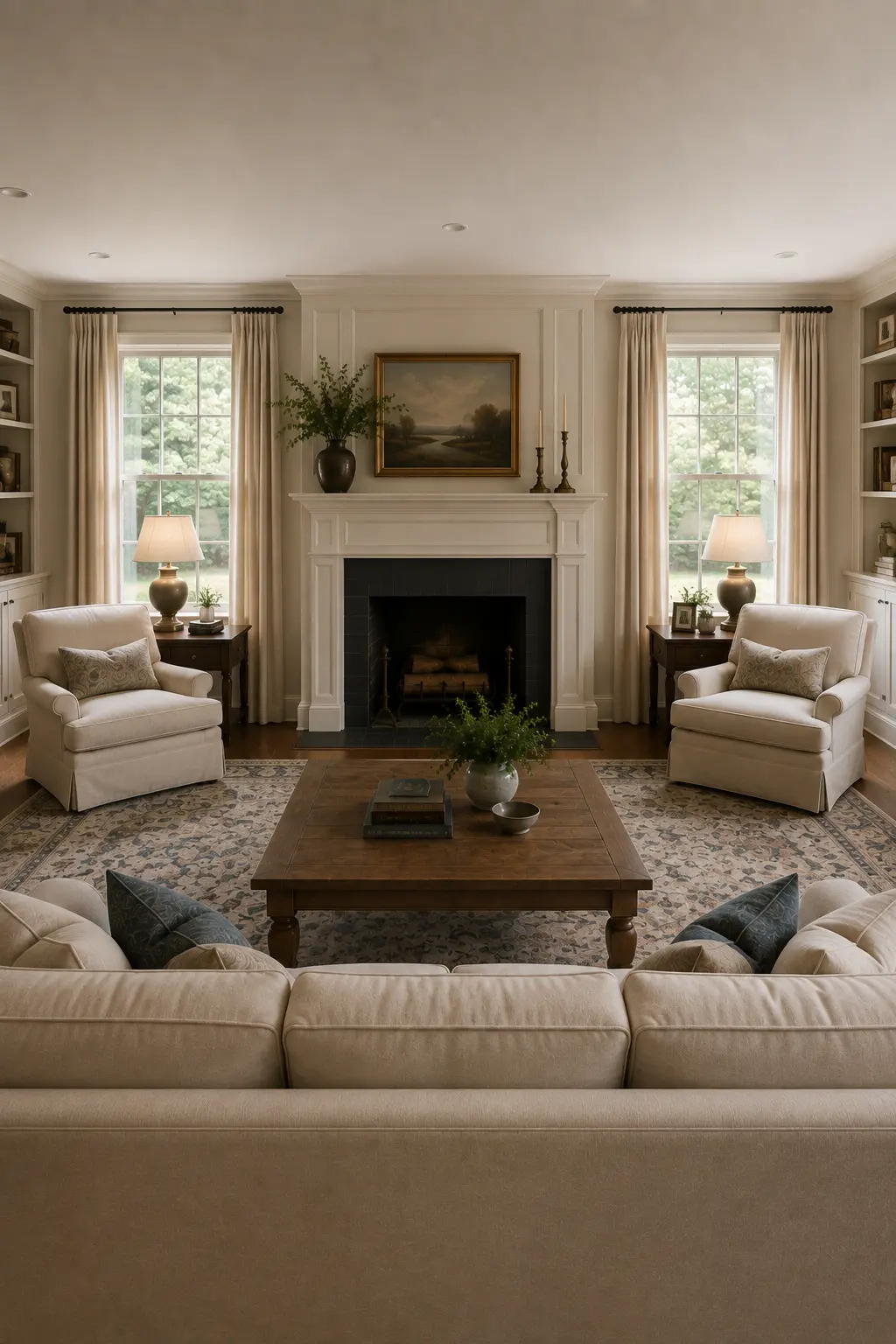
Symmetry gives this living room an immediate sense of order, but it never feels overly formal. The fireplace sits directly at the center, framed by matching windows, curtains, armchairs, side tables, and lamps. That balanced arrangement makes the entire room feel composed before any decorative details are added.
Warm neutrals keep the symmetry soft and inviting. Cream upholstery and ivory curtains blend gently with the walls, while the wood coffee table and dark flooring introduce enough contrast to ground the lighter palette. The traditional rug adds muted pattern and prevents the seating area from feeling too pristine.
Small differences keep the room from looking staged. Landscape artwork, candlesticks, greenery, books, and patterned pillows bring personality into an otherwise structured layout. The combination of formal balance and relaxed materials creates a living room that feels timeless, comfortable, and naturally collected.
Pro Tip: Start a symmetrical living room with the largest architectural feature, such as the fireplace, then balance major furniture around it. Keep smaller accessories slightly varied so the finished space feels polished without becoming rigid.
18. Let a Reclaimed Wood Coffee Table Set the Tone
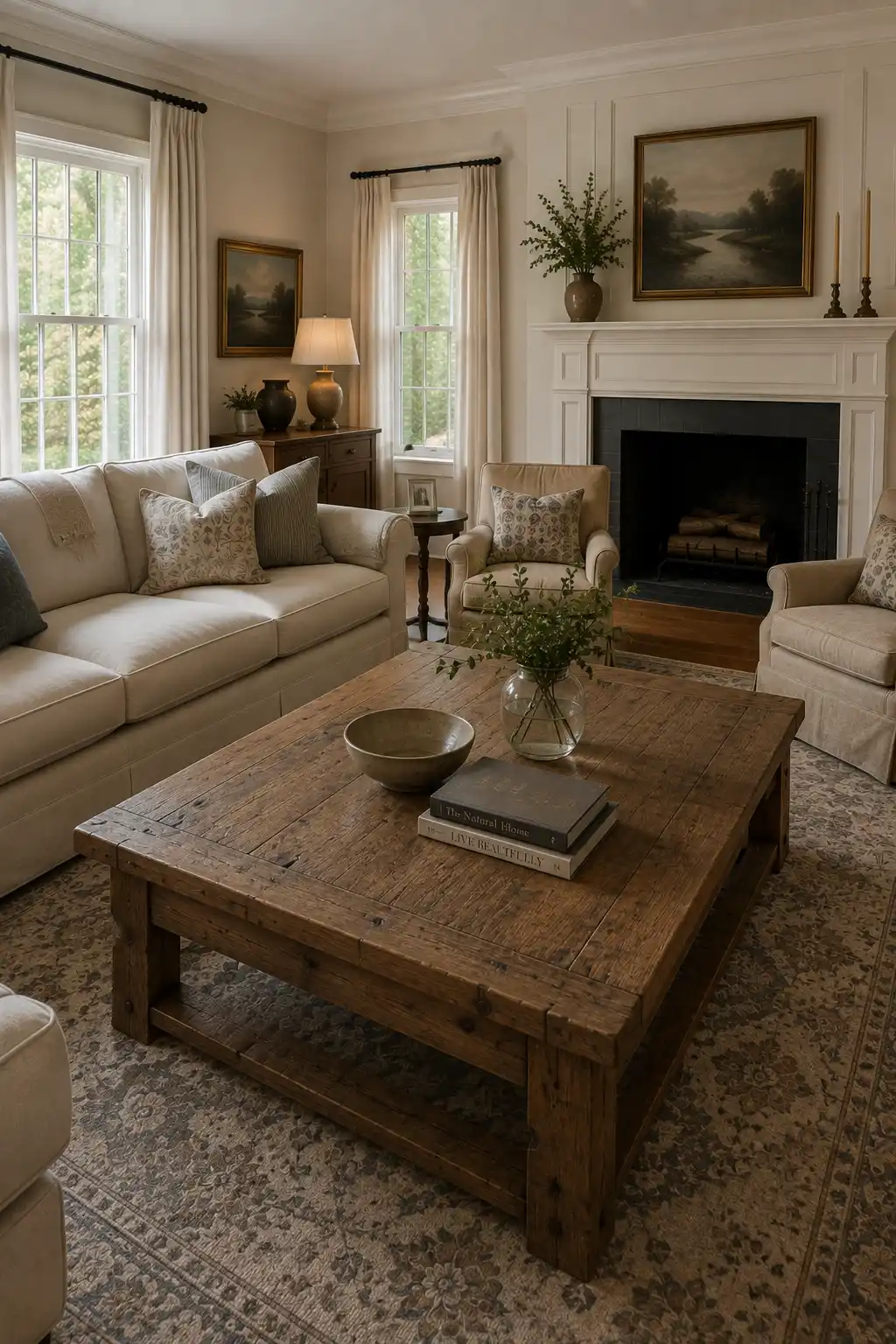
A substantial reclaimed wood coffee table can give an entire living room its sense of character. Here, the oversized square table becomes the visual anchor, with visible grain, knots, worn edges, and natural imperfections bringing age and warmth into an otherwise polished neutral setting.
Its rustic texture works because the surrounding furniture is softer and more tailored. A cream sofa and upholstered armchairs keep the room comfortable and refined, while the traditional rug adds a quieter layer of pattern beneath the heavier wood. The contrast makes the table feel collected rather than overly rustic.
The rest of the room carries that balance forward with a classic fireplace, warm landscape paintings, dark wood furniture, simple pottery, and full length curtains. Even the restrained greenery and stacked books feel intentional, allowing the materials themselves to provide most of the room’s personality.
Pro Tip: If you choose a large reclaimed wood coffee table, keep the styling on top minimal. A few books, a simple vessel, and one natural arrangement will let the wood’s texture and patina remain the main attraction.
19. Turn a Deep Window Nook Into a Built In Reading Seat
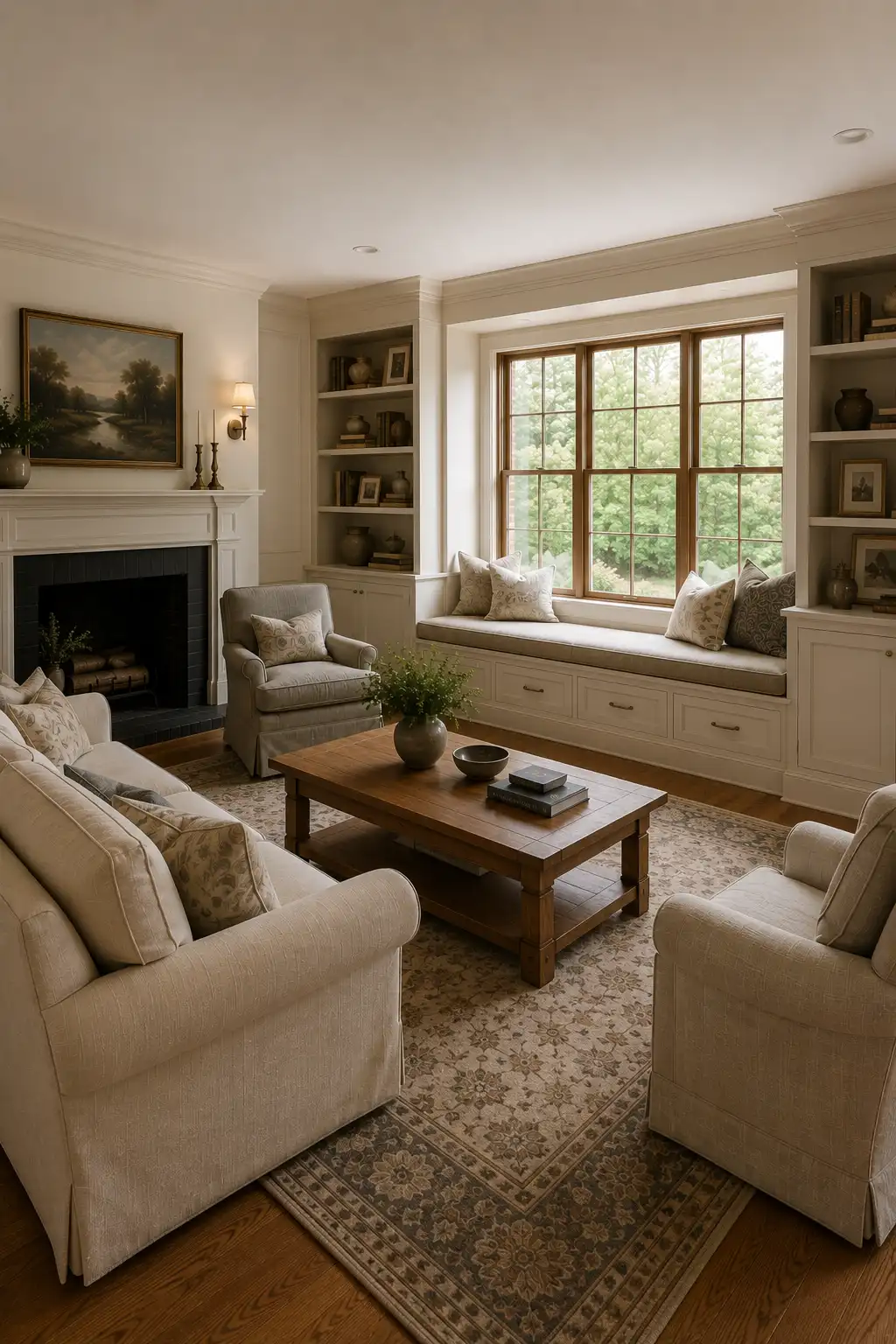
A generous window seat can make an ordinary wall feel like one of the most inviting parts of a living room. Here, the deep built in bench stretches beneath a wide window, creating a comfortable place to read or relax while making thoughtful use of space that might otherwise sit empty.
Surrounding the seat with built in shelving gives the entire wall a finished architectural quality. Closed drawers below provide practical storage, while books, pottery, and framed pieces bring character to the open shelves. Soft cushions and patterned pillows make the bench feel connected to the upholstered seating elsewhere in the room.
Warm wood keeps the creamy built ins from feeling too uniform. The natural window frame, substantial coffee table, and hardwood flooring introduce contrast, while the traditional rug and classic fireplace reinforce the room’s timeless character. It feels functional, comfortable, and carefully integrated rather than added as an afterthought.
Pro Tip: Give a window seat enough depth for comfortable lounging and include hidden drawers underneath. You’ll gain a genuine reading spot and valuable storage without adding another freestanding piece of furniture.
20. Layer Vintage Artwork for a Living Room That Feels Collected
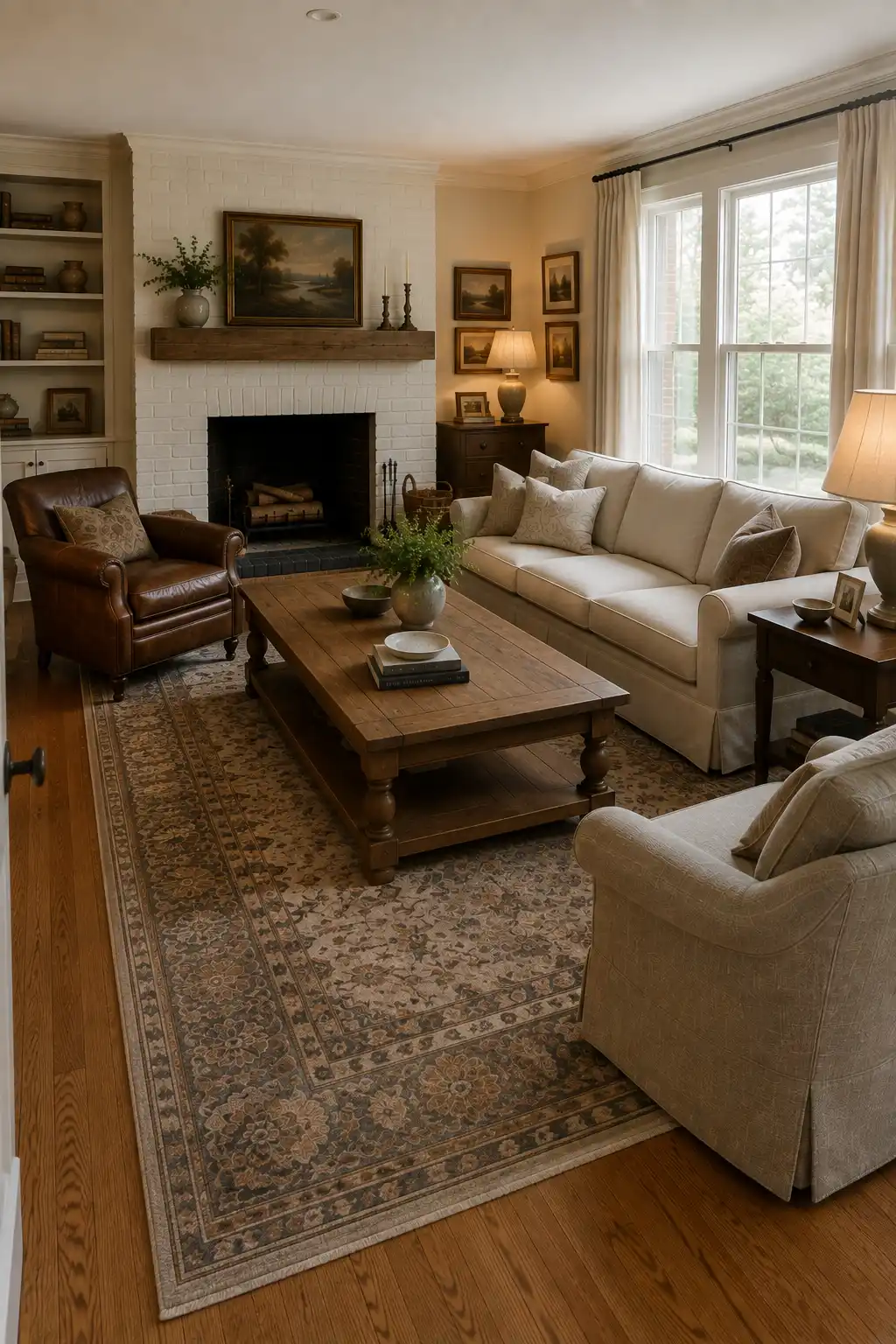
A room feels more personal when the artwork looks gathered over time rather than purchased as a matching set. Here, traditional landscape paintings in different sizes appear above the fireplace and along the adjoining wall, creating visual interest while staying within the same warm, muted palette.
The white brick fireplace and thick wood mantel give those vintage inspired pieces a natural backdrop. Around them, a cognac leather chair, cream sofa, aged wood tables, built in shelving, and a traditional patterned rug continue the mix of old and new. Each element has its own character without competing for attention.
Small finishing touches make the arrangement feel even more established. Books, pottery, candlesticks, framed photographs, greenery, and softly glowing lamps fill the room with detail while leaving enough breathing space. Nothing matches perfectly, and that restraint is exactly what gives the room its relaxed, collected quality.
Pro Tip: Build an art collection around a shared mood or color palette rather than identical frames and sizes. Mixing scales and placements makes the display feel as though it has grown naturally over the years.
Bringing the Joanna Gaines Look Home
The most memorable Joanna Gaines inspired living rooms aren’t built around one piece of furniture or a single decorating rule. Their character comes from layers: warm neutrals, natural wood, architectural details, comfortable upholstery, aged finishes, traditional patterns, and objects that appear to have been collected gradually rather than purchased all at once.
You don’t need to recreate every detail to bring the same feeling into your own living room. Start with the elements that suit your space, whether that means adding a substantial wood table, rethinking the fireplace, introducing an antique piece, or simply layering warmer textures into what you already own. A thoughtful mix will always feel more timeless than a room designed to follow one passing trend.